
Seeing a heavy spray drone drift uncontrollably near power lines during our early R&D days taught us that interference is invisible but costly. You need equipment that withstands these unseen forces.
To evaluate operational stability, prioritize drones with dual-antenna Dual-Antenna RTK 1 RTK systems for heading accuracy and multi-constellation GNSS support to ensure signal redundancy Dual IMU Redundancy 2. Verify that the communication link uses Frequency Hopping Spread Spectrum (FHSS) and demand field test data showing stable Signal-to-Noise Ratios (SNR) near high-voltage High-voltage power lines 3 infrastructure.
Understanding the specific technologies that ensure this stability will protect your investment and operations.
Which anti-interference technologies should I look for in the flight control system?
Our engineering team in Xi’an specifically sources avionics chips that filter out noise because we know farm machinery generates chaotic signals. Reliability starts at the component level.
Look for flight controllers featuring redundant Inertial Measurement Units (IMU) and dual-antenna RTK systems, which eliminate reliance on magnetic compasses. Additionally, ensure the system utilizes adaptive filtering algorithms like FastICA to isolate control signals from electromagnetic noise generated by the drone’s own motors and external sources.
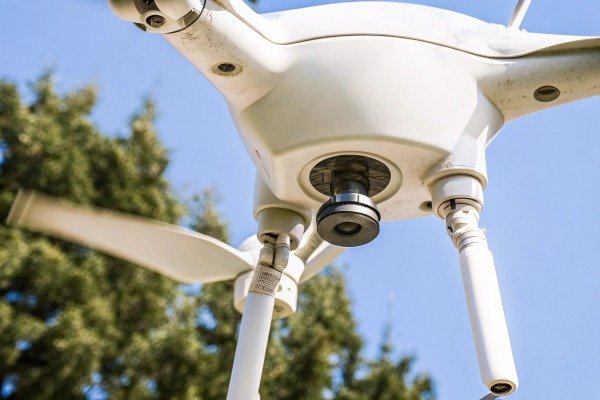
To truly understand stability, you must look beyond the plastic casing of the flight controller. In the agricultural fields we supply to, electromagnetic interference (EMI) does not just come from cell towers electromagnetic interference (EMI) 4 electromagnetic interference 5; it comes from the drone itself and the environment.
Hardware-Based Resilience
The first line of defense is physical. A robust flight control system should use EMI shielding. This often involves enclosing the sensitive avionics in a metal cage or using conductive coatings. In our factory testing, we have found that unshielded wiring acts like an antenna, picking up noise from the high-voltage Electronic Speed Controllers (ESCs) Elektronische Drehzahlregler 6 that drive the motors.
You should specifically ask for Dual IMU Redundancy. If one sensor gets confused by a sudden burst of interference, the second one cross-references the data. If they disagree, the system checks against a voting logic to determine the true orientation of the aircraft.
Software and Algorithmic Filtering
Hardware is not enough. The software needs to be smart. Standard filters might block noise but also delay the drone's reaction time, making it feel sluggish.
Advanced systems use Adaptive Signal Processing. We often implement algorithms that can distinguish between the vibration of the drone and actual pilot commands. A key technology here is the "Kalman Filter" or more advanced variations like FastICA. Kalman Filter 7 These mathematical models predict where the drone should be. If a sensor suddenly reports a position 10 meters away due to interference, the algorithm knows this is physically impossible and ignores the bad data.
Comparison of Anti-Interference Features
When comparing quotes from different suppliers, use this table to check the flight control specifications.
| Merkmal | Standard/Hobby Grade | Industrial/Ag Grade | Warum es wichtig ist |
|---|---|---|---|
| Referenz der Überschrift | Magnetischer Kompass | Dual-Antenna RTK | RTK heading is immune to magnetic interference from power lines. |
| Signal Filtering | Basic Low-Pass Filter | Adaptive Kalman/FastICA | Advanced filters stop "jitters" without slowing down response. |
| Verkabelung | Standard Ribbon Cables | Shielded/Twisted Pair | Prevents internal noise from the motors affecting the brain. |
| Frequency | Fixed 2.4GHz | Dynamic FHSS | Automatically jumps channels if one gets jammed. |
How can I verify the drone's resistance to magnetic interference near high-voltage power lines?
During field tests in Chengdu, we intentionally fly prototypes near pylons to measure compass deviation, ensuring our clients don’t experience fly-aways. Real-world validation is non-negotiable.
Verify resistance by conducting hover tests at incremental distances from power lines while monitoring the drone’s heading stability and position hold. You must confirm the drone uses RTK-based heading rather than a magnetometer, as high-voltage electromagnetic fields will cause standard compasses to spin and trigger flight errors.
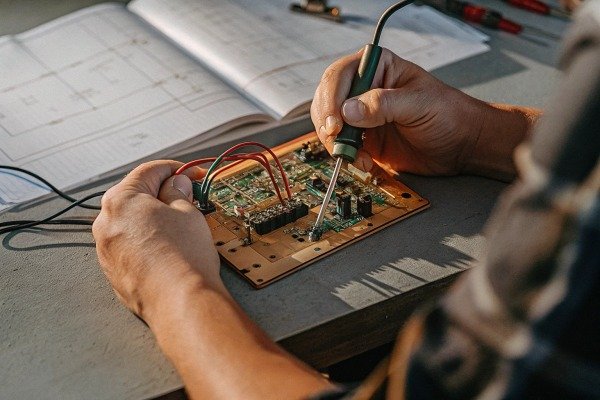
High-voltage power lines are the most common source of "soft kills" for agricultural drones. The strong magnetic fields generated by the current can completely confuse a drone's internal compass.
The Problem with Magnetometers
Most basic drones use a magnetometer (a digital compass) to know which way is North. Near a power line, the electromagnetic field is often stronger than the Earth's magnetic field Earth's magnetic field 8. This causes the drone to think it is spinning when it is actually stationary. The flight controller tries to "correct" this spin, causing the drone to veer violently into the wires or away from the field.
The Dual-Antenna Solution
To verify resistance, you must ensure the drone does not use a magnetometer as its primary heading source. Instead, it should use Dual-Antenna RTK.
Here is how it works: The drone has two GPS antennas spaced apart. The flight computer calculates the precise position of Antenna A and Antenna B. By drawing a line between them, it knows exactly which way the drone is facing. This is purely geometric and relies on satellite data, not magnetism. Therefore, the magnetic field of a power line has zero effect on the heading.
Field Verification Protocol
If you are visiting a supplier or testing a demo unit, do not just fly in an open field. That proves nothing.
- The Approach Test: Hover the drone 50 meters from a power line.
- Monitor the App: Look for "Compass Error" or "Mag Interference" warnings on the ground station screen.
- Close the Gap: Move to 30 meters, then 20 meters (safely).
- Watch the Yaw: Does the drone rotate on its own? Does the nose drift left or right?
If the drone holds its heading perfectly rock-solid while 20 meters from a line, it has verified magnetic resistance.
Safe Distance Guidelines
While technology helps, physics still applies. We recommend the following operational buffers based on voltage levels.
| Voltage Level | Minimum Safe Distance (Standard Drone) | Minimum Safe Distance (Shielded RTK Drone) |
|---|---|---|
| 110 kV | 50 meters | 15 meters |
| 220 kV | 100 meters | 25 meters |
| 500 kV+ | Do not operate | 50 meters |
What specific field test data should I request from the manufacturer to prove stability?
We provide our US distributors with raw flight logs because polished marketing videos can hide micro-oscillations that indicate poor stability. You need the actual telemetry numbers.
Request raw flight logs that display the Satellite Signal-to-Noise Ratio (SNR), RTK fix status retention rates, and vibration analysis graphs during operation. Specifically, ask for data showing the positional variance (RMS error) when the drone is hovering near known interference sources to validate holding accuracy.
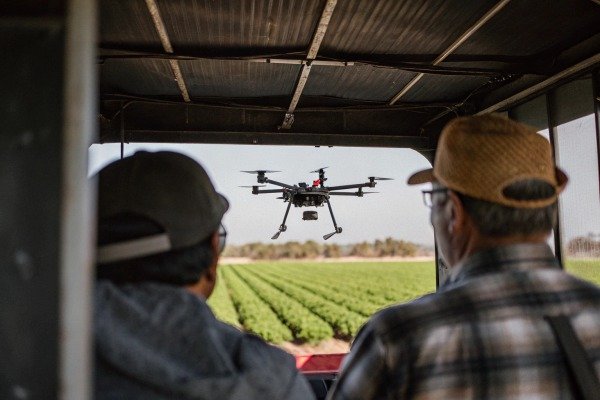
Trust is good, but data is better. When you import drones, you are not just buying hardware; you are buying performance. A manufacturer might say their drone is "stable," but you need to define what stability means in numbers.
Signal-to-Noise Ratio (SNR)
Ask for the SNR logs from the GNSS receiver. SNR measures the strength of the satellite signal relative to background noise.
- Good Data: Values consistently above 40 dBHz.
- Bad Data: Frequent drops below 35 dBHz or jagged spikes.
If you see the SNR dropping frequently in the logs, it means the drone's internal shielding is poor, or its receiver is weak. This drone will lose GPS lock easily.
Root Mean Square (RMS) Error
This is a fancy engineering term for "how much did it wobble?" Request the Position RMS Error data from a hover test.
- In a stable hover, the drone thinks it is at coordinate (0,0).
- In reality, it drifts slightly to (0.1, 0.2).
- A high-quality agricultural drone should have a horizontal RMS error of less than 10 centimeters even in moderate interference. If the graph shows the drone wandering 50cm or more, it is not tight enough for precision spraying.
Schwingungsanalyse
Vibration creates noise that confuses the IMU sensors. Ask for the Vibration Analysis Graph from the flight controller. We mount our flight controllers on dampening blocks to absorb frame vibrations.
- X/Y/Z Vibration Levels: These should be flat and low.
- Spikes: If you see high vibration spikes correlating with motor speed, the drone is mechanically unbalanced. This mechanical noise will eventually overwhelm the anti-interference algorithms, leading to a crash.
Data Request Checklist
When you email a supplier, copy-paste this list:
- RTK Fix Rate: What percentage of the flight time did the drone maintain "RTK Fixed" status? (Should be >95%).
- Magnetometer Innovation: A graph showing how much the compass disagreed with the GPS.
- Radio Link Quality (RSSI): Signal strength of the remote controller at max range.
What fail-safe mechanisms will protect my drone if signal interference occurs during operation?
Our firmware engineers program “worst-case scenario” logic because we know that eventually, a signal loss will happen in the field. The drone must know how to save itself.
Ensure the drone features an automatic “Return Return to Home 9-to-Home” (RTH) function triggered by signal loss and a “Hover/Attitude” mode that maintains altitude using barometric pressure if GPS fails. Critical fail-safes also include independent obstacle avoidance sensors (radar/LiDAR) that function purely on local reflection, unaffected by electromagnetic jamming.
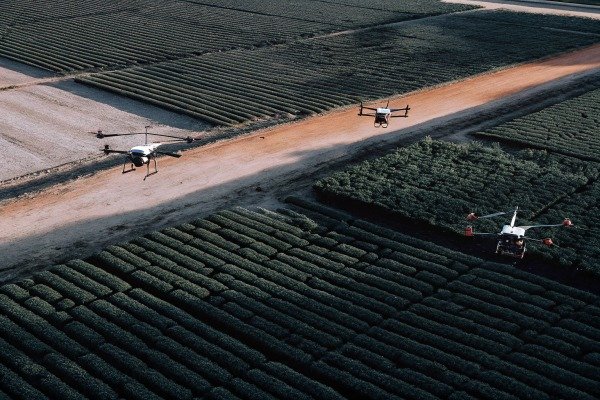
No matter how good the shielding is, you must plan for the moment the interference wins. If a drone loses its connection to the remote or the GPS satellites, it cannot just fall out of the sky. It needs a "survival instinct."
Hierarchy of Fail-Safes
A robust system processes errors in layers. You need to verify that the drone follows this specific logic chain:
- Signal Loss (Remote Controller): If the drone loses contact with the pilot for 3 seconds, it should automatically trigger Failsafe RTH (Return to Home). It climbs to a safe altitude and flies back to the takeoff point.
- GPS/RTK Loss: If electromagnetic interference blinds the GPS, the drone cannot RTH because it does not know where "Home" is. In this case, it must switch to Attitude Mode (ATTI). It locks its altitude using the barometer and uses the IMU to keep the wings level. It will drift with the wind, but it will not crash.
- Total Disorientation: If the compass and GPS both fail, the drone should initiate an Emergency Hover/Land. It stops fighting for position and slowly descends to minimize damage.
Non-RF Dependent Sensors
The best protection against Electromagnetic Interference (RF noise) is to use sensors that do not use Radio Frequencies at all.
- LiDAR and Radar: These sensors use light or radio waves to see the ground and obstacles. They are generally immune to the magnetic interference from power lines.
- Benefits: Even if the GPS is scrambled, the Terrain Follow Radar will keep the drone at the correct height (e.g., 2 meters above crops). The Obstacle Avoidance Radar will prevent it from flying into the pylon itself.
Verification of Dead Reckoning
Advanced industrial drones use "Dead Reckoning Dead Reckoning 10." If GPS is lost, the drone calculates: "I was moving North at 5 m/s. I haven't changed my motor speed. Therefore, I am likely still moving North." It uses this logic to brake and stop safely. Without this, a drone moving at speed will continue drifting until it hits something.
| Fail-Safe Scenario | Hobby/Basic Drone Reaction | Professional Ag Drone Reaction |
|---|---|---|
| Remote Signal Lost | Hovers until battery dies or lands immediately. | Climbs to safe height, returns home. |
| GPS Jammed | Drifts uncontrollably (Fly-away). | Enters ATTI mode, alerts pilot, maintains altitude. |
| Magnetic Interference | "Toilet bowl" effect (circles and crashes). | Ignores compass, uses gyroscope/RTK, maintains straight line. |
Schlussfolgerung
Evaluating operational stability requires looking beyond the brochure. By demanding dual-antenna RTK, verifying resistance to magnetic fields near power lines, and analyzing raw SNR data, you ensure your fleet can handle the harsh electromagnetic reality of modern agriculture. Prioritizing these technical validations mitigates risk and secures your long-term ROI.
Fußnoten
1. Technical specifications for industrial-grade agricultural drones utilizing RTK positioning. ︎
2. Explains the function of inertial measurement units in maintaining aircraft orientation. ︎
3. Government safety standards for operations near high-voltage infrastructure. ︎
4. Official regulatory information regarding radio frequency safety and interference. ︎
5. Technical standard regarding electromagnetic compatibility in unmanned aerial vehicles. ︎
6. Background information on how electronic speed controllers manage motor power and noise. ︎
7. Academic resource explaining the mathematical algorithm used for signal filtering and prediction. ︎
8. Authoritative scientific data on geomagnetic fields and modeling. ︎
9. Federal safety guidelines and regulations for unmanned aircraft systems and fail-safe operations. ︎
10. Standard definition and explanation of the dead reckoning navigation technique. ︎

 English
  Spanish
  German
  French
  Dutch
Dutch  Arabic
