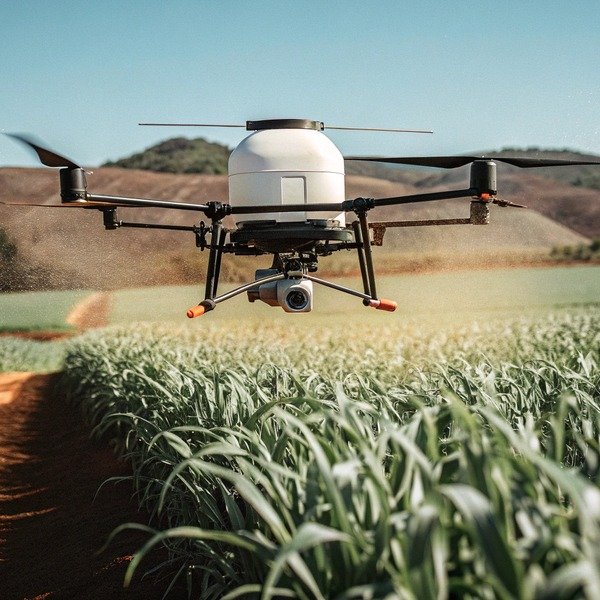
You need distinctive equipment to stand out in the competitive agri-tech market. agri-tech market 1 At our Chengdu factory, we constantly see how generic drones fail to build brand loyalty for importers.
Yes, Chinese agricultural drone suppliers widely offer OEM services. You can customize branding through logo placement, color schemes, and software interfaces. Options range from simple rebadging to deep hardware modifications like tank size adjustments, usually requiring minimum order quantities starting from one to five units for basic testing.
Let’s explore exactly how you can transform our standard units into your exclusive product line.
What specific hardware and software features can I customize to fit my local market needs?
Local crops require specific flight patterns that standard firmware often misses. When we code flight algorithms, we ensure our partners can tweak settings to match their regional farming conditions perfectly.
You can customize hardware elements like nozzle types, pump flow rates, and tank capacities between 10L and 50L. Software customization includes localized app interfaces, multi-language support, boot animations, and specific flight control parameters to optimize spraying efficiency for your local terrain and crop varieties.

Creating a product that fits your local market involves more than just slapping a sticker on a frame. In the agricultural sector, performance is everything. Farmers in the United States may need high-pressure nozzles for thick canopy crops Vereinigte Staaten 2, while users in Europe might prioritize drift-reduction technology.
Hardware Customization Options
We often modify the physical structure of the drone to suit specific tasks. The most common request involves the liquid tank and the spraying system. Standard tanks usually come in 10L, 16L, 30L, or 50L sizes. However, we can modify the tank material. For example, some clients prefer a translucent white tank to allow visual monitoring of liquid levels, while others prefer solid colors for branding.
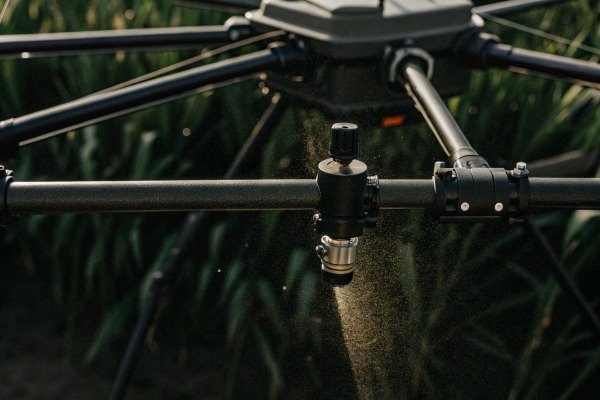
The propulsion system is another key area. We can install heavy-duty motors for high-altitude regions where air density is lower. We can also swap standard pressure nozzles for centrifugal nozzles, which provide better atomization for certain pesticides. Even the arm design is flexible; we can use different carbon fiber weaves to balance weight and durability based on your preference.
Software and Firmware Tailoring
Software is where your brand truly interacts with the user. Using generic software can make your business look like a reseller rather than a manufacturer. We offer deep customization of the Ground Control Station (GCS) app. This includes translating the interface into local languages, such as Spanish or Portuguese, and changing the splash screen to your company logo.
Beyond visuals, we can tune the Flight Controller (FC) parameters. Flugregler 3 If your region has strong winds, we can adjust the attitude control gains to make the drone more aggressive in maintaining stability. We can also customize the Battery Management System (BMS) to report data in a format that integrates with your own fleet management software. Battery Management System 4
Customization Levels Overview
| Feature Category | Customization Option | Typical Use Case |
|---|---|---|
| Structural | Tank Capacity (10L-50L) | Matching farm sizes (small vs. large acreage). |
| Antrieb | Motor & Propeller Type | High-altitude operations or heavy-lift needs. |
| Spraying | Centrifugal vs. Pressure Nozzles | Varying crop types requiring fine or coarse mist. |
| Software | App Language & Logo | Localization for non-English speaking markets. |
| Firmware | Flight Stability Tuning | Operating in high-wind coastal areas. |
| Accessories | Remote Controller Branding | Professional look for end-users. |
By selecting the right combination of these features, you create a machine that feels native to your customer's environment. This level of detail builds trust and reduces the likelihood of farmers looking for alternative suppliers.
What is the typical minimum order quantity required to white-label agricultural drones?
High inventory requirements often scare away new distributors. We structure our production lines to support scalable growth, allowing you to start small before committing to full container loads.
Most suppliers allow a minimum order quantity (MOQ) of just one unit for sample testing and basic logo application. However, for deep customization like custom mold colors or exclusive software features, the MOQ typically rises to 10 or 20 units to cover the initial setup and engineering costs.
Entering the drone market requires capital, and nobody wants to tie up cash in dead stock. That is why the concept of Minimum Order Quantity (MOQ) is flexible Minimum Order Quantity (MOQ) 5 in our industry. We understand that you need to verify the quality before you bet your reputation on it.
The Sample Phase
For your first order, the MOQ is almost always one unit. At this stage, we do not expect you to order a container. The goal is validation. You can request basic branding, such as a logo sticker on the canopy, even on this single unit. This allows you to show a physical product to your local investors or key clients without a massive financial commitment.
However, complex customization is limited here. We cannot open a new injection mold for a single unit because the cost would be astronomical. The sample is mostly about testing flight performance and software stability.
Scaling to Batch Production
Once you move past the sample phase, the MOQ requirements shift based on what you want to change. If you stick to standard white-labeling—like printing logos on the remote controller and using custom user manuals—the MOQ is usually low, often around 5 to 10 units. This is accessible for most small to medium distributors.
If you require a specific color for the plastic injection molds (for example, a bright red chassis to match your brand), the MOQ jumps significantly. This is because clearing the machines and mixing custom colored plastic takes time and material. For these orders, we usually require 50 units or more.
Negotiating MOQ
It is often possible to negotiate these terms. If you commit to an annual purchase volume, we can often waive the high MOQ for the first batch or amortize the customization costs over future orders. Building a relationship with the factory owner or sales manager is key here.
MOQ Tiers and Requirements
| Level of Customization | Typische MOQ | setup Costs | Lead Time Impact |
|---|---|---|---|
| Sample Unit | 1 Unit | Keine | Standard (3-7 Days) |
| Basic Branding (Stickers, Manuals) | 5-10 Units | Low (<$100) | +3 Days |
| Software Branding (Boot Logo, App) | 10-20 Units | Moderate ($500+) | +7 Days |
| Deep Hardware (Custom Molds/Colors) | 50+ Units | High ($2000+) | +20-30 Days |
Understanding these tiers helps you plan your cash flow. You can start with a standard sample, move to basic branding for your first sales, and eventually invest in deep customization once your volume justifies it.
How does the collaborative design process work when developing a unique product with the factory?
Miscommunication during design leads to costly manufacturing errors. Our engineering team uses shared 3D models and weekly video calls to ensure your specifications translate perfectly into the final airframe.
The process begins with a detailed requirement list and a feasibility review by factory engineers. It progresses to 3D rendering, prototype creation, and field testing for stability. Throughout this phase, you provide feedback on performance data, leading to final adjustments before mass production begins.

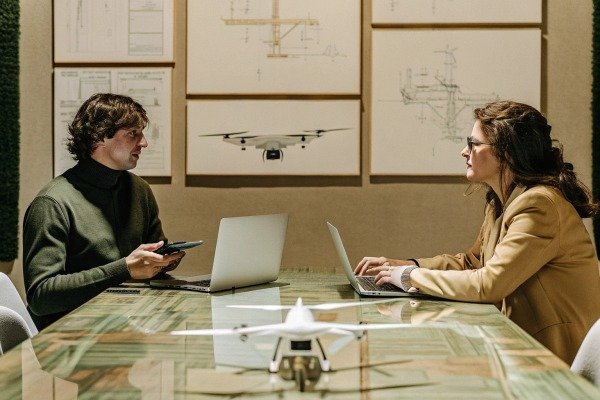
Developing a unique product is a partnership. It is not as simple as sending an email and waiting for a shipment. It requires active participation from both your procurement team and our engineering department.
Step 1: Requirement Gathering and Feasibility
The journey starts with your vision. You provide a list of requirements. For instance, you might need a drone that folds into a specific size to fit in a pickup truck, or you might need a waterproof rating of IP67 for tropical environments.
Our engineers then review these requests. We check if the requested payload aligns with the motor power and battery capacity. If a request is physically impossible or unsafe, we will propose an alternative. This phase usually involves several video calls to align expectations.
Step 2: 3D Modeling and Prototyping
Once we agree on the specs, we create a CAD model. We share these 3D renders with you so you can see exactly how the drone will look. You can check the placement of the GPS module, the tank design, and the landing gear structure.
After you approve the design, we build a physical prototype. This is not a mass-produced unit; it is often hand-assembled or 3D printed for speed.
Step 3: Testing and Validation
This is the most critical phase. We take the prototype to our test fields in China. We fly it fully loaded to test battery endurance, spray width, and stability. We share raw flight logs and video footage with you.
If you are a technical buyer, you can analyze these logs to check for vibration issues or GPS accuracy. Based on this data, we refine the design. We might stiffen the arms or adjust the center of gravity. Only after you sign off on the test data do we open the molds for mass production.
Development Workflow
- Concept Phase: You define the problem (e.g., "Need longer flight time").
- Engineering Review: We propose a solution (e.g., "Switch to 22000mAh battery and lighter frame").
- Digital Proof: We send CAD drawings for approval.
- Prototyping: We build a functional sample.
- Field Testing: Real-world trials with video evidence.
- Mass Production: Tooling creation and assembly.
This structured approach minimizes risk. It ensures that when the container arrives at your warehouse, the product performs exactly as you imagined.
Will customizing the drone design or packaging significantly increase my costs and lead times?
Hidden fees and unexpected delays kill profit margins quickly. We provide transparent quotes upfront, so you know exactly how branding tweaks impact your final landed cost and delivery schedule.
Basic branding adds minimal cost, often included in wholesale prices for orders over 10 units. However, structural changes or custom molds can increase costs by 20-50% and extend lead times by 15-30 days due to the need for new tooling, testing, and supply chain adjustments.
Every modification comes with a price tag, either in money or time. As a business owner, you need to calculate the Return Return on Investment 6 on Investment (ROI) for every Return on Investment (ROI) 7 customization you request.
Understanding Cost Drivers
For simple changes, the cost is negligible. Printing a logo on the center plate or the remote controller usually costs less than $5 per unit once the screen-printing mold is made (which might cost $50 one time). Customized packaging boxes are also cheap if you meet the printing factory's minimums, usually around $10-$20 extra per box.
However, structural changes are expensive. If you want a unique arm design, we need to create a new mold for the carbon fiber Kohlefaser 8 or aluminum parts. A mold can cost between $2,000 and $10,000 depending on complexity. This cost must be paid upfront. Therefore, the unit cost only makes sense if you plan to sell hundreds of drones.
Impact on Lead Times
Time is often more critical than cost during the farming season. Standard "off-the-shelf" drones can ship in 3-7 days.
- Basic OEM: Adding logos and changing manuals adds about 3-5 days to the process.
- Software-Anpassung: This adds about 1 week for coding and testing to ensure no bugs are introduced.
- Hardware Redesign: This is the big delay. Creating new molds, producing sample parts, and testing them can add 30 to 60 days to the lead time.
Balancing Customization and Speed
We advise new clients to start simple. Launch with a standard model that has your logo and custom software. This gets you to market quickly with low risk. As your sales volume grows, you can invest in unique hardware designs for the next season.
Cost and Time Estimation Table
| Customization Type | Estimated Cost Increase | Additional Time Needed |
|---|---|---|
| Logo Printing | < 1% per unit | 3 Days |
| Custom User Manuals | $2 – $5 per unit | 5 Days |
| Custom Firmware | $500 – $1000 (One-off) | 7-10 Days |
| Custom Color (Paint) | $50 – $100 per unit | 7-10 Days |
| New Hardware Mold | $2,000+ (Tooling Fee) | 30-45 Days |
By planning ahead, you can manage these factors. If you need drones for the spring planting season spring planting season 9, you must start the design process in early winter.
Schlussfolgerung
Customizing agricultural drones is a powerful way to build your brand. From simple logo placement to complex hardware engineering, factories like ours offer scalable solutions. Start with a sample, verify the quality verify the quality 10, and grow your custom fleet.
Fußnoten
1. Provides general background on the agricultural technology sector and its competitive landscape. ︎
2. Official FAA regulations for commercial drone operations in the United States. ︎
3. Technical specifications for professional-grade flight control systems from a major manufacturer. ︎
4. Industry research and standards for battery management systems in electronic vehicles and drones. ︎
5. Definition from the Chartered Institute of Procurement & Supply. ︎
6. Explains the financial metric used to evaluate customization costs and business profitability. ︎
7. Standard financial definition for the business term used. ︎
8. Official Department of Energy page explaining the material. ︎
9. USDA report on planting dates, highly relevant to agriculture. ︎
10. Authoritative resource on quality verification processes. ︎

 English
  Spanish
  German
  French
  Dutch
Dutch  Arabic
