
Every day on our production floor, we see hexacopters leave the factory in perfect condition. Yet warranty claims flood in weeks later—many denied. The problem? Buyers rarely read the fine print until it costs them thousands.
Agricultural drone warranties typically exclude crash damage, operator errors, consumable parts like propellers and batteries, unauthorized modifications, water damage, and operation outside specified environmental conditions. Most standard warranties only cover manufacturing defects in materials and workmanship for 12 months, leaving operational risks to separate insurance policies.
Let me walk you through exactly what your warranty does and does not cover. This guide will save you from expensive surprises.
What common parts and wear-and-tear items are typically excluded from my agricultural drone warranty?
When we calibrate our flight controllers before shipping, each drone meets strict quality standards. But once that drone starts spraying fields daily, parts wear down fast. Many buyers assume their warranty covers everything—until the claim gets rejected.
Propellers, batteries, spray nozzles, cables, and pump components are typically excluded from agricultural drone warranties. These consumable parts experience normal wear-and-tear during regular operation. Most manufacturers offer only 30-90 days coverage for batteries, while propellers and nozzles receive no warranty protection at all.

Understanding Consumable Parts Categories
The distinction between covered components and consumables matters greatly. consumable parts 1 Our engineering team designs drones knowing certain parts will need regular replacement. This is not a defect—it is expected use.
Flight motors generally receive full warranty coverage because they should last thousands of hours under normal conditions. However, the propellers attached to those motors spin at high RPM and hit debris. They wear out. Expecting warranty coverage for a cracked propeller after 200 flight hours is like expecting car tire coverage after 50,000 miles.
Standard Warranty Periods by Component Type
| Komponente | Typical Warranty Period | Reason for Limited Coverage |
|---|---|---|
| Flugregler | 12 Monate | Critical component, manufacturing defects only |
| Motoren | 12 Monate | Should last entire warranty period under normal use |
| Batterien | 30-90 days or cycle limit | Chemical degradation is normal, not a defect |
| Propeller | 0-30 days | High wear item, contact with debris expected |
| Spray Nozzles | Keine | Clogs and wear from chemical exposure expected |
| GPS Module | 12 Monate | Sealed unit, covered for defects |
| Cables/Connectors | 90 days | Vibration wear and UV exposure expected |
What Counts as Normal Wear?
Battery capacity naturally decreases over charge cycles. When we test batteries at our facility, brand new units show 100% capacity. After 200 cycles, even perfect batteries drop to 80% capacity. This is chemistry, not a defect.
Your warranty likely specifies a cycle limit—often 200 cycles or 6 months, whichever comes first. After that threshold, capacity loss claims get denied automatically.
Propeller damage is similar. Agricultural environments contain dust, small stones, and insects. Propeller edges chip. Leading edges erode. Our quality control accepts this reality, and so should buyers.
How to Protect Yourself
Keep replacement propellers in stock. Budget for battery replacement every season. Document everything. When we process warranty claims, detailed flight logs showing proper use make approval faster. Vague claims without data get denied.
How will custom OEM modifications or software changes affect my drone's warranty coverage?
In our experience working with distributors across Europe and the US, customization requests arrive daily. Dealers want branded shells. Integrators want third-party sensors. The moment you modify that drone, however, warranty terms change dramatically.
Any unauthorized modification—including third-party software, non-OEM payloads, custom firmware, or hardware alterations—typically voids your entire drone warranty immediately. Even manufacturer-approved OEM modifications may limit coverage to only the original components, excluding any damage caused by or related to the modified systems.

The Modification Spectrum
Not all modifications carry equal risk. Our support team categorizes changes by warranty impact:
| Modification Type | Warranty Impact | Risikostufe |
|---|---|---|
| Cosmetic branding (stickers, paint) | Usually no impact | Niedrig |
| Third-party propellers | Voids propulsion system coverage | Mittel |
| Custom spray tank | May void frame and payload coverage | Medium-High |
| Third-party flight firmware | Voids entire warranty | Kritisch |
| Non-OEM battery packs | Voids battery and electrical system | Kritisch |
| Sensor integration (uncertified) | May void related systems | Hoch |
Software Modifications Are Especially Risky
When we develop flight firmware, every parameter gets tested across thousands of scenarios. Third-party software cannot guarantee this validation. More importantly, we cannot diagnose problems on modified firmware.
If your drone crashes after a third-party software update, proving the crash was unrelated to that software becomes nearly impossible. The warranty claim gets denied because we cannot verify the software did not cause the failure.
This applies to jailbroken controllers, hacked geofencing 2, and disabled safety features. Our engineers have seen cases where buyers disabled low-battery return-to-home functions. When those drones fell from the sky with dead batteries, warranty claims were rejected instantly.
OEM Programs Offer a Middle Path
Some manufacturers, including our company, offer authorized OEM modification programs. Under these programs, approved modifications maintain limited warranty coverage. The key word is "authorized."
Before modifying your drone, get written confirmation from the manufacturer. Request documentation specifying which warranty terms remain valid. Without this paperwork, assume your warranty is void.
Third-Party Payloads Deserve Special Attention
Agricultural drones 3 often need specialized spraying systems, multispectral sensors, or mapping equipment. Integrating non-certified payloads creates liability gray zones.
If a third-party spray tank leaks chemicals onto the flight controller, who bears responsibility? The tank manufacturer says the drone vibrations caused the leak. The drone manufacturer says the tank was improperly installed. Your warranty claim bounces between both parties, and you pay for repairs.
Our recommendation: use certified compatible payloads or accept the warranty risk. Document installation with photos and video. This evidence helps if disputes arise.
Does my warranty cover accidental crashes caused by my pilot's error or poor weather conditions?
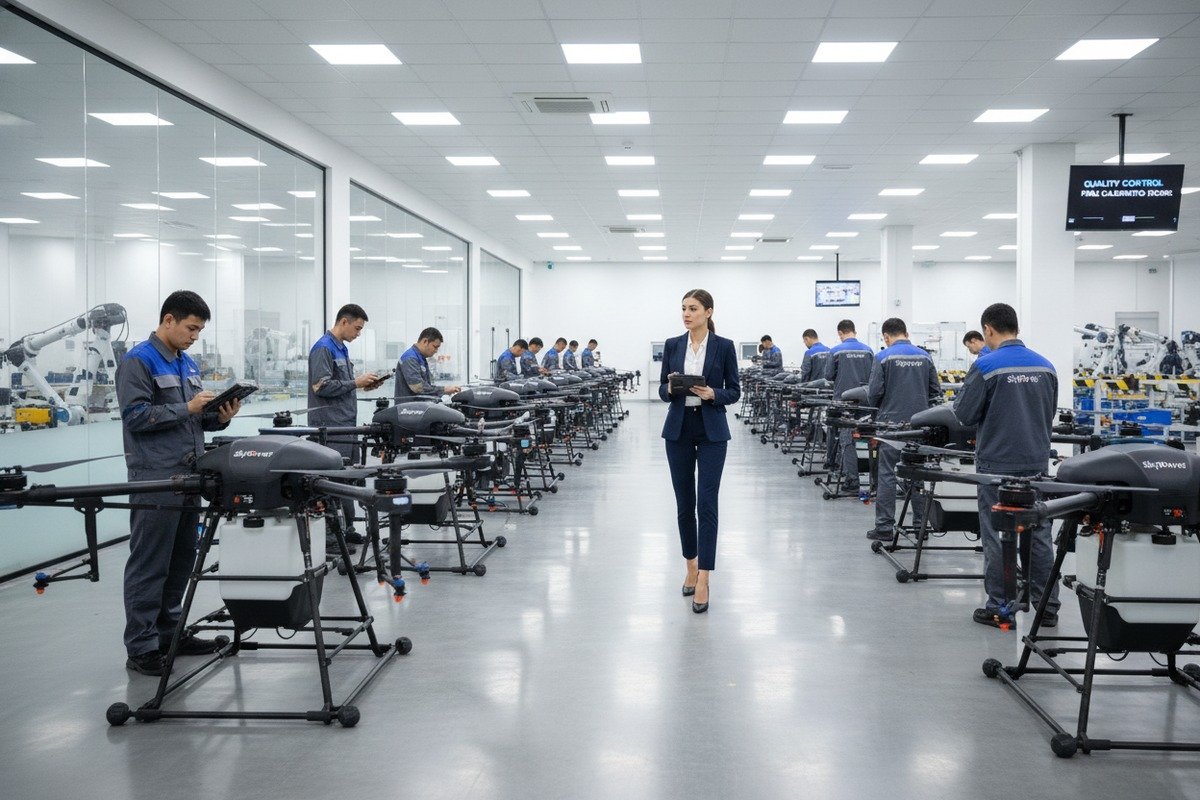
Our engineers design agricultural drones to survive harsh conditions. But surviving harsh conditions and receiving warranty coverage for crash damage are completely different things. This distinction frustrates many buyers.
Standard agricultural drone warranties do not cover crashes from pilot error or weather conditions. Operator mistakes, including flying in prohibited wind speeds, losing orientation, or misreading instruments, are explicitly excluded. Weather damage from rain, high winds, extreme temperatures, or lightning falls outside warranty scope entirely, regardless of circumstances.
Why Crash Damage Is Universally Excluded
Warranties exist to protect buyers from manufacturing defects. A crash is not a defect—it is an operational event. When we receive crashed drones for evaluation, the damage pattern tells us immediately whether the failure was mechanical or operational.
Manufacturing defects show consistent failure signatures. Motor bearings seize. Circuit boards short. Structural joints separate at weld points. These failures happen during normal operation without warning.
Crash damage shows impact signatures. Bent motor shafts. Cracked arms. Shattered propellers. These failures happen because something hit something else. The warranty does not cover collisions.
Weather Creates Clear Exclusion Boundaries
| Weather Condition | Typical Manufacturer Limit | Warranty Implication |
|---|---|---|
| Wind Speed | 8-12 m/s maximum | Flying above limit voids coverage |
| Temperatur | -10°C to 40°C | Operation outside range voids coverage |
| Rain/Moisture | IP43-IP67 rating 4 dependent | Water ingress claims require defect proof |
| Visibility | Manufacturer guidance varies | Poor visibility crashes are operator error |
| Lightning/EMP | Not covered | Electrical surge damage excluded |
Our flight data recorders log environmental conditions. When crash claims arrive, we check whether the pilot exceeded recommended parameters. Wind speed at 15 m/s when the manual specifies 10 m/s maximum? Claim denied.
The Insurance Solution
This is where hull insurance 5 becomes essential. Warranties and insurance serve different purposes:
- Garantie: Covers defects in materials and workmanship
- Hull Insurance: Covers physical damage regardless of cause
- Liability Insurance: Covers third-party property damage and injury
Agricultural drones costing $25,000-$35,000 deserve hull insurance. Premiums typically run 5-10% of drone value annually with reasonable deductibles. A $30,000 drone might cost $2,000 annually to insure against crashes, theft, and transit damage.
Compare this to one uninsured crash destroying a $30,000 investment. The math favors insurance.
FAA Certification Affects Coverage
In the United States, operating agricultural spray drones requires proper FAA certification. Teil 107 6 covers drones under 55 pounds for basic operations. Part 137 certification 7 is mandatory for agricultural aircraft operations including spraying.
Both warranty claims and insurance claims may require proof of proper certification. Operating without required certifications can void both warranty and insurance coverage simultaneously.
The certification process takes time—Part 137 applications often require 6-12 months. Plan accordingly before your first commercial spray season.
What specific maintenance failures or storage issues could lead to my warranty claim being denied?
When we ship drones from our facility, detailed maintenance schedules accompany every unit. These schedules exist for good reasons. Ignoring them creates warranty problems.
Warranty claims get denied when buyers fail to follow manufacturer maintenance schedules, store drones improperly, skip required calibrations, use incorrect lubricants, ignore firmware updates, or neglect documented inspection intervals. Proper maintenance records are essential—claims without documented service history face automatic rejection at many manufacturers.
Documentation Is Your Best Protection
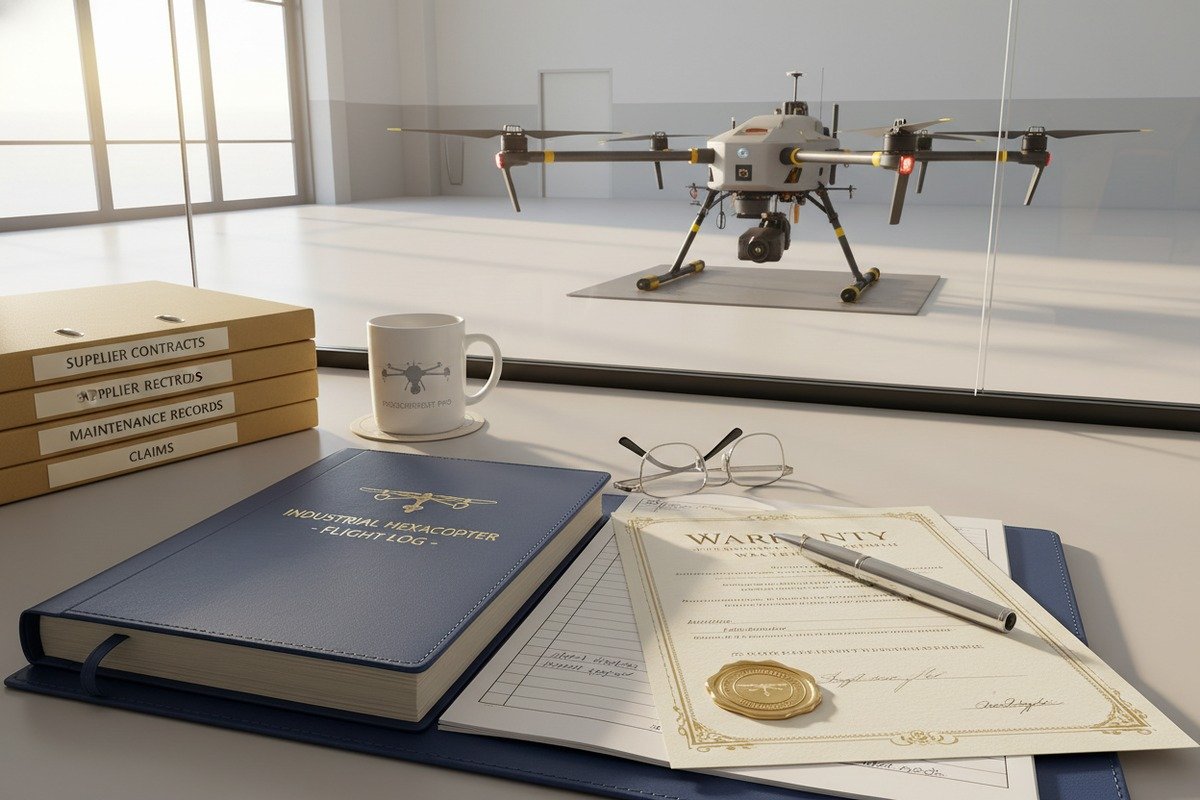
Our warranty department reviews claims daily. The difference between approved and denied claims often comes down to paperwork. Buyers with detailed maintenance logs, timestamped photos, and flight records receive faster approvals.
Keep records of:
- Every pre-flight inspection
- All firmware updates with version numbers
- Battery charge cycles and storage conditions
- Propeller replacements with dates
- Calibration procedures performed
- Storage location temperature and humidity
Without this documentation, proving "normal use" becomes your word against ours. Documented maintenance shows the drone received proper care.
Common Maintenance Failures That Void Coverage
| Maintenance Failure | Why It Voids Warranty | Prevention |
|---|---|---|
| Skipping calibrations | Uncalibrated sensors cause crashes attributed to defects | Follow calibration schedule exactly |
| Improper battery storage | Batteries stored charged or in heat degrade faster | Store at 40-60% charge, cool location |
| Ignoring firmware updates | Known bugs may cause failures addressed in updates | Update within 30 days of release |
| Wrong lubricants | Incorrect products damage seals and bearings | Use only manufacturer-specified products |
| Delayed inspections | Damage propagates from minor to catastrophic | Inspect after every flight session |
Storage Conditions Matter More Than You Think
Agricultural drones often sit unused during off-seasons. Improper storage during these months causes more warranty-voiding damage than active flight.
Batteries require special attention. Storing Lithium-Batterien 8 fully charged accelerates degradation. Storing them completely discharged causes cell damage. The ideal storage charge is 40-60% capacity in a cool, dry location.
Temperature extremes damage electronics, plastics, and lubricants. A drone stored in a hot barn or freezing shed may look fine externally. Internally, thermal cycling stresses solder joints and degrades seals.
Moisture creates corrosion. Even drones with IP ratings suffer from prolonged humidity exposure. Desiccants in storage cases help. Climate-controlled storage is better.
The Unauthorized Repair Trap
When something breaks, the temptation to fix it yourself is strong. Resist this temptation if warranty coverage matters.
Opening sealed components voids coverage immediately. Using non-OEM replacement parts voids coverage. Repairs by uncertified technicians void coverage. Even well-intentioned repairs create warranty problems.
Our service centers see drones with obvious home repairs. Mismatched screws. Silicone sealant in wrong places. Soldering burns on circuit boards. These repairs void warranties even if they did not cause the current problem.
Contact manufacturer support before attempting any repairs. Many issues have simple solutions that maintain warranty status. Unauthorized repairs never maintain warranty status.
Schlussfolgerung
Understanding warranty exclusions before purchasing saves money and frustration. Budget for consumables, consider hull insurance, maintain documentation, and follow manufacturer guidelines exactly. These practices protect your investment better than any warranty alone.
Fußnoten
1. Defines consumable parts in a legal and technical context, relevant to warranties. ︎
2. Defines the specific software restriction technology often targeted by unauthorized modifications. ︎
3. Provides a comprehensive overview of agricultural drones and their applications. ︎
4. Official source for Ingress Protection (IP) code definitions and testing standards. ︎
5. Provides a clear definition of hull insurance specifically within the context of aviation. ︎
6. Official FAA regulation page outlining requirements for commercial drone operations. ︎
7. Official FAA guidance on the specific certification required for agricultural dispensing operations. ︎
8. Authoritative educational resource on lithium battery characteristics, safety, and storage hazards. ︎

 English
  Spanish
  German
  French
  Dutch
Dutch  Arabic
