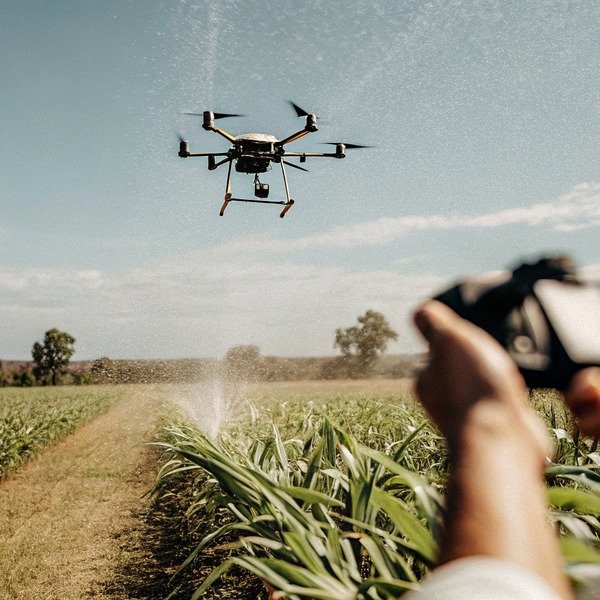
When we calibrate flight controllers in our Xi’an facility Fluglotsen 1, we know that advanced hardware is useless without proper knowledge. Buying a drone without comprehensive training documentation invites crashes, regulatory fines, and operational failure.
You should request a comprehensive package including digital and physical operation manuals, FAA Part 107 and Part 137 compliance guides, and maintenance logs. Essential materials also cover battery management protocols, specific mapping software tutorials, and emergency troubleshooting procedures to ensure safe, legal, and efficient agricultural spraying operations.
Let’s examine the specific documents and resources you need to secure before your shipment leaves the factory floor.
Do I need to ask for operation manuals in both digital and physical formats?
We often see pilots struggle in remote fields because they rely solely on cloud-based documentation on their tablets. A dead device battery or poor internet connection during a critical spray mission stops work immediately.
Yes, demanding both formats is crucial for operational reliability. Digital manuals allow for keyword searching and quick updates, while physical copies serve as a fail-safe during fieldwork where internet connectivity is unstable or devices fail. This dual approach ensures you always have access to critical flight procedures.

When we export our SkyRover units to the United States, we strongly advise our distributors to keep a hard copy of the manual in the transport vehicle. While digital PDFs are excellent for searching specific error codes or zooming in on wiring diagrams, the agricultural environment is harsh. Bright sunlight often makes tablet screens unreadable, and dirty hands covered in fertilizer or mud make touchscreens difficult to operate.
The Risk of Digital-Only Reliance
Field operations do not happen in a sterile office. In our experience, the most common point of failure isn't the drone itself, but the supporting infrastructure. If your tablet overheats in the summer sun or runs out of battery, you lose access to your digital manual. A physical manual never runs out of batteries. It allows your ground crew to troubleshoot a pump issue while the pilot maintains visual line of sight with the controller. visuelle Sichtlinie 2
Managing Version Control
However, physical manuals have a downside: they become outdated. We frequently update firmware to improve flight stability or spray efficiency. Therefore, you should request a digital repository access link from your supplier. This ensures that while you have a physical backup for emergencies, you also have the latest data on software changes.
Critical Checklist for Manual Content
Do not simply accept a generic "User Guide." You need to verify that the manuals cover the following specific areas. A generic manual often leads to confusion when dealing with specialized agricultural payloads.
| Manual Section | Physical Copy Priority | Digital Copy Priority | Reason |
|---|---|---|---|
| Verfahren für Notfälle | Hoch | Niedrig | Instant access needed without device boot-up time. |
| Firmware Update Logs | Niedrig | Hoch | Changes frequently; needs to be current. |
| Wiring Diagrams | Mittel | Hoch | Zooming capability is needed for small details. |
| Chemical Mixing Ratios | Hoch | Mittel | Used constantly in the field; needs to be durable. |
Should I request step-by-step video tutorials for daily drone operations?
Our engineers film hours of footage because reading about compass calibration is significantly harder than watching it. Text-only guides often lead to misinterpretation, causing costly setup errors that we then have to diagnose remotely.
Requesting video tutorials is highly recommended because visual demonstrations clarify complex mechanical tasks better than text. Videos should cover pre-flight calibration, tank refilling logistics, and cleaning procedures, significantly reducing the learning curve for new operators and standardizing daily workflows across your entire agricultural team.

Text manuals are excellent for reference, but they are poor for teaching physical movements. When you are learning how to swap a battery on a heavy agricultural drone or how to properly fold the arms for transport, static images can be confusing. We have found that customers who consume video content report 40% fewer setup incidents during their first week of operation.
Visualizing the "Pit Stop" Workflow
Efficiency in agricultural spraying is determined by the agricultural spraying 3 "pit stop"—the time the drone spends on the ground swapping batteries and refilling the tank. You should request videos that demonstrate this specific workflow. It is not just about flying; it is about the logistics on the ground. A video showing the most ergonomic way to lift the tank or the correct sequence for connecting the generator ensures your team avoids injury and equipment damage.
Software Interface Walkthroughs
Modern agricultural drones use complex mission planning software. mission planning software 4 Reading a sentence that says "Set the boundary offset to 2 meters" is different from seeing exactly which button to click on the interface. Request screen-recording tutorials for the specific Ground Control Station (GCS) software Ground Control Station (GCS) 5 Ground Control Station 6 provided. This is particularly important for mapping and setting obstacle avoidance parameters. obstacle avoidance 7
Bridging the Language Gap
Since many high-end agricultural drones are manufactured in China and exported to the West, translation errors can sometimes occur in written manuals. Video tutorials bridge this gap. Even if the voiceover or subtitles are not perfect, seeing the action performed correctly provides a universal language that helps you understand the mechanical requirements without ambiguity.
| Essential Video Module | Warum es wichtig ist |
|---|---|
| Calibration Series | Compass and IMU calibration are the most common causes of crashes if done wrong. |
| Cleaning Protocols | Shows how to wash corrosive chemicals off without damaging electronics. |
| Nozzle Maintenance | demonstratess how to disassemble and unclog spray tips properly. |
| Mission Planning | Screen recordings prevent software configuration errors before takeoff. |
What specific maintenance and troubleshooting guides will help minimize downtime?
We design our frames to endure harsh environments, but wear and tear is inevitable in industrial agriculture. Without clear repair guides, a simple clogged nozzle or a worn gasket can ground your entire fleet for days.
You must obtain detailed maintenance schedules and troubleshooting flowcharts specific to your drone model. These guides should address nozzle cleaning, pump maintenance, motor lifespan tracking, and error code interpretations. Having this information allows for immediate on-site repairs, preventing minor hardware issues from causing expensive operational delays.
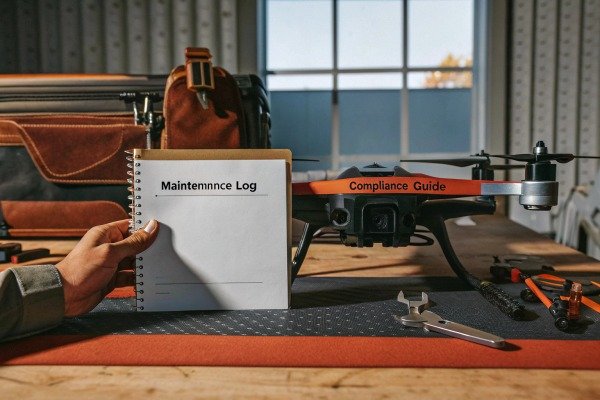
In the middle of the spraying season, you cannot afford to ship your drone back to a service center for every minor issue. You need to become your own first line of defense. The documentation you request must empower you to handle Level 1 and Level 2 repairs independently.
The "Check Engine Light" Problem
Industrial drones are equipped with sophisticated self-diagnostic systems. However, an error code like "0x442 Sensor Error" is useless without a translation key. You must request a comprehensive Error Code Lookup Table. This document should tell you three things: what the code means, whether it is safe to fly, and exactly which component needs to be checked.
Preventive Maintenance vs. Reactive Repair
Most standard manuals only tell you how to fix things when they break. You should ask for a Preventive Maintenance Schedule. This document acts like a service log for a car, telling you exactly when to replace parts before they fail. For example, we know that after 50 hours of flight, certain screws on the folding arms may loosen due to vibration. A guide that prompts you to tighten them at the 50-hour mark prevents a catastrophic mid-air structural failure.
Chemical Handling and System Flushing
The chemicals used in agriculture are often corrosive or sticky. corrosive or sticky 8 If a drone sits overnight with residue in the pumps, the system can seize. You need a specific guide on "End-of-Day Flushing Procedures." This should detail which cleaning agents are safe for the seals and hoses used in the drone. Using the wrong solvent can degrade the internal rubber components, leading to leaks.
| Komponente | Maintenance Action | Frequency Recommendation |
|---|---|---|
| Propeller | Check for cracks/chips | Pre-flight (Every flight) |
| Spray Nozzles | Ultrasonic cleaning | Every 20 operational hours |
| Motor Bearings | Listen for grinding noise | Every 50 operational hours |
| Battery Contacts | Clean oxidation | Wöchentlich |
| Pump Diaphragm | Inspect for leaks/wear | Every 100 operational hours |
Can I expect the supplier to provide remote training sessions for my technical team?
After shipping containers to the US, we realized that manuals aren’t enough for complex inquiries. Silence from a supplier when you have a technical glitch is frustrating, so we believe interactive support is essential for long-term success.
Reliable suppliers should offer remote training options, including live video conferences and screen-sharing sessions for software setup. While hands-on flight skills require physical practice, remote sessions are effective for mastering mission planning software, firmware updates, and regulatory compliance documentation, bridging the gap between the factory and your farm.

While we cannot physically grab the controller and fly the drone for you from across the ocean, remote training is surprisingly effective for the most difficult part of drone operations: the software and data side. The flying part is often easier to learn than the mission planning part.
What Can Be Taught Remotely?
You should request specific sessions dedicated to the "backend" work. This includes setting up RTK (Real-Time Kinematic) base stations Real-Time Kinematic 9, processing the maps you have captured, and managing flight logs for FAA Part 137 compliance. We can share screens and walk your procurement managers or technical leads through the exact sequence of clicks required to generate a prescription map for variable rate spraying variable rate spraying 10.
The Limitations of Remote Training
It is important to be realistic. We can explain how to react to an emergency, but we cannot build your muscle memory. For actual flight maneuvers, you should ask if the supplier has partnerships with local training academies in your region. However, for troubleshooting setup issues, remote video calls are often superior to on-site visits because they can be arranged immediately, rather than waiting for a technician to travel.
Navigating Time Zones and Language
When dealing with international suppliers, specifically from China, you should clarify the support hours. A "remote training session" is not helpful if it is scheduled at 3:00 AM your time. Professional exporters will have support teams that work overlapping hours with US or European time zones. Always ask: "Do you have English-speaking technical support available during my business hours?"
Building a Long-Term Knowledge Base
Record these remote sessions. Unlike a physical seminar, a Zoom or Teams call can be recorded and saved. This creates a permanent asset for your company. When you hire a new pilot six months later, they can watch the recording of the supplier explaining the software setup, ensuring consistent training standards without needing to pay for new sessions.
Schlussfolgerung
Comprehensive training materials are your safety net against operational failure. By requesting physical and digital manuals, video tutorials, maintenance logs, and remote software support, you ensure your investment yields crops rather than crashes.
Fußnoten
1. Technical definition of the drone’s stabilization hardware. ︎
2. Official FAA definition for safe drone operation under Part 107. ︎
3. FAO guidelines on equipment and safety for agricultural pesticide application. ︎
4. Professional software used for agricultural drone mapping and planning. ︎
5. Technical overview of mission planning software systems. ︎
6. Definition and components of the interface used to control UAVs. ︎
7. Research publication regarding obstacle avoidance systems in agricultural UAVs. ︎
8. ISO standards for equipment used in crop protection and chemical handling. ︎
9. Technical background on high-precision satellite navigation used in drones. ︎
10. Educational resource on precision agriculture application methods. ︎

 English
  Spanish
  German
  French
  Dutch
Dutch  Arabic
