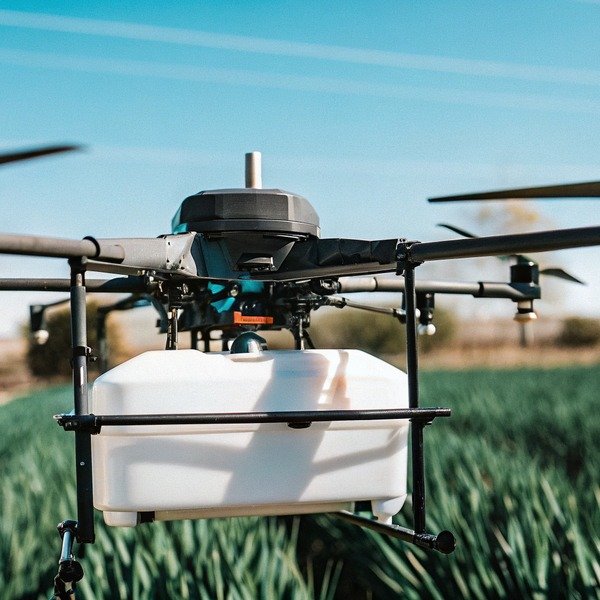
When our engineering team in Xi’an designs flight control software, we constantly balance ease of use with strict security protocols Blue UAS 1. We know that if a competitor or hacker accesses your crop yield data, the financial consequences can be devastating for your farm business.
To protect your operations, you must ask vendors about data ownership rights, the specific encryption standards used for transmission, and whether flight logs are stored locally or on the cloud. Additionally, verify if the system supports offline modes and complies with local privacy regulations like GDPR or NDAA requirements.
Below, we break down the critical questions you need to ask to ensure your farm’s digital perimeter is as secure as your physical fences.
Who owns the agricultural data collected by the drone and can the manufacturer access it?
We often encounter clients in the United States who are hesitant to adopt new technology because they fear their proprietary soil maps will be sold to third parties. This is a valid concern that we address directly in our user agreements to build trust.
Farmers should legally own all raw imagery and processed agronomic data collected by their drones. Ensure your contract explicitly states that the manufacturer cannot access, use, or sell your proprietary field data without your clear, written consent for every specific instance.

Understanding Data Sovereignty
When you buy a piece of hardware, you naturally assume you own everything it produces. However, in the world of smart agricultural machinery, this is not always true. Many manufacturers include clauses in their Terms of Service (ToS) that grant them a license to use your data.
You need to ask the vendor for a clear definition of "Data Ownership." It is not enough for them to say, "You own your data." You need to know if they retain a "perpetual, irrevocable, royalty-free license" to use that data for their own purposes. If they do, they could technically aggregate your yield data with thousands of other farms and sell that market intelligence to hedge funds or commodity traders. This puts you at a competitive disadvantage using your own information.
The "Service Improvement" Loophole
A common gray area we see in the industry is the "Service Improvement" clause. Vendors often claim they need access to your flight logs and camera feeds to "improve algorithm accuracy" or "debug system errors." While this is sometimes necessary for technical support, it should not be the default setting.
You should ask if you can opt-out of data sharing programs. If the drone requires a constant internet connection to function, and automatically sends diagnostic data back to the manufacturer, you have lost control. We recommend systems that allow you to approve data transmission on a case-by-case basis. For example, if your drone malfunctions, you should be the one to decide if you want to send the log file to the support team, rather than the machine sending it automatically.
Distinguishing Between Data Types
It is helpful to distinguish between the types of data your drone collects. Ask the vendor how they handle these specific categories:
- Telemetry Data: This includes flight paths, battery voltage, and motor speed. This is less sensitive but can reveal your operational schedule.
- Payload Data: This is your multispectral imagery, video feeds, and spray rates. This is highly sensitive intellectual property (IP).
- Metadata: This includes GPS coordinates and timestamps. This pinpoints exactly where your high-value crops are located.
Table 1: Data Ownership Red Flags vs. Green Flags
| Merkmal | Green Flag (Safe) | Red Flag (Risky) |
|---|---|---|
| Ownership Clause | "Customer retains 100% exclusive rights." | "Vendor retains a non-exclusive license to use data." |
| Data Access | Access granted only upon customer request for support. | Manufacturer has continuous remote access to logs. |
| Third-Party Sharing | Explicitly forbidden in the contract. | Permitted for "affiliates" or "partners." |
| Data Portability | You can download and delete data anytime. | Data is locked in a proprietary format. |
| Deletion Policy | "Permanent deletion upon request." | "Data retained for archival purposes." |
By clarifying these points, you ensure that the map of your farm remains your property, not a product for the manufacturer to sell.
Is the flight data stored locally on the device or automatically uploaded to a cloud server?
In our experience configuring systems for remote farms with poor internet connectivity, we have found that local storage is not just a security feature but a necessity. Relying on mandatory cloud uploads creates a vulnerability point that many farmers simply cannot afford.
Always ask if the drone system offers a fully offline mode where data resides solely on the onboard SD card or internal memory. Automatic cloud syncing should be an optional feature that requires manual activation, ensuring sensitive field boundaries remain private.

The Risk of "Cloud-First" Architecture
Many modern tech companies push a "cloud-first" approach. This means as soon as the drone lands, or even while it is flying, it tries to upload images and logs to a remote server. While this offers convenience for backing up data, it introduces significant risks.
If your data is automatically uploaded, it enters a chain of custody you cannot control. The data travels from the drone to the controller, to your mobile device, to a cell tower, and finally to a server that might be hosted in a different country. Every step in this journey is a potential interception point.
You need to ask the vendor: "Can this drone complete a full mission—from planning to spraying to landing—without ever connecting to the internet?" If the answer is no, the device is essentially a tracking beacon.
Physical Security of Onboard Storage
When data is stored locally, the physical security of the device becomes the primary concern. Most agricultural drones use SD cards or internal solid-state drives (SSDs).
You should ask if the onboard storage is encrypted. If you lose your drone in a field, or if it is stolen from your truck, can the thief simply pop out the SD card and view your farm layout? High-end systems should offer password protection GDPR (General Data Protection Regulation) 2 Allgemeine Datenschutzverordnung 3 or encryption for the storage media. This means that even if the hardware is lost, the data remains unreadable without the decryption key.
Local Data Modes and Air-Gapping
For high-security operations, such as farms growing proprietary seed strains or government-contracted land, "air-gapping" is the gold standard. An air-gapped system is one that physically has no connection to the internet.
Ask the manufacturer if they have a specific "Local Data Mode" (LDM). Local Data Mode 4 When this mode is active, the software should completely cut off network traffic. This prevents the app from accidentally leaking data in the background. We often advise our clients to use dedicated tablets for flight control that do not have SIM cards installed, ensuring that the only way data leaves the device is via a USB cable attached by the owner.
Hybrid Storage Solutions
Some farmers prefer a middle ground. They want the security of local storage but the backup capability of the cloud. If you choose a vendor with a hybrid option, you must understand the synchronization rules.
Table 2: Comparison of Data Storage Architectures
| Merkmal | Local Storage Only | Cloud-Based Storage | Hybrid (User Controlled) |
|---|---|---|---|
| Datenschutz | Highest (Data stays with you) | Low (Data on 3rd party servers) | High (You choose what to upload) |
| Erreichbarkeit | Limited to the physical device | Access from anywhere | Access locally, backup manually |
| Internet Dependency | Keine | High (Requires strong signal) | Low (Upload when Wi-Fi is available) |
| Risk of Data Loss | High (If device is damaged) | Low (Server backups) | Low (Best of both worlds) |
| Cyber Risk | Physical theft only | Hacking, Server Breaches | Mäßig |
Asking these questions ensures that you are not inadvertently broadcasting your farm's activities to the world every time you power on your drone.
What encryption protocols are used to protect the link between my drone and the ground station?
Our research and development team spends months testing signal transmission stability, but we also focus heavily on signal hardening. A strong signal that is easy to hack is a liability, not an asset, especially in competitive agricultural regions.
You need to confirm that the drone utilizes AES-256 AES-256 (Advanced Encryption Standard) 5 encryption for both command-and-control links and video transmission. This industrial-grade standard prevents third parties from intercepting video feeds or hijacking flight controls, keeping your operational data secure during active missions.
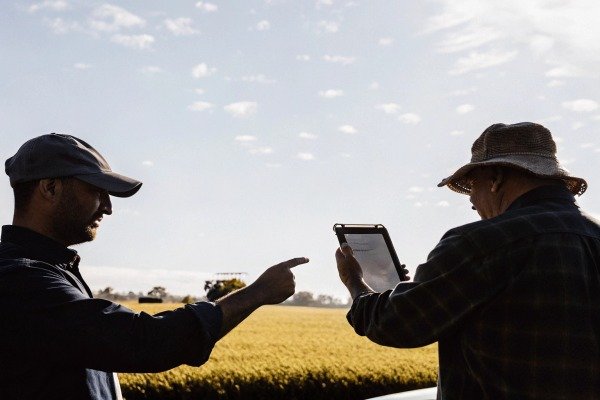
Why Encryption Matters in Agriculture
You might wonder why a hacker would want to intercept a tractor drone. The threat is not always about stealing data; sometimes it is about disruption. "Spoofing" or "Hijacking" involves a third party overpowering the signal between your remote controller and the drone.
If the command link is not encrypted, a malicious actor with a simple radio transmitter could theoretically take control of your drone. In a best-case scenario, they land it. In a worst-case scenario, they could crash it into a building or dump your expensive chemical payload in the wrong area. This is why you must ask specifically about "Command and Control (C2) Link Encryption."
The Standard: AES-256
When questioning a vendor, look for the term AES-256 (Advanced Encryption Standard). This is the same level of encryption used by banks and governments.
Do not settle for vague answers like "We use secure proprietary protocols." Proprietary protocols are often less secure because they haven't been tested by the global security community. Open standards like AES are rigorous. Open standards like AES 6
You should also ask if the video feed is encrypted separately. Sometimes manufacturers encrypt the control link (so nobody can steal the drone) but leave the video feed unencrypted to reduce latency. This means anyone with a receiver nearby could watch what your drone sees in real-time. For precision agriculture, where you might be scouting Präzisionslandwirtschaft 7 for disease or assessing crop readiness, that video feed is proprietary business intelligence.
Key Management and Pairing
Encryption is only as good as the keys used to lock it. Ask the vendor how the drone pairs with the controller.
- Static Keys: Does every drone from the factory use the same default password? This is a major security failure.
- Dynamic Pairing: Does the system generate a unique encryption key every time you bind a new controller? This is the preferred method.
Also, inquire about "Frequency Hopping Spread Spectrum" (FHSS). Frequency Hopping Spread Spectrum 8 While not strictly encryption, this technology makes the signal jump between different frequencies thousands of times per second. This makes it much harder for someone to listen in on the signal or jam it.
Table 3: Common Encryption Standards and Their Security Levels
| Protocol Name | Sicherheitsstufe | Recommended? | Anmerkungen |
|---|---|---|---|
| WEP / WPA | Sehr niedrig | No | Outdated Wi-Fi standards, easily cracked. |
| OcuSync (DJI) | Hoch | Yes | Uses proprietary encryption on top of standard protocols. |
| AES-128 | Mittel | Acceptable | Good balance of speed and security. |
| AES-256 | Sehr hoch | Yes | The industry gold standard for protection. |
| Unencrypted Analog | Keine | No | Anyone with a generic receiver can watch the feed. |
By insisting on AES-256, you ensure that the invisible cable connecting you to your machine is unbreakable.
How can I ensure the drone system complies with my region's specific data privacy laws?
When we prepare our export documentation for European and North American markets, we have to navigate a complex web of legal requirements. We know that using non-compliant hardware can result in fines or the grounding of your fleet.
Verify that the manufacturer holds certifications relevant to your location, such as GDPR compliance for Europe or specific NDAA compliance for the United States. Ask for documentation proving their data servers are located within your country’s borders to meet data residency requirements.
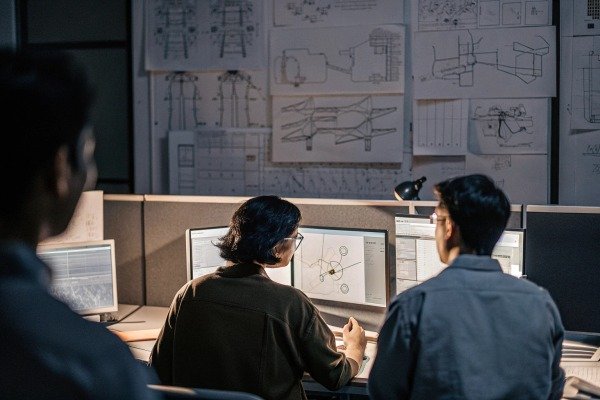
Data Residency and Server Location
One of the most critical questions for modern procurement is: "Where does the server live?"
Different countries have different laws about government access to data. For example, if you are in the European Union, the GDPR (General Data Protection Regulation) mandates strict controls on personal data. If your drone uploads data to a server in a country with weak privacy laws, you might be violating GDPR.
For US customers, this is even more specific. You should ask if the data is stored on servers located physically within the United States (e.g., AWS US-East or AWS US-East 9 Azure US-Central). This concept is called "Data Residency." If the vendor uses servers in their home country to store your data, that data is subject to ihre local laws, which might allow their government to inspect it.
The NDAA Issue (United States Context)
If you are in the US, or work with US government contracts (like forestry services or state-funded university research), you need to ask about NDAA (National Defense Authorization Act) compliance.
The NDAA has listed specific foreign manufacturers that are banned from federal procurement due to security concerns. Even if you are a private farmer, buying a drone from a banned entity might affect your ability to get future government grants or contracts. You should ask the vendor: "Is your company or any component supplier on the US Entity List or subject to NDAA restrictions? US Entity List 10"
Recently, there has been a push for "Blue UAS" or Green UAS lists, which are drones cleared for government use. While agricultural drones don't always need this level of clearance, buying a compliant system is a good way to future-proof your investment against changing regulations.
Third-Party Components and Supply Chain
Compliance isn't just about the brand on the box; it's about the parts inside. A drone might be assembled in one country, but the communication module or the camera might come from another.
You should ask for a "Bill of Materials" or a supply chain transparency statement. If the Wi-Fi module contains firmware from a restricted vendor, that could be a security backdoor.
Audits and Certifications
Finally, do not just take their word for it. Ask for third-party audit reports.
- SOC 2 Type II: This certification means an independent auditor has verified the company's cloud security practices.
- ISO 27001: This is an international standard for information security management.
If a drone manufacturer has invested the time and money to get these certifications, it shows they take data privacy seriously. It shifts the trust from a handshake to a verifiable standard.
Schlussfolgerung
Securing your farm means more than locking the gate; it means securing the digital data that drives your decisions. By asking tough questions about data ownership, local storage options, encryption standards like AES-256, and regulatory compliance, you can enjoy the efficiency of drone technology without compromising your privacy. Always demand transparency from your vendor—after all, it is your land and your data.
Fußnoten
1. Official US Department of Defense page for approved drones. ︎
2. Official European Commission page outlining data protection regulations. ︎
3. Official EU guidance on data protection laws mentioned in the text. ︎
4. Manufacturer documentation for the specific security feature mentioned. ︎
5. Official NIST publication defining the encryption standard. ︎
6. Official NIST publication for the AES encryption standard discussed. ︎
7. Provides a general overview of the concept mentioned in the article. ︎
8. Explains the technical concept of FHSS used in drone signals. ︎
9. Official documentation for AWS regions mentioned regarding data residency. ︎
10. Official US Department of Commerce list of restricted entities. ︎

 English
  Spanish
  German
  French
  Dutch
Dutch  Arabic
