
When our engineering team first started testing firefighting drones at elevations above 3,000 meters, we quickly learned that standard specs on paper rarely match real-world performance. Many buyers face this same frustration—purchasing drones that claim impressive altitude ratings, only to discover they struggle with heavy payloads in thin mountain air.
When buying firefighting drones, consider a maximum takeoff altitude between 4,000 and 6,000 meters for versatile deployment. This range ensures effective operation in high-elevation wildfires and mountainous terrain while maintaining stable lift with firefighting payloads up to 150 kilograms.
Understanding altitude specifications goes beyond checking a single number. It requires examining how thin air, temperature extremes, and heavy loads interact. Let me walk you through the key factors our team evaluates when helping clients select the right firefighting drone for their specific terrain.
How does the maximum takeoff altitude affect my drone's performance in high-elevation firefighting scenarios?
At our testing facility in the Qinling Mountains, we've seen firsthand how altitude transforms drone behavior. A drone that performs flawlessly at sea level can become sluggish and unstable at 3,000 meters. This creates serious risks when fighting fires in elevated terrain.
Maximum takeoff altitude directly impacts lift capacity, motor efficiency, and flight stability in high-elevation firefighting. At 4,000 meters, air density drops by roughly 40%, requiring propellers to spin faster and motors to work harder, which reduces payload capacity by 20-50% compared to sea level operations.

Why Air Density Matters
Air density 1 decreases as altitude increases. This simple physics principle affects every aspect of drone flight. Propellers generate lift by pushing air downward. When that air is thinner, each blade rotation produces less lift.
Our engineers measure this effect carefully. A drone carrying 100 kilograms at sea level might only lift 60-70 kilograms at 4,500 meters. For firefighting operations, this difference determines whether your drone can deliver fire retardant 2 effectively or not.
Real Performance at Different Elevations
| Elevation | Air Density Loss | Typical Payload Reduction | Motor Load Increase |
|---|---|---|---|
| Sea Level | 0% | 0% | Baseline |
| 2,000m | ~20% | 10-15% | +15% |
| 4,000m | ~40% | 25-35% | +30% |
| 6,000m | ~50% | 40-50% | +45% |
When we export drones to clients in Colorado or the Swiss Alps, we always discuss these numbers honestly. A client purchasing drones for Rocky Mountain wildfires needs equipment rated for at least 4,500 meters—not because fires burn that high, but because the drone must take off from elevated staging areas while fully loaded.
Temperature Compounds the Problem
High altitude brings cold air. At 5,000 meters, temperatures regularly drop below -20°C. Cold affects battery chemistry, reducing capacity by 15-30%. It also makes plastic components brittle and lubricants thick.
Our production line now includes cold-weather battery packs specifically for high-altitude firefighting models. These packs use insulated housings and internal heating elements to maintain optimal cell temperatures during mountain operations.
Motor and Propeller Considerations
In thin air, motors must spin propellers faster to achieve the same lift. This increases current draw and heat generation. Poorly designed systems overheat and fail.
We specify high-KV motors 3 with efficient cooling for our altitude-rated drones. The propeller pitch 4 also changes—higher-altitude models use steeper blade angles to grab more air per revolution.
Can I customize the propulsion system to ensure my drones operate safely at higher altitudes?
During our collaboration with a European fire department last year, they needed drones capable of operating in Alpine terrain above 3,500 meters. Their existing fleet struggled with payload delivery. We worked together on a propulsion upgrade that transformed their capability.
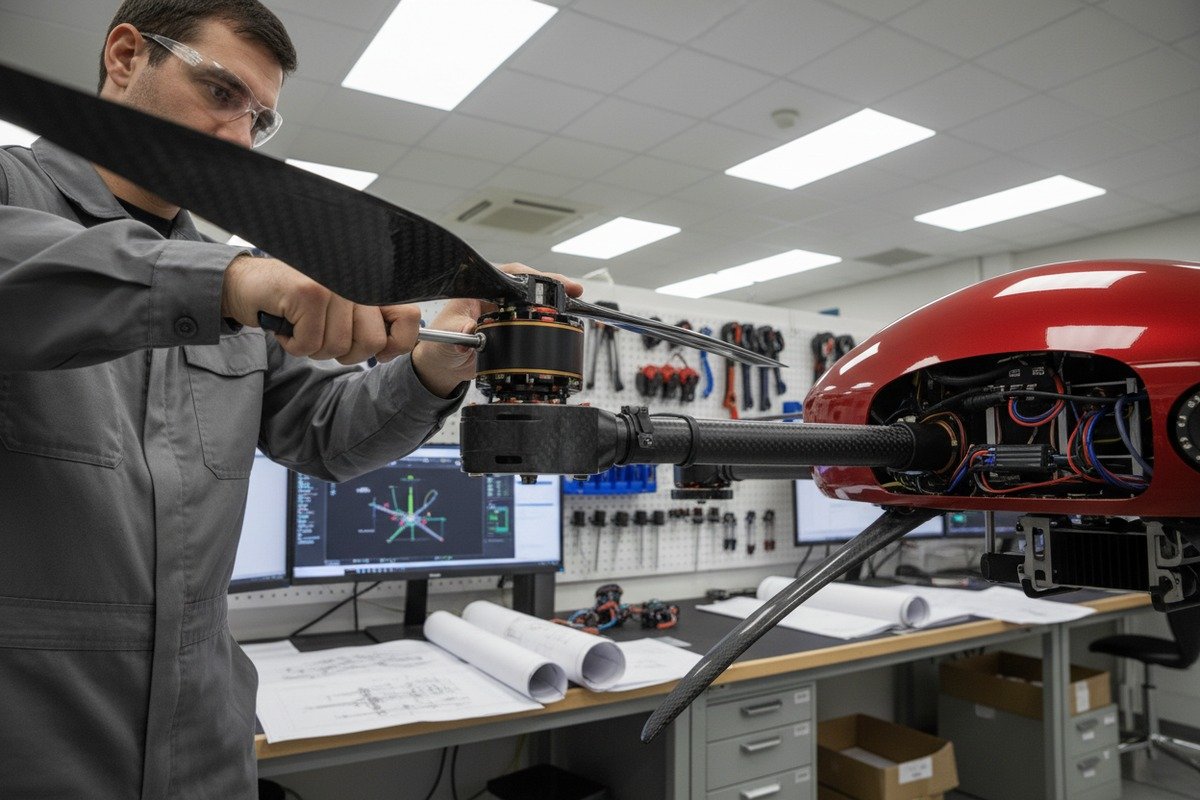
Yes, propulsion systems can be customized for higher altitude operations through larger propellers, higher-KV motors, optimized ESCs, and altitude-compensating firmware. These modifications increase lift at reduced air densities but require careful engineering to balance power consumption, heat management, and flight endurance.
Key Components for Altitude Optimization
Customizing propulsion involves several interconnected systems. Each modification affects others, so changes must be coordinated.
Propeller Selection: Larger diameter propellers sweep more air volume. Increasing from 28-inch to 32-inch propellers can recover 15-20% of lost high-altitude lift. However, larger propellers require stronger motors and frames.
Motor Specifications: Higher-KV motors spin faster at the same voltage. For altitude work, we recommend motors with 10-15% higher KV ratings than standard configurations. These must pair with upgraded cooling systems.
Elektronische Drehzahlregler: ESCs must handle increased current demands. High-altitude propulsion draws 20-40% more power than sea-level operation. Elektronische Drehzahlregler 5 We specify ESCs with at least 30% current headroom above calculated maximums.
Propulsion Customization Options
| Komponente | Standard Spec | High-Altitude Spec | Performance Gain |
|---|---|---|---|
| Propeller Diameter | 28" | 32" | +18% lift |
| Motor KV Rating | 100 KV | 115 KV | +15% RPM |
| ESC Current Rating | 80A | 120A | Safety margin |
| Battery Cells | 12S | 14S | +16% power |
| Cooling System | Passive | Active forced air | -25°C motor temp |
Software and Firmware Adjustments
Hardware alone doesn't solve altitude challenges. Flight controllers need altitude-compensating algorithms.
Our firmware team develops altitude profiles that automatically adjust PID gains 6, throttle curves, and motor response based on barometric pressure readings 7. When the drone detects it's operating at 4,000 meters, it shifts to a high-altitude tuning set that accounts for reduced control authority.
This software layer prevents the sluggish response pilots often experience at elevation. Without it, even properly powered drones feel unresponsive and difficult to control precisely—dangerous when dropping fire retardant on specific targets.
Balancing Power and Endurance
Every altitude modification increases power consumption. Larger propellers, faster motors, and higher voltages all drain batteries faster. This creates a trade-off between altitude capability and mission duration.
For firefighting applications, we typically recommend accepting a 15-20% flight time reduction in exchange for reliable high-altitude performance. A 45-minute sea-level drone might achieve 35-38 minutes at 4,000 meters with proper modifications.
Some clients request hybrid solutions—swappable propeller sets for different mission profiles. Sea-level operations use efficiency-optimized props, while mountain deployments switch to high-altitude configurations.
What should I look for in a supplier's testing reports to verify high-altitude flight stability?
When our quality control team prepares test documentation for export shipments, we include specific altitude verification data. Unfortunately, many suppliers provide vague claims without substantive proof. Knowing what to demand protects your investment.
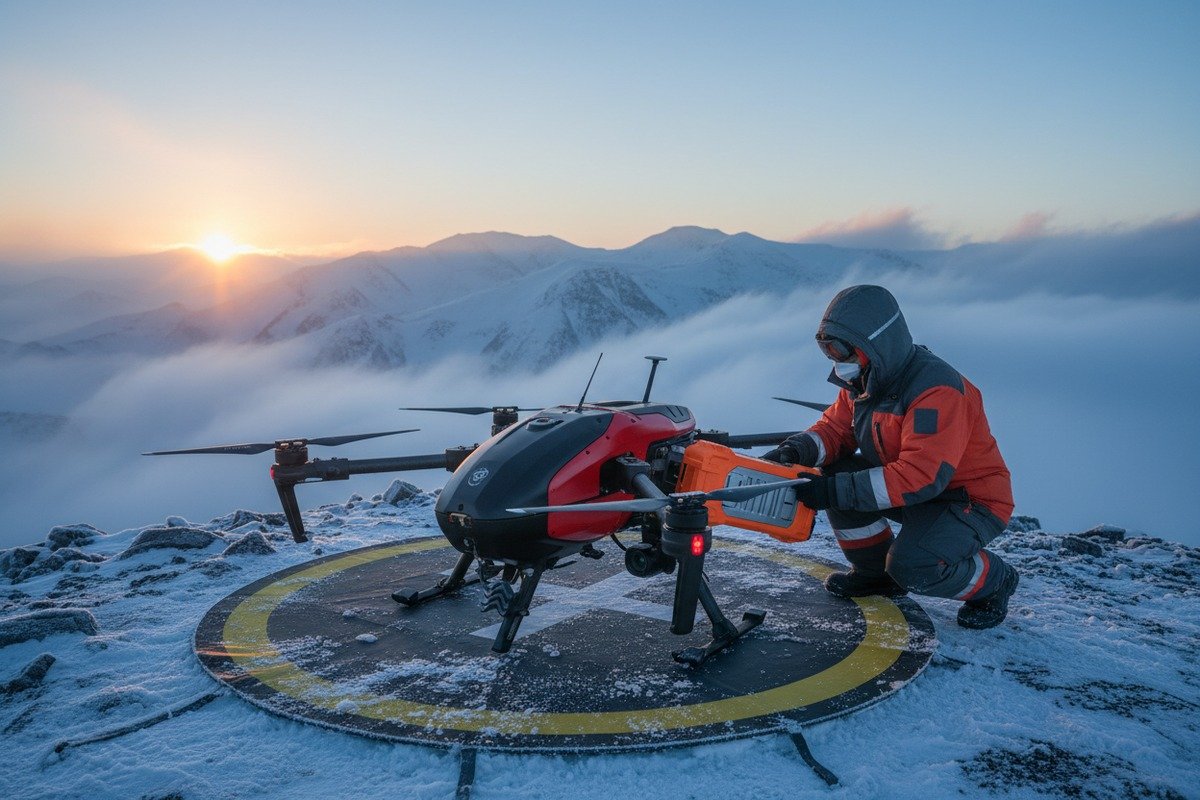
Supplier testing reports should include actual flight logs from verified high-altitude locations, vibration analysis data, motor temperature readings under load, GPS accuracy metrics at elevation, and payload delivery precision tests. Request video documentation and independent third-party verification for altitudes above 4,000 meters.
Essential Documentation Elements
Trustworthy suppliers provide comprehensive testing packages. Missing elements suggest inadequate validation.
Flight Log Data: Raw telemetry from actual high-altitude flights, not simulations. Logs should show GPS coordinates confirming elevation, timestamp verification, motor current draws, battery voltage curves, and attitude sensor readings. We archive complete flight logs for every altitude-rated unit we ship.
Environmental Conditions: Testing date, ambient temperature, humidity, wind speed, and barometric pressure. A drone tested on a calm, warm day at 4,000 meters performs differently than one tested in cold, windy conditions at the same altitude.
Payload Configuration: Exact payload weight during testing. Some suppliers test at maximum altitude with zero payload—a misleading practice. Insist on loaded testing that matches your operational requirements.
Critical Test Metrics to Review
| Test Kategorie | Key Metrics | Zulässiger Bereich | Rote Fahnen |
|---|---|---|---|
| Vibration | X/Y/Z axis acceleration | <0.3g RMS | >0.5g indicates instability |
| Motor Temperature | Max temp under load | <85°C | >100°C suggests cooling failure |
| GPS Accuracy | Position hold deviation | <2m horizontal | >5m compromises precision |
| Hover Stability | Altitude variance | <1m | >3m indicates control issues |
| Payload Precision | Drop accuracy | <3m radius | >10m unsuitable for targeting |
Verifizierung durch Dritte
Independent testing adds credibility. Ask whether reports include certification from recognized aviation testing laboratories.
In China, we work with CAAC-affiliated testing centers for altitude verification. European clients often request TÜV or DNV certification. US buyers may ask for compliance with specific ASTM standards 8 for unmanned aircraft.
These third-party reports cost extra but provide assurance that specifications aren't inflated marketing claims.
Video and Photo Documentation
Written reports can be fabricated. Request video showing complete test flights with visible GPS altitude readouts and identifiable landmarks confirming location.
Our standard practice includes timestamped video of altitude tests with clear shots of onboard displays showing telemetry data. We overlay external GPS verification from separate handheld units to confirm the drone's reported altitude matches actual elevation.
Fragen an Ihren Lieferanten
When reviewing altitude test documentation, ask pointed questions:
- What specific location was used for altitude testing?
- What was the ambient temperature during tests?
- What payload weight was carried during maximum altitude tests?
- How many test flights were conducted at each altitude?
- What failure modes occurred during testing, and how were they resolved?
Evasive answers or refusal to provide detailed data should raise concerns. Reputable manufacturers welcome technical questions because thorough testing represents significant investment they're proud to demonstrate.
How will operating at maximum takeoff altitude impact my drone's battery life and mission duration?
Our battery engineering team spent eighteen months developing cells specifically for high-altitude firefighting operations. The challenge isn't just capacity—it's maintaining performance when every environmental factor works against you.
Operating at maximum takeoff altitude typically reduces battery life by 25-40% compared to sea level. This results from increased motor power demands in thin air, reduced battery efficiency in cold temperatures, and higher current draws to maintain stable flight. Plan missions at 60-75% of sea-level endurance ratings for high-altitude operations.

The Triple Drain Effect
At high altitude, three factors simultaneously attack battery performance.
Power Demand Increase: Motors work harder to generate lift in thin air. Current draw increases by 20-40% depending on altitude and payload. A motor drawing 30 amps at sea level might pull 40-45 amps at 4,500 meters with the same payload.
Cold Temperature Impact: Battery chemistry slows in cold conditions. Lithium-polymer cells 9 lose 1-2% capacity for every 10°C below 25°C. At -15°C, common at 5,000 meters, capacity drops 20-30% before any power is consumed.
Reduced Charging Efficiency: Between missions, batteries recover more slowly in cold environments. Field charging at altitude takes longer and achieves lower peak capacity.
Altitude vs. Flight Time Comparison
| Altitude | Temperatur | Power Increase | Cold Loss | Net Flight Time |
|---|---|---|---|---|
| Sea Level | 25°C | Baseline | 0% | 45 minutes |
| 2,000m | 15°C | +15% | -5% | 36 minutes |
| 4,000m | 0°C | +30% | -15% | 28 minutes |
| 5,000m | -10°C | +40% | -25% | 22 minutes |
| 6,000m | -20°C | +45% | -30% | 18 minutes |
Battery Technologies for Altitude Operations
Standard lithium-polymer batteries struggle above 3,000 meters. High-altitude applications benefit from specialized cell technologies.
Heated Battery Packs: Internal heating elements maintain cell temperature above 15°C regardless of ambient conditions. Our heated packs add 200-300 grams but preserve 90%+ of rated capacity at extreme altitude.
High-Discharge Cells: Cells rated for 25C or higher discharge handle the increased current demands without voltage sag. Standard 15C cells experience voltage drops that trigger low-battery warnings prematurely.
Insulated Housings: Foam-lined battery compartments reduce heat loss during flight. Simple insulation extends effective flight time by 10-15% in cold conditions.
Mission Planning Strategies
Smart operators adjust mission profiles for altitude operations.
Staged Approaches: Rather than flying directly to maximum altitude with full payload, stage equipment upward. Drop partial loads at intermediate elevations, return for more, and build stockpiles closer to fire locations.
Battery Rotation: Carry extra battery sets and keep spares warm in insulated cases or vehicle cabs. Swap batteries before they reach critical levels, allowing each pack shorter duty cycles that preserve long-term capacity.
Conservative Reserves: At altitude, maintain 30-35% battery reserve instead of the typical 20%. Unexpected wind or temperature changes can rapidly drain remaining capacity. Running batteries to minimum at 5,000 meters leaves no margin for emergencies.
Long-Term Battery Health
Altitude operations accelerate battery wear. The high-current draws and temperature cycling stress cells more than gentle sea-level flying.
We recommend reducing altitude battery cycle expectations by 30-40%. A battery rated for 300 cycles at sea level might achieve only 180-200 cycles with regular high-altitude use. Factor replacement costs into operational budgets.
Schlussfolgerung
Selecting the right maximum takeoff altitude for firefighting drones requires understanding how thin air, cold temperatures, and heavy payloads interact. For most applications, drones rated between 4,000-6,000 meters provide the versatility needed for varied terrain while maintaining practical payload and endurance capabilities.
Fußnoten
1. Explains air density and its impact on aircraft performance. ︎
2. Official information on the composition and use of fire retardants. ︎
3. Explains KV rating and its impact on drone motor performance. ︎
4. Replaced with a comprehensive guide explaining drone propellers, including pitch. ︎
5. Replaced with a detailed guide on Electronic Speed Controllers for drone motors. ︎
6. Explains the principles and tuning of PID controllers in multicopters. ︎
7. Replaced with an article explaining how barometric pressure sensors monitor altitude in drones. ︎
8. Replaced with the official ASTM page for Unmanned Aircraft Systems (UAS) standards. ︎
9. Replaced with the Wikipedia page for Lithium polymer battery, an authoritative general source. ︎

 English
  Spanish
  German
  French
  Dutch
Dutch  Arabic
