When we test new prototypes at our facility in Chengdu, we constantly see how quickly heavy equipment drains batteries during critical missions. Fire chiefs frequently tell us they need gear that lasts longer without sacrificing strength, yet many still rely on outdated materials that fail under stress.
Carbon fiber firefighting drones provide a superior strength-to-weight ratio, allowing for 40-50% weight reduction compared to aluminum. This material choice significantly extends flight endurance, enhances thermal resistance up to 60°C, and ensures structural durability against corrosion and fatigue in harsh industrial fire environments.
Let’s break down exactly why this advanced material changes the operational capabilities of your fleet.
Can carbon fiber materials withstand the high temperatures I encounter during fire rescue operations?
We know the heat near a blaze is intense, often putting standard equipment at risk. When we design our frames, we worry about the warping that ruins expensive sensors, which is why we moved away from materials that cannot handle the heat of a rescue zone.
Yes, high-quality carbon fiber composites maintain structural rigidity and dimensional stability in temperatures exceeding 60°C. Unlike thermoplastics that warp or aluminum that expands, carbon fiber has a near-zero coefficient of thermal expansion, protecting sensitive flight controllers and sensors from heat-induced failure during close-range fire suppression.
The Science of Thermal Stability
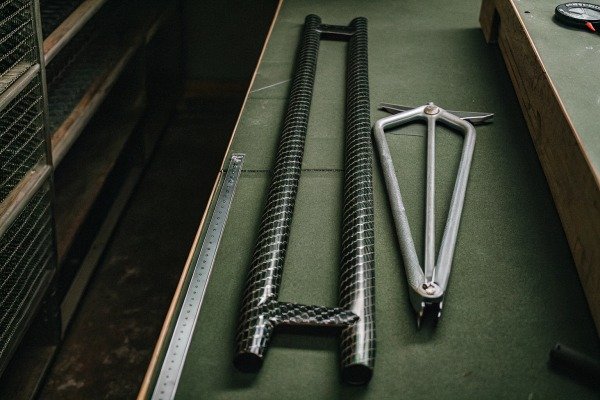
In the field of aerial firefighting, temperature fluctuation is a constant enemy. Brandbekämpfung aus der Luft 1 Standard materials react poorly to the rapid shift from cool ambient air to the intense heat of a fire front. From our engineering perspective, the primary reason we utilize carbon fiber is its incredibly low coefficient of thermal expansion 2 coefficient of thermal expansion (CTE).
When aluminum is exposed to high heat, it expands. This might seem microscopic, but in a precision instrument like a drone, even a millimeter of expansion can throw off the center of gravity or misalign the motor mounts. This causes vibration, which ruins the video feed from your thermal cameras. Wärmebildkameras 3 Plastics are even worse; they soften and warp, leading to catastrophic structural failure. Carbon fiber, however, remains dimensionally stable. It does not expand or warp significantly when exposed to the radiant heat of a fire (up to its resin's glass transition temperature, often engineered to be very high glass transition temperature 4).
Protecting Internal Electronics
The structural frame acts as a shield for the avionics. If the frame conducts heat too well—like metal metal fatigue 5 does—it cooks the flight controller, battery management system, and GPS modules inside. Carbon fiber composites have different thermal conductivity properties depending on the weave and resin used, but generally, they do not soak up and transfer heat as rapidly as a raw aluminum chassis would.
This thermal barrier is critical for mission safety. It ensures that while the outside of the drone is enduring harsh conditions, the internal logic boards remain within their operating temperature range. This reliability allows operators to push closer to the fire source for more accurate suppressant drops without fearing that the drone will essentially melt or overheat mid-flight.
Material Comparison in High-Heat Zones
The following table illustrates why we prioritize carbon fiber for high-temperature environments compared to traditional hobbyist or lower-grade industrial materials.
| Merkmal | Carbon Fiber Composites | Aluminum ( Aviation Grade) | Thermoplastics (ABS/Polymer) |
|---|---|---|---|
| Heat Deflection | High (Maintains shape) | High (Expands) | Low (Warps/Melts) |
| Thermal Expansion | Near Zero | Mäßig | Hoch |
| Heat Transfer | Gering bis mäßig | High (Conductive) | Niedrig |
| Structural Integrity at 60°C+ | Ausgezeichnet | Good, but heavier | Poor (Softens) |
How does the lightweight nature of carbon fiber improve the flight time of my industrial drones?
Every gram counts when you are in the air, and we spend hours optimizing our layups to shave off unnecessary weight. We have seen firsthand how heavy drones simply don’t stay airborne long enough to finish the job, forcing operators to land prematurely.
Carbon fiber reduces the overall airframe mass by approximately 42% compared to metal alternatives. This significant weight saving directly translates to extended battery life, allowing for flight times of 45 to 120 minutes, which is crucial for continuous monitoring and suppression missions without frequent landing.
The Weight-Energy Equation
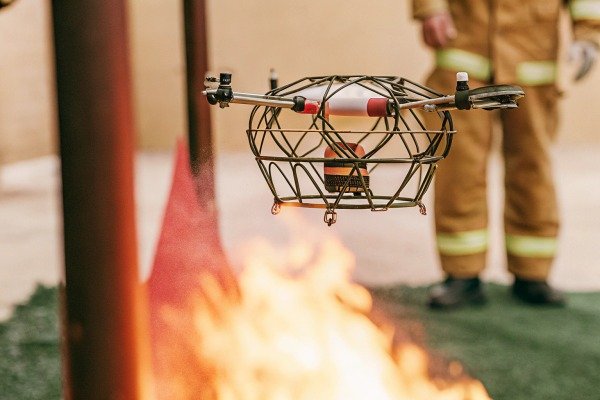
The physics of flight is unforgiving. For an octocopter to hover, its motors must generate thrust 6 generate thrust equal to the total weight of the aircraft. A heavier frame requires higher RPMs from the motors just to stay in the air. This draws more current from the batteries, depleting them rapidly.
By switching to carbon fiber, we reduce the structural mass significantly without losing strength. For example, a landing gear set made of carbon fiber might weigh only 32 grams, whereas a steel or solid aluminum equivalent could weigh three to four times that. This "saved weight" can be used in two ways:
- Longer Flight Times: With the same battery, the drone flies longer because the motors work less.
- Increased Battery Capacity: You can use the weight savings to load a larger battery, extending flight time even further.
In our internal tests, we found that reducing the frame weight by just 500 grams can add several minutes of hover time. For a fire commander, an extra 10 minutes in the air can mean the difference between identifying a hotspot and missing it entirely.
Operational Continuity in the Field
Short flight times are a logistic nightmare. If a drone only flies for 20 minutes, the pilot has to bring it back, land, swap batteries, and relaunch. This creates "blind spots" in the data feed during the swap.
Carbon fiber drones, like the models we export to the US and Europe, often achieve flight times ranging from 45 minutes to over 2 hours depending on the configuration (e.g., hybrid vs. electric). This allows for continuous overwatch. During a large-scale wildfire or a chemical plant incident, having a drone that can loiter for an extended period ensures that the command center has a persistent eye in the sky. It reduces the stress on the ground crew and minimizes the chaotic interruptions caused by constant battery swaps.
Weight vs. Endurance Impact
Here is how material choice impacts the operational endurance of a standard industrial drone setup.
| Component Material | Frame Weight (Approx.) | Battery Drain Rate | Typical Flight Time (Electric) |
|---|---|---|---|
| Kohlefaser | 1.5 kg | Niedrig | 45 - 55 Minuten |
| Aluminum | 2.6 kg | Hoch | 25 – 30 mins |
| Plastic/Nylon | 2.0 kg (Reinforced) | Mäßig | 30 – 35 mins |
Will a carbon fiber structure allow me to carry heavier payloads compared to aluminum or plastic frames?
Carrying fire retardant or heavy gimbals is a challenge, and we often see clients struggle with older frames that buckle under the weight. We design our systems to ensure that the frame is never the weak link when lifting heavy suppression equipment.
Absolutely. Due to its exceptional tensile strength, a carbon fiber chassis supports significantly heavier payloads, such as 25kg fire suppression bombs or dual-sensor gimbals. It handles high-G maneuvers and turbulence without the structural flexing often seen in aluminum or plastic frames, ensuring safe delivery.
Maximizing Mission Capability
In the firefighting sector, a drone is only as good as what it can carry. Whether it is a rack of fire extinguishing balls, a liquid tank, or a heavy-lift LiDAR scanner, the payload is the priority.
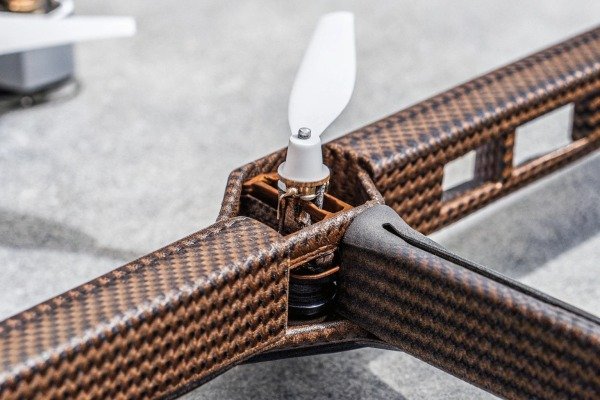
Carbon fiber has a specific tensile strength 7 tensile strength that is roughly five times greater than steel. This incredible strength-to-weight ratio allows us to engineer frames that are incredibly thin and light but can support massive loads. When we build a heavy-lift octocopter, the carbon fiber arms do not bend under the stress of lifting a 25kg payload.
If you were to try this with a plastic frame, the arms would flex, causing instability. With aluminum, you would need such thick metal tubes to prevent bending that the drone would become too heavy to fly efficiently. Carbon fiber hits the "sweet spot"—it is rigid enough to hold the weight but light enough to leave "room" in the Maximum Take-Off Weight (MTOW) for the actual cargo.
Stability Under Load and Turbulence
Fire environments are windy. The heat from the fire creates updrafts and unpredictable turbulence. A drone carrying a heavy liquid payload is fighting gravity and the wind simultaneously.
A rigid carbon fiber frame is essential here. If the frame flexes (bends) during a sudden gust of wind, the flight controller gets confused. The sensors detect movement that the motors didn't cause, leading to over-correction and potential crashes. Carbon fiber's stiffness ensures that the frame remains a solid platform. This allows the flight controller to maintain precise stability Fluglotse 8, even when the drone is fully loaded and buffeted by 25-knot winds. This stability is vital when aiming a fire hose or dropping a suppression bomb with precision.
Structural Response to Heavy Loads
The following comparison highlights why carbon fiber is the standard for heavy-lift operations.
| Szenario | Carbon Fiber Response | Aluminum Response | Plastic Response |
|---|---|---|---|
| Heavy Payload (25kg) | Rigid, no flexing | Minor flexing, high stress | Severe flexing, risk of snap |
| Wind Turbulence | Absorbs vibration, stays stable | Transfers vibration | Unstable, erratic flight |
| Hard Landing | High impact resistance | Bends (permanent damage) | Cracks or shatters |
Is the long-term durability of carbon fiber worth the investment for my drone fleet?
Budgets are tight, and replacing broken gear is painful, which is why we advise our partners that buying cheap often means buying twice. We have seen too many fleets grounded because metal frames succumbed to fatigue or corrosion after just one season.
While the initial cost is higher, carbon fiber offers superior long-term value through fatigue resistance and corrosion immunity. Unlike aluminum which suffers from metal fatigue, or plastics that degrade from UV exposure, carbon fiber withstands thousands of flight cycles and harsh chemical exposure, reducing maintenance and replacement costs.
Fighting Fatigue and Corrosion
One of the hidden killers of industrial drones is vibration. An octocopter creates high-frequency vibrations from its motors. Over time, metal frames like aluminum suffer from metal fatigue 9 "metal fatigue." Microscopic cracks form, and eventually, a structural component can fail mid-flight without warning. Carbon fiber has excellent fatigue resistance; it can endure millions of load cycles without developing these structural weaknesses.
Furthermore, firefighting is a dirty job. Drones are exposed to water, smoke particulates, and chemical fire retardants. Aluminum oxidizes and corrodes when exposed to these elements, especially if the anodized coating is scratched. Carbon fiber is chemically inert. It does not rust. You can fly it through smoke, get it wet, and clean it off without worrying that the frame is rotting from the inside out. This immunity to environmental factors is a massive advantage for longevity.
The Return on Investment (ROI) Calculation
We understand that the upfront price tag of a carbon fiber unit is higher than a plastic or aluminum hobby drone. However, for a professional procurement manager, the metric that matters is Gesamtbetriebskosten 10 Total Cost of Ownership (TCO).
Consider the lifespan:
- Aluminum/Plastic Drone: May survive 1-2 years of heavy use. Requires frequent part replacements due to bending, cracking, or corrosion. High risk of total loss due to fatigue failure.
- Carbon Fiber Drone: Designed to last 5+ years. Requires minimal structural maintenance. Parts are modular and durable.
If a fire department buys a cheaper drone and it fails during a mission, the cost is not just the drone—it is the failed mission and the potential safety risk. Investing in carbon fiber is investing in reliability. You buy it once, and it works for years. When you amortize the cost over thousands of flight hours, carbon fiber becomes the most economical choice.
Checkliste Dauerhaftigkeit
This breakdown shows the long-term survival rates of different materials in a firefighting context.
| Hazard | Kohlefaser | Aluminum |
|---|---|---|
| Vibration Fatigue | Excellent: Resists cracking indefinitely under normal loads. | Poor: Prone to developing micro-cracks over time. |
| Chemical Exposure | Excellent: Inert to retardants and water. | Fair: Corrodes if protective coating is breached. |
| Impact Recovery | Good: High energy absorption; tends to bounce or snap only at extremes. | Fair: Bends permanently; requires replacement if deformed. |
| UV Resistance | Hoch: With proper resin coating, lasts years in sun. | Hoch: Metal is unaffected by UV. |
Schlussfolgerung
The shift towards carbon fiber in the firefighting drone industry is not just a trend; it is a necessity driven by physics and economics. For professionals who cannot afford equipment failure, carbon fiber offers the unique combination of lightness, immense strength, and resistance to heat and chemicals. While the initial investment is higher, the safety, endurance, and operational longevity it provides make it the only logical choice for modern aerial firefighting fleets.
Fußnoten
1. Official US Forest Service guidance on the use of aviation for fire management. ︎
2. Authoritative definition of the thermal property critical to the material comparison. ︎
3. Technical documentation from a leading manufacturer of thermal imaging systems for firefighters. ︎
4. Wikipedia entry explaining the glass transition temperature in polymers and composites. ︎
5. Wikipedia article detailing the phenomenon of structural failure due to cyclic loading. ︎
6. Official NASA explanation of the physics required for flight and hovering. ︎
7. Scientific definition of the structural property allowing for heavier payloads. ︎
8. IEEE research paper discussing the precision and stability of UAV flight controllers. ︎
9. Industry standard explanation of structural failure modes in metal components. ︎
10. Standard financial definition relevant to the procurement and ROI context. ︎

 English
  Spanish
  German
  French
  Dutch
Dutch  Arabic
