
At SkyRover, we understand that purchasing firefighting drones is a high-stakes decision where performance claims must be backed by evidence. You need verified data to ensure safety and reliability.
To request case studies effectively, ask for specific incident reports detailing response times, thermal sensor accuracy, and integration with US inter-agency command structures. Require evidence of FAA Part 107 compliance and ask for direct contact information for program managers at US fire departments to verify reliability.
Securing reliable references is the most critical step in your procurement process. The following guide details exactly how to extract the truth from suppliers.
How Do I Ask for References Without Violating Client Privacy?
When we collaborate with government contractors on custom drone solutions, we respect strict non-disclosure agreements while still proving our capabilities. You face the challenge of needing proof without crossing legal or privacy lines.
Request redacted after-action reports that display operational data like flight duration and payload performance without revealing sensitive personnel names. Ask for references from public agencies where procurement records are open, or request "blind" case studies that focus strictly on technical metrics and environmental conditions.

Navigating Privacy vs. Proof
Requesting references for sensitive equipment like firefighting drones requires a delicate balance. Many suppliers, including us, operate under strict confidentiality agreements, especially when dealing with military or government clients. However, privacy should never be a shield for a lack of experience.
When you draft your email inquiry, you must be specific about what you need while acknowledging their constraints. Instead of asking for a client list immediately, ask for "Sanitized Operational Reports." These are documents where the client's name might be redacted, but the operational data remains visible.
For example, a legitimate report might show:
- Mission Type: Wildfire containment in a dry climate.
- Equipment Used: Heavy-lift drone with fire extinguishing balls.
- Outcome: 95% containment within 2 hours.
If a supplier refuses to provide even redacted data, this is a major red flag. In the United States, many fire departments and forestry agencies are public entities. Their procurement records and operational highlights are often public domain. You can leverage this by asking the supplier to point you toward public press releases or news articles where their equipment was featured.
Structuring Your Request Email
To get the best response, structure your request to show you are a serious buyer who understands the industry. Do not just ask, "Can I see your references?" Be precise.
Table 1: Effective vs. Ineffective Reference Requests
| Merkmal | Ineffective Request | Effective Request (Recommended) |
|---|---|---|
| Specificity | "Send me a list of your US clients." | "Please provide 3 case studies of US agencies using your drones for wildfire suppression." |
| Privacy Awareness | Ignores privacy concerns. | "I understand some clients are confidential; redacted reports showing technical metrics are acceptable." |
| Metric Focus | "Did they like the drone?" | "I need data on Mean Time Between Failures (MTBF) and average flight time under load." |
| Context | Vague about usage. | "We are looking for performance data specifically in high-wind and high-heat environments." |
Public Sector Transparency
In our experience exporting to the US, we find that public agencies like the Department of Interior (DOI) or local fire departments often have less restrictive privacy rules regarding equipment performance than private security firms.
Department of Interior 1
When you speak to a supplier, ask specifically if they have supplied to:
- Local Fire Departments: These entities often love to showcase new technology in local news.
- Agricultural Co-ops: If looking for crop-dusting or prescribed burn drones, these organizations are often open to sharing results.
- University Research Programs: Many US universities test drones for forestry management and publish their findings openly.
By targeting these types of references, you bypass the "corporate secret" excuse and get straight to verifiable data.
What Specific Details Should I Look for in a Case Study to Verify Authenticity?
Our engineering team analyzes every flight log to ensure data integrity before we release a new model to the market. You must scrutinize these details in supplier case studies to avoid falling for marketing fluff or fake specifications.
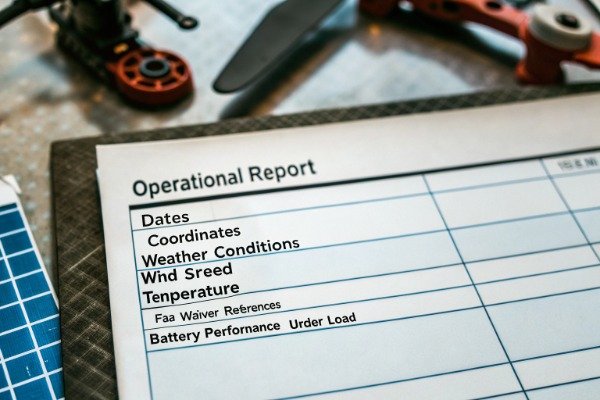
Authentic case studies must include specific dates, locations, and weather conditions like wind speed or temperature during the operation. Look for mention of specific US regulations, such as FAA waivers, and quantitative data on battery performance under load to ensure the report reflects real-world usage.
Identifying the "DNA" of a Real Case Study
A generic marketing brochure is easy to fake; a technical field report is not. When we compile data for our distributors, we include the "ugly" numbers because they prove the test was real. When you review a case study provided by a potential supplier, you need to look for the "DNA" of a real operation.
First, look for US-Specific Terminology. A genuine US case study will reference the regulatory environment. Look for terms like:
- COA (Certificate of Waiver or Authorization): Public agencies need this to fly in certain airspaces.
- Part 107: The standard FAA rule for commercial drone pilots.
- NWCG (National Wildfire Coordinating Group): Standards often cited in wildland firefighting.
If the case study uses generic terms or cites regulations from other countries (like EASA for Europe or CAAC for China) while claiming to be a US success story, the supplier is likely repurposing data from other regions.
Critical Operational Metrics
You are purchasing a tool, not a toy. The case study must contain hard data points. Avoid narratives that use emotional language like "amazing performance" or "superb stability." Instead, look for the metrics that matter to a Procurement Manager.
Table 2: Metrics Checklist for Firefighting Drones
| Metric Category | Was zu beachten ist | Warum es wichtig ist |
|---|---|---|
| Thermische Genauigkeit | Specific temperature deltas (e.g., "Detected hotspots >400°F at 200ft"). | Proves the sensor quality is sufficient for fire detection. |
| Windwiderstand | "Operated stable in 25mph gusts." | Fire creates its own weather; drones must handle turbulence. |
| Deployment Time | "From case to air in <3 minutes." | In emergencies, every second counts. |
| Data Integration | "Streamed to ATAK (Android Team Awareness Kit)." | Shows interoperability with standard US first-responder software. |
| Battery Sag | Voltage drop data under full payload. | Reveals the true quality of the power system. |
The "Dragon Egg" Test
In the US market, specific technologies are trending. For example, "Dragon Eggs" (delayed ignition spheres) are widely used for prescribed burns. If a supplier claims to be a leader in the US forestry sector, their case studies should mention compatibility with aerial ignition systems or similar payloads.
prescribed burns 2
Suchen Sie außerdem nach Negative Data. This sounds counterintuitive, but a case study that says "The drone performed well, but we had to swap batteries every 18 minutes due to extreme heat" is often more credible than one claiming "Unlimited flight time with zero issues." Real operations have challenges. A supplier honest enough to document the challenges is a supplier who understands the reality of the field.
Verifying Locations
Finally, check the geography. A case study claiming to be from a "US West Coast Wildfire" should have terrain matching that description. If the background looks like a tropical rainforest or a dense European city, ask questions. You can even ask for the specific coordinates of the fire line mentioned in the report. We often provide flight path maps (KML files) to our clients; you should ask for the same.
KML files 3
Can They Provide Photos or Videos of Their Drones Operating in the US?
We document our flight tests extensively to prove stability in high winds and ensure our clients have visual confidence. You need visual confirmation that the drone handles US terrain and infrastructure, not just a demo reel filmed in a factory parking lot.
Suppliers should provide raw footage showing the drone's interface with US-specific telemetry data, such as feet and Fahrenheit, rather than metric units. Look for recognizable US landmarks, fire trucks, or uniforms in the background to confirm the equipment was actually deployed in American territories.

The Importance of Visual Forensics
In the age of AI and advanced editing, a photo can be easily manipulated. However, video footage—especially raw flight logs—is much harder to fake convincingly. When sourcing from overseas, you must become a digital detective.
Demand OSD (On-Screen Display) Footage. This is the video feed the pilot sees during the flight. It is the gold standard for verification because it contains live telemetry data.
What to analyze in the OSD:
- Units of Measurement: Is the altitude in feet or meters? Is the speed in mph or m/s? While settings can be changed, US operators almost exclusively use Imperial units. A "US Case Study" video showing meters and Celsius is a slip-up.
- GPS Coordinates: Many OSDs display latitude and longitude. Plug these into Google Maps. Does the location match the claim?
- Battery Voltage: Watch the voltage indicator during a rapid ascent or high-speed maneuver. If it drops precipitously, the drone has a weak power system, regardless of what the spec sheet says.
Contextual Clues in the Background
Beyond the interface, look at the physical environment. We advise our clients to look for "unfakable" context.
- Uniforms: Do the firefighters in the video wear standard US turnout gear (often tan or black with specific reflective striping patterns)? Or do they look like European or Asian firefighting gear?
- Vehicles: Are the fire trucks the large, boxy American style (like Pierce or E-One)? Or are they the smaller, cab-over style common in Europe and Asia?
- Vegetation: Does the flora match the claimed region? A "California Wildfire" video should not feature tropical palm trees or vegetation native to Southeast Asia.
Requesting Metadata
If a supplier sends you high-resolution photos, ask for the original files with metadata intact.
Table 3: Visual Evidence Verification Checklist
| Item to Check | Red Flag | Green Flag |
|---|---|---|
| File Metadata | Created date does not match the incident date. | EXIF data shows correct camera model and date. |
| Background Vehicles | License plates are blurred or foreign. | US Government (G-plate) or state plates visible. |
| Infrastructure | Power outlets or street signs are non-US style. | Standard US road signs and NEMA power plugs visible. |
| Lighting/Shadows | Shadows inconsistent with the time of day claimed. | Shadows match the sun position for that latitude/time. |
Live Video Demos
If the supplier cannot provide past footage due to "confidentiality," challenge them to a live demo. We often perform live video calls with clients where we fly the drone in real-time.
Ask them to perform a specific maneuver live, such as "Fly to 400 feet and hover for 5 minutes." This prevents them from playing a pre-recorded video. If they are a legitimate manufacturer, they will have a test field and a pilot ready to go. This is the ultimate proof of their current capability.
Will They Allow Me to Contact a Past Customer for a Direct Review?
We encourage our partners to speak with our long-term users because we are confident in our product's durability. You should insist on peer-to-peer discussions to uncover hidden maintenance issues that a sales brochure will never admit.
NEMA power plugs 4
Reliable suppliers will facilitate a call with a past customer, specifically a Lead Pilot or Procurement Manager. If a vendor refuses due to "privacy," ask for a different client or a redacted contact list. Direct feedback is crucial for assessing after-sales support and spare parts availability.

The Peer-to-Peer Interview
The most valuable intelligence comes from someone who sits in your seat. A fellow Procurement Manager or a Lead Pilot has no incentive to lie to you. In fact, in the firefighting community, there is a strong brotherhood/sisterhood where professionals protect each other from bad equipment.
Google Maps 6
When a supplier gives you a reference, do not just email them. Call them. A phone call reveals nuances that email cannot. A pause before answering "Are you happy with the support?" speaks volumes.
Questions That Reveal the Truth
When you get a past customer on the phone, skip the generic questions. You need to dig into the pain points identified in your buyer persona—specifically support and durability.
Imperial units 7
Stellen Sie diese spezifischen Fragen:
- "How is the post-sale support?"
- What you want to hear: "They answer emails within 24 hours and shipped a replacement motor in 3 days."
- Red flag: "It's hard to reach them due to the time zone difference," or "We have to wait weeks for parts."
- "What is the real-world flight time?"
- Why ask: Manufacturers (including us) test in ideal conditions. Users fly in wind and smoke. You want the "heavy load" number.
- "Have you ever had a firmware update brick the drone?"
- Why ask: Software stability is just as important as hardware.
- "Did the drone integrate easily with your existing fleet?"
- Why ask: If you use ATAK or other US-standard software, you need to know if the Chinese drone plays nice with American software ecosystems.
Handling Supplier Resistance
If a supplier refuses to let you speak to a customer, they will usually cite "Privacy." While valid, it is often used as a shield.
Android Team Awareness Kit 8
How to push back:
- The "Brand Transition" Request: Ask, "Can I speak to a customer who switched from a competitor (like DJI) to your brand?" These customers are usually the most vocal about warum they switched and are often eager to share their "smart decision."
- The "Ambassador" Program: Many manufacturers have "Brand Ambassadors"—users who get discounts in exchange for publicity. Ask to speak to one of them. While they are biased, they are at least real users.
- LinkedIn Verification: If the supplier gives you a company name but no contact, go to LinkedIn. Search for "Drone Pilot" or "Procurement" at that specific company. Message them directly: "I'm considering buying SkyRover drones; I see your company uses them. Can I ask for your honest opinion?"
Validating the Reference
Be careful of "fake references." We have seen unethical traders set up fake email addresses or have a friend pretend to be a client.
standard FAA rule 9
To validate the reference:
- Check their email domain. Is it
@gmail.comoder@fire.ca.gov? Official agencies always use government domains. - Check the agency's website. Does this person exist in the staff directory?
- Call the department's main landline (found on Google Maps) and ask to be transferred to that person. This proves they actually work there.
Schlussfolgerung
Sourcing industrial drones requires rigorous vetting to protect your budget and your team. By demanding detailed case studies, verifying US-specific operational data, and insisting on direct peer references, you ensure your equipment performs when lives are at stake.
Mean Time Between Failures 10
Fußnoten
1. Official website of the US government agency mentioned. ︎
2. US Forest Service page explaining prescribed fire operations. ︎
3. Official documentation for the Keyhole Markup Language file format. ︎
4. Wikipedia article detailing standard US electrical connectors. ︎
5. Wikipedia article explaining the image metadata format. ︎
6. Link to the specific mapping tool mentioned for verification. ︎
7. Wikipedia article defining the measurement system used in the US. ︎
8. Official government website for the ATAK software suite. ︎
9. Official FAA page detailing Part 107 regulations. ︎
10. Definition of the reliability metric cited in the text. ︎

 English
  Spanish
  German
  French
  Dutch
Dutch  Arabic
