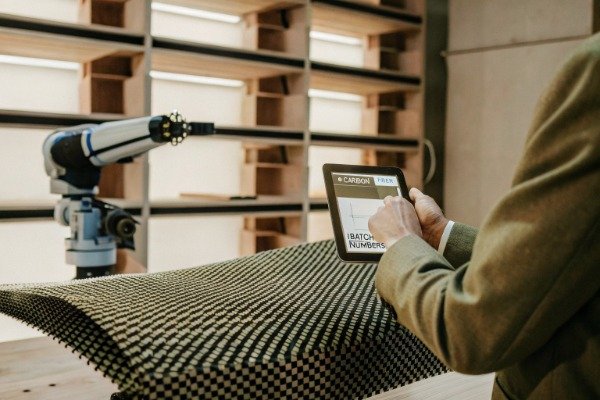
We know the stakes are high when our drones face 600°C heat. If a single motor fails due to poor materials, lives are risked, not just budgets. (28 words)
To evaluate a supplier's raw material procurement, explicitly request their ISO 9001:2015 documentation and Incoming Quality Control (IQC) protocols. Ask for traceability records linking raw material batch numbers to specific component certificates. Verify they perform 100% inspection on critical parts rather than random sampling to ensure mission-critical reliability.
Let's break down the specific questions you need to ask to ensure your fleet is built to last.
How Does the Supplier Vet Their Vendors for Motors and Flight Controllers?
At our Chengdu factory, we refuse to work with vendors who cannot prove long-term stability. A flight controller failure during a mission is simply unacceptable for professional operators. (29 words)
Fluglotse 1
Suppliers must vet vendors by auditing their manufacturing capabilities and demanding a proven track record of consistency. You should ask if they require sub-tier vendors to provide Mean Time Between Failures (MTBF) data and if they conduct on-site audits to verify production standards before approving a component source.

When you are sourcing industrial drones, particularly for high-stakes applications like firefighting, the quality of the final product is entirely dependent on the quality of the components that go into it. We often tell our clients that a drone is only as strong as its weakest solder joint or its cheapest bearing. Therefore, understanding how a manufacturer selects their upstream partners is the first line of defense against future failures.
The Vendor Audit Process
You cannot simply buy industrial-grade motors off a website. A responsible manufacturer must physically visit the vendor's production line. When we evaluate a new supplier for our SkyRover series, we look for specific indicators of quality management. You should ask your potential supplier if they perform these on-site audits. Are they checking the vendor's clean room standards? Are they verifying the calibration of the vendor's testing equipment?
clean room standards 2
If a supplier relies solely on data sheets provided by the vendor without independent verification, they are gambling with your safety. For critical components like flight controllers, we require vendors to demonstrate their own internal quality controls. This includes stress testing components under thermal loads that simulate the environment of a forest fire.
Stability Over Low Cost
In the industrial drone market, consistency is king. A common issue with lower-tier manufacturers is that they switch vendors frequently to save a few dollars on parts. This results in "silent changes" where a drone model name stays the same, but the internal motor or ESC (Electronic Speed Controller) changes to an inferior brand.
Electronic Speed Controller 3
To protect your procurement, you should request a "Fixed Bill of Materials" (BOM) agreement or ask about their policy on vendor changes. A reputable supplier will notify you if a critical component changes. Below is a checklist you can use to evaluate how a supplier manages their vendor relationships.
Table: Vendor Vetting Criteria Checklist
| Vetting Criteria | Why It Matters for Firefighting Drones | What to Ask the Supplier |
|---|---|---|
| Financial Stability | Vendors going bankrupt leads to spare parts shortages later. | "How long have you worked with your motor supplier?" |
| Produktionskapazität | Ensures they can deliver large orders during fire season peaks. | "What is the monthly output capacity of your flight controller vendor?" |
| Quality Certifications | Proves the vendor follows standardized processes (e.g., ISO 9001). | "Do you require ISO certification from your sub-tier vendors?" |
| Change Notification | Prevents unannounced component swaps that affect performance. | "Do you have a contract requiring vendors to notify you of design changes?" |
By digging into these details, you filter out assemblers who just screw parts together and find true manufacturers who engineer reliability from the ground up.
Do They Perform Incoming Quality Checks on All Electronic Components?
We have seen competitors skip checks to save time, only to face recalls later. For us, testing every single sensor is the only way to guarantee safety. (28 words)
Incoming Quality Control (IQC) must go beyond visual inspection to include functional testing of voltage, resistance, and signal integrity. Ask your supplier if they perform 100% functional testing on critical electronics like ESCs and sensors, or if they rely on statistical sampling, which is insufficient for industrial-grade equipment.
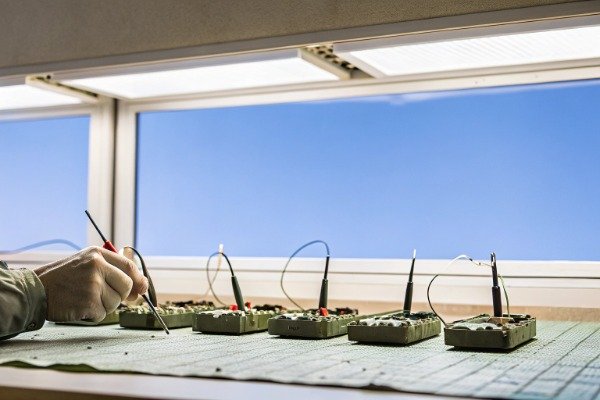
The difference between a consumer toy and an industrial tool often lies in the rigor of inspection. In mass production of cheap electronics, manufacturers use "statistical sampling" (AQL – Acceptable Quality Limit). This means they might test 5 units out of 100. If those 5 pass, they assume the other 95 are good. For a $50 toy, this is acceptable risk. For a $15,000 firefighting drone carrying a heavy payload over a burning building, it is negligence.
The Necessity of 100% Inspection
When we receive a shipment of flight controllers or high-voltage batteries, we cannot assume they are perfect just because the box is sealed. Shipping damage, manufacturing defects, or even humidity exposure during transit can compromise electronics.
You must ask your supplier: "Do you perform 100% functional testing on critical components?" This means every single motor is spun up, every flight controller is powered on and diagnosed, and every battery cell is checked for internal resistance before it ever touches the assembly line.
Specific Tests for Firefighting Drones
Firefighting drones operate in extreme environments. Therefore, the IQC process should simulate these conditions. It is not enough to check if a component works at room temperature.
- Thermal Resistance: We check if the casing materials for the GPS and receiver modules meet the specified heat resistance ratings.
- Connector Integrity: We inspect the soldering and crimping of heavy-duty power connectors. A loose connector can cause a power failure due to vibration.
- Battery Health: Lithium polymer batteries are dangerous if defective. IQC must verify that cell voltages are perfectly balanced.
Sampling vs. Full Inspection
To help you understand the value of the premium you pay for high-end industrial drones, consider the difference in labor and security between sampling and full inspection.
Table: Sampling (AQL) vs. 100% Inspection
| Merkmal | Statistical Sampling (AQL) | 100% Full Inspection |
|---|---|---|
| Method | Tests a random percentage (e.g., 10%) of a batch. | Tests every single unit in the batch. |
| Risikostufe | Moderate risk of a "lemon" slipping through. | Near-zero risk of defective input materials. |
| Cost Impact | Low labor cost, lower product price. | High labor cost, higher product price. |
| Suitability | Consumer electronics, toys. | Aviation, Medical, Industrial Safety. |
| Your Question | "What is your AQL standard?" | "Can you confirm 100% IQC for critical parts?" |
If a supplier admits to using sampling for flight-critical components, you should reconsider their suitability for mission-critical firefighting applications.
Can They Provide Traceability Records for Critical Drone Parts?
When we ship a firefighting drone to the US, we know exactly where the carbon fiber came from. Without this data, maintenance becomes a guessing game for you. (29 words)
Traceability is essential for accountability and safety. You must ask if the supplier assigns a unique serial number to major components that links back to the raw material batch. This ensures that if a material defect is found, all affected units can be identified and grounded immediately.

Traceability is often the most overlooked aspect of drone procurement, yet it is vital for long-term fleet management. Imagine a scenario where a propeller blade shatters during a flight, not because of impact, but because the carbon fiber resin was mixed incorrectly at the factory. If your supplier has a robust traceability system, they can identify exactly which batch of resin was defective.
The Chain of Custody
In our facility, we utilize an ERP (Enterprise Resource Planning) system that tracks the "Chain of Custody" for every part. When a batch of carbon fiber arrives, it gets a barcode. When that fiber is molded into a propeller, that propeller gets a serial number linked to the fiber batch. When that propeller is installed on your drone, the drone's serial number is linked to the propeller's serial number.
Enterprise Resource Planning 4
This means if we discover a defect in "Raw Material Batch #123," we can instantly tell you, "Check Drone #50 and Drone #52, they have parts from this batch." Without this, you would have to ground your entire fleet or risk flying unsafe equipment.
Matching Certificates to Batches
A common trick in the industry is providing a generic "Material Certificate" that doesn't actually match the specific batch used in your product. You might get a certificate saying the aluminum is aircraft-grade 7075, but the actual metal used was a cheaper 6061 alloy.
aircraft-grade 7075 5
As a buyer, you should demand that the supplier proves the link. Ask them: "Can you show me the traveler document that follows the drone through the production line?" This document should list the specific batch numbers of the raw materials used for that specific unit.
H3: Essential Traceability Documentation
To ensure your supplier isn't just paying lip service to traceability, request to see examples of these specific documents during your negotiation phase.
Table: Traceability Documents Checklist
| Name des Dokuments | Zweck | Was zu beachten ist |
|---|---|---|
| Material Certificate (Mill Cert) | Proves the chemical/physical properties of raw material. | Ensure the "Heat Number" or "Lot Number" matches your product's records. |
| Traveler / Router | A physical or digital card that follows the drone during assembly. | Signatures or stamps from QC inspectors at each stage (Motor install, FC calibration). |
| BOM (Bill of Materials) | Lists every component in the drone. | Specific part numbers and manufacturers, not just generic names like "Motor". |
| Certificate of Conformance (CoC) | Official declaration that the product meets specs. | Must reference the specific purchase order and serial numbers of the shipment. |
By enforcing these requirements, you ensure that your supplier maintains a level of organization that supports professional aviation standards.
What Happens if a Batch of Raw Materials Fails Their Internal Inspection?
Our production managers have strict orders to halt lines if materials are subpar. Accepting a bad batch just to meet a deadline destroys trust and endangers pilots. (28 words)
A reliable supplier must have a clear Non-Conforming Material Report (NCMR) process. Ask them to demonstrate how they segregate, label, and return or destroy failed materials to prevent accidental use. They should also provide evidence of Corrective Action Reports (CAR) issued to the vendor to prevent recurrence.

One of the most telling questions you can ask a manufacturer is, "Tell me about a time you rejected a shipment of raw materials." If they say they never have issues, they are lying or they aren't looking hard enough. In manufacturing, variation is inevitable; how we handle that variation defines our quality.
The Quarantine Process
When a batch of motors or carbon tubes fails our IQC checks, it cannot simply be set aside on a table. It must be physically moved to a designated "Quarantine Area" (often a locked cage or a red-taped zone) to ensure it is not accidentally picked up by an assembly worker.
You should ask your supplier for photos of their quarantine area or their "Red Bin" procedures. If a batch fails, it must be tagged with a Non-Conforming Material Report (NCMR). This tag explains exactly why it failed—was the tolerance too loose? Was the resistance too high? Was the finish scratched?
Vendor Accountability and CLCA
Rejecting the material is only step one. The next step is the "Closed-Loop Corrective Action" (CLCA). We don't just send the bad parts back; we demand a report from the vendor explaining warum it happened and what they changed to fix it.
For example, if a batch of batteries arrived with low voltage, we issue a Corrective Action Request (CAR). The battery vendor must then investigate their own line, find the root cause (perhaps a faulty charger in their factory), fix it, and prove to us that the next batch is safe.
root cause 6
The Cost of Quality
Many low-cost suppliers will try to "rework" bad materials to save money. For example, if a carbon fiber frame has a small crack, they might try to glue it or paint over it. In the firefighting drone industry, this is dangerous.
Corrective Action Request 7
You need to know your supplier's policy on rework. For critical structural parts and electronics, the policy should be "Scrap," not "Repair." It is better for us to lose money on a scrapped frame than for you to lose a drone in a fire.
Lithium polymer batteries 8
Key Questions for the "What If" Scenario
- Segregation: "How do you ensure rejected materials aren't accidentally used?"
- Authority: "Who has the authority to stop the production line if a defect is found?" (It should be the Quality Manager, not the Sales Manager).
- Data: "Do you track vendor defect rates over time?"
By asking these tough questions, you force the supplier to reveal their true commitment to quality. You are looking for a partner who values your safety more than their short-term profit margin.
Annehmbare Qualitätsgrenze 9
Schlussfolgerung
Quality starts at the source. Asking these questions ensures you get a partner, not just a vendor. (17 words)
Bill of Materials 10
Fußnoten
1. Defines the electronic component responsible for stabilizing and navigating the drone. ︎
2. Explains the controlled environment protocols necessary for manufacturing sensitive electronics. ︎
3. Describes the circuit that regulates the speed of an electric motor. ︎
4. Describes the software systems used to manage business processes and track materials. ︎
5. Details the properties of this high-strength aluminium alloy used in aerospace applications. ︎
6. Explains the method of problem solving used for identifying the underlying causes of faults. ︎
7. Defines the formal process used to eliminate causes of non-conformities. ︎
8. Provides technical details on the rechargeable battery technology commonly used in drones. ︎
9. Explains the statistical standard used for inspecting a sample rather than the whole batch. ︎
10. Defines the comprehensive list of parts and materials required to build a product. ︎

 English
  Spanish
  German
  French
  Dutch
Dutch  Arabic
