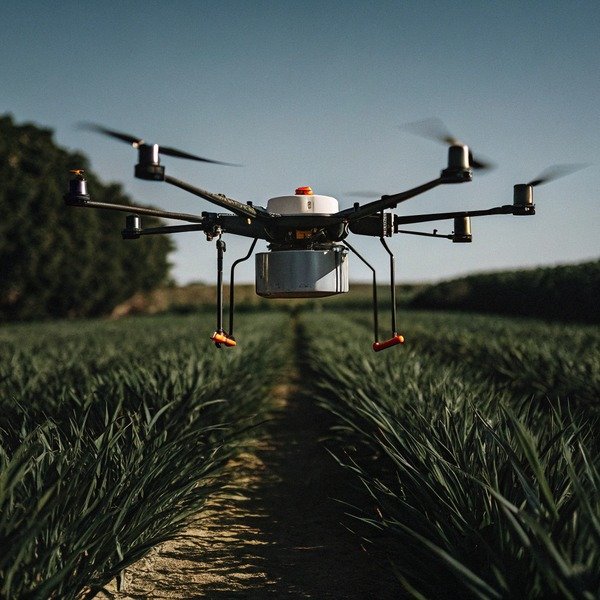
Watching a drone fail in the field because of poor soil penetration or weak battery life is a nightmare we strive to prevent on our assembly lines in Xi'an. Many buyers rush into bulk orders, only to find the equipment unsuited for their specific terrain or crop density.
Arranging a successful sample test requires defining your farm's specific data needs, such as soil analysis or crop health monitoring, and requesting a paid sample unit from the supplier. You must evaluate flight stability, battery endurance under load, and software integration with your current farm management systems before committing to a fleet.
Let’s walk through the critical steps to secure a sample unit and exactly what to look for during your field trials.
How do I request a sample unit to evaluate performance and durability?
When we coordinate exports to the US or Europe, we often advise clients to treat the sample request as a mini-contract rather than a casual inquiry. Miscommunication here leads to receiving the wrong configuration.
You should contact the manufacturer directly to request a paid sample unit, clearly specifying your intended use case and terrain conditions. Most industrial suppliers do not offer free samples due to high manufacturing costs, but many will deduct the sample cost from your future bulk order if the test proves successful.
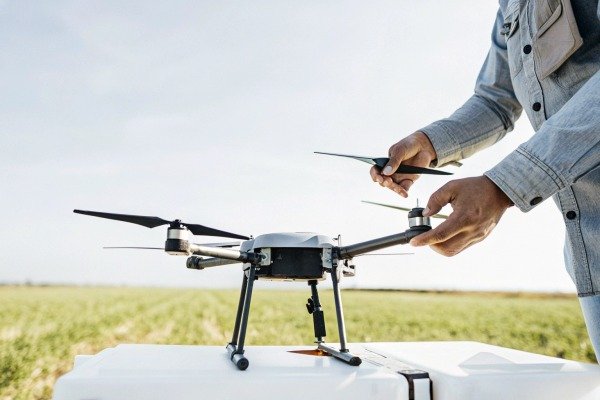
Requesting a sample is the first real test of your relationship with a supplier. Unlike consumer electronics, industrial agricultural drones are highly customizable industrial agricultural drones 1. If you simply ask for "one drone," you might receive a standard model that lacks the specific nozzle pressure or software compatibility you need.
Defining Your Operational Requirements
Before you send an email, you need a clear list of specifications. We see many procurement managers struggle because they haven't defined the "mission profile." Are you spraying pesticides on flat cornfields, or are you doing 3D terrain mapping on hillside orchards? These require different flight controllers and radar modules.
You should draft a requirements document that includes:
- Terrain Type: Flat, hilly, or mountainous.
- Primary Crop: High biomass (corn/sugarcane) or low biomass (vegetables).
- Payload Needs: Liquid tank size (10L, 30L, 50L) or solid spreader capacity.
- Data Integration: Do you need the drone to read prescription maps from existing software?
The Paid Sample Model
It is standard industry practice to charge for samples. A fully equipped agricultural drone can cost several thousand dollars to manufacture. "Free samples" are virtually non-existent in this sector. However, reliable suppliers view this as a deposit. When you negotiate, ask for a "sample refund clause." This means if you proceed with a bulk order (e.g., a container load), the cost of the sample unit is deducted from the final invoice. This reduces your financial risk while showing the supplier you are serious.
Customization at the Sample Stage
Don't be afraid to ask for modifications even for a single unit. If your region requires a specific plug type for the charger or a specific frequency for the radio link to comply with local laws, state this now. Testing a sample that isn't legally compliant or compatible comply with local laws 2 with your power grid is a waste of time.
| Feature Category | What to Specify in Your Request | Warum es wichtig ist |
|---|---|---|
| Stromnetz | Battery voltage and plug type | Ensures compatibility with your local charging infrastructure. |
| Sprühsystem | Nozzle type (Centrifugal vs. Pressure) | Centrifugal is better for orchards; pressure is better for row crops. |
| Communication | Radio frequency (2.4GHz vs. 5.8GHz) | Different countries have different legal bands for drone transmission legal bands for drone transmission 3. |
| Dokumentation | English manuals and software | prevents language barriers during the testing phase. |
What specific features should I focus on during the agricultural drone field test?
Our engineering team in Chengdu spends countless hours stress-testing frames, but real-world field conditions are the ultimate judge of a machine's worth. Synthetic lab tests cannot replicate your specific wind patterns or humidity.
Focus on testing the drone’s flight stability under full payload, actual battery endurance per charge, and spray system consistency across different speeds. You must also verify the accuracy of the obstacle avoidance sensors and how easily the mission planning software integrates with your existing agricultural workflow and data formats.

Once the drone arrives, you need a structured testing plan. Flying it around the parking lot won't tell you anything about its agricultural viability. You need to stress-test the system in the actual environment where it will work.
Payload and Battery Endurance
Manufacturer specs are often based on ideal conditions—sea level, no wind, and hovering. Your farm is likely different. Load the tank with water (which mimics the weight of pesticide) to the maximum capacity. Fly the drone in a typical mission pattern. Record the flight time from takeoff until the "low battery" warning triggers.
- The Gap: If the brochure says 15 minutes but you only get 9 minutes with a full tank, your efficiency calculations will be off by 40%.
- Battery Heat: After the flight, check the battery temperature. Excessive heat indicates poor energy management or high internal resistance, which means a short lifespan for expensive batteries.
Spray Drift and Nozzle Performance
Precision is the main selling point of agricultural drones. To test this, place water-sensitive paper strips on the ground water-sensitive paper strips 4 and at different heights within the crop canopy. Run a spray mission with water.
- Droplet Density: Check the paper for coverage. Are the droplets even?
- Drift Analysis: check papers placed outside the target zone. Did the wind carry the spray into neighboring rows?
- Topography Handling: If your field is uneven, test the terrain-following radar Geländeverfolgungsradar 5. Does the drone maintain a constant height above the crop as the ground rises and falls? If it lags, you risk crashing into the hill or spraying too high, causing drift.
Software and Data Workflow
The hardware might be solid, but if the software is a nightmare, your team won't use it.
- Mapping: Can you easily map a field boundary using the remote controller or by importing importing a KML/Shapefile 6 a KML/Shapefile?
- Automation: Does the drone intelligently pause when the tank is empty and return to the exact same spot after refilling (breakpoint memory)?
- Connectivity: Test the upload speed of mission data. In rural areas with poor internet, cloud-based processing can be a bottleneck. Ensure the drone supports offline mission planning.
| Test Component | Metric to Measure | Acceptable Outcome |
|---|---|---|
| Endurance | Flight time with 100% payload | Within 10-15% of stated specs. |
| Spray Width | Effective coverage width | Matches the setup in the software (e.g., 5 meters). |
| Hindernisvermeidung | Detection distance | Detects poles/trees at >10 meters and stops automatically. |
| Rückkehr nach Hause | Landing accuracy | Lands within 1 meter of the takeoff point. |
Will I receive remote technical assistance while testing the sample drone?
We know that receiving a complex machine halfway across the world can be daunting without an engineer standing next to you to guide the setup.
Reliable manufacturers provide remote technical assistance through video calls, instant messaging, and detailed digital manuals during your sample testing phase. You should confirm their support hours align with your time zone and ask if they offer engineering-level guidance to help troubleshoot setup issues or flight controller calibration remotely.

Support during the sample phase is a preview of the after-sales service you will get later. If a supplier is ghosting you now when they are trying to win your business, they will definitely disappear after you pay for a full container.
Establishing Communication Channels
Email is often too slow for field testing. When you are standing in a field with a drone that won't arm, you need immediate answers.
- Instant Messaging: We usually set up dedicated WhatsApp or WeChat groups for our clients. This allows you to send photos or videos of the error message directly to our engineers.
- Video Support: Ask if the supplier can schedule a live video call for the unboxing and initial setup. This "virtual hand-holding" prevents 90% of user errors, such as incorrect compass calibration or propeller installation.
Troubleshooting Common Setup Issues
Most "failures" during sample testing are actually setup errors. Industrial drones have safety locks.
- IMU Calibration: The Inertial Measurement Unit (IMU) often needs recalibration Inertial Measurement Unit (IMU) 7 after shipping due to vibrations and magnetic interference.
- Unlock Limits: Manufacturers often software-lock drones to a specific region to prevent gray market reselling. You might need a code from support to unlock the drone for flight in your specific GPS location.
- Firmware-Aktualisierungen: The unit might have been sitting in a warehouse for a month. Support should guide you through updating the firmware to the latest stable version before you fly.
Documentation Quality
Assess the materials they send you. Are the manuals in clear English, or are they poorly translated machine text? Do they have video tutorials? Good documentation is a sign of a mature product. If you have to fight to figure out how to charge the battery, the product is not ready for your team.
What are the costs and logistics involved in shipping a sample drone to me?
Shipping a single unit with high-capacity lithium batteries requires special dangerous goods handling that our logistics team navigates daily to ensure safety.
Shipping a sample drone involves the unit cost, higher air freight rates for dangerous goods due to lithium batteries, and potential import duties. You must account for door-to-door delivery fees and customs clearance costs, which are significantly higher per unit compared to shipping a full container via sea freight.
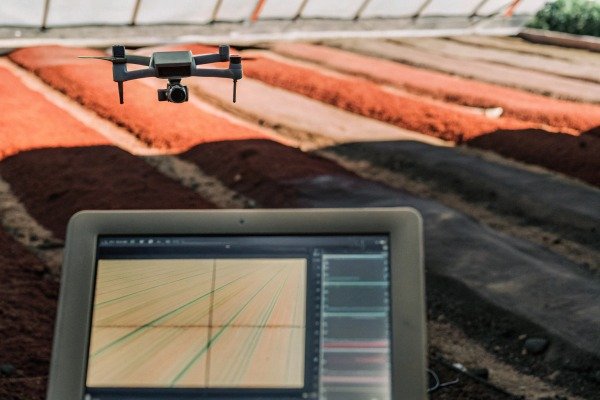
The logistics of getting a sample are fundamentally different from bulk shipping. You need the sample fast (Air Freight), but the batteries make this expensive and complex.
Air Freight vs. Sea Freight for Samples
For a bulk order, we ship via sea, which takes 30-40 days but is cheap. For a sample, you usually want it in 7-10 days.
- Battery Regulations: Agricultural drones use massive Lithium Polymer (LiPo) batteries (e.g., 22000mAh). These are Class 9 Dangerous Goods Klasse 9 Gefährliche Güter 8 (DG). They cannot just go on a regular passenger plane. They must fly on dedicated cargo aircraft (DG Cargo).
- The Cost: This specialized shipping is expensive. Shipping a single drone with 4 batteries by air can sometimes cost as much as the drone itself. Be prepared for this sticker shock. It is not the supplier gouging you; it is the airline safety regulations.
Customs and Import Duties
When the drone arrives in your country (e.g., the US), it doesn't just show up at your door.
- HS Codes: Ensure the supplier uses the correct Harmonized System (HS) code Code des Harmonisierten Systems (HS) 9 for "Agricultural Drones" to avoid unnecessary taxes.
- Tariffs: Depending on trade relations, there may be specific tariffs. In the US, Section 301 tariffs on Chinese technology can apply.
- Clearance: For a sample, we recommend DDP (Delivered Duty Paid) if available DDP (Delivered Duty Paid) 10, where the supplier handles the taxes. However, most B2B transactions are DAP (Delivered at Place), meaning you (the buyer) are responsible for paying import duties before the carrier releases the box.
Total Cost of Ownership (TCO) for the Sample
To budget correctly, look at the full picture. It’s not just the hardware price.
| Cost Item | Estimated Range (USD) | Anmerkungen |
|---|---|---|
| Drone Sample Unit | $3,000 – $8,000 | Depends on capacity (10L vs 50L) and sensors. |
| DG Air Freight | $800 – $2,000 | Varies heavily by oil prices and battery count. |
| Import Duties | 0% – 25% of Value | Depends on your country's tariff schedule. |
| Local Clearance | $100 – $300 | Brokerage fees paid to FedEx/DHL/Forwarder. |
Schlussfolgerung
Sample testing is the only way to validate that an agricultural drone can handle your specific soil, terrain, and operational tempo. By clearly defining your requirements, budgeting for the higher logistics costs of a trial unit, and rigorously testing both hardware endurance and software workflow, you minimize the risk of a large-scale investment. A successful test proves not just the machine's capability, but the supplier's ability to support your business long-term.
Fußnoten
1. Provides general background on the technology and its specific applications in modern farming. ︎
2. Official government guidance for commercial drone operations and ensuring legal compliance in the US. ︎
3. Official US government regulations regarding radio frequency transmission and compliance. ︎
4. Educational guide from a university extension on using this specific testing tool. ︎
5. Authoritative technical overview of terrain-following radar systems. ︎
6. Industry standards for geospatial data formats used in mission planning and field mapping. ︎
7. General background information on the technical component mentioned. ︎
8. Official international standards for shipping lithium batteries by air. ︎
9. Official government resource explaining HS codes for international trade. ︎
10. Standard international commercial terms defining responsibilities for shipping, taxes, and delivery. ︎

 English
  Spanish
  German
  French
  Dutch
Dutch  Arabic
