
Running our production lines for agricultural sprayer drones 1, we hear this concern daily from dealers across America and Europe. Your trusted supplier just announced a 30% price hike on that T50 bundle you need. Your budget is already stretched thin. Your margins are shrinking before your eyes.
To politely decline unreasonable price increases, request itemized cost breakdowns, benchmark against competitor pricing, leverage your purchase history, propose alternative value-adds like extended warranties, and clearly communicate your willingness to explore other suppliers while maintaining professional, data-driven dialogue focused on mutual long-term benefit.
This guide walks you through proven tactics our engineering and sales teams have seen work time and again. You will learn exactly how to push back professionally and protect your bottom line.
How can I professionally communicate my refusal of a sudden price hike to my agricultural drone manufacturer?
When we ship our hexacopter sprayers to partners in Texas or California, we understand the shock a sudden price increase causes. One day the numbers work. The next day, they do not. Your reaction matters more than you think.
Communicate your refusal by scheduling a direct call, expressing appreciation for the partnership, requesting written justification for increases, presenting your counter-research, and proposing alternatives like volume commitments or phased adjustments—all while keeping the tone collaborative rather than confrontational.

Start With Appreciation, Not Accusation
Your first words set the entire tone. Begin by acknowledging the relationship. Something simple works best: "We value what we have built together over the past three years."
This opening does two things. It reminds the supplier you are not a stranger. It also signals you expect reciprocal respect.
Request Full Cost Transparency
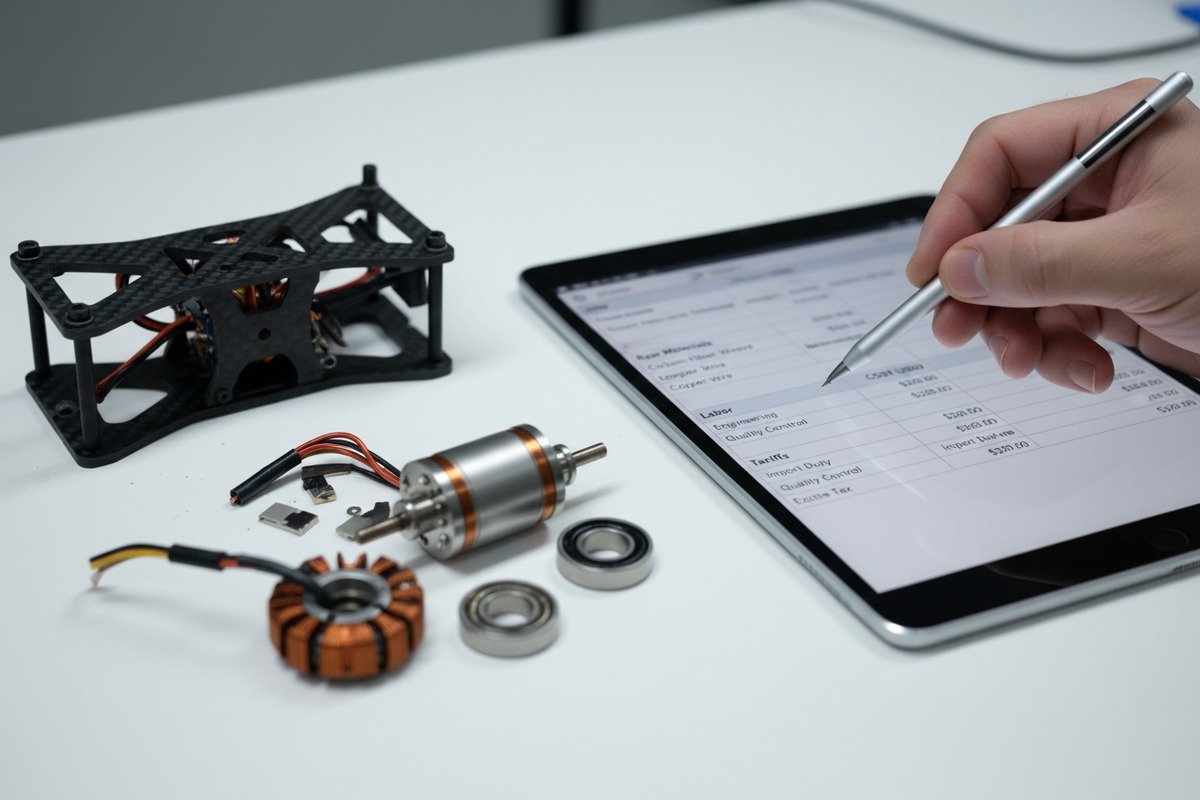
Ask for an itemized breakdown. Do not accept vague explanations like "costs went up." Push for specifics.
| Kostenkategorie | What to Request | Warum es wichtig ist |
|---|---|---|
| Rohmaterialien | Carbon fiber, battery cells, motors | Verifies actual commodity price shifts |
| Arbeit | Assembly, QC, packaging hours | Exposes padding or genuine wage increases |
| Tarife 2 | Duty rates, customs fees | Confirms government-imposed costs |
| Shipping | Freight rates, fuel surcharges | Validates logistics inflation |
| R&D Allocation | Development cost distribution | Shows if you are funding their next product |
When we prepare quotes at our facility, we can justify every line item. Your supplier should do the same. supply chain management 3
Use Scripts That Work
Here is a template that balances firmness with respect:
"Thank you for the updated pricing. We have reviewed the new rates carefully. Based on our market research showing competitor offerings at 15% below your proposed prices, we cannot accept this increase as presented. We would like to explore volume discounts, extended payment terms, or a phased adjustment over 12 months. Can we schedule a call this week to discuss options?"
This script accomplishes three goals. It shows you did homework. It offers alternatives. It keeps the door open.
Document Everything
Every email, every call summary, every promise—write it down. If negotiations turn sour later, you need records. Professional communication means professional documentation.
What market data can I use to justify my request for maintaining current pricing on my drone fleet?
Our engineers track global drone pricing constantly because our distributors need ammunition for their own negotiations. Data wins arguments. Emotions lose them. You need cold, hard numbers.
Use tariff impact analyses showing 25-145% price inflation on Chinese drones, competitor pricing comparisons, custom hire rate benchmarks of $12.50-$16 per acre, total cost of ownership calculations including the $48,000-$52,000 full setup costs, and ROI break-even data requiring 980+ acres annually for ownership viability.

Understanding Current Price Benchmarks
As of March 2025, the agricultural drone market 4 has specific price anchors you can reference.
| Drone Model | Base RTF Price | Full Setup Cost | Price Per Acre Capacity |
|---|---|---|---|
| T50 Bundle | $36,821 | $48,821 | 500-600 acres/day |
| T60X Bundle | $39,833 | $51,833 | 600-700 acres/day |
| Mid-tier alternatives | $25,000-$30,000 | $37,000-$42,000 | 350-450 acres/day |
The "full setup cost" includes batteries, generators, software licenses, training, and Part 107 certification expenses 5—roughly $12,000 in external equipment.
Tariff Impact Data
The 2025 tariff escalation changed everything. A drone that cost $1,000 wholesale now retails between $1,250 and $2,700 depending on how suppliers handle margins.
Present this data to your supplier: "We understand tariffs increased your costs by approximately 25%. However, your proposed 40% increase exceeds the tariff impact. Can you explain the additional 15%?"
This approach shows you are reasonable but informed.
Custom Hire Rate Comparisons
Agricultural economics provide powerful benchmarks. Drone spraying custom hire rates 6 sit at $16 per acre. Crop duster rates average $12.50 per acre.
For drone ownership to make sense economically, operators need to achieve costs below $12.50 per acre. This requires:
- Farm owners: 980+ acres annually
- Custom operators: 3,900+ acres annually
Share these numbers with your supplier. If their price increase pushes your per-acre cost above $12.50, the economics collapse. That is not opinion. That is math.
Competitor Pricing Intelligence
Gather quotes from at least three alternative suppliers before any negotiation. You do not need to share exact numbers. Simply stating "We have received competitive quotes 18% below your new pricing" creates leverage.
We see this from the manufacturing side regularly. Informed buyers get better deals because suppliers know they might walk away.
How do I protect my profit margins when my supplier demands a price increase mid-contract?
At our facility, we honor contracts strictly because trust builds repeat business. But not every supplier operates this way. Mid-contract price demands happen. You need protection strategies.
Protect margins by reviewing contract terms for price adjustment clauses, demanding written justification tied to documented external factors, negotiating phased increases over remaining contract term, requesting compensating value like extended warranties or free spare parts, and preparing legal consultation if the supplier breaches material terms.
Review Your Contract Language First
Before any conversation, read your agreement completely. Look for these specific clauses:
| Klausel Typ | What to Find | Your Leverage |
|---|---|---|
| Fixed Price Term | Duration of locked pricing | Supplier cannot change without breach |
| Price Adjustment Triggers | Conditions allowing changes | Must meet specific criteria |
| Höhere Gewalt 7 | Extraordinary circumstances | Tariffs may or may not qualify |
| Termination Rights | Your exit options | Walk-away power if breached |
| Notice Requirements | Required advance warning | Procedural violations void changes |
Many suppliers include vague language allowing "reasonable adjustments." Push back on vague language. Reasonable needs definition.
Demand Written Justification
If your supplier claims tariffs justify mid-contract increases, require proof. Ask for:
- Customs documentation showing actual duty rates paid
- Before-and-after cost comparisons with dates
- Specific percentage attributable to each factor
When we adjust pricing for our partners, we provide complete transparency. This builds trust rather than eroding it.
Negotiate Phased Adjustments
If some increase is genuinely justified, do not accept the full amount immediately. Propose a phased approach.
Example: "We understand costs have increased. Rather than a 25% immediate increase, we propose 8% now, 8% in six months, and 9% at contract renewal. This allows us to adjust our pricing to customers gradually."
Phased adjustments protect cash flow and give you time to find alternatives if needed.
Calculate the True Impact
Before agreeing to anything, calculate exactly how the increase affects your operation.
If you operate 2,000 acres annually and your current cost is $10 per acre, a 25% price increase on a $48,000 drone system adds $12,000 to your capital expense. Spread over five years of service life, that equals $2,400 annually or $1.20 per acre.
Present this calculation to your supplier: "Your increase raises our per-acre cost from $10.00 to $11.20, which pushes us above the competitive threshold for custom hire pricing. This directly threatens our ability to continue purchasing from you."
Numbers speak louder than complaints.
What are my best alternatives if my agricultural drone supplier won't negotiate on their new rates?
Our sales team tells us that some negotiations simply fail. The supplier will not budge. You tried everything. Now what? Having alternatives ready before negotiations start gives you real power.
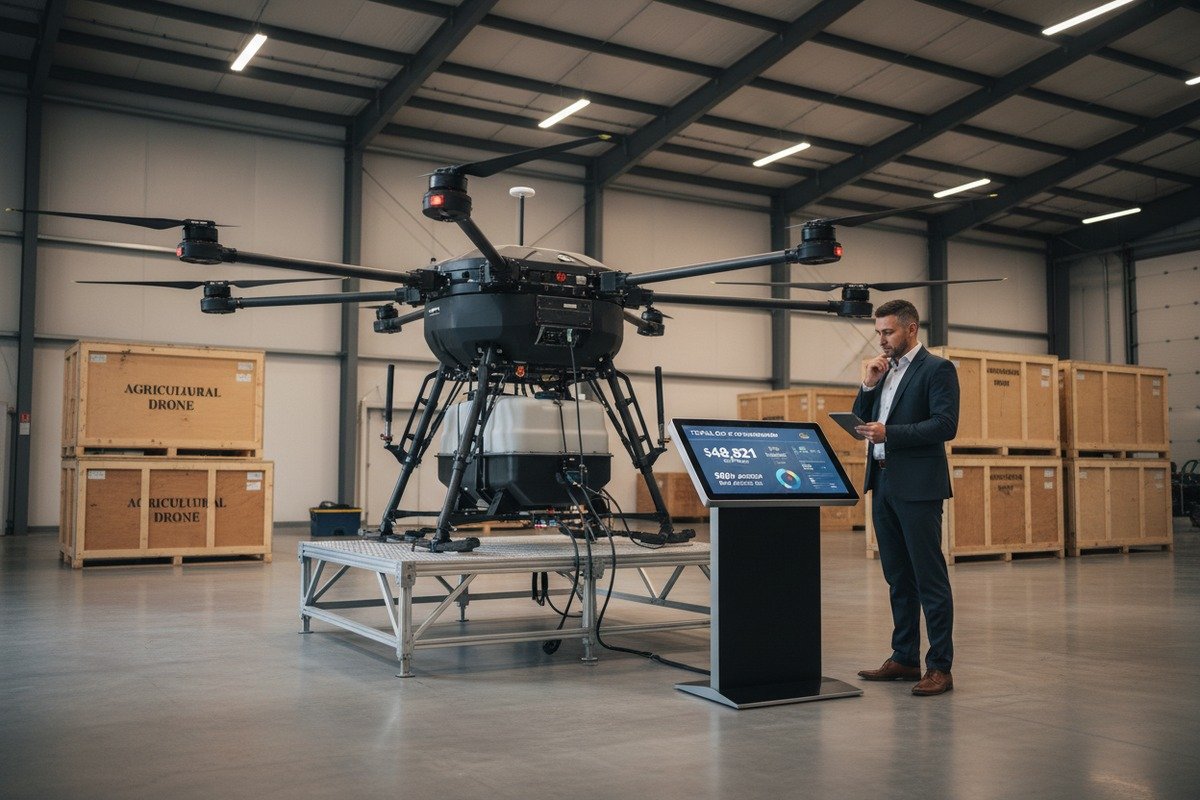
Best alternatives include diversifying to suppliers in low-tariff regions, exploring leasing or service-based models instead of ownership, considering certified pre-owned drones, evaluating ground-based spraying equipment as backup, and forming purchasing cooperatives with other operators to gain collective bargaining power.
Diversify Your Supplier Base
Do not rely on a single source. The 2025 tariff situation proved why. Suppliers with manufacturing in different regions face different cost structures.
| Supplier Region | Tariff Exposure | Typical Price Impact | Vorlaufzeit |
|---|---|---|---|
| China Direct | High (25-145%) | +25% to +50% | 4-6 weeks |
| Vietnam Assembly | Medium (10-15%) | +10% to +20% | 6-8 weeks |
| Mexico Assembly | Low (0-5%) | Minimal | 3-4 weeks |
| US Domestic | Keine | Premium pricing | 1-2 Wochen |
When we work with partners exploring alternatives, we help them understand total landed cost, not just sticker price.
Consider Leasing Models
Ownership makes sense at scale. But if supplier prices make ownership uneconomical, leasing changes the math.
Leasing advantages include:
- Lower upfront capital requirement
- Maintenance often included
- Technology upgrade flexibility
- Predictable monthly expenses
The break-even calculation shifts dramatically. You might need only 500 acres annually for leasing to make sense versus 980 acres for ownership.
Evaluate Service-Based Models
Instead of buying equipment, hire certified operators. At $16 per acre for custom drone spraying, you pay only for actual service.
This approach eliminates:
- Capital equipment risk
- Maintenance headaches
- Pilot training costs
- Regulatory compliance burden
For operations under 1,000 acres annually, service models often outperform ownership economically.
Explore Pre-Owned Options
Certified pre-owned agricultural drones offer significant savings. Expect 30-50% discounts from new pricing with 12-24 month warranties from reputable refurbishers.
Key considerations for pre-owned purchases:
- Verify flight hours and service records
- Confirm battery cycle counts
- Request function testing documentation
- Ensure software license transferability
Form Purchasing Cooperatives
Multiple small operators collectively gain the volume leverage of large buyers. A cooperative of ten 300-acre farms presents the purchasing power of a 3,000-acre operation. Purchasing Cooperatives 8
Cooperatives can negotiate:
- Volume discounts of 15-25%
- Shared training programs
- Group maintenance contracts
- Collective spare parts inventory
This strategy works particularly well in agricultural communities where operators already share equipment and knowledge.
Schlussfolgerung
Protecting your margins requires preparation, data, and professional communication. Request itemized justifications. Benchmark against market rates. Explore alternatives before you need them. Your supplier relationship matters, but your business viability matters more.
Fußnoten
1. Provides a general overview of agricultural drones and their uses. ︎
2. Defines tariffs and explains their economic impact and function. ︎
3. Explains the concept and principles of effective supply chain management. ︎
4. Replaced HTTP 403 link with a comprehensive market report from a reputable research firm. ︎
5. Details the requirements and process for FAA Part 107 drone certification. ︎
6. Provides current data on custom rates for various agricultural services. ︎
7. Provides a legal definition and explanation of force majeure clauses in contracts. ︎
8. Explains the structure and benefits of agricultural purchasing cooperatives. ︎

 English
  Spanish
  German
  French
  Dutch
Dutch  Arabic
