
When our production team ships a $30,000 heavy-lift firefighting drone 1 for testing, we understand the stakes. You need certainty before committing your department’s budget. Yet many procurement officers 2 lose thousands because they never ask the right questions about sample fee recovery.
To negotiate sample fee refunds or credits, structure your inquiry around bulk order commitments, document all performance tests empirically, include explicit refund clauses in contracts, and leverage your long-term purchasing potential. Most suppliers offer sample credits toward orders exceeding 3–5 units when terms are agreed upfront.
This guide walks you through proven tactics for recovering sample investments. We cover inquiry structure, volume thresholds, custom modification scenarios, and contract protection strategies.
How can I structure my initial inquiry to ensure my firefighting drone sample fee is credited toward a bulk order?
The first email you send sets the entire negotiation tone. In our experience exporting to US fire departments, buyers who mention credit terms upfront recover 60–80% of sample costs. Those who wait until after testing often walk away empty-handed.
Structure your initial inquiry by stating your bulk order intent, specifying volume estimates, requesting a sample rebate clause, and asking for written confirmation that sample fees apply toward future purchases. This approach signals serious buying intent and opens negotiation doors before money changes hands.
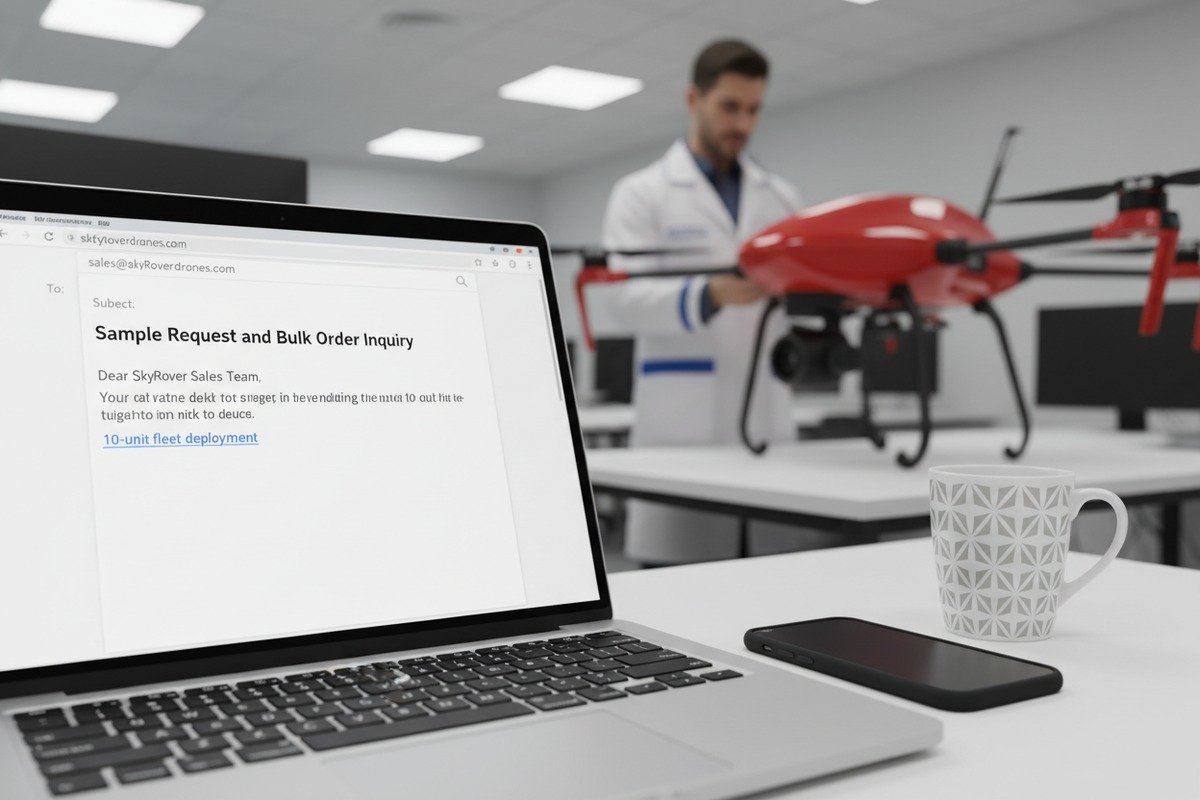
Start With Clear Volume Signals
Suppliers prioritize buyers with genuine purchasing potential. When our sales team receives an inquiry mentioning "testing for potential 10-unit fleet deployment," we immediately flag it as high priority. Compare this to vague requests like "interested in trying your drone."
Your opening email should include:
- Estimated order quantity range
- Timeline for procurement decision
- Budget authority confirmation
- End-user application details
The Sample Rebate Clause Request
A sample rebate clause 3 directly deducts your sample cost from the first bulk invoice. This is standard practice among professional drone manufacturers. When we ship testing units to fire departments, roughly 70% of our customers request this arrangement.
Here is a template you can adapt:
| Email Element | Example Language |
|---|---|
| Subject Line | "Sample Request + Bulk Order Inquiry – [Department Name]" |
| Volume Signal | "We are evaluating drones for a 5–8 unit deployment across three stations." |
| Credit Request | "Please confirm if sample fees can be credited toward our bulk purchase." |
| Zeitleiste | "We plan to complete testing within 60 days and finalize orders by Q3." |
| Decision Maker | "I am the procurement lead with budget approval authority." |
What Information to Gather Before Sending
Before drafting your inquiry, research the supplier's sample program. Check their website for warranty terms, sample pricing, and minimum order quantities 4. When you reference specific policies, suppliers recognize you as an informed buyer.
Our team responds more favorably to buyers who demonstrate product knowledge. Mention specific models, payload requirements, or flight time needs. This shows you have done homework and reduces back-and-forth communication.
Propose Alternative Value Exchanges
If direct credits are unavailable, propose alternatives. Offer to serve as a regional beta-tester. Promise a detailed performance case study. These exchanges provide suppliers with marketing value worth more than sample fees.
Fire departments carry significant credibility. When a department publishes positive test results, other agencies notice. Suppliers understand this leverage. Use it.
What are the standard order volume thresholds I should meet to qualify for a sample refund?
Volume thresholds vary significantly across suppliers. When we set our policies, we balanced customer acquisition costs against sample logistics expenses. Understanding these economics helps you negotiate effectively.
Standard thresholds for sample refunds typically require 3–5 unit minimum orders for partial credits and 10+ units for full refunds. Heavy-lift firefighting drones ($30,000–$100,000) often qualify for credits at lower volumes, while basic thermal drones ($5,000–$10,000) may require higher quantities to offset supplier costs.
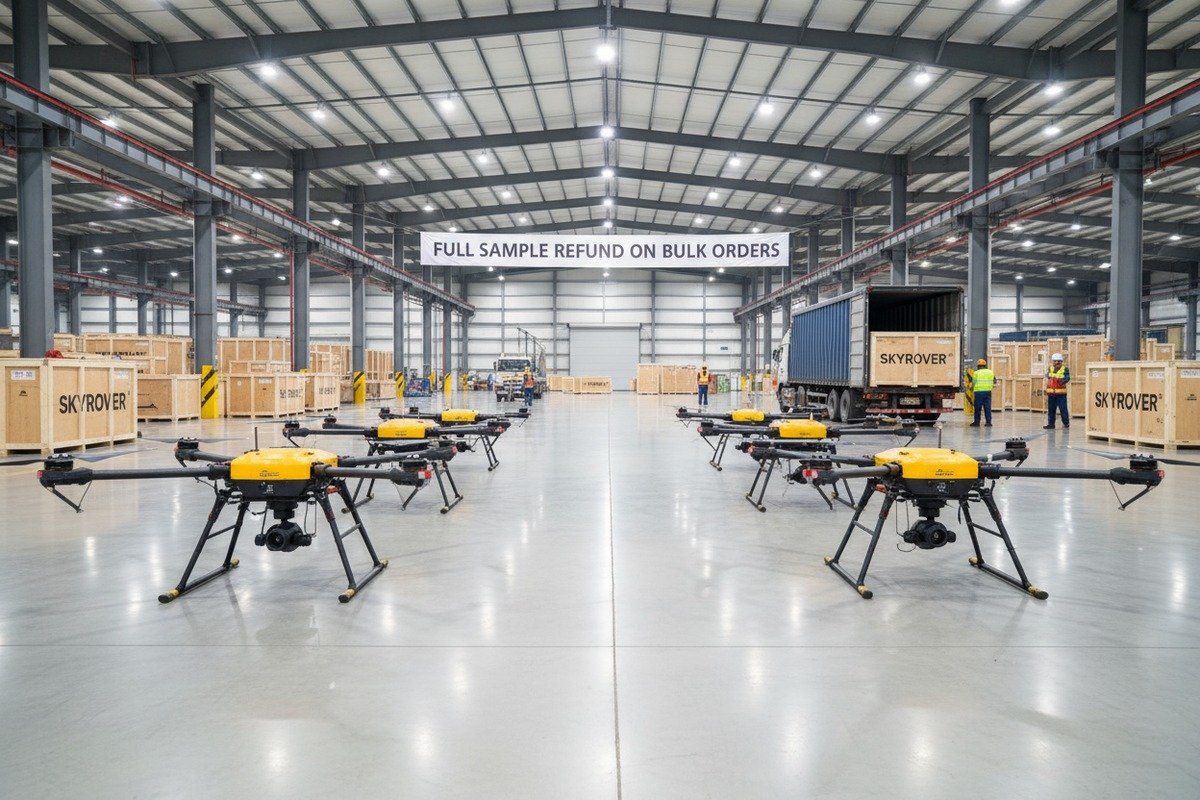
Volume Tiers and Credit Percentages
Different order sizes unlock different benefits. Here is what we typically see across the industry:
| Auftragsvolumen | Sample Credit | Additional Benefits |
|---|---|---|
| 1–2 units | 0–25% | Extended warranty possible |
| 3–5 units | 50–75% | Free training included |
| 6–10 units | 75–100% | Custom branding options |
| 10+ units | 100% + extras | OEM pricing, dedicated support |
Price Tier Considerations
Sample credit thresholds also depend on drone price category. A $5,000 basic thermal drone 5 has different economics than a $100,000 heavy extinguisher system.
| Kategorie Drohne | Preisspanne | Typical Credit Threshold |
|---|---|---|
| Basic Thermal | $5,000–$10,000 | 5+ units |
| Mid-Range Recon | $10,000–$20,000 | 3–5 units |
| Pro-Grade Autonomous | $50,000–$80,000 | 2–3 units |
| Heavy Extinguisher | $80,000–$100,000+ | 1–2 units |
Negotiating Below Standard Thresholds
You can still negotiate credits below standard thresholds. The key is demonstrating future value. If your department plans phased procurement over 2–3 years, communicate this timeline. Suppliers may offer credits against projected volumes.
Our engineering team recently worked with a California fire district ordering just two units initially. They secured 50% sample credit by signing a letter of intent for eight additional units over 24 months.
Regional and Seasonal Factors
Timing affects negotiation leverage. Wildfire season increases demand, reducing supplier flexibility. Off-season inquiries often yield better terms. Additionally, suppliers targeting specific regions may offer preferential terms to establish market presence.
Can I still negotiate a sample credit if I require custom software or OEM modifications for my drones?
Custom modifications add complexity to sample negotiations. When our software engineers develop specialized flight controllers or thermal imaging integrations, development costs factor into pricing decisions. However, customization also signals serious commitment.
Yes, you can negotiate sample credits for customized drones, but expect modified terms. Suppliers typically separate hardware sample fees from development costs, offering credits only on hardware portions. Alternatively, negotiate development cost amortization across bulk orders rather than sample fee refunds.

Separating Hardware and Development Costs
Custom projects involve two distinct cost categories. Understanding this separation helps you negotiate strategically.
Hardware costs include the drone frame, motors, batteries, cameras, and standard components. These follow normal sample credit rules. Development costs cover software customization, integration engineering, certification testing, and documentation.
When we quote custom firefighting drones, we itemize these categories. A $50,000 total quote might include $35,000 hardware and $15,000 development. Smart buyers negotiate hardware credits while accepting development as a fixed investment.
Amortization Strategies for Development Costs
Instead of seeking development cost refunds, negotiate amortization across your bulk order. This spreads non-recurring engineering expenses across multiple units.
For example, if development costs $15,000 and you plan to order 10 units, negotiate $1,500 per-unit reduction on bulk pricing. This effectively recovers your investment without requiring the supplier to absorb upfront losses.
OEM Branding and Credit Considerations
OEM branding requests (custom logos, color schemes, packaging) typically qualify for standard sample credits. These modifications require minimal engineering effort and align with supplier marketing goals.
Our production team regularly provides custom branding for fire department fleets. We view this as partnership investment, not additional cost. Branded units in service generate referrals.
What Customizations Affect Credit Eligibility
| Modification Type | Credit Eligibility | Negotiation Approach |
|---|---|---|
| Custom branding/colors | Full credit eligible | Standard sample terms |
| Extended batteries | Partial credit | Hardware credit only |
| Specialized payloads | Case-by-case | Amortization model |
| Custom software/API | Begrenzt | Development recovery via volume |
| Regulatory certification | None typical | Budget as separate line item |
Protecting Your Custom Development Investment
If you invest in custom development, ensure you retain intellectual property rights 6 for your specific modifications. This protects your investment even if the supplier relationship ends. Include IP clauses in your procurement contract.
How do I protect my investment by including sample refund terms in my final procurement contract?
Verbal agreements mean nothing when disputes arise. In our decade of exporting firefighting drones, we have seen buyers lose thousands because they trusted handshake deals. Written contract terms protect both parties.
Protect your sample investment by including explicit refund trigger clauses, documented performance benchmarks, testing timeline requirements, and credit application procedures in your procurement contract. Specify exact conditions for refunds versus credits, and require supplier acknowledgment of sample payment allocation.

Essential Contract Clauses for Sample Protection
Your procurement contract should address sample fees directly. Do not assume standard terms and conditions cover this adequately. Include specific language addressing:
- Sample fee amount and payment terms
- Credit application method toward bulk orders
- Refund triggers and procedures
- Performance testing requirements
- Dispute resolution process 7
Performance Benchmark Documentation
Specify measurable benchmarks that trigger refund eligibility. Vague language like "satisfactory performance" invites disputes. Use specific metrics:
| Leistungsmetrik | Zulässiger Bereich | Refund Trigger |
|---|---|---|
| Flight time | ≥90% of stated spec | <70% of spec |
| Payload capacity | ≥95% of stated spec | <80% of spec |
| Betriebstemperatur | Full range stated | Failure above 50°C |
| Transmission range | ≥85% of stated spec | <60% of spec |
| Thermal imaging accuracy | ±2°C stated | >±5°C variance |
Testing Protocol Requirements
Your contract should specify testing protocols. This prevents disputes about whether failures resulted from operator error or product defects.
Include requirements for:
- Minimum test duration
- Environmental conditions
- Operator certification requirements
- Documentation standards
- Third-party verification options
When our technical team supports customer testing, we provide standardized evaluation checklists. These protect both parties by ensuring consistent procedures.
Credit Application Procedures
Specify exactly how sample credits apply to bulk orders. Include:
- Credit validity period
- Invoice deduction method
- Partial order credit allocation
- Credit transfer restrictions
For example: "Sample fee of $5,000 shall be credited in full against the first bulk order invoice exceeding $25,000, provided order is placed within 180 days of sample delivery."
Dispute Resolution Framework
Include a clear dispute resolution process. Specify whether disputes go to arbitration, mediation, or courts. Designate governing law jurisdiction. This prevents expensive legal battles over relatively small sample amounts.
Our standard contracts include 30-day mediation periods before escalation. Most disputes resolve during mediation when both parties review documented test results.
Warranty Integration
Ensure sample units carry the same warranty as production units. Some suppliers offer reduced warranties on samples. This leaves you unprotected if defects appear after testing concludes but before bulk deployment.
Confirm warranty start date, duration, coverage scope, and claim procedures in writing.
Schlussfolgerung
Negotiating sample fee refunds requires preparation, clear communication, and written documentation. Structure inquiries around bulk commitments, understand volume thresholds, separate hardware from development costs, and protect investments through explicit contract terms. Your fire department budget deserves this diligence.
Fußnoten
1. Discusses heavy-lift drones for wildfire suppression, carrying payloads, and rapid response capabilities. ︎
2. Details the responsibilities and duties of a government procurement officer, ensuring compliance and best value. ︎
3. Explains the definition and purpose of a supplier rebate agreement, including key terms and conditions. ︎
4. Found an article explaining minimum order quantity (MOQ) in the context of inventory management. ︎
5. Explains how thermal imaging drones revolutionize fire management by providing real-time heat detection and monitoring. ︎
6. Discusses the importance of protecting intellectual property in manufacturing, including contracts and agreements. ︎
7. Reviews the basic characteristics of common dispute resolution mechanisms in commercial contracts. ︎

 English
  Spanish
  German
  French
  Dutch
Dutch  Arabic
