
Every season, our production line sees returned drones with corroded frames and failed motors OEM customization agreements 1. The culprit? Pesticide residue and fertilizer exposure that ate through inadequate coatings. This damage costs farmers thousands in downtime and repairs.
When buying agricultural drones, ask sellers about specific coating materials, IP ratings, salt spray test certifications, and chemical resistance data. Request documented proof of testing against your region’s pesticides. Verify maintenance requirements and warranty coverage for corrosion-related failures before purchase.
Let me walk you through the exact questions that protect your investment. These inquiries come from years of engineering Agrardrohnen 2 for harsh field conditions.
What specific anti-corrosion materials are used on my agricultural drone airframe to resist chemical damage?
Our engineers have tested dozens of coating combinations over the years. Most buyers never ask about materials until corrosion ruins their first drone. This oversight leads to expensive replacements within months.
Agricultural drone airframes typically use carbon fiber composites, anodized aluminum alloys, conformal PCB coatings, board-level potting compounds, and Fluid Thin Film Coatings. Premium models add silicone gaskets, dual O-ring seals, and military-grade wire insulation for complete chemical barrier protection.

Understanding Frame Material Choices
Carbon fiber dominates high-end agricultural drones for good reason. It resists most agricultural chemicals naturally. However, the joints and connection points remain vulnerable. Anodized aluminum provides lightweight strength but needs additional coating layers for acid-based fertilizers.
When we design frames at our facility, we test each material against common pesticides like glyphosate, paraquat, and organophosphates. The results vary dramatically. Some coatings fail within weeks. Others last years.
Key Coating Types Explained
| Coating Type | Application Area | Chemical Resistance | Typical Lifespan |
|---|---|---|---|
| Conformal Coating 3 | PCB boards | Hoch | 3-5 years |
| Board-Level Potting | Elektronik | Sehr hoch | 5+ years |
| Anodization | Aluminum parts | Mittel-Hoch | 2-4 years |
| FTFC (Navguard type) | Metal surfaces | Sehr hoch | 3-5 years |
| Powder Coating | Frame exterior | Mittel | 1-3 years |
Conformal coatings protect circuit boards from moisture and chemical vapor. These thin films seal sensitive electronics without adding weight. Ask your seller which specific conformal coating brand they use. Generic answers suggest cheaper products.
Board-level potting goes further. This process encases entire electronic modules in protective compounds. Our thermal shock testing runs 1000 hours of extreme temperature cycling. Quality potting survives this without cracking.
Questions to Ask About Materials
Request the exact material specifications. Vague answers like "corrosion resistant" mean nothing. You need specifics: What grade of carbon fiber? What anodization thickness? Which potting compound brand?
Ask about gasket materials too. Silicone and fluororubber handle different chemicals better. Fluororubber costs more but resists petroleum-based pesticides far better than standard silicone.
How can I verify that the coating will withstand the harsh pesticides and fertilizers used in my region?
During our export work with American distributors, we learned that regional chemical differences matter enormously. A drone performing perfectly in dry California vineyards may fail rapidly in humid Florida citrus groves. Verification requires documentation, not just promises.
Verify coating durability by requesting salt spray test reports (24 hours equals one year outdoor exposure), IP rating certificates (IP65-IP67 recommended), and specific chemical resistance data sheets. Demand testing evidence against your exact pesticide formulations, not general "chemical resistant" claims.
Understanding IP Ratings
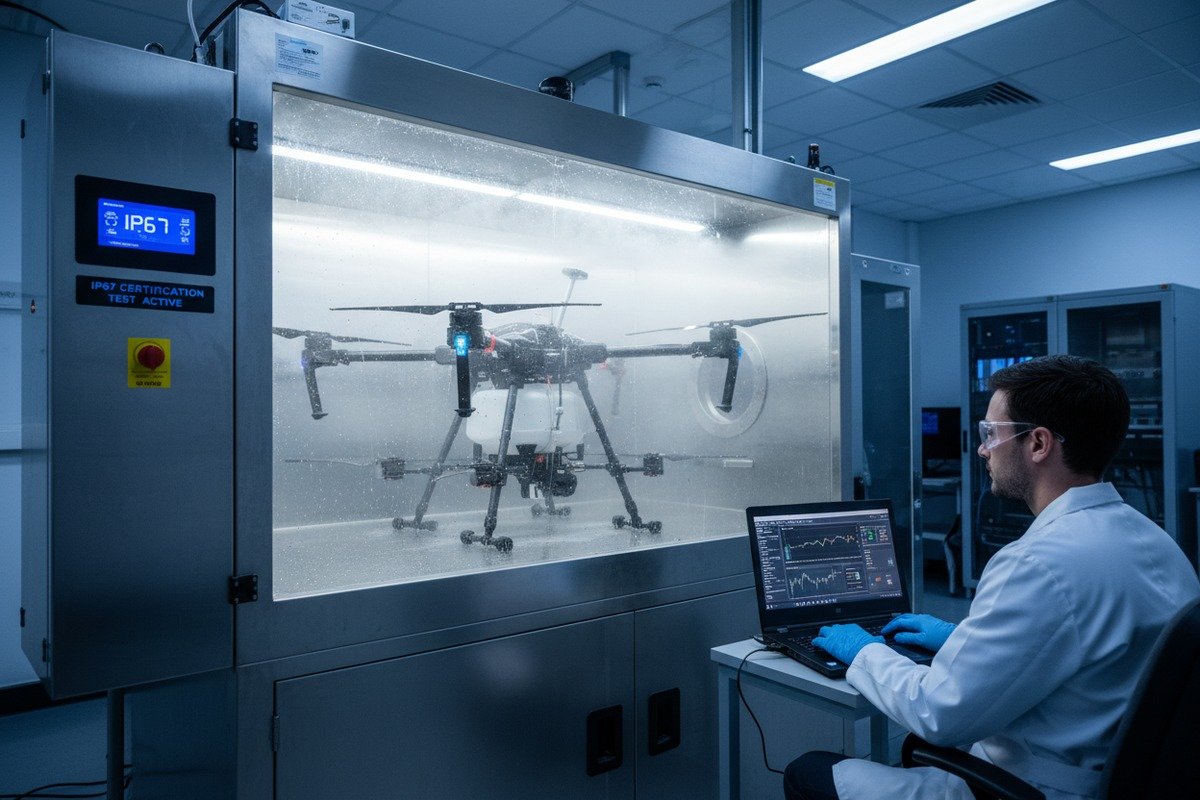
IP-Einstufungen 5 tell you exactly how well a drone resists dust and water. The first digit rates dust protection. The second rates water protection. Agricultural drones need high ratings on both.
| IP-Bewertung | Dust Protection | Water Protection | Suitable Environment |
|---|---|---|---|
| IP45 | Limited dust protection | Low-pressure water jets | Dry field conditions |
| IP55 | Dust protected | Low-pressure water jets | Standard ag operations |
| IP65 | Dust tight | Low-pressure water jets | Humid environments |
| IP67 | Dust tight | Temporary immersion | Heavy spray, rain, flooding |
For aggressive chemical environments, we recommend IP67 for the main body and IP55 minimum for motors. Anything less risks rapid corrosion in coastal or humid regions.
Salt Spray Testing Explained
Salt spray testing 6 simulates years of corrosive exposure in hours. Industry standard says 24 hours of salt spray equals approximately one year of outdoor exposure. Premium agricultural drones pass this test with pristine metal parts afterward.
When our quality control team runs these tests, we document everything with photos and lab reports. Ask your seller for this documentation. If they cannot provide it, question their quality claims.
Regional Chemical Considerations
Different regions use different chemical formulations. Acidic fertilizers common in some areas attack aluminum faster than neutral pH products. Copper-based fungicides create galvanic corrosion 7 when contacting dissimilar metals.
Create a list of your most-used chemicals before purchasing. Share this list with potential sellers. Ask specifically: "Has your coating been tested against these formulations?" Demand written answers, not verbal assurances.
Red Flags to Watch
Avoid sellers who offer only general resistance claims. Phrases like "suitable for agricultural use" without specifics suggest limited testing. Request third-party lab results, not just manufacturer claims.
Watch for snap-fit construction versus ultrasonic welding. Snap-fit joints allow chemical infiltration over time. Ultrasonic welding creates seamless barriers that last years longer.
What questions should I ask about the long-term durability and maintenance of my drone's protective finish?
When we calibrate our flight controllers for export shipments, we include detailed maintenance schedules. Why? Because even the best coatings fail without proper care. Durability depends on both initial quality and ongoing maintenance.
Ask about expected coating lifespan under your conditions, required cleaning frequencies, approved cleaning agents, recoating procedures, and warranty coverage for corrosion damage. Request maintenance schedules specifying daily, weekly, and seasonal care requirements based on your operating environment.
Lifespan Expectations by Component
Different drone components have vastly different durability expectations. Understanding these helps you budget for replacements and plan maintenance.
| Komponente | Protected Lifespan | Unprotected Lifespan | Maintenance Frequency |
|---|---|---|---|
| Motoren | 800-1500 hours | 300-500 hours | After each flight |
| Frame | 3-5 years | 1-2 Jahre | Weekly inspection |
| Elektronik | 5+ years | 2-3 Jahre | Monthly check |
| Connectors | 2-3 Jahre | 6-12 Monate | Daily cleaning |
| Propeller | 200-400 hours | 100-200 hours | Pre-flight check |
These numbers come from our field testing data. Protected motors last up to three times longer than unprotected ones. This difference alone justifies premium coating investment.
Maintenance Schedule Questions
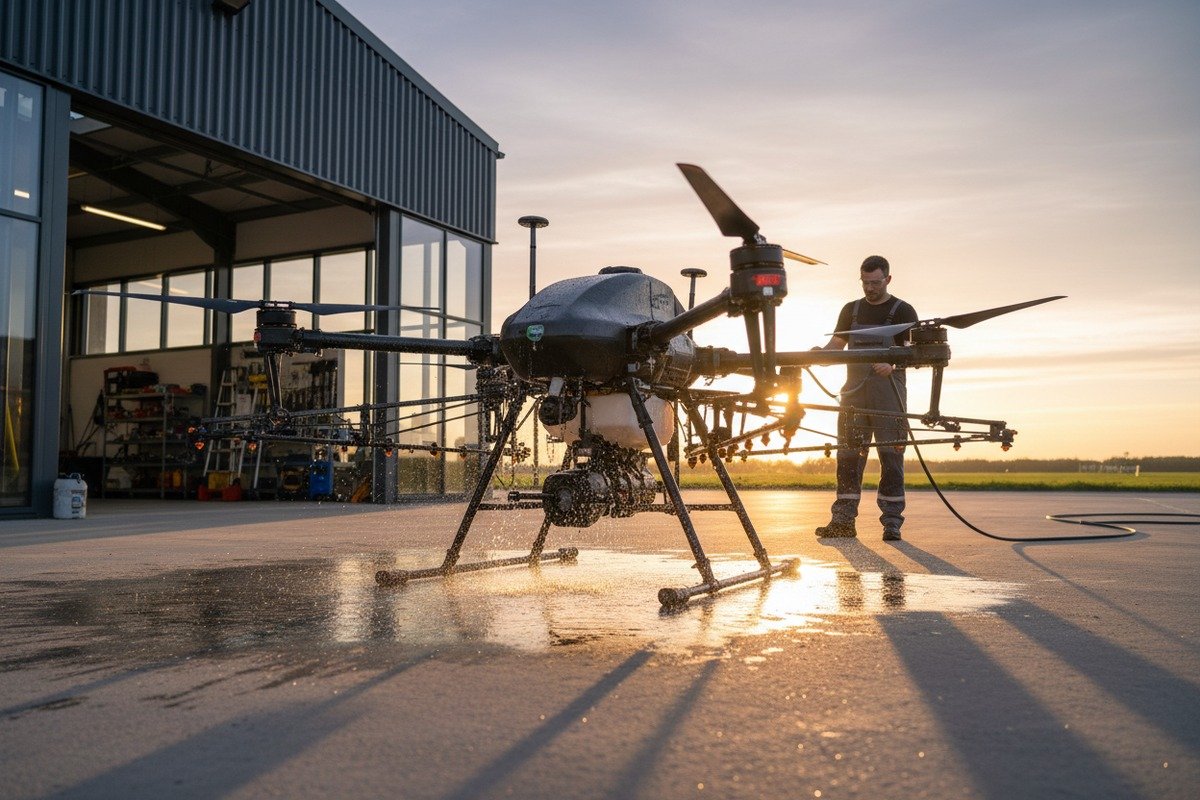
Ask your seller for specific cleaning protocols. Generic advice like "clean after use" helps nobody. You need details: Which cleaning agents are approved? Which damage coatings? How should you dry components to prevent moisture trapping?
Coastal and humid environments demand daily cleaning. Dry inland areas may allow every 2-3 days. Your seller should provide environment-specific guidance based on your location.
Recoating and Repair Options
Coatings wear over time regardless of quality. Ask about recoating options before purchase. Can the manufacturer reapply protective finishes? What does this cost? Does third-party recoating void your warranty?
Some manufacturers offer field-reapplication kits. Others require factory service. Knowing this upfront prevents surprises later.
Warranty Coverage Details
Read warranty fine print carefully. Many manufacturers exclude corrosion damage from coverage. Others require documented maintenance to honor claims. Get clear answers on these questions:
- Does warranty cover corrosion-related motor failure?
- What documentation proves proper maintenance?
- Are third-party repairs or recoating permitted?
- How long does corrosion coverage last?
Can I request custom anti-corrosion standards from my manufacturer to ensure my fleet lasts longer?
At our engineering facility, we regularly collaborate with distributors on custom protection packages. Standard configurations work for typical conditions. But extreme environments or specialty chemicals often demand tailored solutions.
Yes, reputable manufacturers offer custom anti-corrosion standards including upgraded IP ratings, specialty gasket materials, enhanced motor sealing, additional conformal coating layers, and region-specific chemical testing. Request OEM customization agreements specifying exact materials, testing protocols, and performance guarantees.

Types of Customization Available
Custom options range from simple material upgrades to complete redesigns. Understanding what is possible helps you negotiate effectively.
Simple upgrades include fluororubber gaskets instead of silicone, additional potting layers on electronics, and upgraded wire insulation. These changes add minimal cost but significantly improve chemical resistance.
More complex customizations involve structural changes. These might include sealed motor housings, redundant O-ring systems, or removable protective shrouds for easy cleaning.
Cost-Benefit Analysis
Custom coatings cost more upfront. But the math often favors investment. Consider a fleet of ten drones operating in harsh coastal conditions. Standard motors last 400 hours. Upgraded protected motors last 1200 hours.
| Szenario | Motor Replacement Cost | Total Fleet Cost Over 3600 Hours |
|---|---|---|
| Standard motors | $500 each | $45,000 (9 replacements × 10 drones × $500) |
| Protected motors | $650 each | $6,500 (1 replacement × 10 drones × $650) |
| Savings | $38,500 |
This simplified calculation shows why custom protection often delivers strong ROI despite higher initial costs.
Negotiating Custom Standards
When approaching manufacturers about custom anti-corrosion packages, come prepared. Bring your chemical inventory list, environmental data, and specific durability requirements. Vague requests get vague responses.
Ask for written specifications in your purchase agreement. Include specific materials by name, test standards to be met, and performance guarantees. This documentation protects both parties and ensures clear expectations.
Working with OEM Partners
If you need branded products, discuss anti-corrosion requirements during initial OEM negotiations. Adding protection later costs more than building it in from the start.
Our OEM clients often request custom testing against their specific regional pesticides. We maintain these test records for warranty support and quality verification. Ask potential manufacturers if they offer similar services.
Future-Proofing Considerations
Technology advances rapidly. Self-healing coatings and AI-monitored corrosion detection are emerging trends. Ask manufacturers about upgrade paths and compatibility with future protection technologies.
Some manufacturers now integrate corrosion monitoring sensors that alert operators to coating degradation before failure occurs. While still uncommon, these features represent the direction of premium agricultural drones.
Schlussfolgerung
Asking the right questions about anti-corrosion coatings protects your agricultural drone investment for years. Demand specific materials data, verified test reports, clear maintenance requirements, and customization options from every seller you consider.
Fußnoten
1. Explains the components and process of OEM agreements. ︎
2. Authoritative government source on agricultural drone chemical dispensing. ︎
3. Explains the purpose and application of conformal coatings in electronics. ︎
4. Details the material properties and applications of carbon fiber. ︎
5. Explains the international standard for ingress protection. ︎
6. Describes a common method for accelerated corrosion testing. ︎
7. Defines the electrochemical process of galvanic corrosion. ︎

 English
  Spanish
  German
  French
  Dutch
Dutch  Arabic
