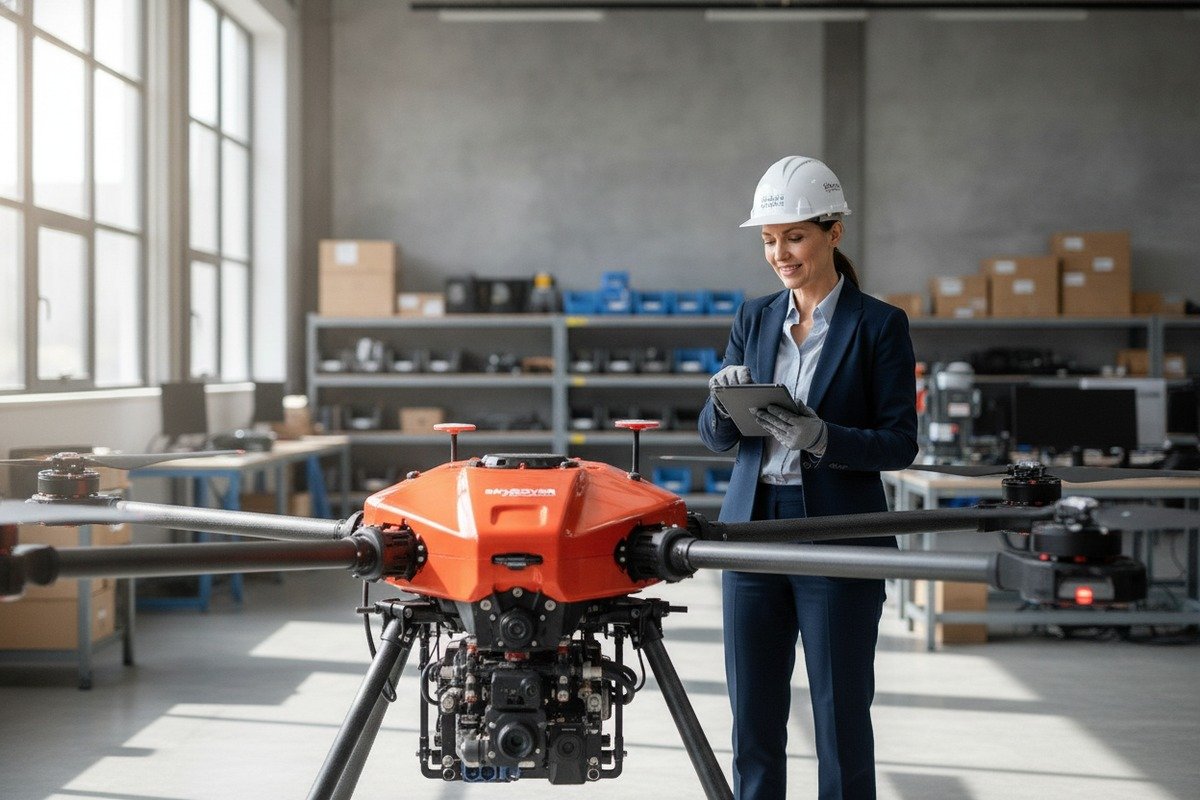
Every week, our sales team fields calls from distributors who bought Brandbekämpfungsdrohnen 1 elsewhere and ended up with machines that couldn’t handle smoke, heat, or real emergency pressure. The problem isn’t a lack of options — it’s a lack of structured evaluation IP-geschützte Gehäuse 2. When a drone fails mid-mission over an active fire, lives and contracts are at stake.
Industrial drone distributors should evaluate firefighting drones by assessing mission fit, sensor quality, flight stability, ruggedness, software integration, supplier certifications, after-sales support, and total cost of ownership together — because a drone that looks impressive on a spec sheet may still fail under real fire conditions.
This guide breaks down the critical procurement criteria into four practical areas. Whether you supply municipal fire departments, industrial plants, or emergency-response contractors, these evaluation steps will help you choose drones that actually perform when it matters most.
How can I verify the flight stability and durability of firefighting drones before placing a bulk order?
Unser Ingenieurteam hat jahrelang getestet Fluglotsen 3 in wind tunnels and high-temperature chambers, and one thing is clear: most drone failures during firefighting aren't random. They come from untested stability systems and materials that can't take the heat. Distributors who skip verification before bulk orders often pay for it later with returns and lost credibility.
To verify flight stability and durability, request factory test reports, conduct a 60- to 90-day field pilot program under realistic fire conditions, and examine redundancy systems including dual IMUs, redundant ESCs, and IP-rated enclosures before committing to bulk procurement.
Why Spec Sheets Alone Are Not Enough
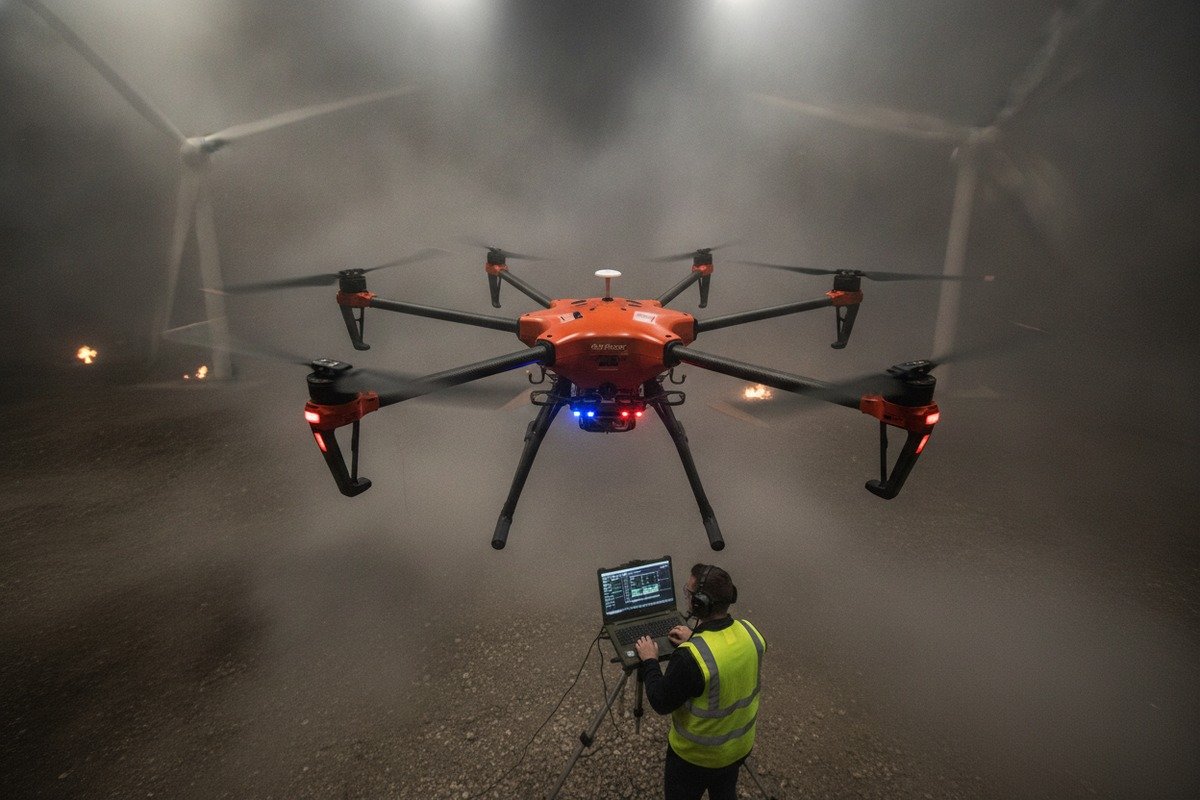
A spec sheet might say a drone handles 12 m/s winds. But does it hold position in turbulent thermals rising from a structure fire? There is a big difference between lab wind resistance and real-world convective turbulence near active flames. When we calibrate our flight controllers, we test against irregular gusts, not just steady headwinds. Distributors should demand the same standard from any supplier.
Ask the supplier for raw flight log data from high-wind and high-temperature tests. Look at GPS positioning accuracy, altitude hold variance, and motor RPM fluctuations. If they can't share this data, that is a red flag.
Key Stability and Durability Metrics to Evaluate
| Metrisch | Was zu beachten ist | Warum es wichtig ist |
|---|---|---|
| Windwiderstand | Stable hover at ≥ 12 m/s with payload | Fires create strong updrafts and crosswinds |
| Betriebstemperaturbereich | -20°C bis +60°C Minimum | Radiant heat near fires can exceed 50°C |
| IP-Einstufung | IP54 oder höher | Smoke, ash, and water exposure are common |
| Redundant flight systems | Dual IMU, dual GPS, redundant ESCs | Single-point failures are unacceptable in emergencies |
| Battery performance in heat | < 15% capacity loss at 45°C | Hot environments drain batteries faster |
| Rahmenmaterial | Carbon fiber or high-strength composite | Must resist heat warping and impact damage |
Run a Pilot Program Before You Scale
The smartest move for any distributor is to request a pilot batch — typically 2 to 5 units — and deploy them in conditions that mimic real operations. Run them in summer heat. Fly near controlled burns if possible. Track deployment time from vehicle to airborne. Measure how long the drone holds stable hover with a full thermal payload. Document every anomaly.
A 60- to 90-day pilot program will reveal problems that no amount of factory testing can predict: how quickly field crews can swap batteries, whether the landing gear survives rough terrain, whether the camera gimbal stays stable in smoke-filled air. Our team in Xi'an actively encourages distributors to run these trials because we know the data builds long-term trust.
Also pay attention to motor and propeller wear. Firefighting drones operate more aggressively than survey drones. High-throttle hover in gusty conditions accelerates motor bearing wear. After your pilot, inspect the motors and props for signs of fatigue. If they show excessive wear in 90 days, the platform may not survive a full operational season.
Don't Overlook the Octocopter Advantage
For heavy-payload firefighting missions, octocopter configurations 4 offer a critical advantage: motor redundancy. If one motor fails on a quadcopter, the aircraft crashes. On an octocopter, the flight controller can compensate and land safely. When lives depend on the drone staying airborne, this matters more than price per unit.
What should I look for in a supplier's OEM and software development capabilities for my specific firefighting needs?
When we work with distributors in the US and Europe, their end customers — fire departments, industrial safety teams, emergency contractors — almost always need something the off-the-shelf version doesn't have. Custom firmware, branded Bodenkontrollstationen 5, or integration with a specific incident command system. If your supplier can't adapt, you'll lose deals.
Look for suppliers with in-house engineering teams that offer OEM branding, custom firmware development, payload integration, and API-level software compatibility with GIS and incident management platforms like ArcGIS, WebEOC, or Veoci.
OEM Is More Than a Logo on a Shell
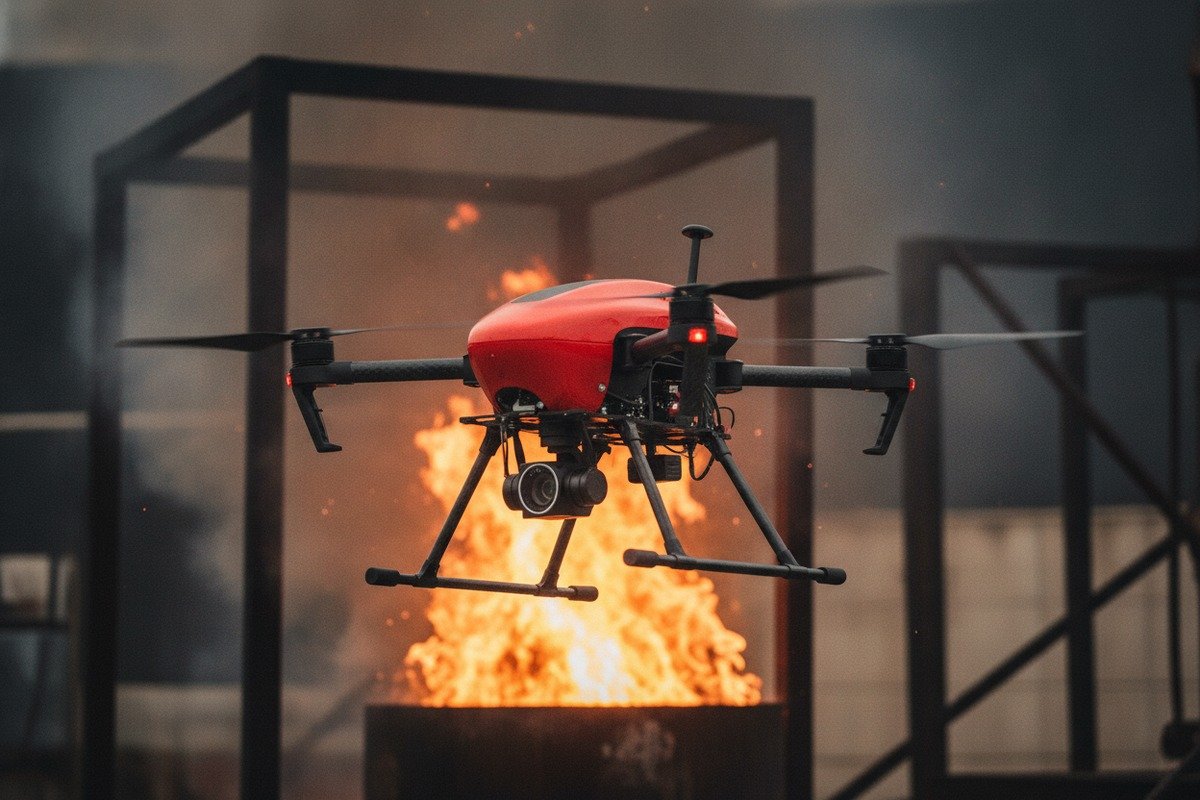
True OEM capability means the supplier can modify hardware configurations, adjust flight parameters in firmware, integrate third-party sensors, and re-skin the ground control software with your brand. At our facility in Xi'an, our 70-person team includes embedded software engineers who handle exactly this kind of work. But not every supplier has this depth. Some "OEM services" just mean they print your logo on the box.
Before signing a contract, ask these questions:
- Can you customize the ground control station interface with our branding?
- Can you adjust flight controller parameters for specific payload weights?
- Do you have SDK or API documentation for third-party software integration?
- Have you previously integrated with ArcGIS 6, FLIR tools, or WebEOC?
Software Integration Is the Real Differentiator
Fire agencies increasingly need drone data to flow directly into their command systems. Live thermal video streaming to an Emergency Operations Center is no longer a bonus — it is a requirement. The global firefighting drone market, projected to grow from USD 0.61 billion in 2024 to USD 2.12 billion at a 19.4% CAGR, is being driven in large part by this demand for integrated situational awareness.
| Softwarefähigkeit | Standard Expectation | Advanced Expectation |
|---|---|---|
| Live video streaming | RTMP/RTSP to local monitor | Stream to remote EOC via 4G/5G |
| Thermal data output | Basic JPEG thermal images | Radiometric TIFF with temperature data |
| Mapping integration | KML/KMZ-Export | Direct ArcGIS or QGIS plugin |
| Incident management | Manual data transfer | API integration with WebEOC or Veoci |
| KI-Analysen | Keine | Hotspot auto-detection, fire spread prediction |
| Firmware-Aktualisierungen | Manual USB update | OTA (over-the-air) remote update |
Radiometric Thermal vs. Simple Infrared
This is a critical distinction many distributors overlook. A simple infrared camera shows hot and cold areas as color gradients. A radiometrische Wärmebildkamera 7 measures actual temperatures at every pixel. For fire scene assessment, hotspot detection, and post-fire investigation, radiometric data is essential. It tells the incident commander whether a roof is at 200°C or 600°C — information that changes tactical decisions.
When evaluating a supplier's sensor package, confirm that the thermal payload supports radiometric output and that the ground control software can display temperature readings in real time. Dual-sensor payloads — combining visible light and radiometric thermal on one gimbal — are now the industry standard for fire operations.
AI and Predictive Analytics Are Growing Fast
Some forward-thinking suppliers now embed AI models that can auto-detect hotspots, track fire perimeter movement, and even predict spread patterns based on wind and terrain data. These features are still emerging, but they are increasingly requested in government and industrial tenders. If your customers are municipal fire agencies or large industrial plants, ask your supplier about their AI roadmap.
How do I ensure my drone supplier provides the necessary certifications and door-to-door delivery for a smooth import process?
We have exported drones to over a dozen countries, and the number one source of import delays is not customs processing speed — it is missing paperwork. A supplier who doesn't understand export documentation, aviation certifications, and the buyer's local regulatory requirements will cost you weeks and thousands of dollars in port fees.
Ensure your supplier holds CE, FCC, and relevant aviation certifications, provides complete export documentation including HS codes and commercial invoices, and offers door-to-door delivery with customs clearance support for your specific import country.
Certifications Are Non-Negotiable
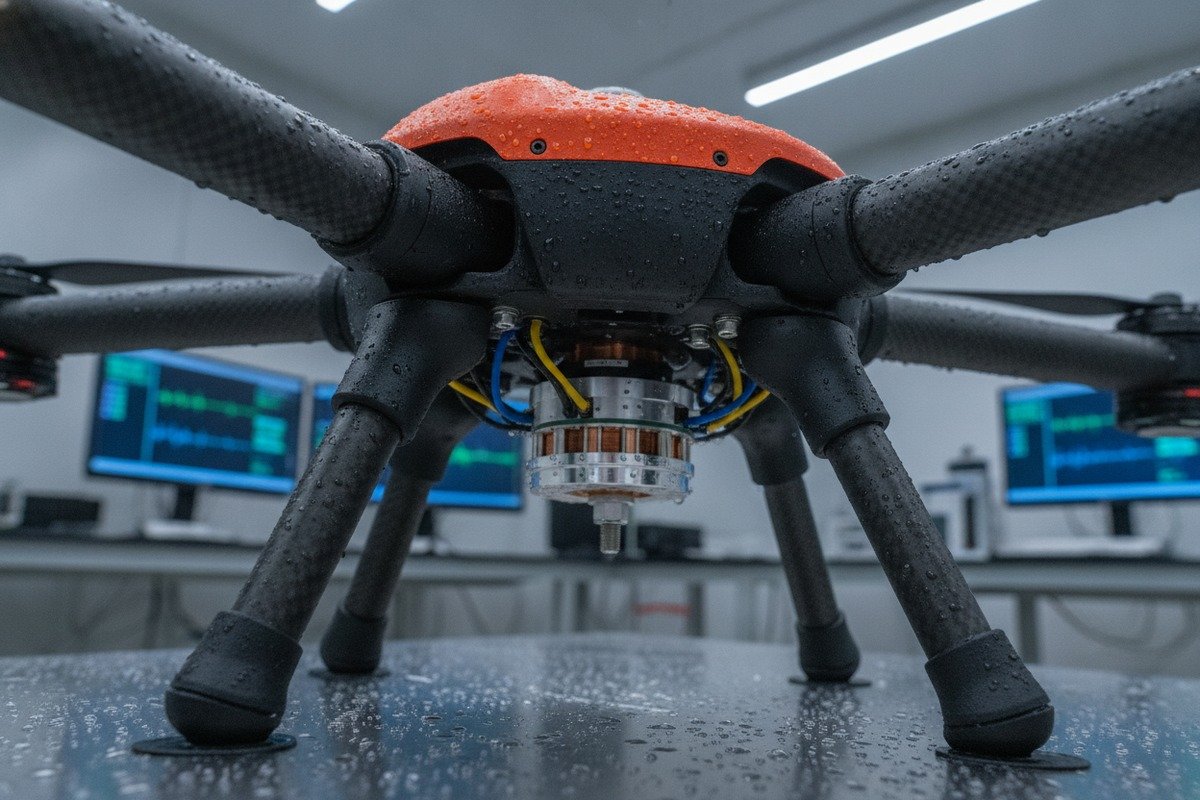
Firefighting drones are not consumer toys. They operate in public airspace, often under emergency authority. The regulatory environment is strict, and market analyses consistently identify certification complexity and airspace restrictions as major procurement constraints. Distributors must verify that the supplier's products meet the standards required by the end user's country.
For US imports, you typically need FCC Teil 15 Konformität 8 for radio emissions. For Europe, CE-Kennzeichnung 9 is mandatory. Beyond that, many fire agencies require the drone to be on an approved equipment list or to meet specific operational standards.
| Zertifizierung / Dokument | Erforderlich für | Was wird abgedeckt? |
|---|---|---|
| FCC Teil 15 | Vereinigte Staaten | Einhaltung der Vorschriften für Funksendemissionen |
| CE-Kennzeichnung | Europäische Union | Elektromagnetische Verträglichkeit, Sicherheit |
| RoHS | EU and many others | Beschränkung gefährlicher Stoffe |
| MSDS for batteries | All international shipments | Lithium battery safety data for transport |
| Ursprungszeugnis | Zollabfertigung | Bestätigt das Herkunftsland |
| Commercial Invoice with HS Code | Zollabfertigung | Correct tariff classification |
| IP Rating Test Report | End-user requirements | Dust and water ingress protection level |
| FAA Remote ID-Konformität | United States (operational) | Broadcast identification during flight |
Door-to-Door Delivery Saves You Headaches
Many Chinese drone manufacturers offer only FOB (Free on Board) pricing, which means the buyer handles ocean freight, customs brokerage, and last-mile delivery. This works if you have an experienced freight forwarder. But for many distributors — especially those new to importing from China — a supplier who provides DDP (Delivered Duty Paid) or at least DDU (Delivered Duty Unpaid) door-to-door service removes enormous complexity.
Our logistics team handles export declarations, dangerous goods paperwork for lithium batteries, freight booking, and customs pre-clearance documentation. This matters because Lithium-Polymer-Batterien 10 used in drones are classified as dangerous goods under IATA and IMDG regulations. If the battery paperwork is wrong, your shipment gets held or returned.
Regulatory Readiness Goes Beyond Hardware
Distributors should also ask whether the supplier can provide documentation that helps end users obtain operational approvals. For example, in the US, fire departments flying drones need FAA Part 107 waivers for certain operations (night flights, flights over people, beyond visual line of sight). A supplier who provides detailed aircraft specifications, safety data, and operational manuals in the correct format makes it much easier for the end user to apply for waivers.
The firefighting drone market is projected to reach USD 3.40 billion by 2034, but growth depends heavily on regulatory frameworks catching up with technology. Distributors who partner with certification-ready suppliers will be better positioned to win tenders from government agencies that require full compliance documentation.
How can I guarantee that my supplier will provide reliable technical support and affordable spare parts after the purchase?
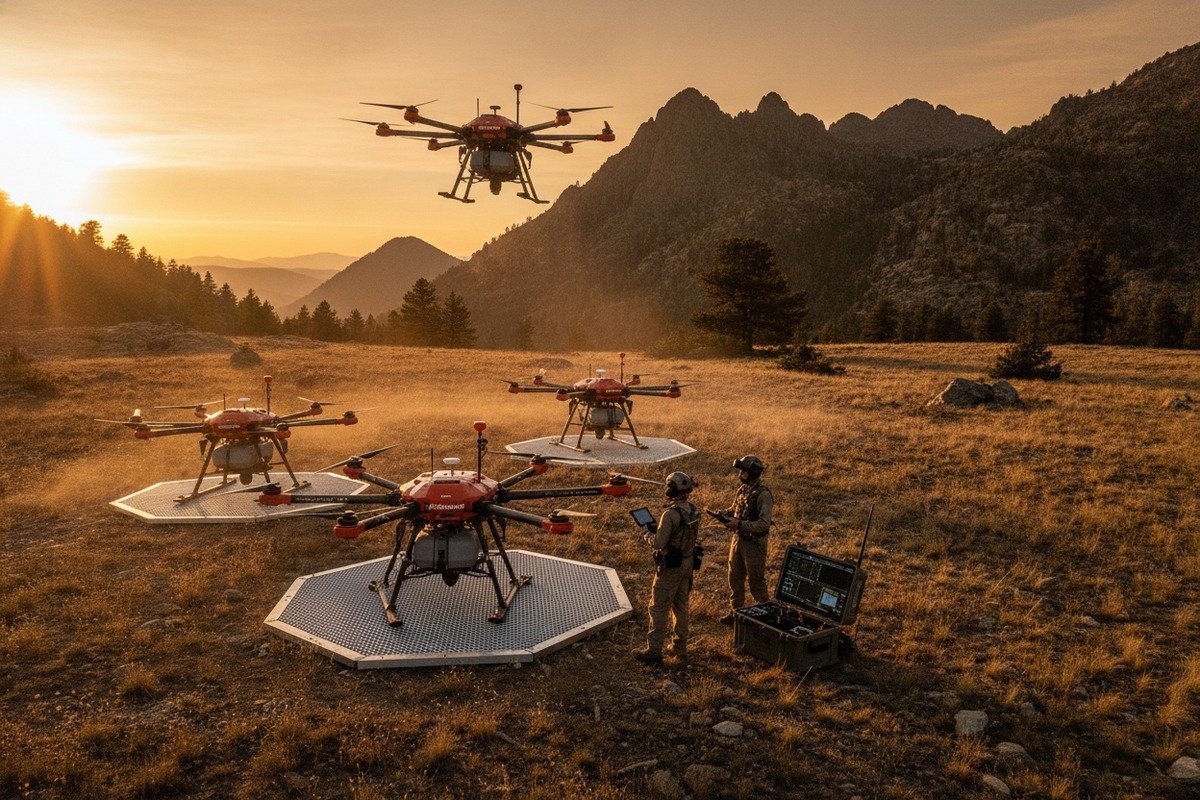
One of the most common complaints we hear from distributors switching to SkyRover is that their previous supplier disappeared after the invoice was paid. No firmware updates. No spare parts. No one answering the phone when a motor failed before a scheduled fire department demo. In mission-critical procurement, after-sales support is not optional — it is the backbone of your business relationship.
Guarantee reliable post-purchase support by requiring contractual commitments for 24/7 technical assistance, spare parts pricing and availability timelines, multi-year warranty terms, firmware update schedules, and documented repair turnaround times before signing any procurement agreement.
Put Support Terms in the Contract
Verbal promises mean nothing when your customer's drone is grounded before a wildfire season deployment. Every support commitment should be written into your procurement contract. This includes response time guarantees, parts shipping timelines, warranty coverage scope, and firmware update frequency.
Here's what we recommend including:
- Response time SLA: Maximum 24 hours for initial technical response, 4 hours for critical mission-down situations.
- Vorlaufzeit für Ersatzteile: Key components (motors, ESCs, propellers, gimbal assemblies) shipped within 48–72 hours.
- Garantiedauer: Minimum 12 months, with extended warranty options for high-volume buyers.
- Firmware-Aktualisierungen: At least quarterly, with OTA capability preferred.
- Ausbildung: Remote training sessions for basic maintenance and field troubleshooting.
The Hidden Cost Problem
The real budget for a firefighting drone program is always larger than the drone itself. Fact.MR estimates the firefighting drone inspection market at USD 0.8 billion in 2025, rising to USD 4.6 billion by 2036 — and a significant portion of that spending goes toward maintenance, training, spare parts, and software licenses.
Distributors who ignore these costs will underquote their customers and erode their own margins. Here is a realistic breakdown of what a full program costs beyond the aircraft:
| Kostenkategorie | Typical Range (Per Unit/Year) | Anmerkungen |
|---|---|---|
| Spare battery sets | $500 – $2.000 | Fire operations drain batteries fast; plan for 3–5 spares per drone |
| Replacement propellers | $100 – $400 | High-RPM operations accelerate wear |
| Thermal payload maintenance | $300 – $1,000 | Calibration and lens cleaning for radiometric accuracy |
| Software license renewals | $200 – $1,500 | GCS, mapping, and analytics platforms |
| Pilot training (per operator) | $1.000 – $3.000 | Initial certification plus annual recurrency |
| Insurance (per drone) | $500 – $2.000 | Required for most government and industrial contracts |
| Erweiterte Garantie | $300 - $1.200 | Covers second and third year |
Why Spare Parts Pricing Must Be Transparent
Some suppliers use low drone prices to win orders, then charge exorbitant rates for spare parts. This is a common trap in industrial equipment markets. If a replacement motor costs 40% of the drone price, your total cost of ownership becomes unsustainable.
Before procurement, request a full spare parts catalog with pricing. Compare motor, ESC, propeller, battery, and gimbal prices against the total unit cost. A fair benchmark: no single replacement component should exceed 10–15% of the drone's base price, except for the thermal payload.
Training Is Part of Support
Your end customers — fire departments, industrial safety teams — need more than a user manual. They need structured training for drone pilots, maintenance technicians, and incident command staff. A good supplier provides video tutorials, remote training sessions, and optional on-site training for large deployments.
At our Xi'an headquarters, we maintain a dedicated support team that conducts remote troubleshooting via video call, walks field technicians through motor replacements, and helps incident commanders configure their ground control software. This level of support is what separates a vendor from a partner.
Calculate Total Cost of Ownership Before You Commit
When presenting firefighting drones to your customers, always show them the three-year total cost of ownership — not just the unit price. Include batteries, training, maintenance, insurance, software, and spare parts. Customers who understand the full picture are more likely to choose a mid-to-high-end platform with strong support over a cheap drone with no backup.
This approach also protects your reputation as a distributor. If you sell a low-cost drone that fails in the field and the supplier can't provide parts or support, your customer won't blame the factory — they'll blame you.
Schlussfolgerung
Firefighting drone procurement demands more than comparing spec sheets. Evaluate mission fit, sensor capability, ruggedness, software integration, certifications, delivery logistics, and long-term support together — because in public-safety work, the weakest link in your supply chain becomes the biggest risk.
Fußnoten
1. Replaced HTTP 404 with a comprehensive guide on firefighting drones. ︎
2. Replaced HTTP unknown with an authoritative source (IEC) explaining IP ratings. ︎
3. Explains the function and importance of drone flight controllers. ︎
4. Details the benefits of octocopter drone designs for heavy payloads. ︎
5. Replaced HTTP 403 with an authoritative Wikipedia page on UAV ground control stations. ︎
6. Replaced HTTP 404 with the official Esri page detailing ArcGIS solutions for emergency management. ︎
7. Replaced HTTP 404 with an explanation of what a radiometric thermal camera is. ︎
8. Explains FCC Part 15 regulations for drone radio frequency emissions. ︎
9. Replaced HTTP 403 with an authoritative government source (.gov) explaining CE marking. ︎
10. Replaced HTTP 404 with an authoritative Wikipedia page on lithium polymer batteries. ︎
 English
  Español de México
  Deutsch
  Français
  Русский
  العربية
Join the Discussion
Have Thoughts on This Article?
Your experience matters. Whether you agree, disagree, or have a question about deploying industrial drones in the field, drop a comment below -- our team reads and responds to every one.