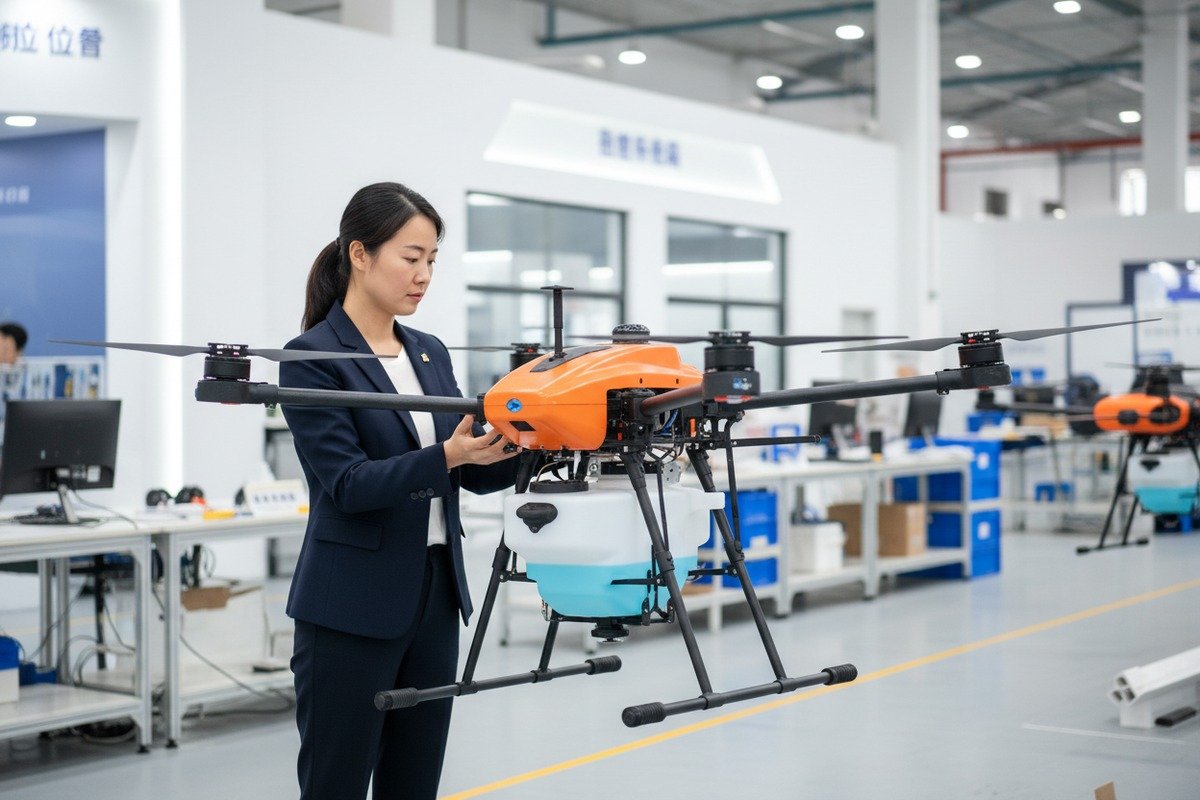
When our engineering team first started developing modular payload systems, we quickly realized that not all suppliers approach customization the same way. Many buyers struggle to identify which manufacturers can truly deliver specialized agricultural payloads versus those who simply offer off-the-shelf modifications.
To evaluate agricultural drone suppliers for specialized payload customization, assess their engineering capabilities through prototype testing, verify quality control certifications like ISO 9001, confirm export documentation compliance, and examine their long-term spare parts availability and technical support infrastructure before committing to large orders.
This guide walks you through the critical evaluation criteria. We will cover engineering verification, quality benchmarks, export certifications, and long-term support considerations. Let us dive into each area systematically.
How can I verify a manufacturer's engineering capability to handle my specific agricultural payload design?
Our production facility receives dozens of custom payload requests monthly. The challenge for buyers is separating manufacturers with genuine R&D depth from those who outsource critical engineering work. Without proper verification, you risk delays, performance issues, and costly redesigns.
Verify a manufacturer's engineering capability by requesting CAD design samples, reviewing their payload integration portfolio, conducting on-site factory audits, testing prototype units in field conditions, and confirming they have dedicated firmware engineers who can modify flight controllers for your specific payload weight and balance requirements.
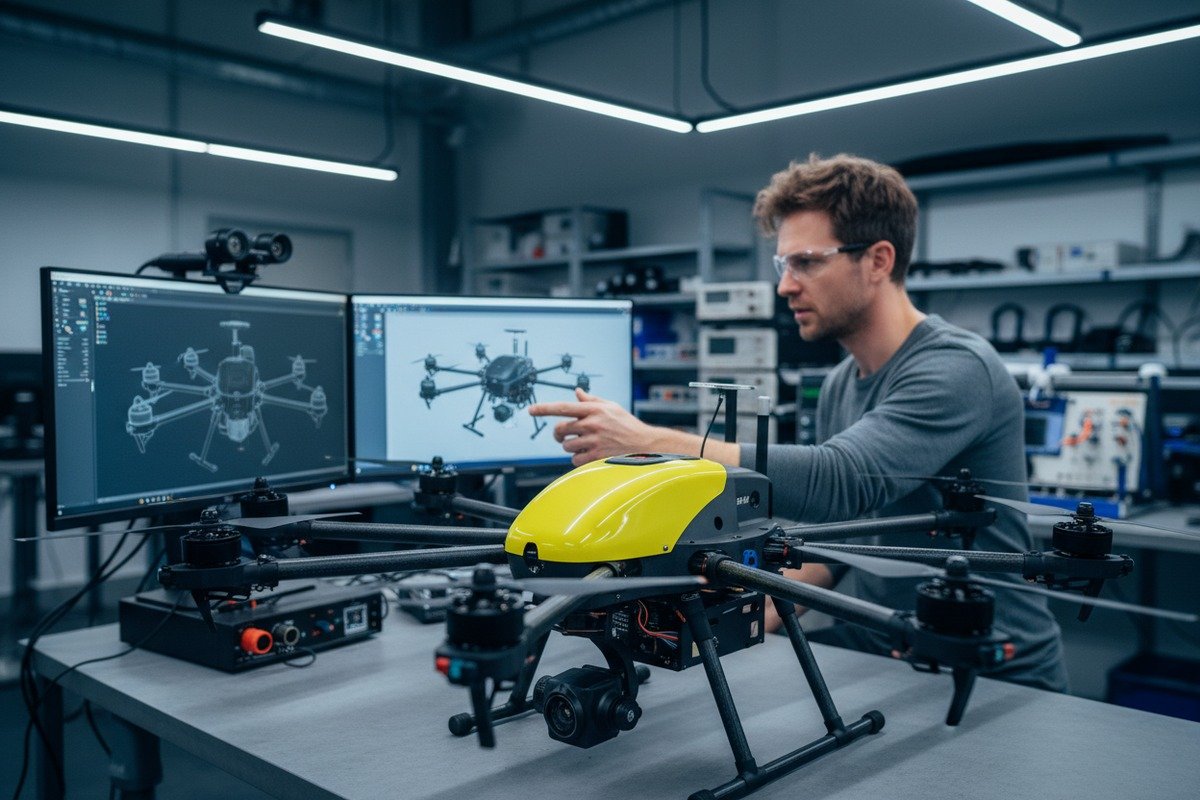
Request Technical Documentation First
Start by asking for detailed technical documentation. A capable manufacturer should provide:
- CAD drawings of previous custom payload mounts
- Firmware modification logs showing payload integration work
- Load testing certificates for various weight configurations
- Flight controller calibration reports
When we calibrate our flight controllers for heavy spraying tanks, the process involves precise center-of-gravity calculations. Ask potential suppliers to walk you through their calibration process. Vague answers signal limited capability.
Evaluate Their Engineering Team Structure
The composition of the engineering team matters significantly. Request information about their team size and specialization.
| Engineering Role | Warum es wichtig ist | Red Flag If Missing |
|---|---|---|
| Mechanical Engineers | Design payload mounting systems | Cannot customize physical attachments |
| Firmware Developers 1 | Modify flight control software | Limited to stock configurations |
| Systems Integrators | Connect sensors to drone platform | Poor data transmission reliability |
| Test Engineers | Validate performance under load | Untested prototypes reach customers |
A manufacturer with only assembly technicians cannot handle true customization. Our team includes dedicated firmware developers who specifically handle payload integration coding. This allows us to adjust motor response curves when customers need heavier multispectral sensor arrays 2.
Conduct Prototype Testing
Never skip prototype testing. Request a small-batch test order before committing to larger volumes. During testing, evaluate:
- Flight stability with your payload attached
- Battery drain compared to manufacturer claims
- Heat dissipation from motors under load
- Vibration levels affecting sensor accuracy
In our experience exporting to US agricultural operations, customers who tested prototypes first reported 40% fewer field issues. Those who skipped testing faced costly retrofits.
Check for Modular Design Philosophy
The best agricultural drone manufacturers build modularity into their core design. Look for quick-release mounting systems, standardized electrical connectors, and adjustable payload bays. These features indicate forward-thinking engineering.
Ask specifically about payload swapping time. A well-designed system allows field crews to switch from spraying tanks to multispectral cameras in under ten minutes. Complex swapping procedures suggest rigid design that limits future flexibility.
What quality control benchmarks should I require to ensure my customized drone performs reliably in the field?
Our quality assurance department rejects approximately 3% of components before they reach assembly. This strict approach exists because agricultural environments destroy poorly built equipment quickly. Dust, moisture, chemical exposure, and temperature swings demand exceptional build quality.
Require ISO 9001 certification, IP65 or higher ingress protection ratings, documented burn-in testing procedures, motor lifespan certifications exceeding 500 flight hours, and third-party vibration analysis reports to ensure your customized agricultural drone performs reliably in harsh field conditions.

Essential Certifications to Request
Certifications provide baseline quality assurance. However, not all certifications carry equal weight for agricultural applications.
| Zertifizierung | Was wird abgedeckt? | Relevance to Agriculture |
|---|---|---|
| ISO 9001 3 | Quality management systems | High – ensures consistent manufacturing |
| IP65/IP67 | Dust and water protection | Critical – protects against field conditions |
| CE Marking | European safety standards | Medium – indicates electrical safety |
| FCC Part 15 | Radio frequency compliance | Required for US operations |
| RoHS | Hazardous substance restrictions | Low direct impact on performance |
When we assemble our agricultural hexacopters, every unit undergoes IP rating verification. IP65 or higher ingress protection 4 This testing involves controlled dust chambers and water spray exposure. Request video documentation of these tests from potential suppliers.
Burn-In Testing Requirements
Burn-in testing identifies early component failures before drones ship. A proper burn-in process should include:
- Minimum 4-hour continuous operation test
- Full payload weight attached during testing
- Temperature cycling between operating extremes
- Multiple takeoff and landing cycles
Manufacturers who skip burn-in testing save production time but transfer failure risk to customers. Ask for burn-in test reports with serial number tracking. Each drone should have individual test documentation.
Motor and ESC Quality Standards
Motors and electronic speed controllers (ESCs) determine drone reliability more than any other components. For agricultural applications, specify:
- Motor lifespan ratings of 500+ flight hours
- ESC temperature ratings above 80°C continuous operation
- Bearing quality certifications (Japanese or German bearings preferred)
- Corrosion-resistant motor housings
Our production line uses motors tested specifically for chemical exposure. Agricultural spraying creates corrosive environments that destroy standard motors within months. This detail often separates agricultural-grade equipment from general-purpose drones.
Structural Integrity Testing
Carbon fiber frames 5 require specific quality verification. Request:
- Tensile strength test results
- Impact resistance documentation
- UV degradation resistance ratings
- Vibration frequency analysis
The woven carbon fiber texture visible on quality drone arms indicates proper layering technique. Inconsistent weave patterns suggest manufacturing shortcuts that compromise structural integrity.
Incoming Component Inspection Protocols
Quality starts with component sourcing. Ask suppliers about their incoming inspection procedures. A thorough manufacturer tests components before assembly rather than relying solely on supplier claims.
Key inspection points include battery cell matching, propeller balance verification, and sensor calibration confirmation. These pre-assembly checks prevent field failures that damage customer operations and reputations.
Can my supplier provide the necessary export certifications and technical documentation for a custom-built drone?
In our experience exporting to the US market, documentation problems cause more shipment delays than product defects. Custom-built drones require additional paperwork beyond standard models. Missing documents can strand your equipment at customs for weeks.
Your supplier must provide FAA-compliant airworthiness documentation, complete technical specifications with payload integration details, customs classification paperwork (HS codes), certificates of conformity, user manuals in required languages, and any exemption support documentation needed for agricultural operations under Part 107 or Part 137 regulations.

FAA Documentation Requirements
Agricultural drone operators in the US face specific regulatory requirements. Your supplier should understand and support compliance with:
| Regulation | Application | Supplier's Role |
|---|---|---|
| Part 107 6 | Basic commercial operations | Provide aircraft specifications |
| Part 137 | Agricultural aircraft operations | Supply airworthiness documentation |
| Section 44807 | Exemptions for special operations | Assist with technical submissions |
| BVLOS Waivers | Beyond visual line of sight | Provide safety system documentation |
For drones under 55 pounds, Part 107 provides the baseline framework. However, agricultural spraying operations typically require Part 137 certification 7. This involves FAA Form 8710-3, risk assessments, and proof of insurance.
When our engineering team designs custom payloads, we prepare documentation packages specifically formatted for FAA submissions. FAA-compliant airworthiness 8 This proactive approach saves customers months of back-and-forth with regulators.
Technical Documentation Checklist
Custom-built drones require comprehensive technical documentation. Before ordering, confirm your supplier will provide:
- Complete wiring diagrams including payload connections
- Flight controller parameter settings
- Motor and propeller specifications with thrust curves
- Battery management system documentation
- Failsafe configuration details
- Wartungspläne und -verfahren
Generic documentation covering base models is insufficient. Custom payload integration changes system behavior. Documentation must reflect actual delivered configuration.
Customs and Import Requirements
Proper customs classification prevents delays and unexpected duties. Agricultural drones typically classify under HS code 8802.20 9 for unmanned aircraft. However, payload components may require separate classification.
Request your supplier provide:
- Accurate HS code determination for complete system
- Commercial invoice with itemized component values
- Country of origin certificates
- Packing lists matching invoice quantities
Our export team prepares customs documentation as standard practice. This includes dual-language commercial invoices and pre-cleared HS code classifications. Suppliers unfamiliar with export procedures often create documentation errors that cause customs holds.
Chemical Handling Documentation
Agricultural spraying drones require additional documentation for chemical dispensing systems. This includes:
- Tank material safety certifications
- Nozzle calibration procedures
- Chemical compatibility charts
- Spill containment protocols
The FAA requires operators to demonstrate safe chemical handling procedures. Suppliers should provide supporting documentation that helps customers meet these requirements.
Warranty Terms for Custom Configurations
Standard warranties often exclude custom modifications. Clarify warranty coverage before ordering:
- Does the warranty cover custom payload integration?
- What testing documentation validates warranty claims?
- Are replacement parts available for custom components?
- What is the warranty claim process for international customers?
Written warranty terms specific to your custom configuration prevent disputes later. Verbal assurances hold no value when components fail in the field.
How do I evaluate the long-term technical support and spare parts availability for my specialized drone fleet?
Our customer service records show that support quality determines repeat purchase rates more than initial product quality. A perfectly functioning drone becomes worthless when replacement motors are unavailable six months after purchase. Long-term support evaluation prevents fleet groundings.
Evaluate long-term support by confirming spare parts inventory levels and lead times, verifying firmware update commitment periods of at least three years, checking for regional service centers or authorized repair partners, reviewing response time guarantees for technical inquiries, and requesting references from existing customers operating similar fleet sizes.
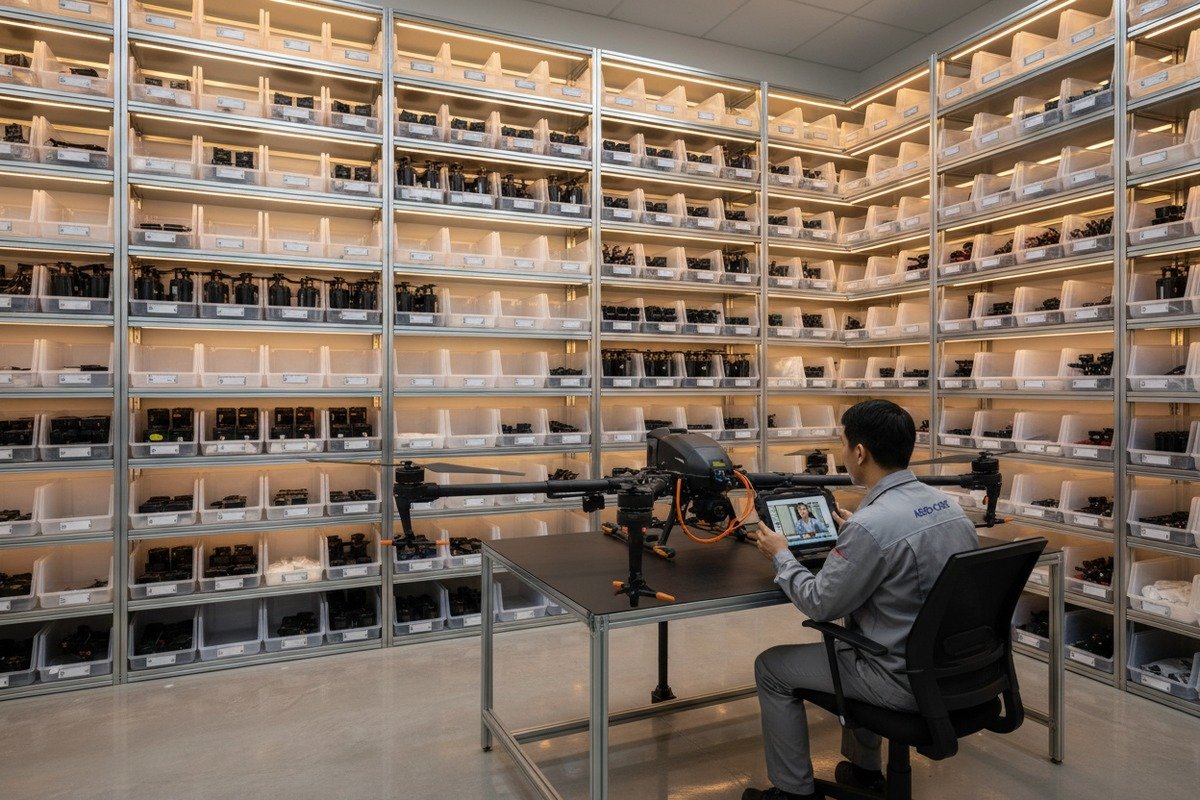
Spare Parts Availability Assessment
Spare parts access determines fleet uptime. Before committing to a supplier, investigate:
| Komponente | Recommended Stock Level | Acceptable Lead Time |
|---|---|---|
| Propeller | 2 sets per drone | Immediate (in stock) |
| Motoren | 1 per 3 drones | 1-2 weeks |
| ESCs | 1 per 3 drones | 1-2 weeks |
| Batterien | 1.5 per drone | 2-4 weeks |
| Fluglotsen | 1 per 10 drones | 2-4 weeks |
| Custom Payload Parts | Variiert | Must confirm availability |
Our warehouse maintains a minimum 90-day supply of all standard components. For custom payload parts, we establish dedicated inventory based on customer fleet sizes. Ask potential suppliers about their inventory management practices.
Firmware and Software Support Lifecycle
Agricultural drone software requires ongoing updates for:
- Bug fixes discovered after deployment
- Compatibility with new payload sensors
- Regulatory compliance changes
- Performance optimizations
Request written commitment to firmware support duration. Three years minimum is standard for industrial equipment. Shorter commitments indicate products may become obsolete quickly.
Cloud-based analytics platforms like Pix4D require ongoing integration support. Confirm your supplier maintains compatibility with major agricultural analytics software.
Technical Support Response Standards
Define acceptable response times before purchase:
- Critical issues (drone grounded): 4-hour response
- Major issues (degraded performance): 24-hour response
- Minor issues (questions/optimization): 72-hour response
Our technical support team operates across time zones to serve international customers. We provide direct engineer access for complex integration questions. Sales-only support teams cannot resolve technical payload issues.
Training and Knowledge Transfer
Long-term fleet success requires trained operators and technicians. Evaluate supplier training offerings:
- Initial operator certification programs
- Maintenance technician training
- Payload-specific operation procedures
- Troubleshooting guides and videos
Comprehensive training packages, like those bundled with DJI T50 systems at approximately $29,999, demonstrate supplier commitment to customer success. Basic product delivery without training support suggests transactional rather than partnership relationships.
Reference Customer Verification
Request references from customers operating similar fleet sizes and payload configurations. Key questions for references:
- How responsive is technical support?
- Have spare parts been readily available?
- Has firmware been regularly updated?
- Would you purchase from this supplier again?
Direct conversations with existing customers reveal support quality that sales presentations cannot demonstrate. Suppliers unwilling to provide references likely have dissatisfied customers.
Service Level Agreement Terms
For fleet purchases, negotiate formal Service Level Agreements (SLAs) covering:
- Guaranteed response times
- Parts availability commitments
- On-site support provisions
- Escalation procedures
- Compensation for support failures
Written SLAs create accountability that informal promises lack. Our distribution partners receive standardized SLAs that clearly define mutual obligations.
Schlussfolgerung
Evaluating agricultural drone suppliers for specialized payload customization requires systematic assessment across engineering capability, quality control, export documentation, and long-term support. Use the frameworks and tables provided here to compare potential suppliers objectively. Your fleet investment deserves thorough due diligence.
Fußnoten
1. Provides a general overview of the role and responsibilities of firmware engineers. ︎
2. Replaced with the Wikipedia page for multispectral imaging, which encompasses the concept of multispectral sensor arrays, as the original Wikipedia page was a 404. ︎
3. Replaced with the Wikipedia page for the ISO 9000 family, which includes ISO 9001, as an authoritative and comprehensive source. ︎
4. Replaced with the Wikipedia page for the IP Code, which authoritatively explains the ingress protection rating system, including IP65 and higher. ︎
5. Replaced with the Wikipedia page for carbon fibers, providing an authoritative overview of the material used for carbon fiber frames. ︎
6. Provides the official regulations for small unmanned aircraft systems under FAA Part 107. ︎
7. Outlines the official FAA regulations for agricultural aircraft operations. ︎
8. Outlines FAA requirements for drone airworthiness certification and related documentation. ︎
9. Explains the international Harmonized System for classifying traded products, including drones. ︎

 English
  Spanish
  German
  French
  Dutch
Dutch  Arabic
