
Every week, our production team receives calls from frustrated fleet managers vorausschauende Instandhaltung 1. Their Brandbekämpfungsdrohnen 2 failed mid-mission. Now they face a maze of paperwork, shipping delays, and unanswered questions. This chaos costs money and risks lives.
To establish an efficient return process for faulty firefighting drones, you need four key elements: streamlined customs documentation, complete technical records for warranty verification, backup fleet strategies to minimize downtime, and real-time communication protocols with your supplier. These components work together to reduce repair turnaround from weeks to days.
In this guide, we will walk you through each step. You will learn practical strategies that our engineering team and export specialists have refined over years of supporting global clients. Let us dive into the details.
How can I streamline the customs and shipping process for returning my faulty firefighting drones?
International returns create headaches for many of our clients. Drones sit at customs for weeks. Paperwork gets rejected. Meanwhile, your fleet operates below capacity. The problem is not the system itself. The problem is missing the right preparation steps. customs documentation 3
To streamline customs and shipping for drone returns, prepare complete export documentation including commercial invoices, country-of-origin certificates, and battery safety declarations beforehand. Work with freight forwarders experienced in aviation equipment, and always use certified hazmat packaging for lithium batteries to prevent customs holds.
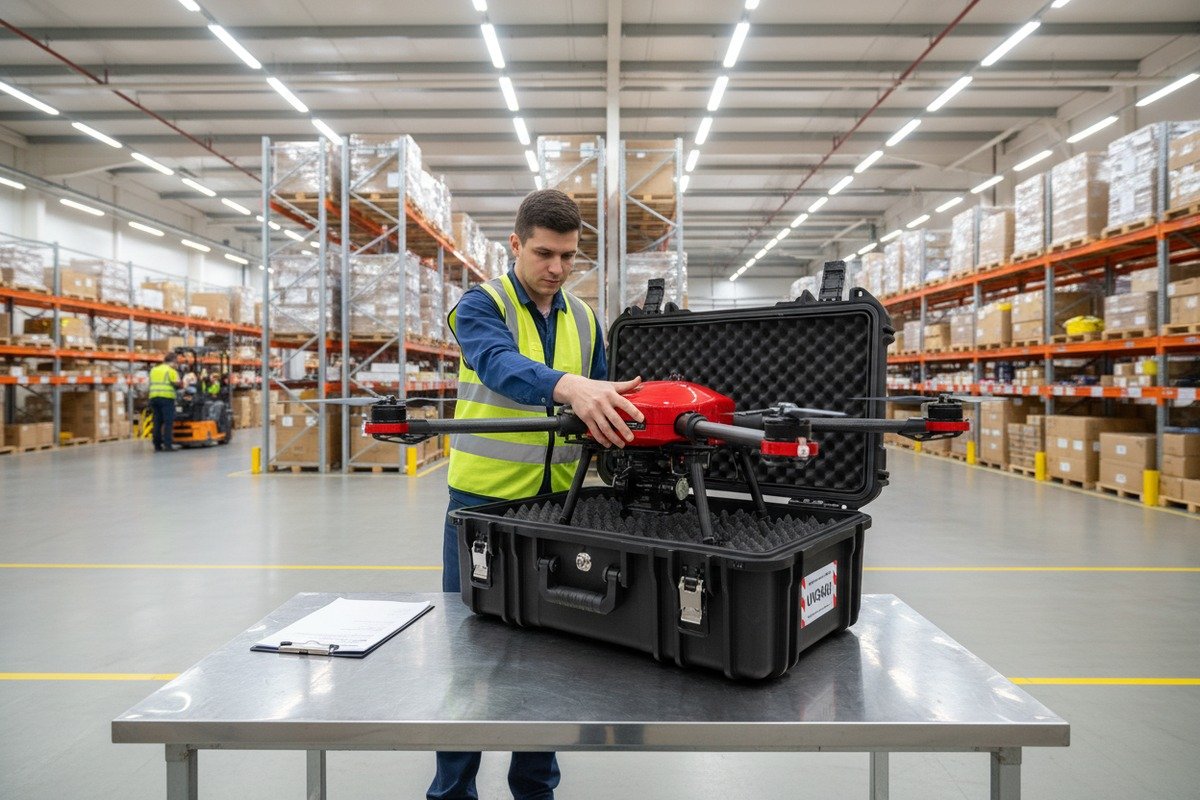
Understanding Export and Re-Import Requirements
When you return a drone to China for repairs, you are technically exporting it from your country. This triggers export regulations. Our logistics team has found that most delays happen because of three issues: incomplete battery documentation, missing original purchase records, and wrong HS code 4s.
Lithium-Batterien 5 inside firefighting drones require special handling. They must travel as Class 9 dangerous goods 6. Your shipping label needs UN3481 markings. Without these, your package will be held or returned.
Checkliste für wichtige Unterlagen
We recommend preparing a complete documentation folder before initiating any return. Our customer service team processes returns faster when clients send everything at once.
| Dokumenttyp | Zweck | Who Provides It |
|---|---|---|
| Handelsrechnung | States drone value and model | You (the buyer) |
| Packliste | Details contents and weight | You (the buyer) |
| Ursprungszeugnis | Proves manufacturing location | Anbieter |
| Battery Safety Data Sheet | Confirms lithium battery specs | Anbieter |
| RMA Authorization Form | Authorizes the return | Anbieter |
| Customs Declaration Form | Required for import/export | Freight forwarder |
Choosing the Right Freight Partner
Not every shipping company handles drone returns well. General freight forwarders often lack experience with aviation equipment. We have seen packages mishandled, batteries removed incorrectly, and drones damaged further during transit.
Look for freight forwarders with DGR certification 7. This means they can legally handle dangerous goods. Ask if they have experience shipping UAV equipment. A good partner will know the exact HS code for your drone type and will pre-clear documentation with customs.
Pre-Shipment Inspection Steps
Before boxing your drone, take photos of all damage. Record serial numbers. Remove any SD cards or custom payloads. Our repair technicians work faster when they receive clean units with documented issues.
Use the original packaging if possible. If you discarded it, request replacement packaging from your supplier. Proper foam inserts prevent additional damage during the long journey.
What technical documentation should I prepare to speed up my supplier's warranty verification?
Our warranty department reviews hundreds of claims each month. Some take two days to approve. Others take two weeks. The difference is almost always documentation quality. warranty verification 8 Incomplete reports force our engineers to request more information, adding days to each exchange.
Prepare flight logs, error codes, maintenance records, photos of visible damage, and a detailed incident report to speed up warranty verification. Include your drone's serial number, firmware version, and purchase invoice. Complete documentation can reduce warranty processing time by up to seventy percent.
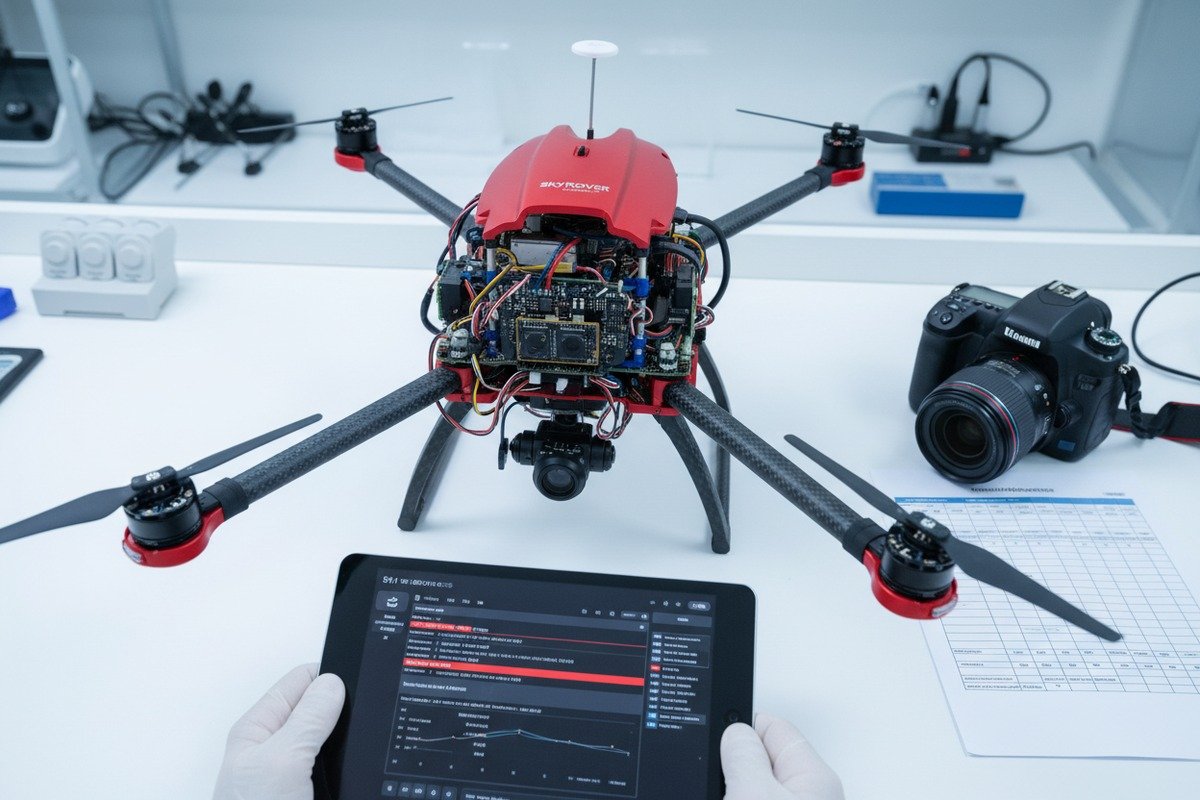
Why Documentation Matters for Warranty Claims
When our engineers receive a faulty drone, they must determine one thing: Did the drone fail due to a manufacturing defect, or did something else cause the problem? Without flight data, they cannot answer this question quickly.
A drone that crashed due to a software glitch is clearly a warranty issue. A drone that crashed because someone flew it into a building during manual override is not. The flight log tells the story.
Critical Data to Collect Before Returning Your Drone
Start data collection immediately after a failure occurs. Memory can fade. Flight logs can be overwritten. Our technical support team recommends gathering the following within 24 hours of any incident.
| Datenart | How to Collect | Warum es wichtig ist |
|---|---|---|
| Flight Log Files | Download from drone controller app | Shows flight path, altitude, speed, and errors |
| Error Code Screenshot | Capture from controller display | Identifies specific system failures |
| Firmware-Version | Check in drone settings menu | Confirms software state at time of failure |
| Battery Cycle Count | View in battery management app | Rules out battery degradation issues |
| Ambient Temperature | Note from weather records | Explains potential thermal failures |
| Photos/Video | Take with phone immediately | Documents physical damage state |
Writing an Effective Incident Report
Our warranty team processes claims faster when the incident report follows a clear structure. Do not write paragraphs of explanation. Use bullet points. State facts only.
Include these elements:
- Date and time of failure
- Location and weather conditions
- Mission type being performed
- What the drone was doing when it failed
- What you observed during the failure
- What actions you took after the failure
Understanding Warranty Exclusions
Knowing what your warranty covers prevents frustration later. Our standard warranty covers manufacturing defects, component failures under normal use, and software bugs. It does not cover crash damage from pilot error, water damage beyond rated IP protection, or modifications to hardware or software.
Review your warranty terms before filing a claim. If you are unsure about coverage, contact your supplier first. A quick email can save weeks of back-and-forth.
Maintaining Records Throughout Drone Ownership
The best warranty claims come from operators who document everything from day one. When we calibrate our flight controllers at the factory, we create a baseline record. You should do the same when you receive your drone.
Keep a maintenance log. Record every firmware update. Note any unusual behavior, even if it does not cause a failure. This history helps engineers trace problems to their source.
How do I minimize the downtime of my firefighting fleet while waiting for drone repairs or replacements?
When a drone fails, your operations suffer. Our clients in emergency services cannot simply pause firefighting until repairs arrive. Lives depend on continuous coverage. The solution is proactive fleet management, not reactive scrambling.
Minimize fleet downtime by maintaining spare drones or components, establishing agreements for expedited replacements, cross-training pilots on multiple platforms, and implementing predictive maintenance to catch failures before they happen. A well-planned redundancy strategy keeps your fleet operational even during repair cycles.

Building Redundancy Into Your Fleet
In our experience working with fire departments across the United States, the most resilient teams maintain at least a fifteen percent redundancy ratio. If you operate ten drones, keep one or two spares ready.
These spares do not sit unused. Rotate them into regular service. This keeps batteries healthy and firmware current. When a primary drone fails, your spare is mission-ready immediately.
Spare Parts Strategy
Not every failure requires a full drone return. Many issues can be fixed locally if you have the right parts. We recommend stocking these high-wear components:
| Komponente | Recommended Quantity | Typical Failure Cause |
|---|---|---|
| Propeller | 2 Sätze pro Drohne | Impact damage, wear |
| Batterien | 1-2 extra per drone | Cycle degradation |
| Motorbaugruppen | 1 per 5 drones | Overheating, bearing failure |
| ESC boards | 1 pro 10 Drohnen | Electrical surge |
| Camera gimbals | 1 pro 10 Drohnen | Impact, calibration drift |
Having these parts on hand can reduce a two-week repair cycle to a two-hour swap.
Expedited Replacement Programs
Ask your supplier about expedited replacement options. Our premium support program, for example, ships replacement drones before receiving the faulty unit. This advance exchange model eliminates the waiting period entirely.
Yes, these programs cost more. But calculate the cost of downtime. A firefighting drone that saves property and lives is worth far more than the expedited shipping fee.
Cross-Training Your Team
Your fleet redundancy means nothing if only one pilot can fly each drone model. Cross-train your team on all platforms in your inventory. This flexibility allows operations to continue even when specific pilots are unavailable.
Create standardized operating procedures for each drone type. Our engineers design our controllers with consistent interfaces across models. This makes cross-training easier for your pilots.
Implementing Predictive Maintenance
The best way to minimize downtime is to prevent failures before they happen. Our drones log extensive telemetry data. Use this data to spot warning signs.
Watch for these indicators:
- Motor temperature climbing over successive flights
- Battery capacity dropping faster than expected
- GPS lock taking longer than usual
- Gimbal vibrations increasing over time
When you see these patterns, schedule maintenance proactively. A planned service visit during slow periods beats an emergency failure during a wildfire.
How can I establish a clear communication protocol with my supplier to track the repair status in real-time?
Nothing frustrates our clients more than silence during repairs. They send a drone to China and hear nothing for weeks. They email and wait days for responses. This uncertainty makes planning impossible. The solution is establishing clear communication expectations from the start.
Establish clear communication by agreeing on a primary contact person, setting expected response times, requesting access to repair tracking systems, and scheduling regular status updates. Document all communications in writing. A formal communication protocol ensures transparency and accountability throughout the repair process.

Setting Expectations Before Problems Occur
Do not wait until you have a faulty drone to discuss communication protocols. When you first partner with a supplier, ask about their support structure. Our sales team provides this information during the initial consultation.
Key questions to ask:
- Who is my primary contact for technical issues?
- What is your typical response time for emails?
- Do you offer phone support in my time zone?
- Can I access a repair tracking portal?
- How often will I receive status updates?
Get answers in writing. Include them in your supplier agreement.
Establishing a Single Point of Contact
Multiple contacts create confusion. Emails get lost between departments. Information gets repeated. Our most successful client relationships involve a dedicated account manager 9 who handles all communications.
This person becomes your advocate inside the supplier organization. They know your fleet, your history, and your priorities. They can escalate urgent issues without you navigating a phone tree.
Communication Frequency and Format
Define how often you expect updates during the repair process. We recommend this schedule:
| Repair Stage | Häufigkeit der Aktualisierung | Update Method |
|---|---|---|
| Drone received | Innerhalb von 24 Stunden | Email confirmation |
| Initial diagnosis | Within 72 hours | Detailed email report |
| Repair in progress | Wöchentlich | Status email or portal update |
| Repair completed | Gleicher Tag | Email with test results |
| Shipment dispatched | Gleicher Tag | Email with tracking number |
If your supplier cannot commit to this schedule, ask why. Understand their constraints and negotiate realistic timelines.
Using Technology for Transparency
Modern suppliers offer digital tools for tracking repairs. Our client portal shows real-time repair status, technician notes, and estimated completion dates. Clients can check progress anytime without sending emails.
If your supplier lacks such tools, request photo updates at key milestones. Ask for before-and-after images of repaired components. This visual documentation builds trust and provides records for your files.
Escalation Procedures
Sometimes things go wrong. Repairs take longer than expected. Communication breaks down. You need a clear escalation path.
Know who to contact if your primary contact becomes unresponsive. Ask for the name and contact information of their supervisor. Understand the chain of command before you need it.
Document every escalation. Keep records of all communications. This history protects you if disputes arise later.
Cultural and Time Zone Considerations
When working with international suppliers, remember that business cultures differ. In our experience exporting to the US and Europe, we have learned that American clients prefer direct, frequent communication. This differs from some Asian business norms.
Be explicit about your expectations. Do not assume your supplier will automatically match your communication style. A clear agreement prevents misunderstandings.
Time zones also matter. If your supplier is in China and you are in the United States, expect delays in email responses. Schedule calls at mutually convenient times. Use asynchronous communication effectively.
Schlussfolgerung
Establishing an efficient return process protects your investment and keeps your fleet operational. Prepare documentation early. Build redundancy into your operations. Communicate clearly with your supplier. These practices transform frustrating repair cycles into manageable business processes.
Fußnoten
1. Provides a comprehensive definition and benefits of predictive maintenance. ︎
2. Replaced 404 link with an authoritative Wikipedia page on drones in wildfire management. ︎
3. Provides a comprehensive list of common export documents required for international shipping. ︎
4. Explains the Harmonized System (HS) code as an international product nomenclature by the WCO. ︎
5. Explains regulations for shipping lithium-ion batteries, including UN3480 and UN3481 classifications. ︎
6. Defines Class 9 as miscellaneous dangerous goods and lists examples and characteristics. ︎
7. Details IATA’s requirements for Dangerous Goods Regulations (DGR) certificates and training. ︎
8. Explains what a product warranty is, its types, and consumer protections. ︎
9. Defines the role and responsibilities of an account manager in client relationships. ︎

 English
  Spanish
  German
  French
  Dutch
Dutch  Arabic
