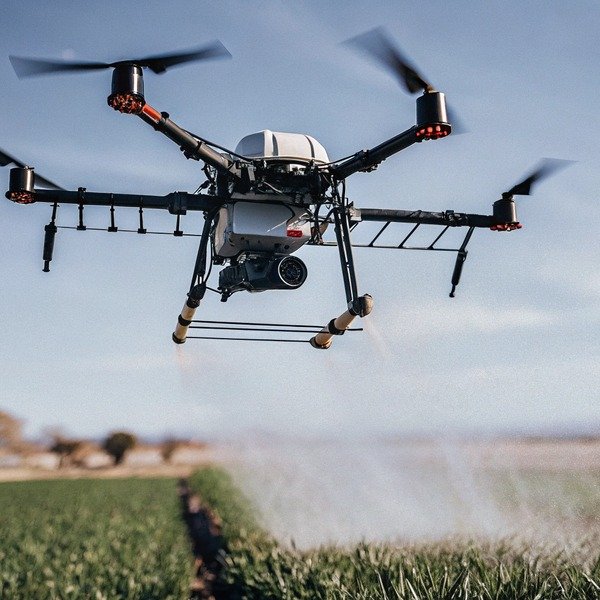
When we design flight platforms at our factory, we see how mismatched equipment leads to poor coverage and drift fines. drift fines 1 You need verified specs to ensure efficiency and compliance.
To determine suitability for US crops, evaluate the system against three critical metrics: nozzle adjustability for EPA-compliant droplet sizes, pump capacity exceeding 2 gallons per minute for high-volume fertilizers, and material resistance to corrosive inputs like UAN. Ensure software supports standard shapefiles for seamless variable-rate application integration.
Below, we break down the specific technical components you must verify before deploying a new system.
How do I verify if the nozzle types and droplet sizes are adjustable for varying canopy densities like corn or cotton?
During field tests on dense canopies, we often observe standard setups failing to penetrate lower leaves. You risk poor pest control without precise droplet management.
Verify that the drone features quick-change nozzle manifolds compatible with TeeJet standards or adjustable centrifugal atomizers. These allow operators to shift between medium and coarse droplets, ensuring deep canopy penetration for corn while meeting strict EPA drift reduction requirements during windy conditions common in the Midwest.

The ability to manipulate droplet size is not just a feature; it is a regulatory necessity in the United States. When we configure our spraying modules, we focus heavily on the interaction between pressure and atomization. For US row crops like corn and cotton, the canopy density changes drastically throughout the growing season. Early in the season, you might need finer coverage, but as the crop matures, you need heavier droplets to penetrate the thick foliage and reach pests hiding near the stalk.
Understanding Droplet Physics
In the US market, EPA labels on pesticide containers strictly dictate droplet size categories EPA labels 2 (e.g., Medium, Coarse, Very Coarse) to minimize drift. A drone system that uses fixed, non-standard nozzles will limit your legal ability to apply many common products. You should look for systems that support standard hydraulic nozzles or advanced centrifugal rotary atomizers.
Centrifugal nozzles are increasingly popular because they allow you to adjust droplet size via the rotation speed of the disc, rather than changing physical tips. This can be done via software on the fly. However, traditional hydraulic nozzles (like flat fans or air induction tips) are often preferred for their proven drift reduction characteristics.
Checklist for Nozzle Evaluation
When inspecting a potential drone unit, ask the supplier for specific performance charts. You need to know the flow rate range at different pressures. If the system uses proprietary nozzles that cannot be swapped for industry-standard parts, you might face supply chain issues mid-season.
Recommended Droplet Settings
We have compiled a general guide based on our testing data regarding droplet effectiveness for different US crop scenarios.
| Crop Stage | Canopy Density | Recommended Droplet Size | Goal |
|---|---|---|---|
| Corn (Early V-Stage) | Niedrig | Medium (250-350 microns) | Maximum leaf coverage for herbicides. |
| Corn (Tassel/Silk) | Hoch | Coarse (350-450 microns) | Deep penetration for fungicide application. |
| Cotton (Flowering) | Sehr hoch | Coarse to Very Coarse | Penetrate dense bush; reduce evaporation. |
| Soybeans (Full Pod) | Medium-High | Medium-Coarse | Balance between coverage and penetration. |
By ensuring your system can achieve these specific micron ranges, you protect your crop investment and maintain compliance with federal aerial application regulations.
What pump flow rate capacity do I need to handle high-volume fertilizer applications on large-scale farms?
Our export data shows that US clients frequently overload standard pumps, causing overheating and delays. You need robust throughput to handle the heavy application rates required by industrial agriculture.
Select a pumping system capable of delivering at least 1.5 to 2.5 gallons per minute to match US row crop application rates. High-performance brushless diaphragm pumps are essential for handling the viscosity of liquid fertilizers without overheating, ensuring consistent flow rates across extensive acreage.

Flow rate is the bottleneck of efficiency. In many Asian markets, lower volume fungicide applications are common, often around 1 gallon per acre. However, US farming practices often require higher volumes, particularly for fertilizers and complex tank mixes. fertilizers and complex tank mixes 3 If your drone's pump maxes out at a low flow rate, the drone has to fly slower to put out the required product amount. This drastically reduces the number of acres you can cover in an hour.
The Impact of Viscosity
Water is thin, but many fertilizers and foliar feeds used in the US are thick and viscous. We advise checking if the pump is a magnetic drive gear pump, a peristaltic pump, or a diaphragm pump. diaphragm pump 4 Gear pumps can struggle with abrasive suspended solids found in some organic fertilizers. Diaphragm pumps generally offer a good balance of durability and pressure. Impeller pumps are simple but may not generate the high pressure needed for certain hydraulic nozzles to function correctly.
Calculating Your Needs
To determine if a specific model fits your farm, you must calculate the required flow rate based on your target flight speed and swath width.
- Formula: Flow Rate (GPM) = (Speed (mph) × Swath (ft) × Rate (GPA)) / 495
- If you want to fly at 15 mph with a 20-foot swath and apply 2 gallons per acre (GPA), you need a pump that can sustain roughly 1.2 GPM per nozzle set.
Pump Type Comparison
We have analyzed the three most common pump technologies found in agricultural drones to help you choose the right one for heavy-duty US operations.
| Pump Technology | Viscosity Handling | Maintenance Needs | Suitability for US Ag |
|---|---|---|---|
| Diaphragm Pump | Hoch | Moderate (Check valves) | Excellent. Handles high pressure and thick fluids well. |
| Peristaltic Pump | Sehr hoch | Low (Change tube) | Good. Great for abrasive mixes, but lower pressure. |
| Centrifugal Pump | Low-Medium | Niedrig | Fair. Good flow, but pressure drops if viscosity increases. |
| Gear Pump | Mittel | High (Gears wear out) | Poor. Susceptible to damage from abrasive particles. |
Choosing the right pump technology prevents mid-flight failures and ensures your application rate remains consistent from the first acre to the last.
Can I integrate the drone's spray control system with my existing precision agriculture mapping software?
During software development, we found that closed ecosystems frustrate modern farmers who rely on data. You need seamless file compatibility to avoid wasting hours on manual flight planning.
Confirm the drone’s ground station software accepts standard industry formats like SHP, KML, and GeoTIFF files. This compatibility allows for the direct import of prescription maps from platforms like John Deere John Deere Betriebszentrum 5 Operations Center, enabling precise variable-rate applications without complex manual data conversion or third-party middleware.

Integration is often overlooked until the drone arrives on the farm. Modern US agriculture runs on data. You likely use platforms like Climate FieldView, John Deere Operations Center John Deere Betriebszentrum 6, or SMS Advanced to generate prescription maps. If your drone cannot read these maps, it becomes a dumb tool rather than a precision instrument. precision instrument 7
The Importance of Variable Rate Application (VRA)
VRA allows you to spray different amounts of chemical in different parts of the field. For example, you might want to apply a growth regulator only to the most vigorous parts of a cotton field. If your drone software only supports basic "AB point" routing (spraying the whole field evenly), you lose the primary economic benefit of drone technology: precision.
File Formats and Coordinate Systems
When we code our flight controllers, we ensure they can parse Shapefiles (.shp). Shapefiles (.shp) 8 This is the universal language of GIS data. However, simply loading a file isn't enough. The system must also interpret the attributes within that file—specifically the "Rate" column that tells the drone how much to spray in each zone.
You must also verify the coordinate system. US maps often use WGS84 or NAD83. WGS84 or NAD83 9 If the drone's software assumes a different projection, your spray map could be shifted by several meters, resulting in spraying the wrong areas.
Data Workflow Compatibility
Before purchasing, ask the manufacturer for a demo of the workflow. Can you export a map from your agronomy software and load it directly into the drone remote via USB or Wi-Fi? Or do you have to redraw the boundaries manually on a small screen? The latter is prone to error and incredibly time-consuming for large fields.
Software Feature Checklist
Here is a breakdown of essential software capabilities for seamless integration into a US precision ag workflow.
| Merkmal | Funktion | Why it Matters for US Ag |
|---|---|---|
| Shapefile Import | Reads .shp, .shx, .dbf | Industry standard for boundary and prescription maps. |
| Prescription Support | Reads attribute data | Enables variable rate application (VRA) based on agronomic data. |
| As-Applied Export | Saves flight logs | Required for regulatory reporting and billing verification. |
| RTK Network Support | Connects to NTRIP | Ensures sub-inch accuracy matching planter and tractor lines. |
Ensuring these features are present means your drone fits into your existing farm management ecosystem rather than creating a new, isolated workflow.
How do I ensure the tank and tubing materials are compatible with the specific agrochemicals commonly used in my region?
We rigorously test components because corrosion destroys equipment and profits. Using incompatible tanks with chemicals like UAN leads to leaks and dangerous structural failures mid-season.
Ensure the tank and tubing utilize chemical-resistant materials such as high-density polyethylene and Viton seals. These components must withstand aggressive agrochemicals like liquid nitrogen and solvent-based herbicides, preventing structural degradation and leaks that compromise safety and shorten the equipment’s operational lifespan in intensive farming cycles.

Durability against chemicals is a silent killer of agricultural machinery. In the US, the chemical profile is intense. Farmers frequently use Liquid Nitrogen (UAN 28% or 32%), which is highly corrosive to certain metals and lower-grade plastics. Additionally, many herbicides used in the US are solvent-based (EC formulations) that can swell or dissolve standard rubber o-rings and seals.
Material Science in Spraying
When we source materials for our export models, we prioritize chemical inertness. Standard PVC tubing might harden and crack after exposure to UV light and harsh chemicals. We recommend looking for systems that use Teflon (PTFE) or specialized reinforced hoses.
For the tank itself, High-Density Polyethylene (HDPE) is the industry standard. It is tough and resistant to most agricultural chemicals. However, pay close attention to the fittings—the points where the hose connects to the pump or tank. If these are made of cheap brass or non-anodized aluminum, liquid fertilizer will corrode them rapidly. Stainless steel or high-grade polypropylene fittings are superior choices.
Seal Integrity
The most common point of failure is the seal (o-ring). Standard Buna-N rubber seals are cheap but often fail when exposed to certain solvents. Viton (FKM) seals are far more resistant Viton (FKM) seals 10 and are a hallmark of a high-quality system designed for professional use. If the manufacturer does not specify the seal material, it is a red flag.
Cleaning and Maintenance
Even with the best materials, residue build-up can cause damage. The system design should allow for easy flushing. Are there blind spots in the tank where chemicals can settle? Is there a dedicated fresh water tank for purging the lines immediately after landing? These design choices significantly extend the life of the materials.
Corrosion Risk Assessment
Review the following table to understand which components are most at risk from common US agricultural inputs.
| Komponente | Common Material | Risk Factor | Recommended Upgrade |
|---|---|---|---|
| Tank Body | Standard Kunststoff | Niedrig | HDPE (High-Density Polyethylene) |
| O-Rings/Seals | Buna-N Rubber | High (Swelling) | Viton (FKM) |
| Nozzle Fittings | Brass | High (Corrosion) | Stainless Steel or Polypropylene |
| Tubing | Clear Vinyl | Medium (Hardening) | Reinforced EPDM or PTFE |
Verifying these material specifications protects your investment from premature failure and ensures safety for the operator handling the equipment.
Schlussfolgerung
To select the right drone, verify adjustable nozzles, high-flow pumps, software compatibility, and chemical-resistant materials. These factors ensure the system handles US crops efficiently.
Fußnoten
1. Official EPA information on pesticide drift reduction and regulations. ︎
2. Official EPA resource regarding pesticide container labeling requirements. ︎
3. Official USDA statistics and surveys regarding agricultural chemical and fertilizer application in the US. ︎
4. Industry authority on pump technologies and standards. ︎
5. Official product documentation for a major precision agriculture data management platform. ︎
6. Official product page for the specific software platform mentioned. ︎
7. International standard for data exchange and interoperability in precision agricultural systems. ︎
8. Technical background on the industry-standard geospatial vector data format for GIS software. ︎
9. General background on the geodetic systems used for global and North American mapping. ︎
10. Official manufacturer page for the specific material brand. ︎

 English
  Spanish
  German
  French
  Dutch
Dutch  Arabic
