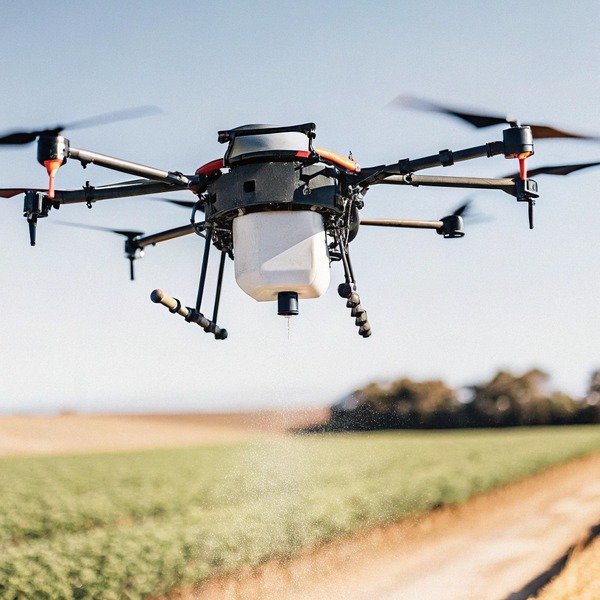
We see many clients rush to import our sprayers, ignoring compliance until it’s too late. This oversight often leads to costly delays at the border or illegal operations.
Yes, requiring FCC certification is mandatory for all agricultural Agrardrohnen 1 drones imported into the US. Without it, equipment violates federal radio frequency laws, cannot legally access US communication networks, and faces immediate seizure by Customs US-Zoll und Grenzschutz 2, especially given strict new regulations on foreign-made unmanned aircraft systems.
Let’s explore why this paperwork is the most critical part of your next shipment.
What are the risks if I import agricultural drones without FCC certification?
Our engineering team ensures every radio module we install meets strict standards, because we know that ignoring signal interference rules creates dangerous liabilities signal interference rules 3 for your business.
Importing uncertified agricultural drones exposes you to severe risks, including federal fines, equipment confiscation, and operation bans. Non-compliant hardware can interfere with emergency services or manned aircraft, leading to legal liability for the operator and potentially voiding all commercial insurance coverage in the event of an accident.

When we build our drones, we treat the radio frequency (RF) components with the same seriousness radio frequency 4 as the flight motors. Agricultural drones are not toys; they are heavy industrial machinery that transmit data over long distances. If you import a drone that hasn't been vetted by the Federal Communications Commission (FCC), you are essentially operating a pirate radio station in the eyes of the law. The risks go far beyond a simple slap on the wrist.
The Legal and Financial Consequences
The FCC takes "Part 15" violations very seriously. Part 15 5 If your imported drone operates on a frequency that interferes with critical infrastructure—such as air traffic control or emergency response channels—you could face civil penalties reaching tens of thousands of dollars per violation. Furthermore, since December 22, 2025, the FCC has expanded its "Covered List," adding strict prohibitions on certain foreign-produced Unmanned Aircraft Systems (UAS). If your supplier sends you a model that is on this list or lacks authorization, you possess illegal hardware.
Voiding Your Safety Net
Perhaps the most immediate financial threat to your business is the nullification of insurance. We often advise our partners that no reputable insurance underwriter will cover an accident involving illegal equipment. If an uncertified drone crashes into a barn or injures a worker, your liability policy will likely be voided the moment the adjuster discovers the equipment lacks a valid FCC ID.
Operational Interference
Uncertified drones often use "dirty" radio spectrum. This means they bleed signals into frequencies they shouldn't use. In precision agriculture, where GPS accuracy is paramount, RF interference can cause signal loss, leading to "fly-aways" or erratic spraying patterns that damage crops.
| Risk Category | Consequence of Non-Compliance | Severity |
|---|---|---|
| Legal | Federal fines and potential criminal charges for interference. | Hoch |
| Financial | Seizure of inventory and total loss of investment. | Hoch |
| Versicherung | Policy exclusions triggered; zero coverage for accidents. | Kritisch |
| Operational | Signal interference causing crashes or GPS failure. | Mittel |
Will US Customs seize my shipment if the drones lack proper FCC documentation?
When we coordinate logistics for our US partners, we double-check every document attached to the bill of lading to prevent the nightmare of port detention.
Yes, US Customs and Border Protection (CBP) actively enforces FCC regulations and will seize drone shipments lacking valid equipment authorization. Officers can detain products indefinitely at the port of entry, requiring you to prove compliance or face destruction of the goods without compensation.

The relationship between US Customs and Border Protection (CBP) relationship between US Customs 6 and the FCC is tighter than ever. We have seen shipments from other exporters get flagged simply because the paperwork was incomplete. When a container arrives at a US port, CBP officers act as the enforcement arm for the FCC. They are trained to look for specific compliance markers on electronic devices, especially those capable of radio transmission like our agricultural drones.
The "Red Light" at the Port
When your shipment arrives, it must be cleared through an entry process that often requires FCC Form 740 (or its modern electronic equivalent in the ACE system). If the FCC ID is missing, fake, or belongs to a device on the "Covered List," the shipment is flagged. This is not a minor delay. Your goods are moved to a bonded warehouse, and the storage fees begin to accumulate immediately. These fees are your responsibility, not ours or the shipping line's.
The Impact of the Covered List
With the recent regulatory crackdowns peaking around late 2025 and early 2026, scrutiny on Chinese-manufactured technology has intensified. If a drone model is identified as posing a national security risk or lacks the necessary waivers, CBP has the authority to seize and destroy the shipment. There is usually no option to "return to sender." The inventory is crushed, and you lose 100% of your capital.
Documentation is Your Only Defense
To clear customs smoothly, the FCC ID must be visible on the product and matched to a valid grant of equipment authorization. We ensure our commercial invoices and packing lists explicitly state the compliance codes to help brokers clear the goods. Without this trail of evidence, you are gambling with your supply chain.
Common Customs Outcomes for Non-Compliant Drones
| Outcome | Trigger | Result for Buyer |
|---|---|---|
| Immediate Release | Valid FCC ID and clean paperwork. | Goods delivered on time. |
| Detention/Hold | Missing ID or suspicious documentation. | Daily storage fees; 30+ day delay. |
| Seizure & Destruction | Device on "Covered List" or fake certification. | Total loss of goods; potential fines. |
| Re-export Order | Technical non-compliance (rarely granted). | Cost of return shipping; lost time. |
How can I verify if the FCC certificate from a Chinese manufacturer is authentic?
In our factory, we display our grant codes proudly, but we urge buyers to verify them independently because counterfeit documents are unfortunately common in this industry.
You can verify authenticity by searching the FCC ID printed on the drone’s label in the official FCC Equipment Authorization System database. A valid record must match the manufacturer’s name, model number, and operating frequencies exactly; if the record is missing or mismatched, the certificate is fake.
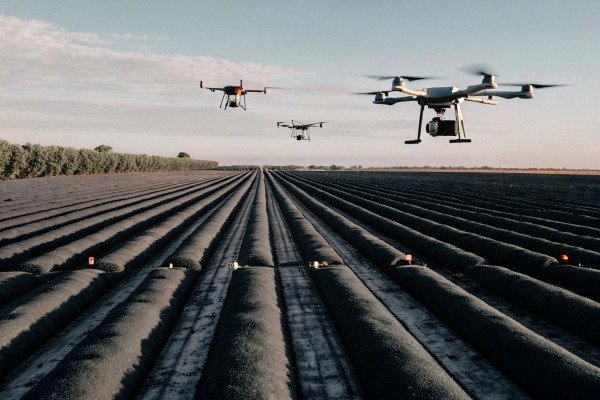
Trust, but verify. That is the golden rule of international procurement. We often receive inquiries from buyers who have been burned by suppliers providing Photoshop-edited certificates. A PDF document emailed by a sales representative is not proof of compliance. The only source of truth is the FCC's Office of Engineering and Technology (OET) database. OET database 7
Step-by-Step Verification Process
The FCC ID is a unique alphanumeric string consisting of two parts: the Grantee Code (the first 3-5 characters identifying the manufacturer) and the Product Code (the remaining characters identifying the specific model).
- Locate the ID: Ask the supplier for a photo of the label on the actual drone chassis. Do not settle for a digital mockup.
- Access the Database: Gehe zu
fcc.gov/oet/ea/fccid. - Input Data: Enter the Grantee Code and Product Code separately.
- Analyze the Result: The search should return a "Grant of Equipment Authorization."
What to Look For in the Grant
When you open the grant, check the details meticulously. Does the frequency range listed match the drone's specifications frequency range 8 (e.g., 2.4 GHz or 5.8 GHz)? Does the power output match? Crucially, look at the Grant Notes. Sometimes, a module is certified, but only for "mobile" use (kept 20cm away from the body), yet the manufacturer has installed it in a handheld controller. This invalidates the certification.
Beware of the "Module Scam"
A common trick we see competitors use is providing the FCC ID of a sub-component (like a Wi-Fi chip) and claiming it covers the entire drone. This is false. While the module might be certified, the integrated system—the drone itself—often requires its own certification or a "Change in ID" filing Change in ID 9 because the integration alters the RF characteristics. If the FCC ID leads to a generic "Wi-Fi Module" from a third-party vendor rather than the drone manufacturer, proceed with extreme caution.
Checklist for Validating Supplier Claims
| Schritt der Verifizierung | Warning Sign (Red Flag) | Erforderliche Maßnahmen |
|---|---|---|
| Check Manufacturer Name | Name on Grant does not match Supplier. | Ask for relationship proof or OEM agreement. |
| Check Photos in Database | Internal photos in DB look different from product. | The product has been changed; cert is invalid. |
| Check Frequency | Grant lists 2.4GHz only; drone claims 900MHz. | Immediate rejection; illegal transmission. |
| Check Issue Date | Grant is from 2015 for a "new" 2026 model. | Technology is obsolete or ID is recycled. |
Does the remote controller also need FCC certification along with the drone itself?
We design our ground control stations to communicate seamlessly with the aircraft, which means both ends of the link must undergo rigorous lab testing for compliance.
Yes, the remote controller is an intentional radiator of radio frequency energy and requires its own separate FCC certification. The drone and the controller must each possess a unique FCC ID label to legally operate, as they function as distinct transmission devices within the unmanned aircraft system.
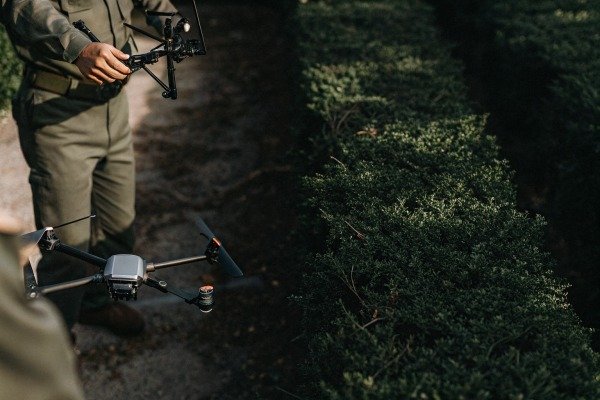
Many buyers make the mistake of assuming the "system" is certified as a single unit. In the world of radio compliance, this is rarely the case. The agricultural drone system consists of two distinct active transmitters: the aircraft (the drone) and the ground station (the remote controller). Both are classified as "intentional radiators" because they actively generate radio waves to communicate telemetry and control commands.
The Ground Station is a Transmitter
The remote controller in your hands is not just a passive receiver. For agricultural operations, these controllers often pump out significant power to maintain a link over large fields, sometimes up to several kilometers. Under FCC Part 15 rules, this device must be tested independently to ensure it doesn't fry nearby electronics or exceed human exposure limits for Radio Frequency (SAR testing).
Separate IDs are Mandatory
When you inspect our products, you will find one FCC ID on the drone body and a different FCC ID on the back of the remote controller. If a supplier shows you one certificate and claims it covers the whole box, they are lying or misinformed. The testing criteria for a flying object (often tested for radiated emissions) and a handheld device (tested for Specific Absorption Rate/body contact) are different. Specific Absorption Rate 10
The Risk of Regional Incompatibility
Another reason we insist on specific US certification for controllers is regional locking. A controller certified for use in China or Europe (CE) often operates at lower power levels or on different channels than what is permitted (or required) in the US. Using a non-US controller might technically work, but it could suffer from poor range—a disaster for agricultural spraying—or illegally transmit on restricted bands. Furthermore, software updates from major flight control providers are increasingly checking for these hardware signatures. If your controller lacks the US region code embedded in its certified hardware, you might find your drone grounded after a firmware update.
Compliance Breakdown by Component
- The Drone: Transmits video and telemetry down to the ground. Requires FCC ID.
- The Remote Controller: Transmits control sticks and commands up to the air. Requires FCC ID.
- RTK Base Station (if applicable): Transmits correction data to the drone. Requires FCC ID.
Schlussfolgerung
Securing FCC-certified drones safeguards your investment and ensures legal operation. We prioritize compliance to keep your fleet flying safely and your business growing without regulatory interruptions.
Fußnoten
1. International standard for unmanned aircraft systems classification and safety. ︎
2. General background on the agency responsible for border enforcement. ︎
3. Explains FCC rules regarding radio signal interference. ︎
4. Leading organization for technical standards in radio frequency engineering. ︎
5. Official electronic code of federal regulations for radio frequency devices. ︎
6. Official website of the agency enforcing import regulations. ︎
7. Direct link to the official FCC equipment authorization search tool. ︎
8. Official FCC information on radio frequency spectrum allocation. ︎
9. Official FCC guidance on the Change in ID certification procedure. ︎
10. Official FCC definition and safety standards for SAR. ︎

 English
  Spanish
  German
  French
  Dutch
Dutch  Arabic
