
Wir sehen oft, dass Flotten am Boden bleiben, weil Beschaffungsmanager den Verschleiß durch Rauch und Hitze unterschätzen. Lassen Sie nicht zu, dass ein fehlender Propeller für fünfzig Dollar eine kritische Rettungsmission für fünfzigtausend Dollar während der Hauptbrandzeit stoppt.
Um den Lagerbestand für Feuerwehrdrohnen zu planen, berechnen Sie den durchschnittlichen monatlichen Verbrauch multipliziert mit der Lieferzeit und fügen Sie dann einen Sicherheitsbestandspuffer von 50% hinzu. Für stark beanspruchte Teile wie Propeller sollten Sie mindestens drei komplette Sätze pro Drohne vorrätig halten. Berücksichtigen Sie die Umweltschwere, da Rauch und Hitze die Degradation erheblich beschleunigen.
Lassen Sie uns die spezifischen Formeln, Verhältnisse und Beschaffungsstrategien aufschlüsseln, die wir unseren Kunden empfehlen, um ihre Flotten in der Luft und einsatzbereit zu halten.
Was ist das empfohlene Verhältnis von Ersatzteilen für eine Flotte von zehn Drohnen?
Das Ausgehen von Ersatzteilen während einer Waldbrandsaison ist ein logistischer Albtraum. Unsere Daten zeigen, dass Standard-Herstellerverhältnisse unter hoher operativer Belastung oft versagen, was zu kostspieligen Ausfallzeiten führt.
Für eine Flotte von zehn Feuerwehrdrohnen empfehlen wir die Lagerung von 30 bis 50 Sätzen Propeller, 5 Ersatzmotoren und 20 zusätzlichen Akkus. Dieses Verhältnis von 3:1 bis 5:1 für stark beanspruchte Teile gewährleistet die operative Kontinuität während der Hauptbrandzeiten, wenn die schnelle Einsatzbereitschaft zu häufiger Belastung der Komponenten führt.
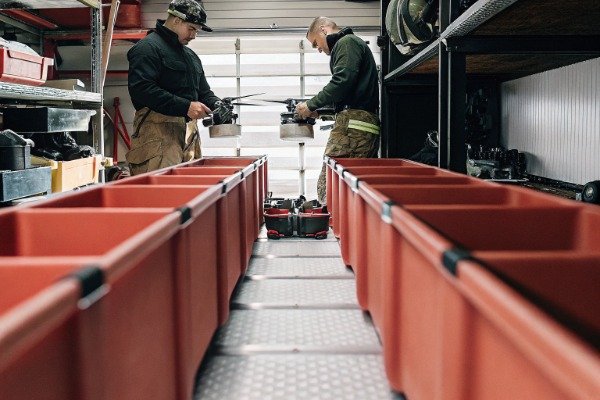
Verständnis des "Mission-Type Scarcity"-Modells
Wenn wir Kunden bei der Einrichtung ihres anfänglichen Lagerbestands unterstützen, verwenden wir keine "Einheitsgröße für alle"-Zahl. Stattdessen betrachten wir, wo Sie fliegen. Wenn Ihre Flotte hauptsächlich in engen städtischen Umgebungen operiert, ist das Risiko von Kollisionen mit Hindernissen deutlich höher als in offenen Wildnisgebieten. Für städtische Einsätze empfehlen wir, Ihren Propeller- und Fahrwerksbestand um zusätzliche 40% zu erhöhen.
In unseren Werkstests simulieren wir diese Umgebungen. Wir haben festgestellt, dass Rauch und Asche wie Schleifpapier auf bewegliche Teile wirken. Ein Propeller, der in sauberer Luft 200 Flüge hält, hält in starkem Rauch möglicherweise nur 50 Flüge. Daher muss Ihre Lagerplanung dynamisch und nicht statisch sein.
Die Liste der kritischen Komponenten
Sie sollten Ihre Ersatzteile in drei Stufen einteilen: Verbrauchsmaterialien, Verschleißteile und Strukturbauteile. Verbrauchsmaterialien (Propeller) benötigen das höchste Volumen. Verschleißteile (Akkus, Motoren) benötigen ein moderates Volumen basierend auf den Zykluszählungen. Strukturbauteile (Arme, Fahrwerk) sind für versehentliche Beschädigungen.
Nachfolgend finden Sie eine Aufschlüsselung des empfohlenen Lagerbestands für eine Standardflotte von 10 Drohnen, die in gemischten Umgebungen betrieben werden:
Tabelle 1: Empfohlener Ersatzteilbestand für eine Flotte von 10 Einheiten
| Bauteil-Kategorie | Teilebezeichnung | Verhältnis pro Drohne | Gesamtmenge für 10 Drohnen | Austauschbedingung |
|---|---|---|---|---|
| Hoher Verschleiß | Propeller (CW/CCW) | 5 Sätze | 50 Sätze | Chips, Risse oder >50 Flugstunden |
| Hoher Verschleiß | Batterien | 2 Einheiten | 20 Einheiten | >300 Zyklen oder Spannungsunregelmäßigkeit |
| Mittlerer Verschleiß | Landegestelle Kufen | 0,5 Sätze | 5 Sätze | Spannungsrisse oder harte Landungen |
| Mittlerer Verschleiß | Motorarme | 0,2 Einheiten | 2 Einheiten | Unfallschäden |
| Wartung | Befestigungssatz (Schrauben) | 1 Satz | 10 Kits | Every maintenance cycle (prevent stripping) |
Implementing the "Rule of Three"
For critical missions, we teach our clients the "Rule of Three" for inventory distribution. You should never keep all your spares in one central warehouse.
- One set on the drone: The active components currently in use.
- One set in the vehicle: Every deployment truck must have a field-ready repair kit. This allows for immediate swaps if a prop snaps during a mission.
- One set in the warehouse: This is your safety stock to replenish the vehicle kits.
By following this structure, you avoid the "last mile" problem where you own the part, but it is two hours away when you need it in two minutes.
Was ist die typische Lieferzeit für die Nachbestellung von Propellern und Motoren?
Waiting weeks for a shipment while fires burn is unacceptable for any department. We constantly adjust our production schedules, yet global logistics can still cause unexpected delays that you must plan for.
Typical lead times for specialized firefighting drone parts range from 7 to 30 days. However, you must account for "blackout periods" like Chinese New Year or National Day, which can extend delays by an additional 15 to 20 days due to factory and customs closures.

The "Holiday Effect" on Global Supply Chains
Since most industrial drone manufacturing happens in China, including our own facilities, you must align your procurement calendar with the Chinese holiday schedule. We often see international clients caught off guard in January or February.
During the Chinesisches Neujahr (Frühlingsfest), Fabriken und Logistikunternehmen schließen für 2 bis 3 Wochen. Selbst nach unserer Wiedereröffnung gibt es einen Rückstau von Bestellungen beim Zoll. Wenn Sie eine Woche vor den Feiertagen Propeller bestellen, werden diese möglicherweise erst in einem Monat versandt. Ebenso die Nationalfeiertag (Goldene Woche) Anfang Oktober verursacht eine einwöchige Pause.
Berechnung Ihres Lieferzeitpuffers
Um zu vermeiden, dass Ihre Flotte am Boden bleibt, sollten Sie eine "Lieferzeitpuffer"-Formel verwenden. Warten Sie nicht, bis Sie nur noch den letzten Satz Ersatzteile haben, um nachzubestellen. Sie müssen Ihren Nachbestellpunkt (ROP) ermitteln.
Die Formel lautet:
ROP = (Täglicher Verbrauch × Lieferzeit) + Sicherheitsbestand
Wenn Sie 2 Sätze Propeller pro Tag für Ihre gesamte Flotte verbrauchen und der Versand 20 Tage dauert, benötigen Sie allein 40 Sätze, um die Versandzeit abzudecken. Wenn Sie einen Sicherheitsbestand von 10 Sätzen hinzufügen, müssen Sie nachbestellen, wenn Sie noch 50 Sätze auf Lager haben.
Tabelle 2: Auswirkungen von Hauptfeiertagen auf die Lieferzeiten
| Feiertagsereignis | Ungefähre Daten | Auswirkungen auf die Produktion | Auswirkungen auf den Versand | Empfohlenes Bestelldatum |
|---|---|---|---|---|
| Chinesisches Neujahr | Jan/Feb (variiert) | Vollständige Schließung (15-20 Tage) | Häfen überlastet | 4 Wochen vorher |
| Tag der Arbeit | 1. Mai – 5. Mai | Teilweiser Stillstand (5 Tage) | Kleinere Verzögerungen | 2 Wochen vorher |
| Nationalfeiertag | 1. Okt. – 7. Okt. | Vollständiger Stillstand (7 Tage) | Zollverzögerungen | 3 Wochen vorher |
Logistikkanäle sind wichtig
Wenn wir in die USA oder nach Europa exportieren, bestimmt die Versandart die Geschwindigkeit.
- Express-Luftfracht (DHL/FedEx): 5-7 Tage. Am besten für dringende, kleine Artikel wie Propeller oder Motoren.
- Luftfracht: 10-15 Tage. Gut für Großbestellungen von Batterien (Batterien sind Gefahrgut und erfordern eine spezielle Handhabung).
- Seefracht: 30-45 Tage. Nur für massive Großbestellungen von schweren Geräten empfohlen, nicht für dringende Ersatzteile.
Fragen Sie uns oder Ihren Lieferanten immer, ob sie einen "Tür-zu-Tür"-Service anbieten, der die Zollabfertigung übernimmt. Wenn Sie den Zoll selbst abwickeln müssen, rechnen Sie mit weiteren 5-7 Tagen Unsicherheit bei Ihrer Lieferzeit.
Kapitalrendite (ROI) 1
Haben bestimmte Verbrauchsmaterialien ein Haltbarkeitsdatum, das ich berücksichtigen muss?
Teile für immer zu lagern ist nicht sicher; Materialien zersetzen sich lautlos, auch wenn sie nicht in Gebrauch sind. Wir haben schon einwandfreie neue Propeller gesehen, die mitten im Flug versagten, weil sie zwei Jahre lang in einem heißen, unbelüfteten Lager standen.
Ozon von Geräten 2
Ja, Verbrauchsteile haben eine Haltbarkeit. Lithiumbatterien zersetzen sich, wenn sie monatelang voll geladen oder entladen bleiben. Gummidichtungen, Schwingungsdämpfer und Kunststoffpropeller können aufgrund von Umgebungsbedingungen bei der Lagerung über 2 bis 3 Jahre spröde werden, was das Risiko eines strukturellen Versagens während des Fluges erhöht.
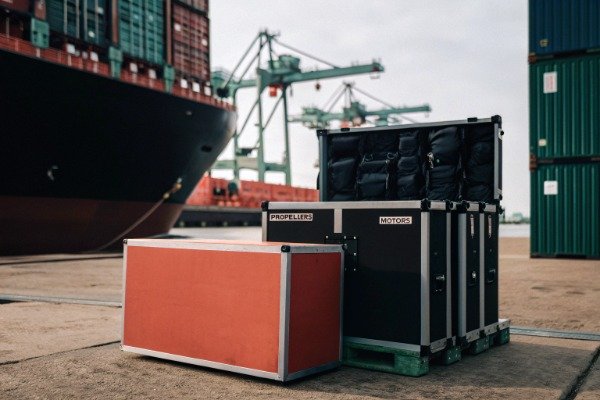
First-In, First-Out (FIFO)-System 3
Die versteckte Gefahr der Materialzersetzung
Sie denken vielleicht, ein Propeller sei nur ein Stück Kunststoff oder Kohlefaser, aber Umweltfaktoren greifen ihn ständig an.
- UV-Strahlung: Wenn Sie Teile in der Nähe von Fenstern lagern, baut UV-Licht die Polymerketten in Kunststoffen ab und macht sie spröde.
- Temperaturschwankungen: Extreme Hitze und Kälte verursachen Ausdehnung und Kontraktion. Bei Teilen mit Metalleinsätzen (wie dort, wo der Propeller am Motor befestigt ist) kann dies die Verbindung im Laufe der Zeit lockern.
- Chemische Exposition: In einer Feuerwache können Ozon von Geräten oder Dämpfe von Lastwagen Gummidichtungen und Schwingungsdämpfer zersetzen.
Batteriemanagement ist entscheidend
Batterien sind der empfindlichste Lagerartikel. Sie können nicht einfach 50 Batterien kaufen und sie ein Jahr lang im Regal liegen lassen.
- Selbstentladung: Wenn sie bei 100% Ladung liegen gelassen werden, verschlechtert sich die interne Chemie, was zu Aufblähungen führt. Wenn sie bei 0% liegen gelassen werden, fällt die Spannung unter den kritischen Schwellenwert, und der Akku wird unbrauchbar.
- Erhaltungsladung: Sie müssen Ihren Lagerbestand rotieren. Wir empfehlen ein "First-In, First-Out" (FIFO)-System. Verwenden Sie zuerst die ältesten Akkus und lagern Sie die neueren im Lagermodus (normalerweise 40-60% Ladung).
Tabelle 3: Haltbarkeit und Lagerungsprotokolle für Schlüsselkomponenten
| Komponente | Maximale Haltbarkeit | Ideale Lagerbedingungen | Warnzeichen für Ablauf |
|---|---|---|---|
| LiPo/Li-ion Akkus | 2-3 Jahre | 22°C-28°C, 50% Ladung | Aufblähen (Puffing), Spannungsungleichgewicht |
| Carbon/Kunststoff-Propeller | 3-5 Jahre | Dunkel, trocken, stabile Temperatur | Verfärbung, Mikrorisse in der Nähe der Nabe |
| Gummidämpfer | 2 Jahre | Versiegelte Tüte, fern von Ozon | Verhärtung, Rissbildung beim Zusammendrücken |
| Motoren | 5+ Jahre | Low Humidity (Prevent Rust) | Grinding noise (bearing rust) |
Payload Seals and Gaskets
For firefighting drones specifically, pay attention to the seals on your payload drop systems (for water or retardant). The chemicals in fire retardants are corrosive. Even if the part is new in the box, if the rubber seal has dried out, it will leak the moment you pressurize the system. We advise replacing all rubber seals and gaskets every 2 years, regardless of usage.
internal chemistry degrades 4
Can I get a discount if I bundle a year's worth of spare parts with the drone order?
Buying parts ad-hoc is the most expensive way to maintain a fleet. We encourage clients to plan ahead, as it simplifies our production planning and significantly lowers your total cost of ownership.
UV light breaks down 5
Bundling a year's worth of spare parts typically secures a 10% to 20% discount on the components. Manufacturers prefer bulk orders for production stability, allowing you to negotiate for free wearing parts or reduced shipping rates as part of the total procurement package.

batteries are dangerous goods 6
The Economics of Bundling
From our perspective as a factory, processing one order for 500 propellers is much cheaper than processing 50 orders for 10 propellers. We save on administrative work, packaging materials, and logistics coordination. We are happy to pass these savings on to you.
Nationalfeiertag (Goldene Woche) 7
When you negotiate your initial drone purchase contract, do not just look at the price of the aircraft. Ask for a "Service & Maintenance Package."
- Strategie: "I am buying 5 drones. If I commit to buying 20 batteries and 50 prop sets now, what is the best price?"
- Ergebnis: You can often get the parts at wholesale distributor pricing rather than end-user retail pricing.
Negotiating for "Free" Inventory
Eine weitere effektive Taktik ist, kostenlose Verbrauchsmaterialien anstelle eines Barrabatts auszuhandeln. Manchmal ist unsere Marge auf den Drohnenkörper gering, und wir können den Preis nicht weiter senken. Die Produktionskosten für Propeller oder Kabel sind jedoch niedriger.
- Fragen: "Können Sie ein 'First Year Wear Kit' (2 Sätze Propeller + 1 Fahrwerk) kostenlos zu jeder Einheit hinzufügen?"
- Erfolgsquote: Dies ist sehr hoch. Es fügt Ihnen immensen Wert hinzu, kostet den Hersteller aber relativ wenig.
Lokale Äquivalente vs. OEM-Teile
Eine häufige Frage, die wir erhalten, ist: "Kann ich Schrauben oder Kabel lokal kaufen, um Geld zu sparen?"
- Ja: Für Standard-Metrikschrauben (M3, M4) oder Standardkabel (USB-C, HDMI) ist der lokale Kauf schneller und günstiger. Es ist nicht notwendig, eine Stahlschraube aus China zu importieren.
- Nein: Für Propeller, Motoren und Batterien. Verwenden Sie keine Drittanbieter-"Klone". Sie verfügen oft nicht über die strenge Qualitätskontrolle von OEM-Teilen. Die Verwendung eines nicht-OEM-Propellers, der mitten im Flug zerbricht, führt zum Absturz Ihrer Drohne und zum Erlöschen Ihrer Garantie. Die $20, die Sie sparen, sind das $10.000 Risiko nicht wert.
ROI auf Ersatzteilbestand
Betrachten Sie schließlich den Return on Investment (ROI) für die Verfügbarkeit von Teilen. Wenn eine Drohne 2 Wochen lang auf ein Ersatzteil wartet und am Boden bleibt, zahlen Sie für das Vermögen, erhalten aber keinen Wert. Wenn ein $100 Teil auf Lager die Ausfallzeit verhindert, ist der ROI sofort gegeben.
Chinesisches Neujahr (Frühlingsfest) 8
Durch Bündelung sichern Sie auch den Preis. Die Kosten für Rohmaterialien (Lithium, Kupfer, Kohlefaser) schwanken. Der Kauf eines Jahresvorrats schützt Ihr Budget vor Inflation oder Wechselkursschwankungen im späteren Jahresverlauf.
Vorlaufzeit 9
Schlussfolgerung
Um die Einsatzbereitschaft zu gewährleisten, berechnen Sie den Lagerbestand basierend auf Verbrauch plus Sicherheitsbestand, berücksichtigen Sie feiertagsbedingte Lieferzeiten, verhandeln Sie Mengenrabatte für Bündel und überwachen Sie die Haltbarkeit, um Materialabbau zu verhindern.
Sicherheitsbestand zum Auffüllen 10
Fußnoten
1. Definiert die Finanzkennzahl, die zur Rechtfertigung von Lagerkosten verwendet wird. ︎
1. 2. Erklärt das Phänomen der Ozonrissbildung, die Gummidichtungen beschädigt. ︎
2. 3. Definiert die empfohlene Methode der Bestandsverwaltung für die Batterierotation. ︎
3. 4. Erklärt die chemischen Prozesse, die zum Versagen und Aufblähen von Batterien führen. ︎
4. 5. Beschreibt, wie ultraviolette Strahlung chemische Degradation in Polymeren verursacht. ︎
5. 6. Links zu den IATA-Vorschriften für den Lufttransport von Lithiumbatterien. ︎
6. 7. Erklärt die spezifische chinesische Feiertagsperiode, die zu Logistikpausen führt. ︎
7. 8. Bietet Kontext zu den wichtigsten Feiertagen, die globale Produktionspläne beeinflussen. ︎
8. 9. Erklärt das Lieferkettenkonzept, das in der Nachbestellformel verwendet wird. ︎
9. 10. Abgenutzter Drohnenpropeller. ︎

 English
  Español de México
  Deutsch
  Français
  Русский
  العربية
