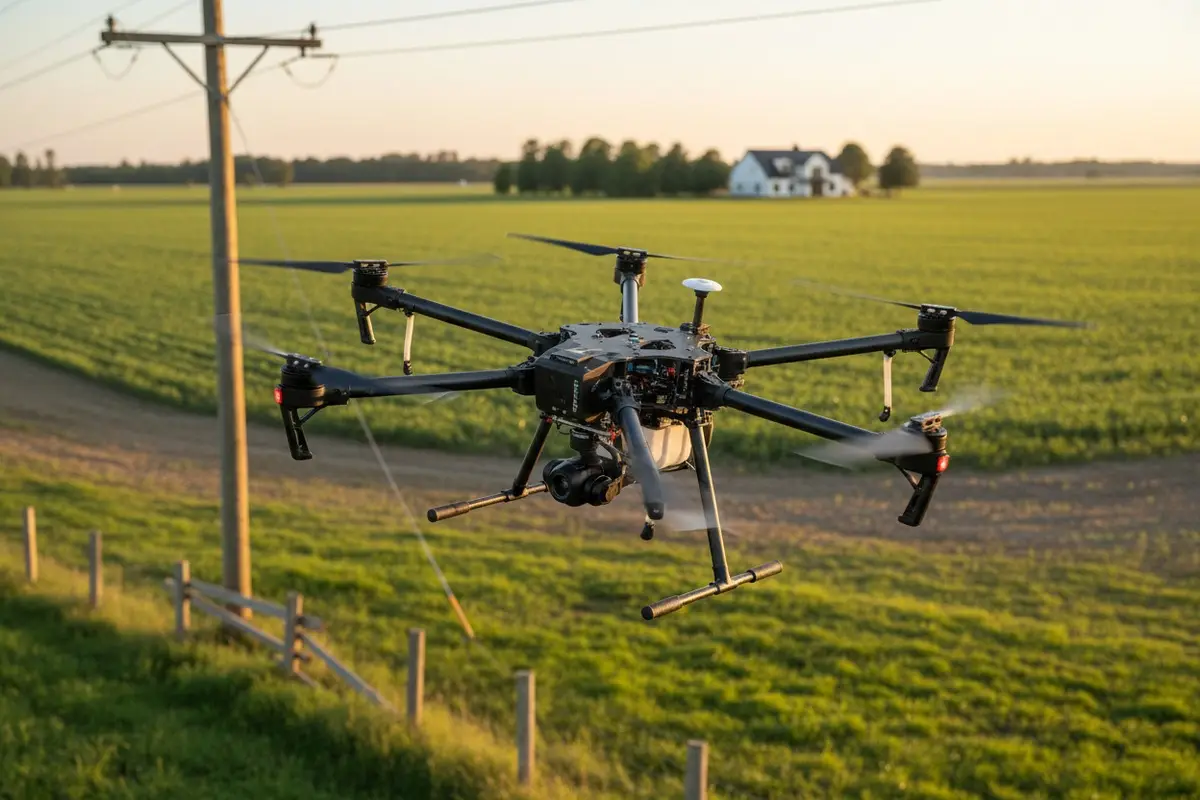

Every season, we see customers return drones damaged by collisions with power lines, trees, or irrigation equipment real-time obstacle detection 1. On our production floor, our engineers constantly ask: how fast must a processor think to save a $15,000 machine from a split-second mistake?
Die Verarbeitungsgeschwindigkeit bestimmt, wie schnell landwirtschaftliche Drohnen Sensordaten analysieren und Flugbahnen anpassen. Schnellere Prozessoren ermöglichen die Erkennung und Reaktion auf Hindernisse in Echtzeit innerhalb von Millisekunden, wodurch Kollisionsrisiken in komplexen landwirtschaftlichen Umgebungen reduziert werden. Drohnen mit Hochgeschwindigkeitsprozessoren können sicher durch Obstgärten, über Stromleitungen und unebenes Gelände navigieren und gleichzeitig effiziente Sprühvorgänge aufrechterhalten.
In this guide, we will break down exactly how processing speed affects your drone investment, what specifications matter most, and how to choose the right system for your operation.
Wie schützt eine hohe Verarbeitungsgeschwindigkeit meine Investition vor Kollisionsschäden in dichten Obstgärten?
When we calibrate Fluglotsen 2 for export to the US market, orchard operations represent our most demanding test scenario. Trees appear suddenly. Branches hang at unpredictable angles. A slow processor means a crashed drone and damaged crops SLAM capability 3.
Hohe Verarbeitungsgeschwindigkeit schützt Ihre Investition, indem sie eine Objekterkennung in weniger als einer Sekunde und sofortige Anpassungen des Flugpfads ermöglicht. In dichten Obstgärten müssen Prozessoren Sensordaten mit 20-30 Hz oder schneller analysieren, um Äste, Stämme und Geräte vor einer Kollision zu identifizieren. Diese schnelle Reaktion verhindert kostspielige Reparaturen und Schäden an der Ernte und sorgt gleichzeitig für eine gleichmäßige Sprühabdeckung.

Understanding the Processing Pipeline
Die Hindernisvermeidungssystem 4 in Agrardrohnen 5 follows a specific sequence. First, sensors collect data. Then, the processor fuses this information. Finally, the flight controller executes adjustments multi-core architecture 6.
Here is how each step works:
- Data Collection: Radar, LiDAR, and vision cameras 7 scan the environment continuously
- Sensor Fusion: Der Prozessor kombiniert alle Datenströme zu einer einzigen 3D-Karte
- Pfadberechnung: Algorithmen bestimmen die sicherste Route nach vorne
- Befehlsausführung: Der Flugcontroller passt Motoren und Richtung an
Jeder Schritt erfordert Verarbeitungszeit. In Obstgärten erscheinen Hindernisse in unmittelbarer Nähe. Eine Drohne, die mit 5 Metern pro Sekunde fliegt, legt in nur 100 Millisekunden 50 Zentimeter zurück. Wenn die Verarbeitung länger als dieses Zeitfenster dauert, wird eine Kollision unvermeidlich.
Verarbeitungsgeschwindigkeitsanforderungen nach Obstgartentyp
| Obstgartentyp | Hindernisdichte | Minimale Verarbeitungsgeschwindigkeit | Empfohlene Erfassungsreichweite |
|---|---|---|---|
| Standard Apfel/Birne | Mittel | 15 Hz | 15-20 Meter |
| Dichte Zitrusfrüchte | Hoch | 25 Hz | 10-15 Meter |
| Spalier-Weinberg | Sehr hoch | 30 Hz | 8-12 Meter |
| Offene Nussbäume | Niedrig | 10 Hz | 20-30 Meter |
Die Kosten langsamer Verarbeitung
Unsere Serviceabteilung hat den Zusammenhang zwischen Prozessorgeschwindigkeit und Reparaturhäufigkeit dokumentiert. Drohnen mit langsameren Prozessoren weisen bei komplexen Feldeinsätzen höhere Kollisionsraten auf. Jede Kollision kostet je nach Schweregrad zwischen 200 und 3.000 Euro. Über eine Vegetationsperiode hinweg summieren sich diese Reparaturen schnell.
Schnellere Prozessoren ermöglichen auch flüssigere Flugbahnen. Die Drohne muss nicht anhalten und schweben, wenn sie Hindernisse erkennt. Stattdessen berechnet sie alternative Routen, während sie den Vorwärtsdrang beibehält. Diese Effizienz führt zu mehr Hektar, die pro Akkuladung abgedeckt werden.
Bei der Entwicklung unserer Flugsteuerungen zielen wir auf Reaktionszeiten von unter 200 Millisekunden von der Erkennung bis zur Manöveraussführung ab. Dies gibt Piloten und autonomen Systemen genügend Spielraum, um unerwartete Hindernisse ohne Notstopps zu bewältigen.
Welche Prozessorspezifikationen sollte ich beachten, um sicherzustellen, dass meine Drohne sofort auf Hindernisse im Feld reagiert?
Unser Ingenieurteam verbringt Monate damit, verschiedene Prozessorkonfigurationen zu testen, bevor es Komponenten für die Produktion auswählt. Nicht alle Spezifikationen sind gleichermaßen wichtig. Einige Zahlen auf Datenblättern sehen beeindruckend aus, bieten aber wenig praktischen Nutzen.
When evaluating processors for obstacle avoidance, prioritize sensor fusion rate (minimum 20 Hz), latency under 100 milliseconds, and multi-core architecture for parallel processing. Look for drones that specify SLAM capability, real-time 3D mapping, and support for radar plus vision sensor combinations. Avoid systems that rely on single sensors or advertise only detection range without processing speed data.

Wichtige Spezifikationen erklärt
Nicht jeder Käufer versteht technische Spezifikationen. Hier ist eine einfache Aufschlüsselung dessen, was wichtig ist:
Sensorfusionsrate (Hz): Diese Zahl gibt an, wie oft pro Sekunde der Prozessor Daten von allen Sensoren kombiniert. Höher ist besser. Suchen Sie nach mindestens 20 Hz für den landwirtschaftlichen Einsatz.
Latenzzeit: Die Zeit zwischen Hinderniserkennung und Flugkorrektur. Unter 100 Millisekunden ist ausgezeichnet. Über 300 Millisekunden besteht Kollisionsgefahr.
Verarbeitungsarchitektur: Mehrkernprozessoren verarbeiten Hindernisvermeidung und Flugsteuerung gleichzeitig. Single-Core-Systeme müssen zwischen Aufgaben wechseln, was zu Verzögerungen führt.
Vergleich beliebter Systemkonfigurationen
| Spezifikation | Budget-Systeme | Mittelklasse-Systeme | Professionelle Systeme |
|---|---|---|---|
| Fusionsrate | 8-12 Hz | 15-20 Hz | 25-40 Hz |
| Latenzzeit | 200-400 ms | 100-200 ms | 50-100 ms |
| Erfassungsreichweite | 10-15 m | 20-30 m | 40-50 m |
| Sensortypen | Nur Vision | Radar + Vision | Radar + Vision + LiDAR |
| SLAM-Unterstützung | Nein | Grundlegend | Fortgeschrittene |
| Preisspanne | $3,000-$8,000 | $10,000-$20,000 | $25,000-$45,000 |
Fragen, die Sie vor dem Kauf stellen sollten
Wenn wir mit Distributoren zusammenarbeiten, empfehlen wir ihnen, diese Punkte mit jedem Lieferanten zu überprüfen:
- Was ist die tatsächliche Sensor-Fusion 8 Rate während des Fluges?
- Wie ändert sich die Verarbeitungsgeschwindigkeit, wenn mehrere Hindernisse gleichzeitig auftreten?
- Behält das System bei maximaler Fluggeschwindigkeit die volle Verarbeitungsgeschwindigkeit bei?
- Was passiert mit der Hindernisvermeidung, wenn das GPS-Signal schwächer wird?
Viele Hersteller werben mit Spitzenwerten, die nur unter idealen Bedingungen gelten. Reale landwirtschaftliche Umgebungen umfassen Staub, wechselnde Lichtverhältnisse und elektromagnetische Störungen durch Geräte. Der Prozessor muss trotz dieser Herausforderungen eine Leistung aufrechterhalten.
Die Rolle der SLAM-Technologie
SLAM steht für Simultaneous Localization and Mapping. Diese Technologie ermöglicht es der Drohne, eine 3D-Karte ihrer Umgebung zu erstellen und gleichzeitig ihre eigene Position zu verfolgen. SLAM erfordert erhebliche Rechenleistung.
In landwirtschaftlichen Anwendungen ermöglicht SLAM der Drohne, Hindernispositionen zu speichern und Flugrouten über mehrere Durchgänge hinweg zu optimieren. Ohne SLAM muss die Drohne bei jedem Flug dieselben Hindernisse erneut erkennen. Dies verschwendet Zeit und erhöht das Kollisionsrisiko.
Unsere Flugsteuerungen integrieren SLAM-Algorithmen, die speziell für landwirtschaftliche Umgebungen optimiert sind. Das System priorisiert vertikale Hindernisse wie Masten und Bäume und filtert gleichzeitig die Pflanzenbedeckung heraus, die keine Kollisionsgefahr darstellt.
Kann ich meine Drohne mit höheren Geschwindigkeiten betreiben, ohne die Sicherheit meines Hindernisvermeidungssystems zu beeinträchtigen?
Auf unseren Testfeldern bringen wir Drohnen an ihre Grenzen. Geschwindigkeit ist für die Produktivität wichtig. Eine Drohne, die 20 Hektar pro Stunde abdeckt, generiert mehr Umsatz als eine, die 10 Hektar abdeckt. Aber Geschwindigkeit schafft neue Herausforderungen für die Hindernisvermeidung.
Yes, you can operate at higher speeds if your drone's processor can maintain adequate response margins. The relationship is direct: double your flight speed and you halve the time available for obstacle response. A drone flying at 10 m/s needs a processor that completes detection-to-maneuver cycles in under 150 milliseconds to maintain safe operating margins for obstacles detected at 15 meters.

Die Geschwindigkeits-Sicherheits-Gleichung
Das Verständnis dieser Beziehung hilft Ihnen, bessere Kaufentscheidungen zu treffen. Hier ist die grundlegende Mathematik:
- Erfassungsreichweite: Wie weit im Voraus die Drohne Hindernisse erkennt
- Bearbeitungszeit: Wie lange das System benötigt, um zu identifizieren und zu reagieren
- Bremsweg: Wie weit die Drohne während des Abbremsens fliegt
Für sicheren Betrieb: Erfassungsreichweite > (Fluggeschwindigkeit × Verarbeitungszeit) + Stoppdistanz
Geschwindigkeitsfähigkeiten nach Systemtyp
| Fluggeschwindigkeit | Benötigte Verarbeitungszeit | Minimale Erfassungsreichweite | Geeignetes Systemlevel |
|---|---|---|---|
| 3 m/s (6,7 mph) | 500 ms akzeptabel | 8 Meter | Haushalt |
| 5 m/s (11,2 mph) | 300 ms akzeptabel | 12 Meter | Mittelklasse |
| 8 m/s (17,9 mph) | 150 ms erforderlich | 18 Meter | Professionell |
| 12 m/s (26,8 mph) | 100 ms erforderlich | 25 Meter | Premium Professionell |
Praktische Geschwindigkeits-Empfehlungen
Basierend auf unseren Feldtests und Kundenfeedback empfehlen wir diese Betriebsparameter:
Für offene Felder: Maximale Geschwindigkeit, begrenzt nur durch die Anforderungen an die Sprühgenauigkeit. Hinderniserkennung hat ausreichende Marge.
Für Felder mit verstreuten Hindernissen: Reduzieren Sie die Geschwindigkeit auf 70% des Maximums, um dem Prozessor eine ausreichende Reaktionszeit zu ermöglichen.
Für dichte Umgebungen: Reduzieren Sie die Geschwindigkeit auf 50% des Maximums oder aktivieren Sie den spezifischen Obstgartenmodus, falls verfügbar.
Erweiterte Funktionen, die höhere Geschwindigkeiten ermöglichen
Einige professionelle Systeme verfügen über Funktionen, die speziell für den Hochgeschwindigkeitsbetrieb entwickelt wurden:
Vorausschauende Routenplanung: Der Prozessor berechnet, wo sich Hindernisse befinden werden, nicht nur, wo sie sich gerade befinden. Dies gilt für sich bewegende Hindernisse wie Landmaschinen und Tiere.
Look-Ahead Scanning: Sensoren priorisieren die Vorwärtsdetektion gegenüber der Seitenabdeckung bei hoher Geschwindigkeit.
Terrain Memory: Die Verwendung früherer Flugdaten zum Vorladen von Hindernisinformationen reduziert die Echtzeit-Verarbeitungsanforderungen.
Wenn wir Drohnen für die landwirtschaftliche Hochgeschwindigkeitsarbeit konfigurieren, stellen wir sicher, dass der Prozessor auch bei maximaler Geschwindigkeit eine Fusionsrate von mindestens 25 Hz beibehält. Einige Wettbewerber reduzieren die Verarbeitungsfrequenz bei hohen Geschwindigkeiten, um eine Systemüberlastung zu verhindern. Dies führt zu gefährlichen Lücken in der Hindernisabdeckung.
Wie wird schnellere Datenverarbeitung die Häufigkeit von Hardwarefehlern und Reparaturen für meine Flotte reduzieren?
Die Verwaltung unserer Produktionsqualität bedeutet, dass wir verfolgen, was nach der Lieferung schiefgeht. Wir analysieren jede Garantieanspruch und jede Reparaturanfrage. Das Muster ist klar: Drohnen mit schnelleren Prozessoren erfordern weniger Reparaturen, obwohl die Prozessoren selbst komplexer sind.
Schnellere Verarbeitung reduziert Hardwareausfälle, indem sie reibungslosere Flugvorgänge ermöglicht und Kollisionsschäden verhindert. Hochgeschwindigkeitsprozessoren führen sanftere Korrekturen anstelle von Notfallmanövern aus, was die Belastung von Motoren, Propellern und Rahmenteilen reduziert. Flottenbetreiber mit professionellen Prozessoren berichten von 40-60% weniger strukturellen Reparaturen im Vergleich zu Budgetsystemen, die in ähnlichen Umgebungen betrieben werden.

Wie sich die Verarbeitungsgeschwindigkeit auf den Verschleiß von Komponenten auswirkt
Der Zusammenhang zwischen Verarbeitungsgeschwindigkeit und Langlebigkeit der Hardware ist nicht offensichtlich. Hier ist der Mechanismus:
Not-Aus vs. Sanfte Anpassungen: Langsame Prozessoren erkennen Hindernisse spät und erfordern harte Bremsungen. Schnelle Prozessoren passen Flugbahnen schrittweise an. Hartes Bremsen belastet Motorlager, Propellerwellen und Befestigungsteile.
Vibrationen durch Korrekturen: Abrupte Richtungsänderungen erzeugen Vibrationsmuster, die sich durch den Rahmen ausbreiten. Mit der Zeit lockert dies Befestigungselemente und ermüdet Kohlefaser.
Landestress: Langsames Terrain-Following führt zu harten Landungen. Schnelle Prozessoren halten die Höhe konstant und ermöglichen sanfte Landungen.
Reparaturhäufigkeitsdaten nach Prozessorklasse
Unser Servicenetzwerk verfolgt Reparaturen über verschiedene Drohnenkonfigurationen hinweg:
| Bauteil-Kategorie | Budget-Prozessoren | Mittelklasse-Prozessoren | Professionelle Prozessoren |
|---|---|---|---|
| Austausch des Motors | 2,3 pro Jahr | 1,4 pro Jahr | 0,8 pro Jahr |
| Propellerschäden | 4,1 pro Jahr | 2,2 pro Jahr | 1,1 pro Jahr |
| Rahmen-/Armreparaturen | 1,8 pro Jahr | 0,9 pro Jahr | 0,3 pro Jahr |
| Sensor-Kalibrierung | 3,2 pro Jahr | 1,8 pro Jahr | 1,2 pro Jahr |
| Gesamtausfallzeit | 14 Tage | 7 Tage | 3 Tage |
Langfristige Kostenanalyse
Wenn Kaufentscheidungen nur auf den Anschaffungspreis abzielen, übersehen Käufer das Gesamtbild der Kosten. Hier ist ein realistischer Vergleich für einen dreijährigen Nutzungszeitraum:
Budget-System ($5,000):
- Kauf: $5,000
- Jährliche Reparaturen: $1,800 × 3 = $5,400
- Ausfallzeitverlust (14 Tage × $200/Tag × 3): $8,400
- Dreijahres-Gesamtbetrag: $18,800
Professionelles System ($25,000):
- Kauf: $25,000
- Jährliche Reparaturen: $600 × 3 = $1.800
- Ausfallverlust (3 Tage × $200/Tag × 3): $1.800
- Dreijahres-Gesamt: $28.600
Die Lücke verringert sich erheblich, wenn Reparatur- und Ausfallkosten berücksichtigt werden. Für stark ausgelastete Betriebe bieten professionelle Systeme trotz höherer Anschaffungspreise oft einen besseren Wert.
Beste Wartungspraktiken
Selbst mit schnellen Prozessoren verlängert eine ordnungsgemäße Wartung die Lebensdauer der Hardware. Wir empfehlen:
- Aktualisieren Sie die Firmware regelmäßig, um auf Prozessoroptimierungen zuzugreifen
- Reinigen Sie die Sensoren wöchentlich, um die Erkennungsgenauigkeit aufrechtzuerhalten
- Überprüfen Sie die Propeller vor jedem Flug
- Überprüfen Sie die Flugprotokolle auf ungewöhnliche Korrekturmuster
- Lagern Sie die Lager jährlich aus, unabhängig vom scheinbaren Zustand
Unser technisches Support-Team bietet Fernwartungsdiagnosen für Flottenbetreiber. Der Flugcontroller protokolliert Verarbeitungsbelastungen und Reaktionszeiten. Ungewöhnliche Muster deuten oft auf sich entwickelnde Probleme hin, bevor sie zu Ausfällen führen.
Schlussfolgerung
Die Verarbeitungsgeschwindigkeit ist entscheidend für die Sicherheit und Effizienz von Agrardrohnen. Schnellere Prozessoren schützen Ihre Investition, ermöglichen eine höhere Produktivität und reduzieren langfristige Wartungskosten. Bei der Bewertung von Drohnen sollten Sie Sensorfusionsraten von über 20 Hz, Latenzzeiten unter 150 Millisekunden und Multi-Sensor-Fähigkeiten priorisieren.
Fußnoten
1. Erklärt das grundlegende Konzept und die Bedeutung der Echtzeit-Hinderniserkennung in der Robotik. ︎
2. Bietet eine detaillierte Erklärung von Drohnen-Flugsteuerungen und ihren Kernaufgaben. ︎
3. Erklärt Simultaneous Localization and Mapping (SLAM) und seine Rolle bei der Drohnenavigation und Kartierung. ︎
4. Beschreibt die Technologie und Schlüsselfunktionen von Drohnen-Hindernisvermeidungssystemen für eine sichere Navigation. ︎
5. Bietet einen umfassenden Überblick über Drohnen in der Landwirtschaft und ihre Anwendungen. ︎
6. Beschreibt Mehrkernprozessoren und wie sie die Leistung durch parallele Verarbeitung verbessern. ︎
7. Erklärt, wie Radar, LiDAR und Kameras als Sensoren zur Hinderniserkennung eingesetzt werden. ︎
8. Definiert Sensorfusion in der Robotik und ihre Bedeutung für eine genaue Umwahrnehmung. ︎
 English
  Español de México
  Deutsch
  Français
  Русский
  العربية
Comments
No comments yet. Be the first to share your thoughts!
Leave a Comment