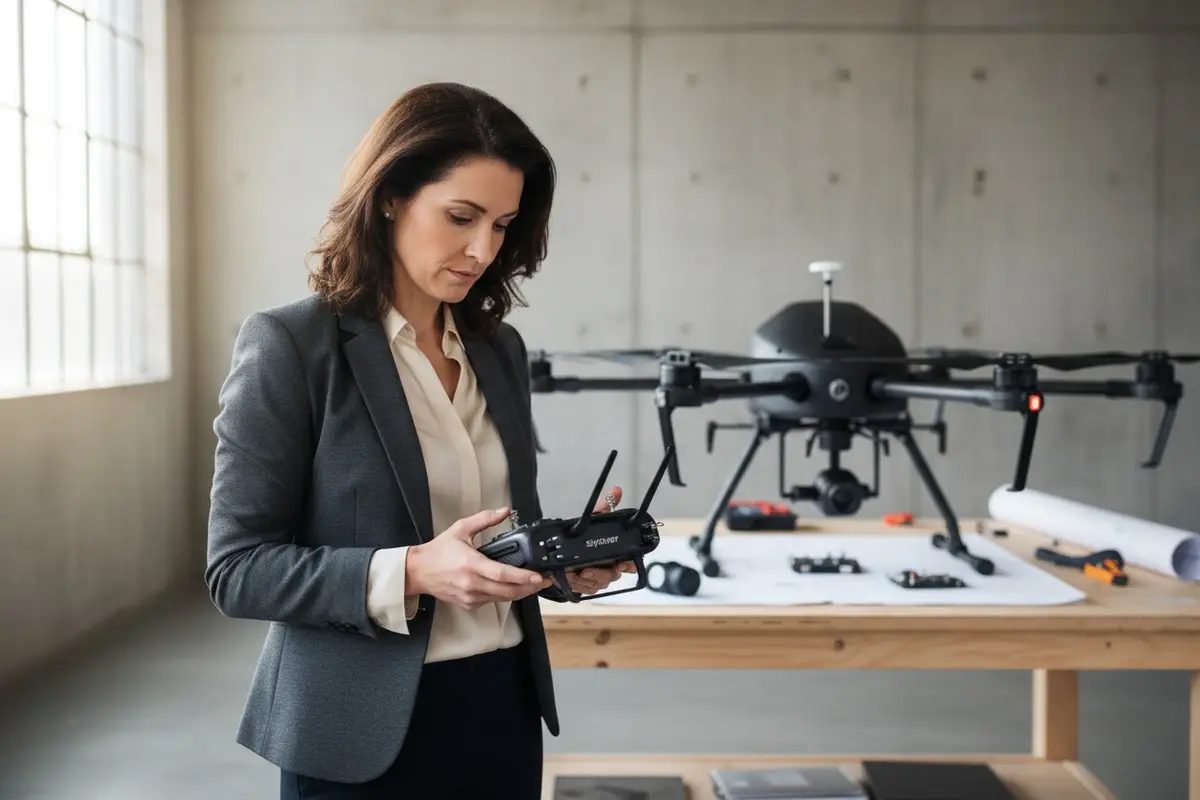

Als wir mit dem Design von Steuerungen für unsere Agrardrohnen 1, begannen, überraschte uns das Feedback der Piloten. Die Bediener beschwerten sich mehr über Ermüdung der Hände als über die Flugleistung. Das war ein Weckruf für unser Ingenieurteam.
Um die Ergonomie und Tastenbelegung der Fernbedienung zu bewerten, beurteilen Sie den Griffkomfort durch ausgedehnte Testsitzungen, untersuchen Sie die Tastenplatzierung für intuitiven Zugriff ohne Hinsehen, prüfen Sie Anpassungsoptionen zur Workflow-Optimierung und verifizieren Sie die Verarbeitungsqualität anhand von IP-Schutzarten und Temperaturspezifikationen für die Feldhaltbarkeit.
Dieser Leitfaden zerlegt jeden Bewertungsfaktor. Sie lernen praktische Methoden, um Steuerungen vor dem Kauf zu testen Ergonomie von Fernsteuerungen 2. Lassen Sie uns durchgehen, was für landwirtschaftliche Drohnenbetriebe am wichtigsten ist.
Woran erkenne ich, ob der Griff der Fernbedienung für meine Langzeit-Sprühmissionen bequem genug ist?
Unser Produktionsteam verbringt Wochen mit dem Testen von Griffdesigns, bevor es eine Steuerung fertigstellt Potentiometer-Designs 3. Wir haben gelernt, dass sich das, was sich fünf Minuten lang gut anfühlt, oft nach zwei Stunden als problematisch erweist. Viele Piloten entdecken dies zu spät.
Ein bequemer Controller-Griff verteilt das Gewicht gleichmäßig auf Handflächen und Finger, verfügt über konturierte Oberflächen, die natürlichen Handpositionen entsprechen, wiegt unter 1200 Gramm und ermöglicht entspannte Handgelenkswinkel bei längerem Betrieb. Testen Sie jeden Controller mindestens 30 Minuten lang, bevor Sie Kaufentscheidungen treffen.
Warum Griffdesign für landwirtschaftliche Betriebe wichtig ist
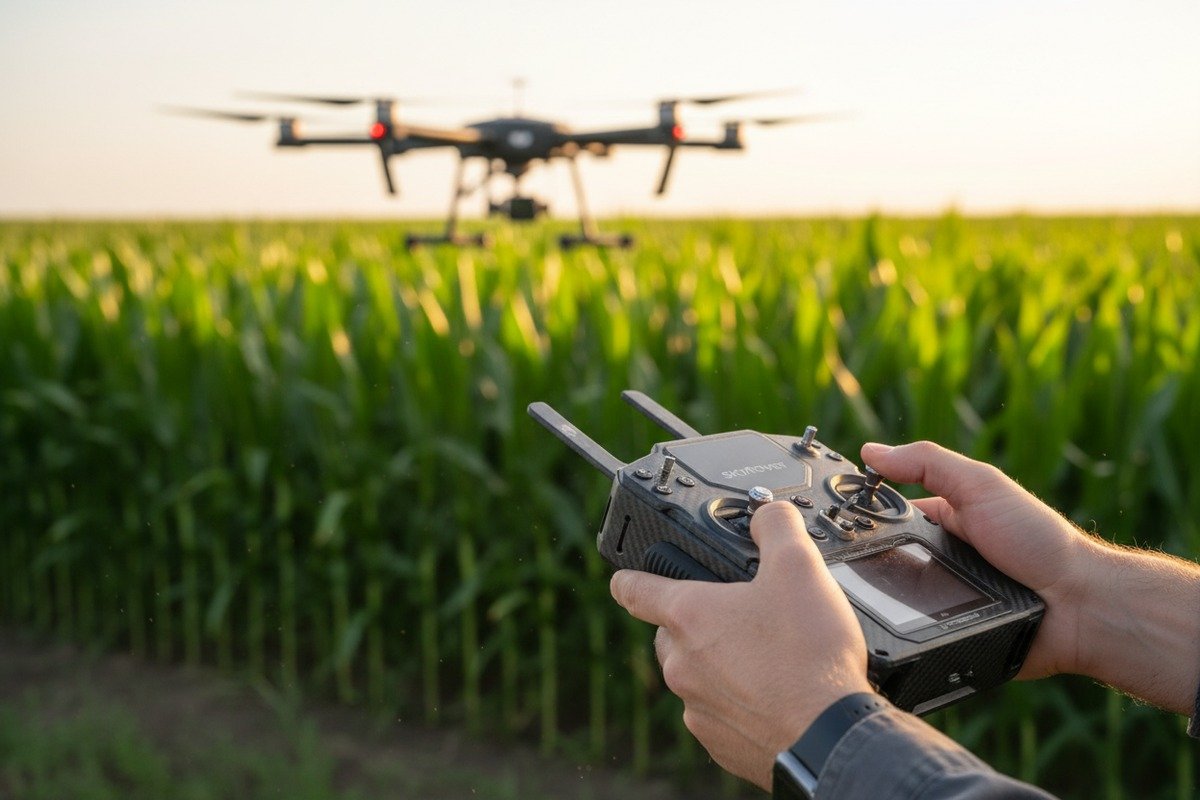
Landwirtschaftliche Drohnenmissionen unterscheiden sich erheblich von Freizeitflügen Glasfaserverstärkte Polymere 4. Sprühvorgänge dauern oft vier bis sechs Stunden pro Tag. Piloten können in einer einzigen Sitzung Dutzende von Ladezyklen absolvieren. Diese verlängerte Nutzung deckt ergonomische Schwächen schnell auf.
Schlechte Griffdesigns verursachen mehrere Probleme. Bediener erleben innerhalb der ersten Stunde Handkrämpfe. Über mehrere Tage hinweg entwickelt sich eine Handgelenksbelastung. Diese Probleme verringern die Steuerpräzision und erhöhen das Unfallrisiko. Ermüdung führt auch zu verkürzten Arbeitstagen und verzögerter Feldabdeckung.
Wenn wir unsere Flugsteuerungen im Werk kalibrieren, halten Ingenieure Prototypen über ganze Schichten hinweg. Diese Tests decken Druckpunkte und Gleichgewichtsprobleme auf. Das Ziel ist eine neutrale Handgelenksposition mit minimaler Griffkraft.
Zu prüfende physikalische Spezifikationen
Vergleichen Sie vor dem Kauf diese Spezifikationen für Controller-Optionen:
| Spezifikation | Zulässiger Bereich | Optimaler Bereich | Warum es wichtig ist |
|---|---|---|---|
| Gewicht | 800-1300g | 900-1100g | Leichter reduziert Ermüdung, aber zu leicht fühlt sich instabil an |
| Breite | 250-320mm | 280-300mm | Muss zur Handspannweite des Bedieners passen |
| Tiefe | 140-180mm | 150-165mm | Beeinflusst die Reichweite zu allen Tasten |
| Griffumfang | 35-50mm | 38-45mm | Bestimmt den Tragekomfort des Fingers |
Der Gurt-Test
Professionelle Landwirte verwenden Brust- oder Nackengurte. Dieses Zubehör überträgt das Gewicht des Controllers vom Händen auf den Oberkörper. Die Verwendung eines Gurtes eliminiert jedoch nicht die Bedeutung des Griffs.
Selbst mit Gurtunterstützung greifen die Bediener den Controller immer noch. Schlecht gestaltete Griffe verursachen Ermüdung der Finger und verringern die Präzision des Joysticks. Aus diesem Grund fügen wir unseren Exportlieferungen an amerikanische Händler Hinweise zur Gurtkompatibilität bei.
Testen Sie den Controller mit und ohne Gurtunterstützung. Achten Sie darauf, wo Ihre Finger natürlich liegen. Prüfen Sie, ob alle Tasten zugänglich bleiben. Die besten Designs funktionieren in beiden Konfigurationen gut.
Balance und Gewichtsverteilung
Ein Controller kann 1000 Gramm wiegen, sich aber schwerer anfühlen, wenn er schlecht ausbalanciert ist. Konzentriertes Gewicht an der Oberseite erzeugt ein Drehmoment, das die Handgelenke belastet. Frontlastige Designs zwingen die Bediener, fester zu greifen.
Halten Sie den Controller locker und achten Sie darauf, in welche Richtung er kippt. Gut gestaltete Controller bleiben mit minimaler Griffkraft nahezu waagerecht. Unser Ingenieurteam verwendet Präzisionswaagen, um den Schwerpunkt während der Prototypenentwicklung zu überprüfen.
Nach unserer Erfahrung bei der Schulung neuer Piloten an unseren Agrarsystemen verursacht Knopfverwirrung mehr Beinaheunfälle als jeder technische Ausfall. Bediener, die nach dem Not-Aus greifen, sollten nicht versehentlich die Nutzlastfreigabe auslösen. Das Layout ist von enormer Bedeutung.
Eine effektive Tastenanordnung platziert kritische Funktionen wie Not-Aus und Rückkehr zum Startpunkt in Reichweite des Daumens, gruppiert zusammengehörige Funktionen, bietet taktile Unterscheidbarkeit zwischen den Tasten und behält eine konsistente Positionierung über alle Flugmodi hinweg bei. Piloten sollten jede Taste finden können, ohne den Blick vom Fluggerät abzuwenden.

Zugänglichkeit der Hauptsteuerung
Die wichtigsten Bedienelemente müssen am zugänglichsten sein. Agrardrohnen-Controller verwenden typischerweise Dual-Joystick-Konfigurationen. Der rechte Joystick steuert Nick- und Rollbewegungen. Der linke steuert Gas und Gier. Diese Anordnung ermöglicht gleichzeitige Steuereingaben.
Neben Joysticks erfordern mehrere Funktionen sofortigen Zugriff:
| Prioritätsstufe | Funktion | Empfohlene Position | Zugriffsmethode |
|---|---|---|---|
| Kritisch | Not-Aus | Oben mittig oder dedizierter Schulterknopf | Einmaliges Drücken, keine Bestätigung |
| Kritisch | Zurück zum Start | Nahe am rechten Daumen | Einmaliges Drücken mit optionalem Halten |
| Hoch | Moduswechsel | Linke Schulter | Kippschalter oder Drei-Positionen-Schalter |
| Hoch | Sprühen Ein/Aus | Rechter Zeigefinger | Kippschalter bevorzugt |
| Mittel | Kamera/Kardanische Aufhängung | Untere Joysticks oder dedizierte Daumenräder | Variable Eingabe |
| Mittel | Karten-/Bildschirmumschaltung | Touchscreen oder Seitentaste | Einzeldruck |
Taktile Unterscheidung
Landwirte tragen in landwirtschaftlichen Umgebungen oft Handschuhe. Touchscreens werden schwierig. Physische Tasten müssen sich voneinander unterscheiden.
Qualitätsprüfer verwenden unterschiedliche Tastenformen, -größen und -texturen. Der Not-Aus-Schalter kann größer sein und eine gerippte Oberfläche haben. Modusschalter verwenden unterschiedliche Hubwege. Unsere werkseitige Qualitätskontrolle umfasst aus genau diesem Grund Tests für den Betrieb mit Handschuhen.
Fahren Sie mit geschlossenen Augen über das Tastenfeld. Können Sie jede Steuerung allein durch Fühlen identifizieren? Dieser einfache Test deckt schnell die Qualität des Layouts auf.
Joystick-Eigenschaften
Hall-Effekt-Joysticks 5 übertreffen Potentiometer-Designs für landwirtschaftliche Arbeiten. Sie bieten eine sanftere Reaktion, höhere Genauigkeit und eine längere Lebensdauer. Der magnetische Sensor widersteht Staub- und Feuchtigkeitsschäden.
Auch die Joystick-Spannung ist wichtig. Landwirtschaftliche Piloten bevorzugen etwas steifere Federn als Hobby-Drohnenpiloten. Dies reduziert versehentliche Eingaben durch Stöße oder Vibrationen während des Transports auf dem Feld. Einige Steuerungen bieten einstellbare Spannungseinstellungen.
Logik der Funktionsgruppierung
Logische Gruppierung reduziert die kognitive Belastung. Flugsteuerungen sollten getrennt von Nutzlaststeuerungen gruppiert werden. Kamerafunktionen bleiben zusammen. Autonome Missionssteuerungen nehmen einen eigenen Bereich ein.
Wenn Tasten zufällig verstreut sind, verschwenden Piloten mentale Energie, um sich an die Positionen zu erinnern. Dies erhöht die Reaktionszeit in Notfällen. Konsistente Gruppierung ermöglicht die Entwicklung von Muskelgedächtnis.
Gleichgewicht der Bildschirmintegration
Moderne Steuerungen integrieren Touchscreens für die Missionsplanung und Statusanzeige. Reine Touchscreen-Oberflächen verursachen jedoch Probleme. Helles Sonnenlicht reduziert die Sichtbarkeit. Handschuhe werden schlecht erkannt. Nasse Bedingungen verursachen falsche Berührungen.
Die besten Designs kombinieren die Flexibilität von Touchscreens mit der Zuverlässigkeit physischer Tasten. Kritische Funktionen haben immer physische Bedienelemente. Der Touchscreen übernimmt komplexe Planungsaufgaben während der Vorflugvorbereitung. Dieses Gleichgewicht ist gut für landwirtschaftliche Betriebe.
Unser technisches Support-Team erhält wöchentlich Anpassungsfragen von amerikanischen und europäischen Kunden. Unterschiedliche Kulturen, Feldgrößen und Betriebsarten erfordern unterschiedliche Steuerkonfigurationen. Einheitsgrößen passen selten in der Landwirtschaft.
Hochwertige Agrardrohnen-Controller ermöglichen eine umfangreiche Tastenanpassung über Begleitsoftware oder On-Screen-Menüs, sodass Bediener Funktionen wie Sprühratenanpassung, Wegpunktmarkierung und Kameraauslöser bevorzugten Tasten zuweisen können, während mehrere Profile für verschiedene Missionstypen gespeichert werden.

Möglichkeiten der Software-Anpassung
Moderne Controller verbinden sich über USB oder eine drahtlose Verbindung mit der Konfigurationssoftware. Diese Software zeigt die verfügbaren Anpassungsoptionen an. Einfache Controller erlauben möglicherweise nur eine Neubelegung von Tasten. Fortgeschrittene Einheiten ermöglichen die vollständige Funktionszuweisung, einschließlich:
- Primäre und sekundäre Tastenaktionen
- Unterscheidung zwischen langem und kurzem Drücken
- Joystick-Empfindlichkeitskurven
- Anpassungen der Totzone
- Benutzerdefinierte Automatisierungssequenzen
Wenn wir Firmware-Updates entwickeln, steht die Flexibilität der Anpassung bei den Funktionsprioritäten ganz oben. Unsere Händler berichten, dass Betreiber konfigurierbare Systeme stark bevorzugen.
Profilverwaltung
Landwirtschaftliche Betriebe umfassen mehrere Missionstypen. Sprühen erfordert andere Bedienelemente als Kartierungsvermessungen. Die Überwachung von Feldfrüchten nutzt Kamerafunktionen mehr als Nutzlaststeuerungen.
Controller, die mehrere Profile unterstützen, ermöglichen ein schnelles Umschalten zwischen Konfigurationen. Ein Betreiber könnte Profile für Folgendes haben:
| Profilname | Hauptnutzung | Wichtige Anpassungen |
|---|---|---|
| Sprühstandard | Normale Anwendung | Sprühen über rechten Abzug, Durchflussregelung über Drehrad |
| Sprühpräzision | Punktuelle Behandlung | Reduzierte Empfindlichkeit, Schnellsprüh-Burst-Taste |
| Vermessung der Kartierung | Erfassung von Feldgrenzen | Kamerasteuerung prominent, autonomes Markieren von Wegpunkten |
| Überwachung | Inspektion von Feldfrüchten | Gimbal-Steuerung priorisiert, Zoom über Schultertaste |
Optionen zur Hardware-Anpassung
Einige Controller-Hersteller bieten modulare Designs an. Bediener können Joystick-Module mit unterschiedlichen Spannfedern austauschen. Spezialisierte Drehräder ersetzen Standardknöpfe für die Durchflussregelung. Verlängerte Abzüge verbessern den Zugang für größere Hände.
Diese Hardware-Flexibilität verlängert die Lebensdauer des Controllers. Mit der Weiterentwicklung der Einsätze passt sich der Controller an, ohne dass er komplett ersetzt werden muss. Unser Produktentwicklungsteam beobachtet diese modularen Trends für zukünftige Designs genau.
Integration mit Ground Station Software
Die Anpassung geht über den physischen Controller hinaus. Bodenstationssoftware 6 koordiniert Controller-Eingaben mit dem Drohnenverhalten. Benutzerdefinierte Tastendrücke können komplexe autonome Sequenzen auslösen.
Zum Beispiel kann eine einzige Taste Folgendes auslösen:
- Aktuelle Mission pausieren
- GPS-Koordinaten erfassen
- Standort als Problembereich markieren
- Mission fortsetzen
Diese Integration verwandelt einfache Tastendrücke in leistungsstarke Workflow-Tools. Prüfen Sie, ob die Controller- und Drohnensoftware eine solche erweiterte Anpassung unterstützt.
Zu verstehende Einschränkungen
Nicht alle Funktionen können auf jedem Controller neu zugewiesen werden. Sicherheitskritische Steuerungen wie der Not-Aus bleiben in der Regel fest. Einige Hersteller sperren bestimmte Tasten, um die Einhaltung von Zertifizierungsstandards zu gewährleisten.
Fragen Sie vor dem Kauf gezielt nach Einschränkungen bei der Anpassung. Fordern Sie Dokumentationen an, die die verfügbaren Optionen zeigen. Das Verständnis der Grenzen verhindert Frustration nach der Inbetriebnahme.
Wie bewerte ich, ob die Verarbeitungsqualität und die Materialien des Controllers in meinen rauen Umgebungen standhalten?
Wenn wir Steuerungen an Kunden in staubigen amerikanischen Agrargebieten oder feuchten europäischen Klimazonen versenden, stehen Haltbarkeitsbedenken ganz oben auf der Liste. Laborbedingungen unterscheiden sich stark vom tatsächlichen Feldeinsatz. Unsere Testeinrichtungen simulieren diese rauen Umgebungen, bevor die Produkte das Werk verlassen.
Bewerten Sie die Haltbarkeit des Controllers anhand von IP-Schutzarten (mindestens IP67 oder IP68 für landwirtschaftliche Zwecke), des Betriebstemperaturbereichs (idealerweise -20 °C bis +50 °C), der Materialspezifikationen (verstärkte Polymere oder Aluminiumlegierung), der Falltestbewertungen und der Garantiebedingungen, die das Vertrauen des Herstellers in die Verarbeitungsqualität belegen.

Verständnis von IP-Schutzarten
IP-Einstufungen 7 zeigen Schutz gegen Staub und Wasser an. Der zweistellige Code gibt spezifische Fähigkeiten an:
| IP-Bewertung | Staubschutz | Wasserschutz | Eignung für die Landwirtschaft |
|---|---|---|---|
| IP54 | Geschützt gegen Staubeintritt | Spritzwassergeschützt | Minimal – nur bei gutem Wetter |
| IP65 | Staubdicht | Niederdruck-Wasserstrahlen | Akzeptabel – leichter Regen |
| IP67 | Staubdicht | Eintauchen bis zu 1 Meter | Gut – normale Feldbedingungen |
| IP67 | Staubdicht | Kontinuierliches Eintauchen | Ausgezeichnet – alle Bedingungen |
Landwirtschaftliche Steuerungen sollten mindestens IP67 erfüllen. IP68 bietet besseren Schutz für den Einsatz in der Nähe von Bewässerungssystemen oder bei starkem Regen. Fordern Sie Zertifizierungsdokumente an, nicht nur Marketingaussagen.
Temperaturbereichsspezifikationen
Landwirtschaftliche Arbeit erstreckt sich über Jahreszeiten und Klimazonen. Steuerungen müssen von der Kälte des frühen Frühlings bis zur Sommerhitze funktionieren. Betriebstemperaturspezifikationen zeigen Designmargen.
Verbrauchscontroller geben oft 0°C bis 40°C an. Dieser Bereich versagt bei frühem Morgenfrost oder sommerlicher Mittagshitze in südlichen Regionen. Professionelle Landwirtschaftscontroller reichen am unteren Ende bis -20°C oder -40°C und am oberen Ende bis +50°C oder höher.
Die Batterieleistung verschlechtert sich bei extremen Temperaturen. Qualitätscontroller verwenden Batterietechnologien und Wärmemanagement, die für landwirtschaftliche Bedingungen geeignet sind. Unser Ingenieurteam testet Lithium-Batterien 8 bei -25°C, um die Zuverlässigkeit beim Start zu überprüfen.
Materialauswahl
Gehäusematerialien beeinflussen sowohl die Haltbarkeit als auch das Gewicht. Gängige Optionen sind:
ABS-Kunststoff: Leicht, aber anfällig für Risse bei Kälte. Ausreichend für geschützte Umgebungen.
Glasfaserverstärkte Polymere: Bessere Schlagfestigkeit und Temperaturstabilität. Üblich bei professionellen Controllern.
Aluminiumlegierungsrahmen: Hervorragende Steifigkeit und Wärmeableitung. Erhöht das Gewicht, verbessert aber die Haltbarkeit erheblich.
Kohlefaserverbundwerkstoffe: Premium-Option, die geringes Gewicht mit hoher Festigkeit kombiniert. Findet sich normalerweise in Controllern der höchsten Klasse.
Untersuchen Sie Verbindungen, Nähte und Anschlussstellen. Diese Bereiche versagen unter Belastung zuerst. Qualitätscontroller verwenden durchgehend Dichtungen, O-Ringe und abgedichtete Steckverbinder.
Vibrations- und Stoßfestigkeit
Landwirtschaftliche Drohnen werden oft über unwegsames Gelände in Fahrzeugen transportiert. Controller erfahren während der Feldarbeit kontinuierliche Vibrationen. Die Montage in der Traktorkabine setzt Controller Motorvibrationen und plötzlichen Stößen aus.
Achten Sie auf Spezifikationen für Vibrationstests. Militärische Standards wie MIL-STD-810 9 Bieten Sie strenge Benchmarks. Steuerungen, die diese Standards erfüllen, überstehen landwirtschaftliche Misshandlungen.
Interne Komponenten erfordern eine sichere Montage. Lose Leiterplatten oder Steckverbinder verursachen intermittierende Ausfälle, die die Fehlersuche erschweren. Unser Montageprozess umfasst Vibrationstests für jede Steuereinheit.
Garantie- und Support-Indikatoren
Herstellergarantiebedingungen offenbaren Vertrauen in die Verarbeitungsqualität. Kurze Garantien oder umfangreiche Ausschlüsse deuten auf Bedenken hinsichtlich der Haltbarkeit hin. Starke Garantien deuten auf eine zuverlässige Konstruktion hin.
Bewerten Sie diese Garantieaspekte:
- Abdeckungsdauer (mindestens 12 Monate für professionelle Geräte)
- Einschluss von Umweltschäden
- Reparatur- versus Austauschrichtlinien
- Zeitplan für die Teileverfügbarkeit
- Erreichbarkeit des technischen Supports
Unser After-Sales-Team unterhält einen Ersatzteilbestand speziell für die nordamerikanischen und europäischen Märkte. Ein schneller Austausch reduziert Ausfallzeiten während kritischer Wachstumsperioden.
Vorschläge für reale Tests
Über Spezifikationen hinaus zeigen praktische Tests die Verarbeitungsqualität:
- Üben Sie mäßigen Druck auf die Gehäusepaneele aus und achten Sie auf Knarren
- Überprüfen Sie das Gefühl von Tasten und Joysticks auf Lockerheit oder Wackeln
- Untersuchen Sie den Bildschirmschutz (vertieftes Design oder erhöhte Blenden)
- Testen Sie die Steckverbinderabdeckungen auf sichere Abdichtung
- Überprüfen Sie die Haltbarkeit und Befestigungsstärke der Antenne
Schlussfolgerung
Die Bewertung von Drohnensteuerungen für die Landwirtschaft erfordert eine systematische Beurteilung von Griffkomfort, Tastenanordnung, Anpassungsoptionen und Robustheit der Konstruktion. Nehmen Sie sich vor dem Kauf Zeit zum Testen. Ihre betriebliche Effizienz hängt von dieser kritischen Schnittstelle ab.
Fußnoten
1. Bietet einen umfassenden Überblick über UAVs in der Landwirtschaft, ihre Anwendungen und Vorteile. ︎
2. Erörtert, wie Ergonomie das Design von Fernsteuerungen beeinflusst und die Steuerung des Bedieners verbessert und Ermüdung reduziert. ︎
3. Beschreibt Potentiometer-Designs, ihre Funktion als variable Widerstände und gängige Anwendungen. ︎
4. Definiert glasfaserverstärkten Kunststoff (GFK) als Verbundwerkstoff mit hoher Festigkeit und Korrosionsbeständigkeit. ︎
5. Erklärt die Hall-Effekt-Joystick-Technologie, ihren berührungslosen Betrieb und ihre Vorteile gegenüber herkömmlichen Designs. ︎
6. Ersetzt durch Dokumentation von ArduPilot, einem maßgeblichen Open-Source-Autopilotprojekt, das Bodenkontrollstationen detailliert beschreibt. ︎
7. Ersetzt durch einen Wikipedia-Artikel, der eine umfassende Erklärung der IP-Schutzarten bietet und sich auf den IEC-Standard bezieht. ︎
8. Erklärt die grundlegenden Komponenten und das Funktionsprinzip von Lithium-Ionen-Batterien. ︎
9. Definiert MIL-STD-810 als einen US-Militärstandard für Umwelttechnik und Labortests. ︎
 English
  Español de México
  Deutsch
  Français
  Русский
  العربية
Comments
No comments yet. Be the first to share your thoughts!
Leave a Comment