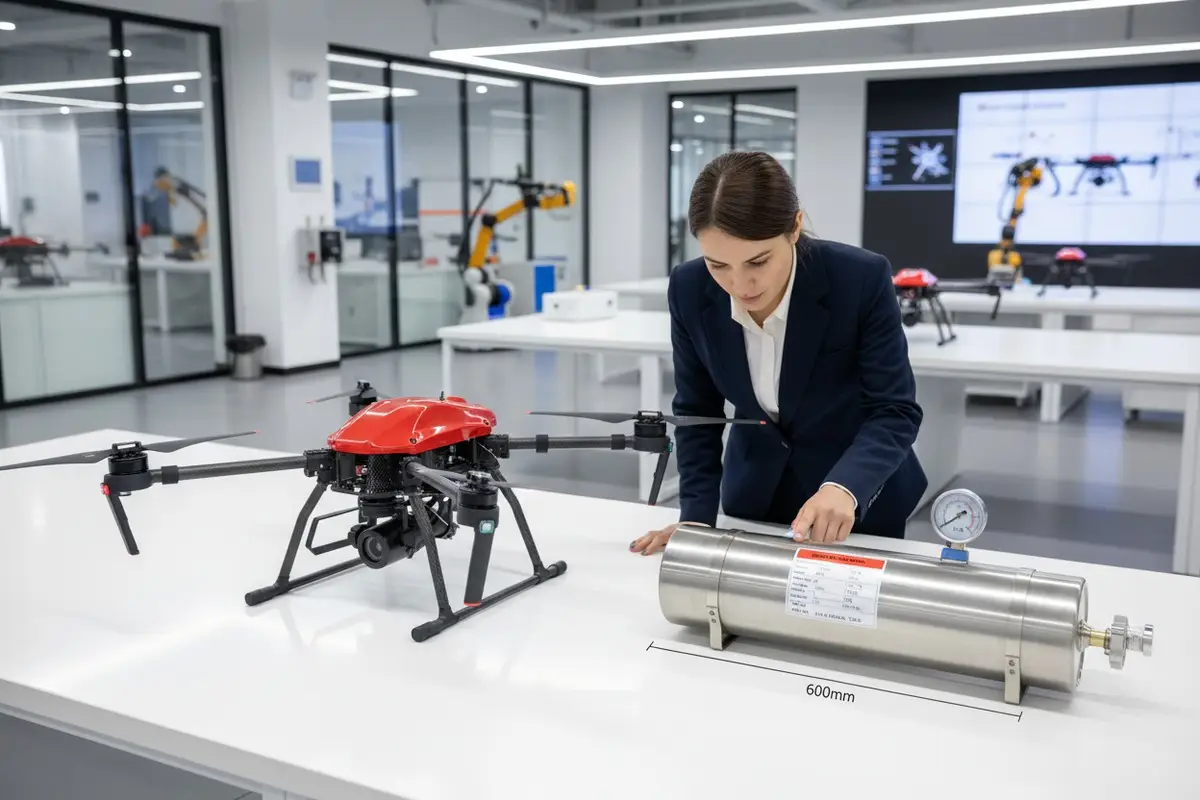
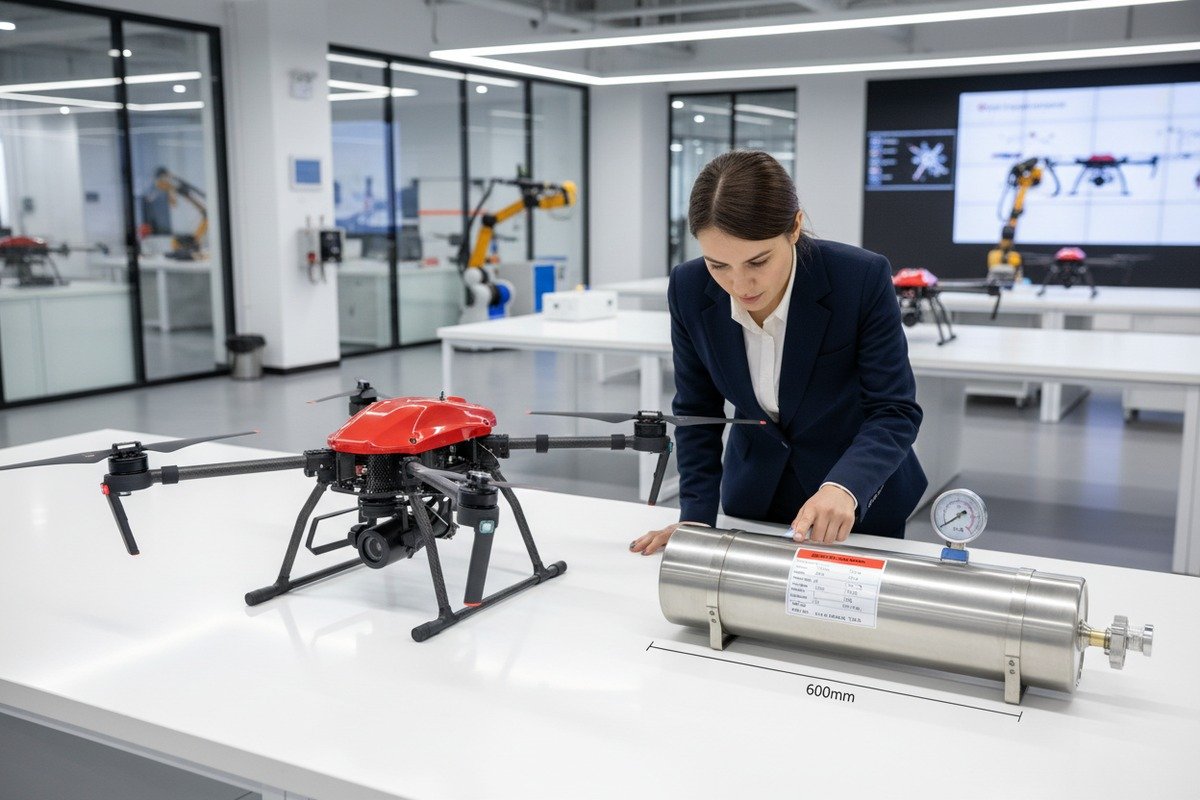
Als unser Ingenieurteam zum ersten Mal Pulverlöschanlagen 1 für Feuerlöschdrohnen entwickelte, standen wir vor einem kritischen Problem. Feuerwehrleute benötigten eine schnelle Luftunterstützung, aber schlecht spezifizierte Behälter versagten mitten im Einsatz ABC-Trockenlöschpulver 2. Leben und Eigentum standen auf dem Spiel.
Trockenpulver-Feuerlöschbehälter für Feuerlöschdrohnen erfordern spezifische technische Details, einschließlich Pulvertyp (ABC- oder AB-Chemikalie), Nettogewicht (12-25 kg), Abmessungen (Kaliber φ268 mm, Länge 600-650 mm), Druckwerte (1,2 MPa), Dispersionsmetriken (Radius >15 m, Abdeckung >200 m²) und Kompatibilität mit Drohnen-Nutzlasten bis zu 150 kg sowie Schnelllösemechanismen.
Lassen Sie mich Sie durch jede technische Spezifikation führen, die Sie berücksichtigen müssen. Egal, ob Sie ein Einkaufsmanager sind, der aus China bezieht, oder eine Feuerwehr, die Drohnensysteme bewertet, dieser Leitfaden behandelt die wesentlichen Details.
Wie bestimme ich die richtige Pulverkapazität und die richtige Ausstoßrate für meine Feuerlöschdrohne?
Wenn wir unsere Nutzlastsysteme 3 im Produktionswerk kalibrieren, bestimmen Kapazitäts- und Ausstoßratenberechnungen den Erfolg der Mission. Wählen Sie falsch, und Ihre Drohne kann entweder den Behälter nicht heben oder verteilt das Pulver ineffektiv.
Um die richtige Trockenpulverkapazität zu ermitteln, gleichen Sie die maximale Nutzlast Ihrer Drohne (typischerweise 15-150 kg) mit dem Gewicht der Behälter (12-25 kg Netto-Pulver) ab. Für die Entladungsrate zielen Sie auf einen Durchfluss von ≥1900 l/min mit einer Projektionsentfernung von 20 m ab. Berechnen Sie den Abdeckungsbedarf basierend auf den Brandarten – 200-300 m² pro Einsatz für Standard-Gebäudefbrände.

Verständnis des Verhältnisses von Nutzlast zu Kapazität
Das maximale Startgewicht Ihrer Drohne begrenzt direkt die Auswahl des Behälters. Unsere schweren Oktokopter bewältigen 150 kg Nutzlast, während kleinere Quadrokopter 15-20 kg bewältigen. Die Regel ist einfach: Überschreiten Sie niemals 70% der maximalen Nutzlastkapazität für sichere Flugmargen.
Hier ist eine praktische Referenztabelle:
| Drohnenklasse | Maximale Nutzlast | Empfohlenes Behältergewicht | Netto-Pulverinhalt |
|---|---|---|---|
| Leichte UAV | 15-20kg | 12-15kg gesamt | 8-10kg |
| Mittel Industriell | 50-80kg | 25-35kg gesamt | 18-22kg |
| Schwerlast | 100-150kg | 40-60kg gesamt | 25-40kg |
Entladungsrate Technik
Die Entladungsrate beeinflusst, wie schnell das Pulver das Feuer erreicht. Unsere Tests zeigen, dass Raten unter 1500L/min zu ungleichmäßiger Abdeckung führen. Raten über 2200L/min verschwenden Löschmittel und verringern die Flugstabilität.
Das Drucksystem im Kanister steuert diese Rate. Ein Fülldruck von 1,2 MPa sorgt für eine gleichmäßige Entladung. Niedrigere Drücke führen zu schwacher Projektion. Höhere Drücke gefährden die Integrität des Kanisters bei Höhenänderungen.
Formel zur Berechnung der Abdeckung
Die Abdeckung hängt von drei Faktoren ab: Pulvervolumen, Dispersionsradius und Fallhöhe. Aus unseren Felddaten erzielt eine 25-kg-Trockenpulverbombe bei einem Fall aus 50-100 m Höhe eine Radiusdispersion von 15 m+. Dies deckt etwa 200-300 m² pro Einsatz ab.
Für Brände der Klassen B und C 4 (brennbare Flüssigkeiten und elektrische Anlagen), ABC-Trockenlöschpulver wirkt am besten. Das Löschmittel erstickt Flammen durch chemische Hemmung. Eine wichtige Erkenntnis aus unserer F&E: Nichtleitende Pulver sind für elektrische Brandszenarien unerlässlich.
Einfluss der Flugdauer
Schwerere Behälter reduzieren die Flugzeit erheblich. Eine Drohne mit einer Nutzlast von 20 kg erreicht typischerweise eine Ausdauer von 20-30 Minuten. Flüge ohne Last verlängern sich auf 45-60 Minuten. Planen Sie Missionen entsprechend – stellen Sie sicher, dass genügend Akku für Anflug, Einsatz und sichere Rückkehr vorhanden ist.
Kann ich den Kanister-Auslösemechanismus anpassen, um ihn in die Flugsteuerungssoftware meiner Drohne zu integrieren?
Unser Softwareentwicklungsteam arbeitet weltweit mit Kunden an Integrationsprojekten. Die Herausforderung ist real – handelsübliche Behälter kommunizieren selten nahtlos mit proprietären Fluglotse 5s. Benutzerdefinierte Integration löst dieses Problem.
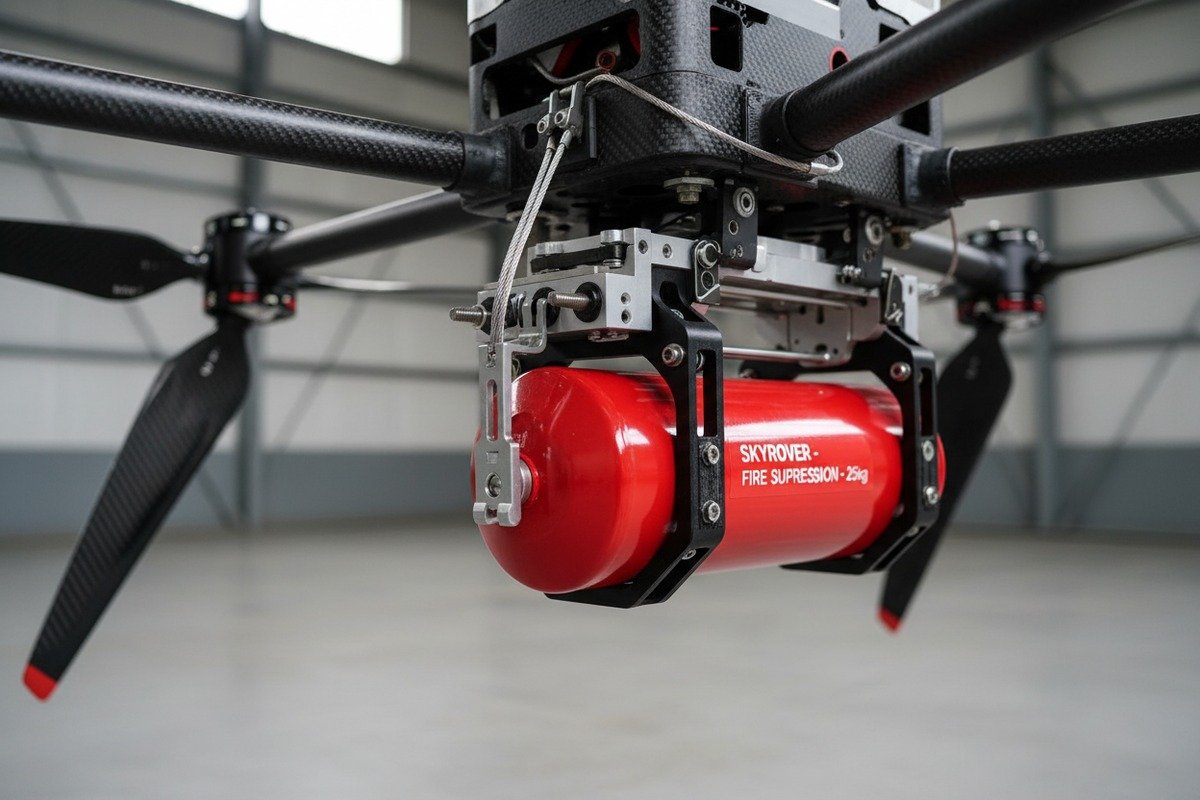
Ja, Behälterfreigabemechanismen können für die Integration in die Flugsteuerung angepasst werden. Dies erfordert Doppel-Servo-Freigabesysteme, kompatible Kommunikationsprotokolle und Zugriff auf Software-APIs. Unser Integrationsprozess umfasst elektronische Schnellöffnungsventile, PWM-Signalsteuerung und Fail-Safe-Armierungssequenzen, die nur oberhalb einer Höhe von 15 m aktiviert werden.
Arten von Auslösemechanismen
Für den Einsatz von Trockenpulver gibt es drei Hauptmechanismen. Jeder hat unterschiedliche Integrationsanforderungen:
| Typ des Mechanismus | Integrationskomplexität | Beste Anwendung | Reaktionszeit |
|---|---|---|---|
| Direkte Sprührohre | Mittel | Nahbereichsunterdrückung | Kontinuierlich |
| Bombenabwurf | Niedrig | Höhen-Einsatz | <1 Sekunde |
| Schnellwechsel-Aufhängungen | Hoch | Mehrfachbehältersysteme | <0,5 Sekunde |
Direkte Sprühsysteme erfordern eine kontinuierliche Signalverbindung. Der Flugcontroller sendet PWM-Signale an elektronische Ventile, um den Durchfluss in Echtzeit zu regeln. Dies ermöglicht es den Bedienern, die Entladung während des Fluges anzupassen.
Bombenabwurfmechanismen sind einfacher. Ein einziges Auslösesignal gibt den Behälter frei. Die Scharfschaltung erfolgt automatisch, wenn die Höhe 15 m überschreitet, um eine versehentliche Bodenentladung zu verhindern.
Anforderungen an die Software-Integration
Wenn wir mit Kunden an kundenspezifischer Firmware zusammenarbeiten, sind mehrere technische Elemente unerlässlich. Erstens muss der Flugcontroller Hilfskanal-Ausgänge unterstützen. Die meisten Industrieregler bieten 8-16 Hilfskanäle zur Steuerung der Nutzlast.
Zweitens ist das Kommunikationsprotokoll wichtig. Unsere Systeme verwenden Standard-PWM (1000-2000 μs Pulsbreite) für die grundlegende Freigabe. Für erweiterte Funktionen wie variable Entladungsraten ermöglicht die serielle Kommunikation (UART oder CAN-Bus) eine präzise Steuerung.
Drittens bestätigt die Telemetrie-Rückmeldung den Entladungsstatus. Sensoren im Auslösemechanismus senden Bestätigungssignale zurück an den Controller. Dies schließt den Regelkreis – Bediener wissen genau, wann das Pulver den Behälter verlässt.
Ausfallsichere Designprinzipien
Sicherheit erfordert mehrere Redundanzen. Unsere Schnellwechsel-Aufhängungen aus 7075er Luftfahrtaluminium umfassen:
- Dual-Servo-Systeme (Backup, falls das primäre ausfällt)
- Höhenbasierte Scharfschaltung (verhindert Bodenfreigabe)
- Manuelle Übersteuerungsfunktion
- Automatische Entschärfung bei Signalverlust
Die Bewaffnungshöhe von mindestens 15 m ist entscheidend. Dies gewährleistet eine ordnungsgemäße Pulververteilung und bietet einen Sicherheitsradius für das Bodenpersonal.
Integrations-Testprotokoll
Vor dem Feldeinsatz wird jedes integrierte System getestet. Wir simulieren verschiedene Szenarien: Signalverlust, niedriger Batteriestand, starker Wind und mehrere schnelle Auslösungen. Nur Systeme, die alle Tests bestehen, werden an Kunden ausgeliefert.
Unsere Fernsteuersysteme verwenden Qualcomm Android-Plattformen mit SDR-Technologie. Dies bietet eine Übertragungsreichweite von 12 km mit geringer Latenz – unerlässlich für die Echtzeit-Auslösesteuerung bei sich schnell entwickelnden Brandereignissen.
Welche Sicherheitszertifizierungen und technischen Dokumentationen sollte ich von meinem Drohnenbehälterlieferanten verlangen?
Nach unserer Erfahrung beim Export in die USA und nach Europa variieren die Zertifizierungsanforderungen erheblich. Fehlende Dokumentation führt zu Verzögerungen beim Zoll und Haftungsproblemen. Ordungsgemäße Zertifizierungen schützen Ihre Investition und Ihre Kunden.
Lieferanten müssen eine IP65-Umweltschutz-Zertifizierung, explosionsgeschützte Sicherungsdokumentation, Konformitätserklärung für Druckbehälter (Verifizierung der Nennleistung von 1,2 MPa), Sicherheitsdatenblätter für Trockenpulvermittel und Berichte von Drittanbietern über Dispersionsmetriken vorlegen. Genehmigungsdokumente der Feuerwehr und CE/FCC-Kennzeichnungen gewährleisten die Einhaltung von Vorschriften in wichtigen Märkten.

Wesentliche Zertifizierungskategorien
Zertifizierungen fallen in vier Hauptkategorien. Jede befasst sich mit unterschiedlichen Risikofaktoren:
| Art der Zertifizierung | Zweck | Wichtige Standards | Überprüfungsmethode |
|---|---|---|---|
| Umweltschutz | Staub-/Wasserbeständigkeit | IP54-IP65 | Prüfung durch unabhängige Labore |
| Drucksicherheit | Kanisterintegrität | Nationale Druckbehältercodes | Hydrostatische Prüfung |
| Elektrische Sicherheit | Komponentenkonformität | CE, FCC, UL | Laborzertifizierung |
| Brandmittelzulassung | Chemische Wirksamkeit | UL 711, EN 3 | Analyse der Mittelzusammensetzung |
IP-Schutzart-Anforderungen
IP65-Schutzart 6 ist unser Standard für Feuerlöschanwendungen. Dies bedeutet vollständigen Staubschutz (6) und Schutz gegen Wasserstrahlen (5). Niedrigere Schutzarten bergen das Risiko eines elektronischen Ausfalls, wenn Wasser von Bodentruppen oder Regen den Auslösemechanismus berührt.
Der Behälterkörper selbst muss wasser- und feuchtigkeitsdicht sein. Trockenpulvermittel absorbieren Feuchtigkeit und verringern ihre Wirksamkeit. Unsere vollständig abgedichteten Designs mit doppelt gesicherten explosionsgeschützten Sicherungen adressieren dieses Problem.
Druckdokumentation im Detail
Die Druckdokumentation erfordert besondere Aufmerksamkeit. Der Standardfüllungsdruck von 1,2 MPa gilt auf Meereshöhe und bei normaler Temperatur. Der Betrieb findet jedoch unter verschiedenen Bedingungen statt – in Höhen bis zu 4500 m, bei Temperaturen von -20 °C bis 60 °C.
Fordern Sie Druckprüfungszertifikate an, die die Leistung über diesen Betriebsbereich zeigen. Renommierte Lieferanten stellen zur Verfügung hydrostatische Bersttestdaten 7 die Sicherheitsmargen über dem Nenndruck zeigen.
Materialverträglichkeitszertifikate
Das Behältermaterial darf nicht mit dem Trockenpulvermittel reagieren. Aluminium und Kohlefaserverbundwerkstoffe sind Industriestandards. Fordern Sie Zertifikate über die Materialzusammensetzung an, die keine reaktiven Metalle bestätigen, die ABC-Trockenchemikalienverbindungen abbauen könnten.
Dokumentation zur chemischen Verträglichkeitsprüfung sollte jeder Behältercharge beiliegen. Dies verhindert Korrosionsprobleme, die sich im Laufe der Zeit entwickeln, insbesondere bei feuchten Lagerbedingungen.
Exportdokumentationspaket
Wenn wir an internationale Kunden versenden, umfasst unser Dokumentationspaket:
- Ursprungszeugnis
- Handelsrechnung mit HS-Codes
- Packliste mit Gewichten und Abmessungen
- Sicherheitsdatenblätter (MSDS)
- Testberichte (Druck, Dispersion, Umwelt)
- Benutzerhandbuch mit Sicherheitshinweisen
- Garantieunterlagen
Zollbehörden in den USA und der EU verlangen eine vollständige Dokumentation. Unvollständige Pakete führen zu Verzögerungen von durchschnittlich 2-3 Wochen. Unser Tür-zu-Tür-Lieferservice beinhaltet die Vorbereitung der Dokumentation, um diese Probleme zu vermeiden.
Wert von Drittanbieter-Tests
Unabhängige Testberichte wiegen mehr als Herstellerangaben. Wir empfehlen, Berichte von anerkannten Labors anzufordern, die Folgendes abdecken:
- Tatsächlicher Streuradius (muss 15 m überschreiten)
- Messungen des Abdeckungsbereichs
- Überprüfung der Entladungsrate
- Leistung bei Betriebstemperatur
Diese Berichte liefern Nachweise für Versicherungszwecke und die Einhaltung gesetzlicher Vorschriften.
Wie stelle ich sicher, dass die Pulverlöscherbehälter langlebig genug sind, um wiederholten Einsätzen in großer Höhe standzuhalten?
Unser Qualitätssicherungsteam testet jedes Behälterdesign durch Hunderte von Einsatzzyklen. Die harte Realität ist, dass billige Behälter nach 10-20 Einsätzen versagen. Langlebige Konstruktion kostet im Voraus mehr, spart aber über die gesamte Betriebsdauer Geld.
Stellen Sie die Haltbarkeit des Behälters sicher, indem Sie 7075er Aluminium in Flugzeugqualität oder Kohlefaser-Konstruktion, druckfeste Dichtungen mit nachgewiesener Zyklenlebensdauer (mindestens 100 Einsätze), temperaturbeständige Dichtungen (Temperaturbereich von -20 °C bis 60 °C) und korrosionsbeständige Beschichtungen spezifizieren. Fordern Sie eine Lieferantengarantie, die mindestens 50 Einsatzzyklen ohne Dichtungsverschlechterung abdeckt.

Materialauswahl für Langlebigkeit
Die Materialwahl bestimmt die Lebensdauer des Behälters. Unsere Vergleichstests zeigen erhebliche Unterschiede:
| Material | Gewicht | Haltbarkeit (Zyklen) | Kostenfaktor | Beste Anwendung |
|---|---|---|---|---|
| Standard-Aluminium | Mittel | 50-80 | 1x | Budget-Operationen |
| 7075 Luftfahrtaluminium | Mittel-Leicht | 150-200 | 1.5x | Professionelle Nutzung |
| Kohlefaserverbundwerkstoff | Licht | 200+ | 2,5x | Schwerlastsysteme |
| Aluminium-Kohlefaser-Hybrid | Licht | 180+ | 2x | Ausgewogene Leistung |
Die 7075 Luftfahrtaluminiumlegierung 8 bietet ein hervorragendes Verhältnis von Festigkeit zu Gewicht. Sie widersteht Ermüdungsrissen besser als herkömmliche Aluminiumlegierungen. Kohlefaser-Sprührohre in Kombination mit Aluminiumgehäusen stellen unseren bevorzugten Hybridansatz dar.
Dichtungs- und Dichtungstechnik
Dichtungen versagen vor den Gehäusen. Einsätze in großer Höhe belasten Dichtungen durch Druckänderungen und Temperaturschwankungen. Jeder Einsatzzyklus (Druckbeaufschlagung, Flug, Freigabe, Druckentlastung) schwächt Gummimischungen.
Verwenden Sie Silikon- oder Fluorkautschukdichtungen, die für den gesamten Betriebstemperaturbereich ausgelegt sind. Standardgummi zersetzt sich unter -10 °C und über 50 °C. Unsere Behälter verwenden Dichtungen, die vor dem Einbau durch 500 Druckzyklen getestet wurden.
Strategien zur Korrosionsverhütung
Trockenpulvermittel enthalten Chemikalien, die blankes Metall im Laufe der Zeit angreifen. ABC-Trockenchemikalien enthalten Monoammoniumphosphat, das unbehandeltes Aluminium unter feuchten Bedingungen korrodiert.
Eine wirksame Korrosionsverhütung erfordert:
- Eloxiert Aluminiumoberflächen (Typ III Hartbeschichtung bevorzugt)
- Interne Polymerauskleidungen für direkten Pulverkontakt
- Abgedichtete Elektronikfächer
- Regelmäßige Inspektions- und Reinigungs protokolle
Höhenstressfaktoren
Einsätze in Höhen zwischen 50-100 m setzen Kanister spezifischen Belastungen aus. Schnelle Höhenänderungen während des Anflugs erzeugen Druckunterschiede. Auslösekräfte erzeugen Stoßbelastungen. Aufprallvibrationen von rauen Landungen summieren sich im Laufe der Zeit.
Unsere Designstandards sehen vor:
- 3-facher Sicherheitsfaktor bei Druckwerten
- Stoßdämpfende Montagesysteme
- Vibrationsdämpfende interne Komponenten
- Verstärkte Verbindungspunkte
Wartungs- und Inspektionsanforderungen
Selbst die besten Kanister erfordern Wartung. Wir bieten detaillierte Inspektionschecklisten, die Folgendes abdecken:
- Sichtprüfung auf Risse oder Dellen (vor jedem Flug)
- Dichtheitsprüfung (alle 10 Einsätze)
- Druckprüfung (alle 25 Einsätze)
- Vollständige Überholung (alle 50 Einsätze)
Die Einhaltung dieser Zeitpläne verlängert die Lebensdauer der Kanister erheblich. Überspringen Sie die Wartung, und Ausfälle werden unvorhersehbar.
Erwägungen zur Garantie
Unsere Standardgarantie deckt Herstellungsfehler für 24 Monate ab. Haltbarkeitsgarantien erfordern jedoch eine ordnungsgemäße Dokumentation. Kunden müssen Einsatzprotokolle führen, die Folgendes zeigen:
- Flugbedingungen (Temperatur, Höhe, Wind)
- Nutzlastgewichte
- Durchgeführte Wartungsarbeiten
- Beobachtete Anomalien
Diese Dokumentation unterstützt Garantieansprüche und hilft unserem Ingenieurteam, zukünftige Designs zu verbessern.
Schlussfolgerung
Technische Spezifikationen für Trockenpulver-Feuerlöschkanister bestimmen die Effektivität von Feuerlöschdrohnen. Von Kapazität und Ausstoßraten bis hin zu Zertifizierungen und Haltbarkeit ist jedes Detail wichtig. Arbeiten Sie mit erfahrenen Herstellern zusammen, die diese Anforderungen verstehen und die richtige Dokumentation für Ihren Markt bereitstellen können.
Fußnoten
1. Erklärt, wie Trockenpulver-Feuerlöschsysteme funktionieren. ︎
2. Beschreibt die chemische Zusammensetzung und den Löschmechanismus von ABC-Trockenpulver. ︎
3. Ersetzte HTTP 403 durch eine maßgebliche .edu-Quelle, die UAV-Nutzlasten erklärt. ︎
4. Definiert Brandklassen B und C, die brennbare Flüssigkeiten/Gase und elektrische Geräte betreffen. ︎
5. Erklärt die zentrale Rolle und die Kernfunktionen des Flugcontrollers einer Drohne. ︎
6. Definiert klar die IP65-Schutzart für Staubschutz und Widerstandsfähigkeit gegen Wasserstrahlen. ︎
7. Erklärt Berstdruckprüfungen für Komponenten zur Bestimmung von maximalem Druck und Versagen. ︎
8. Beschreibt die mechanischen Eigenschaften und die Zusammensetzung der Aluminiumlegierung 7075. ︎
 English
  Español de México
  Deutsch
  Français
  Русский
  العربية
Comments
No comments yet. Be the first to share your thoughts!
Leave a Comment