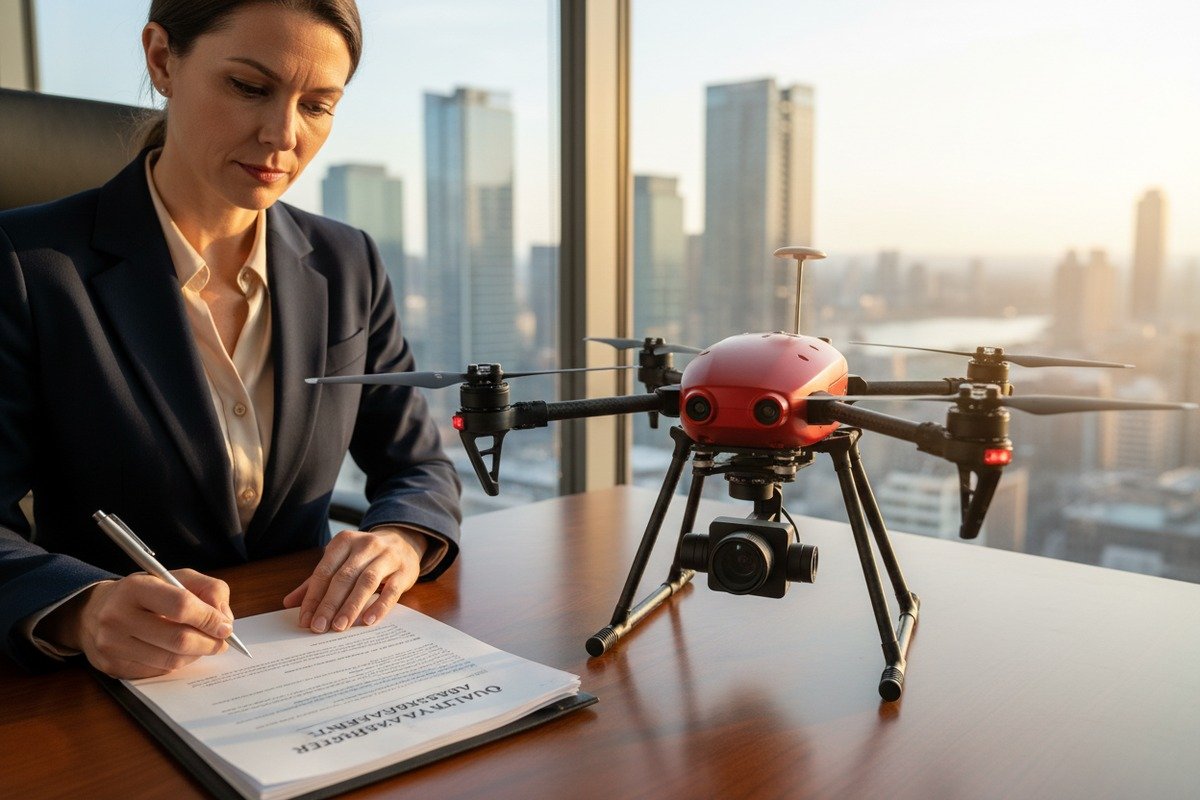
Jede Woche sieht unser Qualitätskontrollteam Bestellungen mit vagen Spezifikationen und fehlenden Compliance-Klauseln eintreffen. Käufer sehen sich dann mit Zollverzögerungen, fehlgeschlagenen Inspektionen und Drohnen konfrontiert, die nicht legal betrieben werden können. Das kostet Zeit, Geld und Reputation.
Eine Qualitätsicherungsvereinbarung für eine Feuerwehrdrohne muss Leistungskennzahlen, Klauseln zur Einhaltung bundesstaatlicher Vorschriften wie ASDA-Anforderungen, IPC-A-610 Klasse 3 Herstellungsstandards, Cybersicherheitsprotokolle, Garantien für Ersatzteile auf lange Sicht und Bedingungen zum Schutz der OEM-Marke enthalten, um zuverlässige, importbereite, missionskritische Ausrüstung zu gewährleisten.
Dieser Leitfaden zerlegt jedes kritische Element. Wir zeigen Ihnen genau, was Sie von Ihrem Lieferanten verlangen müssen. Lesen Sie weiter, um Ihre Investition zu schützen und sicherzustellen, dass Ihre Flotte funktioniert, wenn Leben davon abhängt.
Welche spezifischen Leistungsbenchmarks sollte ich in meine Qualitätsicherungsvereinbarung für Löschdrohnen aufnehmen?
Wenn unsere Ingenieure Flugsteuerungen in extremen Wärmekammern testen, sehen wir genau, welche Spezifikationen wichtig sind und welche nur auf dem Papier gut aussehen. Viele Käufer konzentrieren sich auf Reichweite und Geschwindigkeit, verpassen aber die Metriken, die das Überleben unter realen Brandbedingungen bestimmen.
Ihr QAA muss Flugstabilitätstoleranzen, Batterielaufzeit bei maximaler Nutzlast, Staub- und Wasserbeständigkeitsklassen von IP67 oder höher, Mindestanforderungen an die Auflösung der Wärmebildkamera, Reaktionszeiten bei der Hindernisvermeidung und dokumentierte Tests vor dem Versand mit Videoaufzeichnungen für jede Einheit festlegen.

Flugstabilität und Steuerpräzision
Die Flugstabilität ist für Feuerwehreinsätze nicht verhandelbar. Ihre Vereinbarung sollte akzeptable Schwebe-Driftgrenzen festlegen. Wir empfehlen nicht mehr als 0,5 Meter horizontale Drift bei Windgeschwindigkeiten von bis zu 12 m/s. Die Drohne muss während der Nutzlastabwurfoperationen die Höhe innerhalb von ±0,3 Metern halten.
Auch die GPS-Genauigkeit ist wichtig. Fordern Sie Dual-Frequenz-GNSS-Positionierung 1 mit einer Genauigkeit von 1 Zentimeter plus 1 ppm horizontal. Dies gewährleistet eine präzise Wasser- oder Schaumlieferung zu gezielten Hotspots.
Akku- und Nutzlastausdauer
Die Akkuleistung verschlechtert sich bei Hitze. Ihr QAA muss minimale Flugzeiten unter realistischen Bedingungen angeben. Hier ist, was Sie spezifizieren sollten:
| Leistungsmetrik | Mindestanforderung | Testbedingung |
|---|---|---|
| Flugzeit (ohne Nutzlast) | 45 Minuten | 25°C, Meereshöhe, kein Wind |
| Flugzeit (maximale Nutzlast) | 25 Minuten | 35°C, volle Nutzlast, 8 m/s Wind |
| Batterielebensdauer (Zyklen) | 300 Zyklen bis 80% Kapazität | Standard-Lade-/Entladeprotokoll |
| Thermische Drosselungsschwelle | 55°C Umgebungstemperatur | Dauerbetriebstest |
Standards für Umweltdauerhaftigkeit
Feuerlöschdrohnen sind Wasser, Asche, Rauch und extremen Temperaturen ausgesetzt. Ihre Vereinbarung sollte vorschreiben Mindestens IP67-Schutzart 2. Das bedeutet vollständigen Staubschutz und Eintauchen in Wasser bis zu 1 Meter Tiefe für 30 Minuten.
Der Betriebstemperaturbereich sollte von -20°C bis +55°C reichen. Die Lagertemperaturtoleranz sollte bis +70°C reichen. Diese Zahlen sind wichtig, da Drohnen oft vor dem Einsatz in heißen Fahrzeugen stehen.
Sensor- und Kameraspezifikationen
Die Qualität der Wärmebildgebung wirkt sich direkt auf den Missionserfolg aus. Auflösung der Wärmebildkamera 3 Geben Sie diese Mindestanforderungen in Ihrem QAA an:
- Thermische Auflösung: Mindestens 640 x 512 Pixel
- Temperaturerfassungsbereich: -40°C bis +550°C
- Thermische Empfindlichkeit (NETD): ≤50mK
- Visuelle Kamera: 4K-Auflösung mit 3-Achsen-Gimbal-Stabilisierung
Die Vereinbarung sollte Kalibrierungszertifikate für jeden Wärmesensor vorschreiben. Fordern Sie Beispielaufnahmen von der exakt gelieferten Einheit an, nicht nur von einem Demomodell.
Dokumentation der Vorversandprüfung
Jede Drohne, die unser Werk verlässt, durchläuft eine 47-Punkte-Inspektion. Ihr QAA sollte ähnliche Dokumentationen verlangen. Dazu gehören Motoransprechzeiten, ESC-Kalibrierungsdaten, Kompasskalibrierungsaufzeichnungen und Vollflugvideos, die alle spezifizierten Manöver zeigen.
Wie kann ich sicherstellen, dass mein Vertrag langfristigen technischen Support und die Verfügbarkeit von Ersatzteilen für meine Flotte garantiert?
Unsere Kundendienstaufzeichnungen zeigen, dass 60% der Supportanfragen mehr als 18 Monate nach dem Kauf eingehen. Doch die meisten Käufer fragen nie nach dem Support nach der Garantiezeit. Diese Nachlässigkeit verwandelt funktionierende Flotten in teure Briefbeschwerer, wenn ein Motor ausfällt.
Ihr Vertrag muss Folgendes beinhalten: Mindestens 5-jährige Garantien für die Ersatzteilverfügbarkeit, eine maximale Reaktionszeit von 72 Stunden für kritische Supportanfragen, festgelegte Preisobergrenzen für Teile, Verpflichtungen zur Firmware-Aktualisierung für mindestens 3 Jahre und klare Eskalationsverfahren für ungelöste technische Probleme.

Zusagen zur Ersatzteilverfügbarkeit
Ersatzteile verschwinden, wenn Hersteller Modelle einstellen. Ihr QAA sollte Verfügbarkeitsgarantien festlegen. Wir halten Ersatzteilbestände für alle Modelle mindestens 7 Jahre nach dem letzten Produktionsdatum vor. Fordern Sie ähnliche Zusagen schriftlich.
Geben Sie an, welche Teile als kritisch gelten. Dazu gehören Motoren, ESCs, Propeller, Batterien, Flugsteuerungen und Kameragimbals. Die Vereinbarung sollte maximale Lieferzeiten für jede Kategorie festlegen.
| Teil Kategorie | Maximale Lieferzeit | Verpflichtungszeitraum für Lagerhaltung |
|---|---|---|
| Propeller | 5 Arbeitstage | 7 Jahre nach Produktion |
| Motoren | 10 Arbeitstage | 7 Jahre nach Produktion |
| Fluglotsen | 15 Werktage | 5 Jahre nach Produktion |
| Batterien | 7 Werktage | 5 Jahre nach Produktion |
| Kamera-/Gimbal-Einheiten | 20 Werktage | 5 Jahre nach Produktion |
Preisschutzklauseln
Lieferanten erhöhen manchmal die Teilepreise nach dem Kauf um das Dreifache. Schützen Sie sich mit Preisobergrenzen. Ihre Vereinbarung sollte festlegen, dass die Preise für Ersatzteile 120% des ursprünglich angebotenen Preises nicht überschreiten, nur angepasst an dokumentierte Währungsschwankungen.
Fügen Sie eine Preisliste für Ersatzteile als Anhang zu Ihrem Vertrag bei. Dies schafft einen verbindlichen Bezugspunkt für zukünftige Einkäufe.
Standards für die Reaktion des technischen Supports
Definieren Sie, was "Support" tatsächlich bedeutet. E-Mail-Antwort innerhalb von 24 Stunden für routinemäßige Fragen. Telefon- oder Videosupport innerhalb von 4 Stunden für dringende operative Probleme. Vor-Ort-Support innerhalb von 72 Stunden für kritische Flottenausfälle, wenn als Zusatzleistung erworben.
Die Vereinbarung sollte die Support-Verfügbarkeitszeiten festlegen. Berücksichtigen Sie Zeitzonenunterschiede. Unser Support-Team ist täglich 16 Stunden erreichbar, um sowohl amerikanische als auch europäische Geschäftszeiten abzudecken.
Firmware- und Software-Update-Garantien
Drohnen erfordern regelmäßige Software-Updates für Sicherheitspatches und Leistungsverbesserungen. Ihr QAA sollte Firmware-Updates für mindestens 3 Jahre garantieren. Diese Updates müssen während dieses Zeitraums kostenlos bleiben.
Die Vereinbarung sollte auch die Abwärtskompatibilität regeln. Neue Softwareversionen müssen mit Ihren bestehenden Bodenkontrollstationen und Datenmanagementsystemen kompatibel bleiben.
Schulungs- und Dokumentationsanforderungen
Fordern Sie umfassende Schulungen für Bediener und Wartungspersonal an. Dies sollte eine Erstschulung für Ihr Team und Zugang zu aktualisierten Schulungsmaterialien bei Softwareänderungen beinhalten. Die Dokumentation muss vollständige Wartungshandbücher, Fehlerbehebungsleitfäden und Schaltpläne enthalten.
Welche Klauseln benötige ich, um meine Marke beim Kauf von kundenspezifischen OEM-Feuerwehrdrohnen von einem Hersteller zu schützen?
Wenn wir OEM-Drohnen für Partner produzieren, treten ständig Fragen zum Markenschutz auf. Ein Kunde stellte fest, dass sein kundenspezifisches Design an Wettbewerber verkauft wurde, da seinem Vertrag ordnungsgemäße Klauseln zum geistigen Eigentum fehlten. Dieser Fehler kostete ihn seine Marktposition.
OEM-Markenschutz erfordert exklusive Gebietsrechte, Klauseln zum Schutz geistigen Eigentums für kundenspezifische Designs, Wettbewerbsverbote, die den Verkauf an Ihre Wettbewerber verhindern, Garantien für gleichbleibende Qualität, die an Ihre Markenstandards gebunden sind, und Vertraulichkeitsvereinbarungen, die alle proprietären Spezifikationen und Geschäftsinformationen abdecken.

Geistiges Eigentum
Kundenspezifische Designs erfordern klare Eigentumsdefinitionen. Wenn Sie einzigartige Funktionen in Auftrag geben, muss die Vereinbarung festlegen, wem das daraus resultierende geistige Eigentum gehört. Dies umfasst Hardware-Designs, Software-Anpassungen und Firmware-Modifikationen.
Wir bieten typischerweise zwei Modelle an: kundeneigenes IP mit höheren Entwicklungskosten oder geteiltes IP mit geringeren Kosten, aber begrenzter Exklusivität. Wählen Sie basierend auf Ihrer Wettbewerbsstrategie.
Gebiets- und Exklusivitätsrechte
Definieren Sie Ihren geschützten Markt klar. Geografische Exklusivität sollte sich auf bestimmte Länder oder Regionen erstrecken. Die Vereinbarung sollte den Hersteller daran hindern, identische oder im Wesentlichen ähnliche Produkte an andere Parteien in Ihrem Gebiet zu verkaufen.
Beziehen Sie auch Kundenexklusivität mit ein. Wenn Sie Feuerwehren beliefern, sollte der Hersteller nicht direkt an dieselben Behörden in Ihrem Markt verkaufen.
Wettbewerbsverbot und Nichtumgehung
Ihr Lieferant sollte nicht zu Ihrem Konkurrenten werden. Wettbewerbsverbotsklauseln verhindern, dass der Hersteller unter irgendeiner Marke direkt an Endverbraucher in Ihrem Markt verkauft. Nichtumgehungsklauseln hindern sie daran, sich an Ihre bekannten Kunden zu wenden.
| Schutzart | Umfang | Dauer |
|---|---|---|
| Geografische Exklusivität | Genannte Länder/Regionen | Vertragslaufzeit + 2 Jahre |
| Kunden-Nichtumgehung | Alle offengelegten Kunden | Vertragslaufzeit + 3 Jahre |
| Design-Wettbewerbsverbot | Entwickelte kundenspezifische Funktionen | Auf Dauer für kundenbezogenes geistiges Eigentum |
| Verbot des Direktvertriebs | Endverbraucher im Gebiet | Vertragslaufzeit + 1 Jahr |
Qualitätskonsistenz für Markenreputation
Ihre Markenreputation hängt von gleichbleibender Produktqualität ab. Die QAA sollte Qualitätsgrundlagen mit spezifischen Kennzahlen festlegen. Jede Charge muss diese Standards vor dem Versand erfüllen.
Fordern Sie das Recht zur Durchführung von Fabrikaudits. Planen Sie regelmäßige Qualitätsüberprüfungen. Fügen Sie Strafklauseln für Qualitätsmängel ein, die Ihre Markenreputation schädigen.
Vertraulichkeit und Geschäftsgeheimnisse
Schützen Sie Ihre Geschäftsinformationen. Vertraulichkeitsklauseln sollten Kundenlisten, Preisstrukturen, Verkaufsvolumen und Marketingstrategien abdecken. Technische Vertraulichkeit sollte kundenspezifische Spezifikationen und proprietäre Merkmale schützen.
Legen Sie klare Bedingungen fest, wie lange Vertraulichkeitsverpflichtungen nach Vertragsende gelten. Fünf Jahre sind typisch für kommerzielle Informationen; unbefristet für echte Geschäftsgeheimnisse.
Wie überprüfe ich, ob die Qualitätszertifizierungen meines Lieferanten die Einfuhrbestimmungen für meinen lokalen Markt erfüllen?
Unser Exportdokumentationsteam bearbeitet täglich Compliance-Unterlagen. Wir haben erlebt, dass Sendungen wochenlang am Zoll festgehalten wurden, weil Käufer davon ausgingen, dass Zertifizierungen aus einem Markt auf einen anderen übertragen werden. Diese Annahme erweist sich als teuer.
Überprüfen Sie die Zertifizierungen des Lieferanten, indem Sie Originalzertifikate mit Gültigkeitsdaten anfordern, die Anerkennung der Akkreditierungsstelle in Ihrem Land bestätigen, den ASDA-Compliance-Status für US-Bundesaufträge prüfen, die Fertigungsstandards IPC-A-610 Klasse 3 validieren und eine schriftliche Bestätigung erhalten, dass die Produkte den Luftfahrt- und Sicherheitsvorschriften Ihres spezifischen Importlandes entsprechen.

Verständnis der Beschaffungsanforderungen für Bundes-UAS
Für US-Käufer ist die American Security Drone Act 5 (ASDA) ändert alles. Ab dem 22. Dezember 2025 dürfen Bundesverträge keine Drohnen von Unternehmen kaufen, die auf der 1260H-Liste des DoD stehen. Dies schließt viele chinesische Hersteller ein.
Prüfen Sie, ob Ihre beabsichtigte Nutzung Bundesmittel beinhaltet. Universitäten, Auftragnehmer und Zuschussempfänger müssen von der Blue UAS Cleared List 6. beziehen. Unsere Produkte sind mit Compliance-Pfaden konzipiert, die die Blue UAS-Qualifizierungsprozesse für US-Partner unterstützen.
Fertigungsqualitätsstandards
IPC-A-610 Klasse 3 7 repräsentiert das höchste Fertigungsqualitätsniveau. Dieser Standard gilt für hochzuverlässige Elektronik, bei der ein Ausfall inakzeptabel ist. Feuerwehrdrohnen sollten diesen Standard erfüllen.
Fordern Sie einen Nachweis der IPC-Zertifizierung an. Fragen Sie nach aktuellen Auditberichten. Der Hersteller sollte Dokumentationen vorlegen, die Folgendes zeigen:
- 100% Sichtprüfung aller Lötstellen
- Aufbringen einer Schutzlackierung zum Umweltschutz
- Größerer Leiterbahnabstand auf der Leiterplatte für Zuverlässigkeit
- Lufteinschlussfreie Beschichtungen, verifiziert durch Röntgeninspektion
Checkliste für importbezogene Dokumentation
Unterschiedliche Märkte erfordern unterschiedliche Unterlagen. Hier ist, was zu überprüfen ist:
| Dokument | US-Markt | EU-Markt | Zweck |
|---|---|---|---|
| CE-Kennzeichnung | Nicht erforderlich | Obligatorisch | EU-Sicherheitskonformität |
| FCC-Zertifizierung | Obligatorisch | Nicht erforderlich | Einhaltung von Funkfrequenzen |
| FAA Remote ID | Erforderlich für den Betrieb | Nicht anwendbar | Flugzeugidentifikation |
| EU-Klassenkennzeichnung | Nicht anwendbar | Obligatorisch ab 2024 | Drohnenkategorieklassifizierung |
| ITAR/EAR-Klassifizierung | Kann zutreffen | Kann zutreffen | Exportkontrollprüfung |
Cybersicherheit und Datenkonformität
Drohnen sind sowohl Flugzeuge als auch IT-Systeme. NIST SP 800-63 Standards 8 gelten für Zugriffskontrollen. Ihr Lieferant sollte die Einhaltung der Datenschutzanforderungen nachweisen.
Für US-Bundesaufträge darf die Drohne keine Daten an unbefugte ausländische Server übertragen. Fordern Sie Architekturdokumentationen an, die Datenflusswege zeigen. Überprüfen Sie, ob die Firmware keine unbefugten Kommunikationskanäle enthält.
Validierung der Echtheit von Zertifikaten
Gefälschte Zertifikate existieren. Überprüfen Sie die Echtheit, indem Sie sich direkt an die ausstellende Organisation wenden. Vergleichen Sie Zertifikatsnummern mit Registern. Fordern Sie Originaldokumente an, keine Kopien.
Für die laufende Einhaltung der Vorschriften sollten Sie Prüfrechte in Ihre Vereinbarung aufnehmen. Planen Sie eine jährliche Überprüfung der fortlaufenden Gültigkeit von Zertifizierungen. Zertifizierungen können ablaufen oder widerrufen werden; Ihr Vertrag sollte diese Möglichkeit berücksichtigen.
Schlussfolgerung
Eine umfassende QAA schützt Ihre Investition in Feuerwehrdrohnen. Beinhaltet Leistungsbenchmarks, Garantien für langfristigen Support, Markenschutz für OEMs und verifizierte Compliance-Dokumentation. Diese Elemente stellen sicher, dass Ihre Flotte im Notfall einsatzfähig, legal und effektiv bleibt.
Fußnoten
1. Erklärt die Technologie für präzise globale Navigationssatellitensystem-Positionierung. ︎
2. Definiert den internationalen Standard für Staub- und Wasserbeständigkeit. ︎
3. Beschreibt die Bedeutung der thermischen Bildqualität für den Missionserfolg. ︎
4. Definiert die gesetzlichen Rechte an Schöpfungen in kundenspezifischen Designvereinbarungen. ︎
5. Bietet Details zum US-Bundesgesetz für die Beschaffung von Drohnen. ︎
6. Identifiziert zugelassene Drohnen für den Einsatz im US-Bundes- und Regierungsbereich. ︎
7. Erklärt die höchste Qualitätsstufe in der Elektronikfertigung. ︎
8. Bietet Richtlinien für digitale Identität und Zugriffsmanagement. ︎

 English
  Español de México
  Deutsch
  Français
  Русский
  العربية
