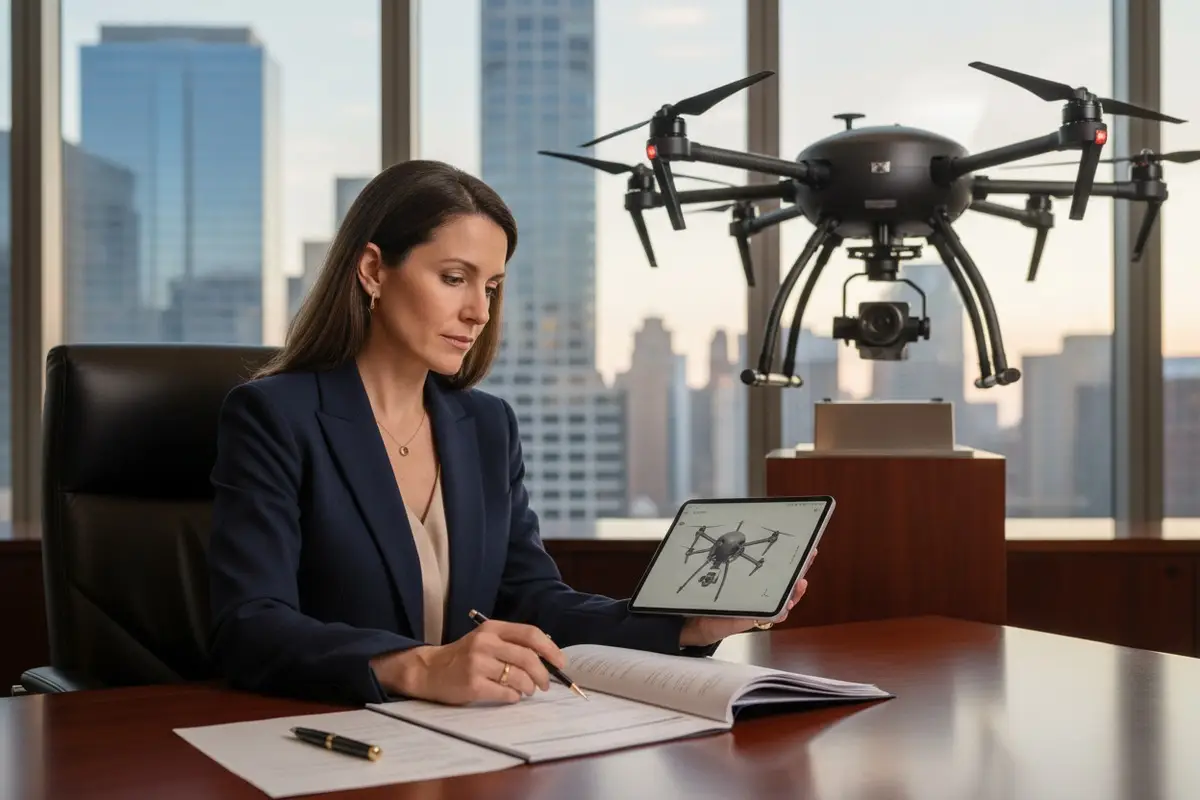

Jede Woche erhält unser Ingenieurteam Anfragen von Käufern aus Übersee, die mit vagen Spezifikationen zu kämpfen haben, die zu falschen Produkten und kostspieligen Rücksendungen führen Nutzlastkapazität 1. Die Frustration, eine Drohne zu erhalten, die Ihr lokales Klima nicht bewältigen kann oder keine ordnungsgemäßen Zertifizierungen hat, verschwendet Zeit und Geld.
Um effektive technische Spezifikationen für die Beschaffung von Agrardrohnen von chinesischen Lieferanten zu erstellen, müssen Sie Kernleistungsmetriken wie Nutzlastkapazität und Flugzeit definieren, OEM-Anpassungsanforderungen festlegen, Haltbarkeitsstandards einschließlich IP-Schutzarten spezifizieren und After-Sales-Supportbedingungen in Ihrer Beschaffungsvereinbarung darlegen.
Dieser Leitfaden führt Sie durch jede kritische Spezifikationskategorie IP67 Wasserdichtigkeitsklassen 2. Sie erfahren genau, was Sie in Ihre Angebotsanfrage aufnehmen müssen, um häufige Beschaffungsfehler zu vermeiden.
Welche Kernleistungs- und Nutzlastkennzahlen für Flüge sollte ich bei meinen Spezifikationen für Agrardrohnen priorisieren?
Wenn wir unsere Agrardrohnen vor dem Export testen, bestimmt die Flugleistung den Erfolg auf dem Feld mehr als jeder andere Faktor. Käufer übersehen oft spezifische Kennzahlen, die die betriebliche Effizienz direkt beeinflussen.
Priorisieren Sie die Nutzlastkapazität, die auf Ihre Fläche, Flugzeit unter Volllast, effektive Sprühbreite, Durchflussbereich und maximale Betriebsgeschwindigkeit abgestimmt ist. Für Betriebe unter 1.000 Hektar geben Sie Nutzlasten von 10-20 l mit Flugzeiten von 15-20 Minuten an. Größere Betriebe benötigen Tanks von 30-40 l mit RTK-GPS-Präzision.
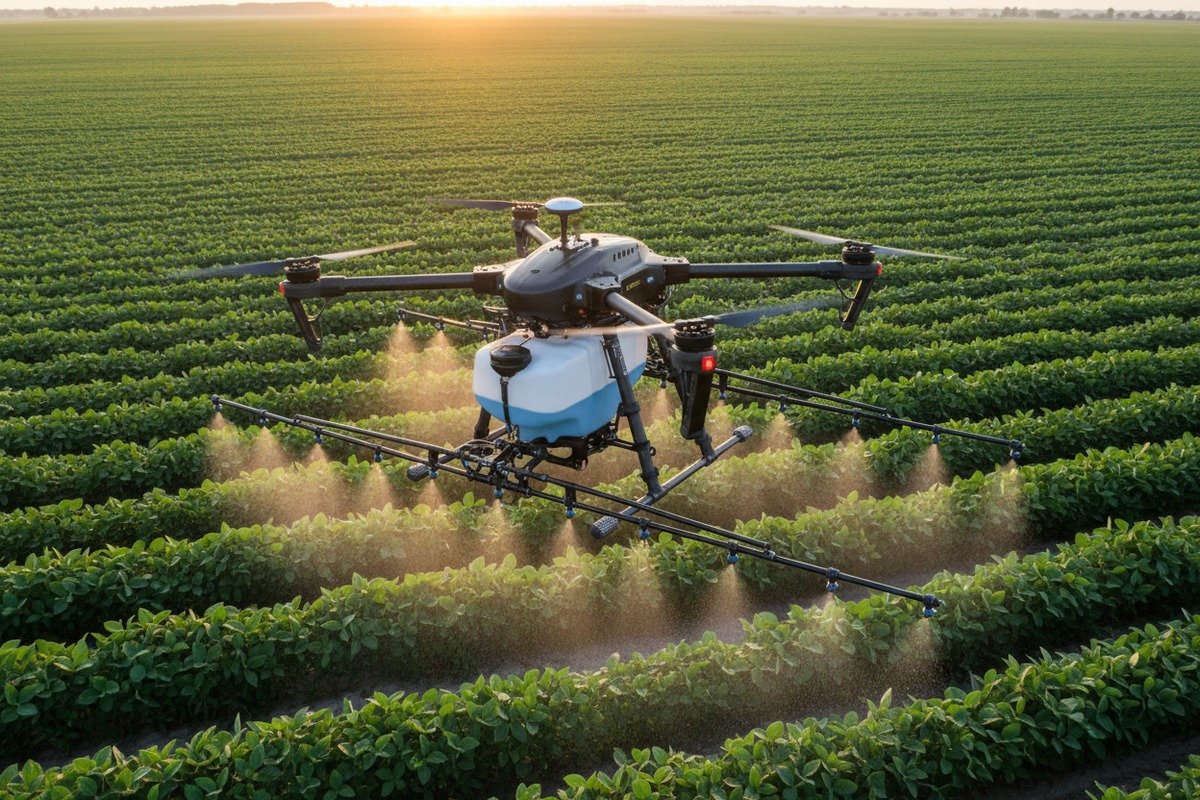
Verständnis der Nutzlast-zu-Flächen-Verhältnisse
Die Größe Ihres Hofes bestimmt direkt die benötigte Nutzlast. Unsere Produktionsdaten zeigen, dass unterdimensionierte Nutzlasten übermäßige Batteriewechsel und Nachfüllstopps erzwingen. Überdimensionierte Nutzlasten verschwenden Kapital für Kapazitäten, die Sie nie nutzen.
Kleine Betriebe unter 500 Hektar arbeiten effizient mit 10-16-Liter-Tanks. Diese Größe deckt ungefähr einen Hektar pro Flug ab. Mittlere Betriebe zwischen 500 und 2.000 Hektar profitieren von 20-30-Liter-Systemen. Große kommerzielle Betriebe mit über 2.000 Hektar benötigen 40-Liter- oder größere Tanks.
Das Gewicht ist für die Einhaltung von Vorschriften wichtig. Drohnen unter 55 Pfund qualifizieren sich für grundlegende FAA Part 107-Zertifizierung 3 auf dem US-Markt. Schwerere Einheiten erfordern Ausnahmen nach Section 44807 sowie eine Genehmigung nach Part 137 für die chemische Ausbringung.
Flugzeit-Spezifikationen
Flugzeit 4 variiert unter Last dramatisch. Unsere Ingenieure messen dies bei voller Nutzlast bei ruhigen Bedingungen. Marketingaussagen zitieren oft Zeiten bei leerem Tank, die im realen Betrieb nichts bedeuten.
Geben Sie die minimale Flugzeit bei maximalem Startgewicht an. Fordern Sie Testdokumentationen an, die die tatsächlich aufgezeichneten Zeiten zeigen. Eine Drohne, die mit 25 Minuten beworben wird, liefert möglicherweise nur 12-15 Minuten, wenn sie voll beladen ist.
| Betriebsgröße | Empfohlene Nutzlast | Minimale Flugzeit | Abdeckung pro Flug |
|---|---|---|---|
| Unter 500 Hektar | 10-16L | 12-15 Minuten | 1-2 Hektar |
| 500-2.000 Hektar | 20-30L | 15-20 Minuten | 3-5 Hektar |
| Über 2.000 Hektar | 40-72L | 18-25 Minuten | 6-10 Hektar |
Leistungskennzahlen des Sprühsystems
Das Sprühsystem bestimmt die Anwendungsqualität. Geben Sie den Durchflussbereich in Litern pro Minute an. Die meisten landwirtschaftlichen Anwendungen erfordern einstellbare Raten zwischen 0,8 und 4,0 L/min.
Die effektive Sprühbreite beeinflusst die Abdeckgeschwindigkeit. Unsere Standardmodelle bieten Arbeitsbreiten von 4-8 Metern. Eine breitere Abdeckung reduziert die Flugdurchgänge, kann aber die Gleichmäßigkeit beeinträchtigen.
Die Konsistenz der Tropfengröße ist wichtig für die chemische Wirksamkeit. Referenz Chinesischer Standard NY/T 4258-2022 5 für Anforderungen an die Sprühgleichmäßigkeit. Dieser Standard gewährleistet abdriftarme Düsen, die Pestizidabfälle um bis zu 30 % reduzieren.
Geschwindigkeit und Höhenparameter
Die Betriebsgeschwindigkeit beeinflusst sowohl die Abdeckung als auch die Sprühqualität. Chinesische Vorschriften begrenzen Agrardrohnen auf 50 km/h und 30 Meter Höhe. Die meisten Präzisionsanwendungen verwenden 3,5-5 m/s in 1,5-2,5 Metern über dem Blätterdach.
Berücksichtigen Sie geländespezifische Höhenanforderungen. Reisfelder benötigen andere Parameter als Obstgärten. Zuckerrohrfelder erfordern möglicherweise eine Bodenfreiheit von 3-4 Metern.
| Leistungsmetrik | Kleine Drohne | Mittlere Drohne | Große Drohne |
|---|---|---|---|
| Max. Geschwindigkeit | 10 m/s | 12 m/s | 15 m/s |
| Betriebsgeschwindigkeit | 3-5 m/s | 4-6 m/s | 5-8 m/s |
| Betriebshöhe | 1,5-2m | 2-3m | 2-4m |
| Maximaler Windwiderstand | Stufe 4 | Stufe 5 | Stufe 6 |
Wie kann ich meine benutzerdefinierten OEM-Anforderungen definieren, um sicherzustellen, dass die Drohnen-Hardware und -Software meinen Markenstandards entsprechen?
Unsere OEM-Abteilung bearbeitet jährlich über 200 Anpassungswünsche. Die erfolgreichsten Partnerschaften beginnen mit detaillierten Spezifikationen, die keinen Raum für Interpretationen lassen.
Definieren Sie OEM-Anforderungen, indem Sie genaue Platzierungen der Markenlogos, Farbschemata mit Pantone-Codes, den Umfang der Firmware-Anpassung, Änderungen an der App-Oberfläche, das Verpackungsdesign und die Dokumentationssprache festlegen. Fügen Sie Mindestbestellmengen, Mustergenehmigungsverfahren und Schutz des geistigen Eigentums in Ihre Vereinbarung auf.
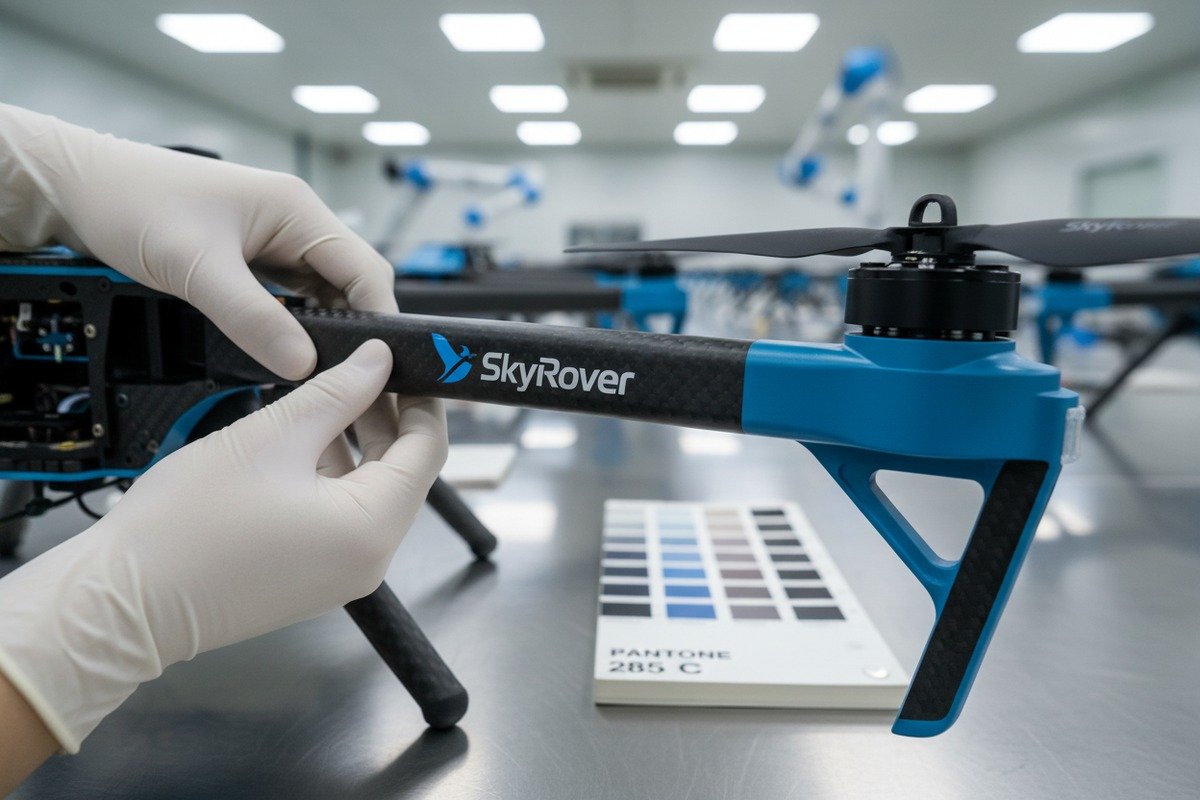
Spezifikationen für Hardware-Anpassungen
Physische Markenanpassung erfordert präzise Anweisungen. Geben Sie Logo-Abmessungen, Platzierungsorte und Druckverfahren an. Lasergravur hält länger als Aufkleber, kostet aber mehr.
Anforderungen an die Farbgestaltung Pantone- oder RAL-Codes 6. Allgemeine Beschreibungen wie "dunkelblau" führen zu falschen Chargen. Unser Lackierverfahren erfordert exakte Farbreferenzen für Konsistenz über Produktionsläufe hinweg.
Änderungen an der Hülle beeinflussen die Lieferzeiten. Einfache Farbänderungen verlängern die Lieferzeit um 2-3 Wochen. Kundenspezifische Werkzeuge für einzigartige Körperformen erfordern 8-12 Wochen und höhere Mindestbestellmengen.
Anforderungen an Software und Firmware
Die Anpassung der Flugsteuerungssoftware reicht von einfach bis komplex. Grundlegende Änderungen umfassen Startbildschirme, App-Branding und Sprachlokalisierung. Diese verursachen in der Regel minimale Kosten und Zeitaufwand.
Erweiterte Modifikationen umfassen Voreinstellungen für Flugparameter, Geofencing-Konfigurationen und Datenexportformate. Geben Sie an, ob die Drohne mit lokalen Luftraumvorschriften vorprogrammiert werden muss. Die Einhaltung der FAA-Vorschriften erfordert ein anderes Geofencing als die EU- oder australischen Regeln.
Spezifikationen zur Datenverarbeitung schützen Ihre Kunden. Definieren Sie Verschlüsselungsstandards, lokale Speicheroptionen und Bedingungen für das Daten-Eigentum. Chinesische Lieferanten müssen klären, ob Flugprotokolle an externe Server übertragen werden.
API- und Integrationsstandards
Die Integration von Farmmanagement-Software erfordert standardisierte Ausgaben. Geben Sie kompatible Datenformate an, einschließlich Shapefiles, KML-Dateien und CSV-Exporten. Fordern Sie API-Dokumentation an, bevor Sie sich zu großen Bestellungen verpflichten.
Testen Sie Mustergeräte mit Ihren bestehenden Präzisionslandwirtschaftsplattformen. Unser Ingenieurteam bietet Integrationsunterstützung, aber die Kompatibilitätsprüfung obliegt dem Käufer für spezialisierte Software.
Mindestbestellmengen und Zeitpläne
| Anpassungsstufe | Typische MOQ | Vorlaufzeit | Zusätzliche Kosten |
|---|---|---|---|
| Nur Logo und Aufkleber | 5-10 Einheiten | 1-2 Wochen | 5-10% |
| Benutzerdefinierte Farben | 20-30 Einheiten | 3-4 Wochen | 10-15% |
| Firmware-Modifikationen | 50+ Einheiten | 4-6 weeks | 15-25% |
| Kundenspezifische Form/Gehäuse | 100+ Einheiten | 10-14 Wochen | 30-50% |
Verhandeln Sie die Musterfreigabestufen. Fordern Sie 2-3 Vorserienmuster zum Testen an, bevor die volle Produktion beginnt. Dies deckt Probleme frühzeitig auf und verhindert kostspielige Korrekturen.
Welche Haltbarkeits- und Wetterbeständigkeitsstandards sollte ich von meinem chinesischen Drohnenlieferanten verlangen?
Während unserer Umgebungsbelastungstests setzen wir jedes Drohnenmodell extremen Bedingungen aus, bevor es zertifiziert wird. Käufer, die Haltbarkeitsspezifikationen überspringen, sehen sich oft vorzeitigen Ausfällen in feuchten oder staubigen Umgebungen gegenüber.
Fordern Sie IP67-Wasserdichtigkeitszertifizierungen für den Hauptkörper und mindestens IP54 für Motoren, Konstruktion aus kohlenstofffaserverstärktem Kunststoff und Aluminiumlegierung in Luftfahrtqualität, Zertifizierung von Vibrationstests, Betriebstemperaturbereiche, die Ihrem Klima entsprechen, und Dokumentation von Burn-in-Tests für alle elektronischen Komponenten.
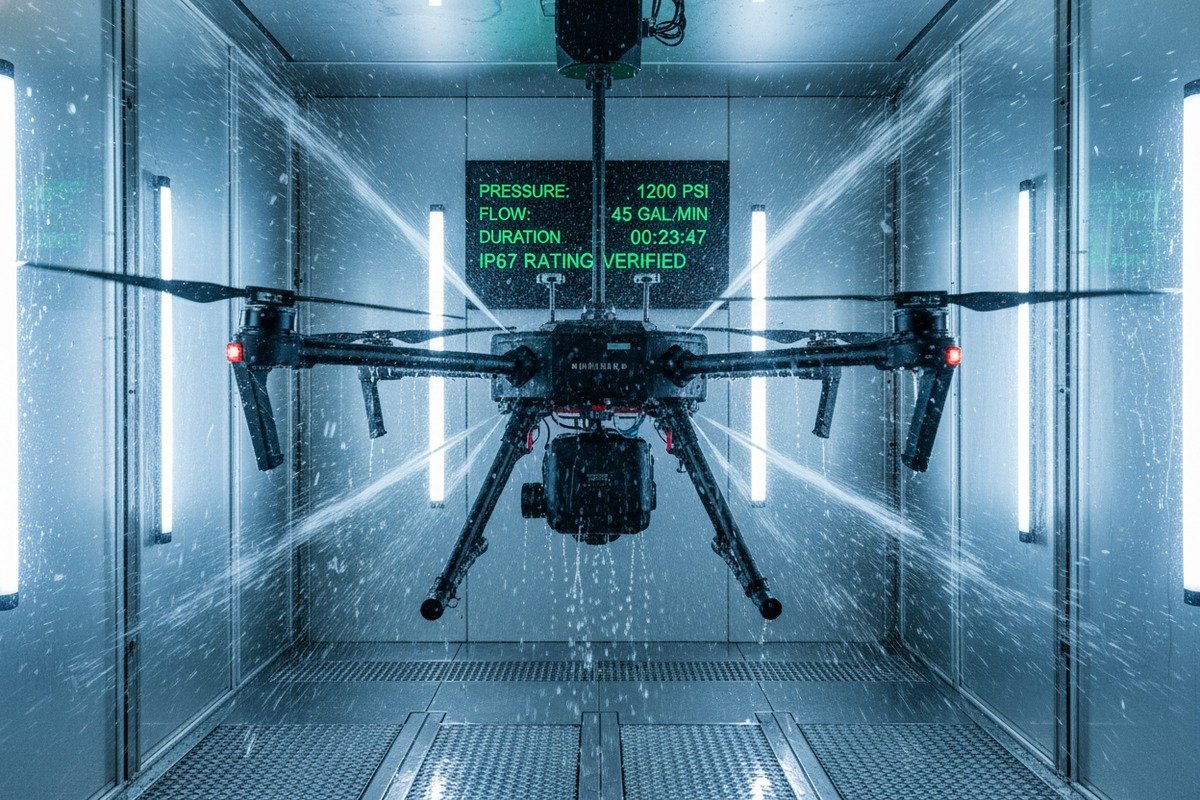
IP-Schutzart-Anforderungen
IP-Schutzarten (Ingress Protection) geben den Widerstand gegen Wasser und Staub an. Landwirtschaftliche Umgebungen erfordern hohe Schutzarten. Der Sprühnebel von Feldfrüchten setzt Drohnen Feuchtigkeit aus. Feldarbeiten beinhalten Staub und Schmutz.
Die Hauptsteuereinheit benötigt IP67-Schutz. Diese Schutzart bedeutet vollständigen Staubschutz und Überleben in einem Meter Wasser für 30 Minuten. Motoren erreichen typischerweise IP54 oder IP55, was Schutz vor Staubeintritt und Wasserspritzern bietet.
Fordern Sie IP-Schutzarten für einzelne Komponenten an, nicht nur für die Gesamtbewertung der Drohne. Der Sprühtank, das Batteriefach und die Sensorgehäuse benötigen jeweils spezifizierte Schutzstufen.
Materialspezifikationen
Das Rahmenmaterial beeinflusst sowohl Gewicht als auch Haltbarkeit. Luftfahrt-Kohlefaser 7 bietet das beste Verhältnis von Festigkeit zu Gewicht. Spezifizieren Sie Kohlefaser-Layup-Muster und Dickenanforderungen.
Aluminiumlegierungen eignen sich für Motorhalterungen und Strukturverbindungen. Fordern Sie Spezifikationen für die Güteklasse 6061-T6 oder 7075-T6 an. Geringere Güten korrodieren schneller und ermüden unter Vibrationsbelastung.
Das Fahrwerk nimmt erhebliche Stöße auf. Verstärkte Kohlefaser oder bearbeitetes Aluminium hält rauen Feldlandungen besser stand als spritzgegossene Kunststoffe.
Umweltprüfstandards
Der chinesische Standard GB/T 43071-2023 deckt Tests zur Umwelttauglichkeit ab. Dies umfasst Temperaturwechsel, Feuchtigkeitseinwirkung und Vibrationsfestigkeit. Fordern Sie Konformitätsdokumentation an.
| Test Typ | Standardanforderung | Empfohlenes Minimum |
|---|---|---|
| Betriebstemperatur | -10°C bis 40°C | -20°C bis 50°C |
| Storage Temperature | -20°C bis 60°C | -30°C bis 70°C |
| Feuchtigkeitsbeständigkeit | 95% RH nicht kondensierend | Getestet bei 48 Stunden |
| Schwingungsprüfung | Gemäß GB/T 43071-2023 | Dokumentierte Ergebnisse |
| Salzsprühnebel | 24 Stunden | 48 Stunden für den Küsteneinsatz |
Qualitätskontrollen auf Komponentenebene
Elektronische Komponenten erfordern Burn-in-Tests. Dieser Prozess lässt Platinen 24-72 Stunden unter Last laufen, um frühe Ausfälle zu identifizieren. Die Säuglingssterblichkeit bei Elektronik tritt typischerweise innerhalb der ersten 48 Betriebsstunden auf.
Fordern Sie dokumentierte Testergebnisse für Flugsteuerungen, ESCs und Batteriemanagementsysteme an. Unser Qualitätskontrollprozess umfasst 100%-Tests dieser kritischen Komponenten vor der Montage.
Motortests sollten kontinuierliche Laufzyklen unter maximaler Nennlast beinhalten. Die Lagerqualität beeinflusst direkt die Lebensdauer des Motors. Spezifizieren Sie abgedichtete Lager für staubige Umgebungen.
Zertifizierungsanforderungen
Internationale Zertifizierungen validieren Design- und Fertigungsqualität. Die CE-Kennzeichnung deckt europäische Sicherheitsanforderungen ab. Die FCC-Zertifizierung befasst sich mit der Einhaltung von Funkfrequenzvorschriften für US-Märkte.
ISO 9001-Zertifizierung 8 zeigt dokumentierte Qualitätsmanagementsysteme. Obwohl nicht produktspezifisch, zeigt es das Engagement des Lieferanten für konsistente Prozesse.
Die Batterie-Zertifizierung erfordert UN38.3-Tests 9 für den Lufttransport. Ohne diese Dokumentation drohen Ihren Sendungen Zollverzögerungen oder Ablehnungen.
Wie gebe ich meine Anforderungen an technischen Support und Ersatzteilverfügbarkeit in der Beschaffungsvereinbarung an?
Wenn unsere Vertriebspartner in Europa und Nordamerika Feedback geben, steht der After-Sales-Support durchweg an erster Stelle ihrer Anliegen. Der Preis ist bedeutungslos, wenn Geräte untätig auf Ersatzteile oder technische Unterstützung warten.
Geben Sie die garantierte Ersatzteilverfügbarkeit mit maximalen Lieferzeiten von unter 14 Tagen, Reaktionszeiten für technischen Fernsupport innerhalb von 24 Stunden, Garantiebedingungen, die mindestens 12 Monate auf Hauptkomponenten abdecken, Schulungsprogramme für Bediener und dokumentierte Reparaturverfahren mit Videoanleitungen für gängige Wartungsaufgaben an.

Ersatzteilverfügbarkeitsbedingungen
Die Ersatzteilverfügbarkeit bestimmt Ihre Betriebszeit. Geben Sie an, welche Komponenten auf Lager bleiben müssen und wie lange. Kritische Teile umfassen Motoren, Propeller, Sprühpumpen und Flugsteuerungen.
Definieren Sie maximale Lieferzeiten für verschiedene Ersatzteilkategorien. Unsere Standardvereinbarung garantiert eine Lieferung von 7 Tagen für gängige Verschleißteile und 14 Tage für Hauptkomponenten.
| Teil Kategorie | Stock Requirement | Maximale Lieferzeit | Mindestverfügbarkeitszeitraum |
|---|---|---|---|
| Propeller | 200% der Flotte | 5 Arbeitstage | 5 Jahre |
| Motoren | 50% der Flotte | 7 Werktage | 5 Jahre |
| Sprühpumpen | 30% der Flotte | 10 Arbeitstage | 5 Jahre |
| Flugsteuerungen | 20% der Flotte | 14 Werktage | 5 Jahre |
| Akku-Packs | 50% der Flotte | 7 Werktage | 3 Jahre |
Fügen Sie die Ersatzteilpreise in Ihre Vereinbarung ein. Einige Lieferanten bieten niedrige Drohnenpreise an, verlangen aber überhöhte Margen für Ersatzteile. Fordern Sie eine Ersatzteilpreisliste an, die für den Produktlebenszyklus gültig ist.
Struktur des technischen Fernsupports
Definieren Sie Support-Kanäle und Reaktionszeiten. E-Mail-Support ist für nicht dringende Probleme geeignet. Telefon- oder Video-Support ist für flugkritische Probleme zuständig.
Geben Sie Sprachkenntnisse an. Die technische Fehlerbehebung erfordert eine klare Kommunikation. Unser Support-Team verfügt über englischsprachige Ingenieure für Kunden in den USA und Europa.
Zeitzonenabdeckung ist für dringende Probleme wichtig. Berechnen Sie die Überlappungsstunden zwischen Ihren Betriebszeiten und der Verfügbarkeit des Lieferanten-Supports. Fordern Sie Notfallkontaktprotokolle für kritische Ausfälle an.
Garantiebedingungen
Standardgarantien decken Herstellungsfehler ab. Legen Sie separate Bedingungen für Flugwerk, Motoren, Elektronik und Sprühsysteme fest. Unterschiedliche Komponenten haben unterschiedliche Ausfallprofile.
Klären Sie die Verfahren für Garantieansprüche. Übernimmt der Lieferant die Rücksendekosten? Akzeptieren sie Feldreparaturen mit garantierten Teilen? Unsere Richtlinie erstattet dokumentierte Reparaturen, die von geschulten Technikern durchgeführt wurden.
Ausschlüsse müssen ausdrücklich aufgeführt werden. Wasserschäden, Absturzschäden und unbefugte Modifikationen führen in der Regel zum Erlöschen der Garantie. Stellen Sie sicher, dass IP-geschützte Komponenten gegen Feuchtigkeitseintritt garantiert sind.
Schulungs- und Dokumentationsanforderungen
Bediener-Schulungen reduzieren den Supportaufwand und verlängern die Lebensdauer der Geräte. Legen Sie Schulungsformate fest, einschließlich Video-Tutorials, schriftlichen Handbüchern und Live-Sitzungen.
Fordern Sie Dokumentationen in Ihrer Landessprache an. Technische Handbücher nur auf Chinesisch schaffen Barrieren für Ihre Servicetechniker. Die Übersetzung sollte Betriebs-, Wartungs- und Fehlerbehebungsanleitungen umfassen.
Wartungspläne müssen klar definiert sein. Legen Sie Inspektionsintervalle, Verschleißgrenzen und Austauschkriterien für Verbrauchsmaterialien fest.
Service-Level-Vereinbarungen
Formalisieren Sie Support-Verpflichtungen in Ihrem Vertrag. Fügen Sie Strafen für die Nichteinhaltung von Reaktionszeiten oder Garantien für die Teileverfügbarkeit hinzu.
Dokumentieren Sie Eskalationsverfahren. Der First-Level-Support kümmert sich um die grundlegende Fehlerbehebung. Komplexe Probleme erfordern Eskalationspfade für die Ingenieurabteilung mit definierten Zeitplänen.
Jährliche Support-Überprüfungen bewerten die Leistung anhand vereinbarter Kennzahlen. Unsere Key Account Manager führen vierteljährliche Überprüfungen mit wichtigen Vertriebspartnern durch.
Schlussfolgerung
Die Erstellung detaillierter technischer Spezifikationen schützt Ihre Investition und optimiert Lieferantenverhandlungen. Konzentrieren Sie sich auf Leistungskennzahlen, OEM-Anpassung, Haltbarkeitsstandards und After-Sales-Support. Klare Spezifikationen führen zu erfolgreichen Partnerschaften und zuverlässigen Geräten, die Ihre Kunden jahrelang bedienen.
Fußnoten
1. Bietet Details zu den Nutzlastkapazitäten von Agrardrohnen. ︎
2. Definiert die IP67-Schutzart für Staub- und Wasserschutz. ︎
3. Bietet offizielle Informationen zur FAA Part 107-Zertifizierung. ︎
4. Bietet allgemeine Informationen zur Flugdauer von UAVs. ︎
5. Zitiert eine wissenschaftliche Arbeit, die den chinesischen Standard für Sprühqualität diskutiert. ︎
6. Erklärt standardisierte Farbsysteme für Konsistenz in der Fertigung. ︎
7. Beschreibt die Eigenschaften und Verwendung von kohlenstofffaser in Luftfahrtqualität. ︎
8. Erklärt den Zweck und die Vorteile der ISO 9001-Zertifizierung. ︎
9. Details zu den UN38.3-Testanforderungen für Lithiumbatterien. ︎
 English
  Español de México
  Deutsch
  Français
  Русский
  العربية
Comments
No comments yet. Be the first to share your thoughts!
Leave a Comment