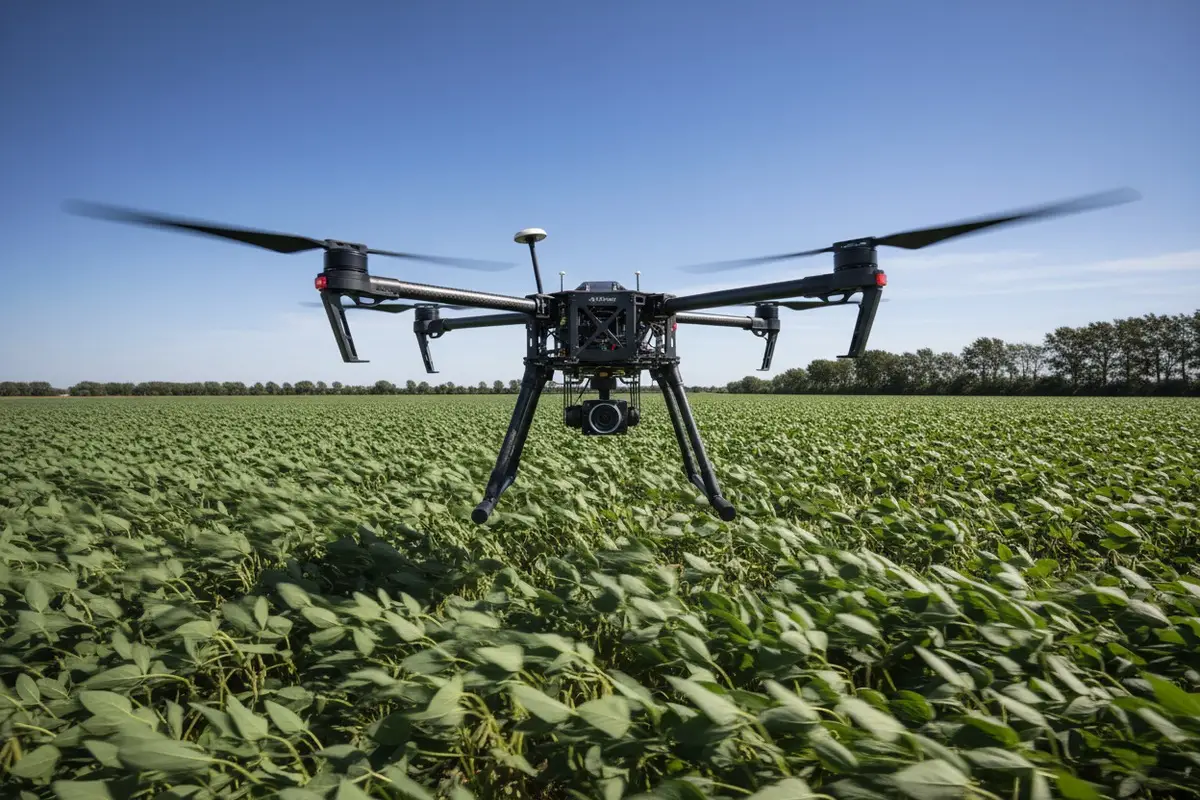

Jede Woche beobachten wir auf unserer Produktionsfläche Testpiloten, die mit Drohnen kämpfen, die auf dem Papier perfekt aussehen, aber wie verwundete Vögel fliegen. Der Schuldige? Schlechte Schwerkraftzentrum 1 Design. Dieser unsichtbare Faktor trennt zuverlässige Arbeitspferde für die Landwirtschaft von teuren Gartendekorationen.
Der Schwerpunkt bestimmt, wie Ihr Agrarflugdrohne während des Fluges ausbalanciert, was sich auf Stabilität, Steuerungsreaktion und Nutzlasttransport auswirkt. Ein richtig positionierter Schwerpunkt hält Ihre Drohne bei Windlast und sich ändernden Sprühlasten im Gleichgewicht, während ein falsch ausgerichteter Schwerpunkt zu Abdriften, Motorbelastung und möglichen Abstürzen führt, die Ihre Investition zerstören.
Lassen Sie mich Ihnen durchführen, was unser Ingenieurteam beim Bau von Tausenden von Agrardrohnen 2. gelernt hat. Dieses Wissen wird Ihnen helfen, eine intelligentere Kaufentscheidung zu treffen.
Wie bewerte ich das Design des Schwerpunkts beim Vergleich verschiedener Agrardrohnen für mein Unternehmen?
Wenn unser Verkaufsteam auf Messen unterwegs ist, vergleichen Käufer Drohnen oft nur nach PS und Flugzeit. Sie übersehen den versteckten Faktor, der die Feldleistung tatsächlich bestimmt. Schlechte CoG-Konstruktion hat mehr landwirtschaftliche Betriebe lahmgelegt als jeder Motorausfall.
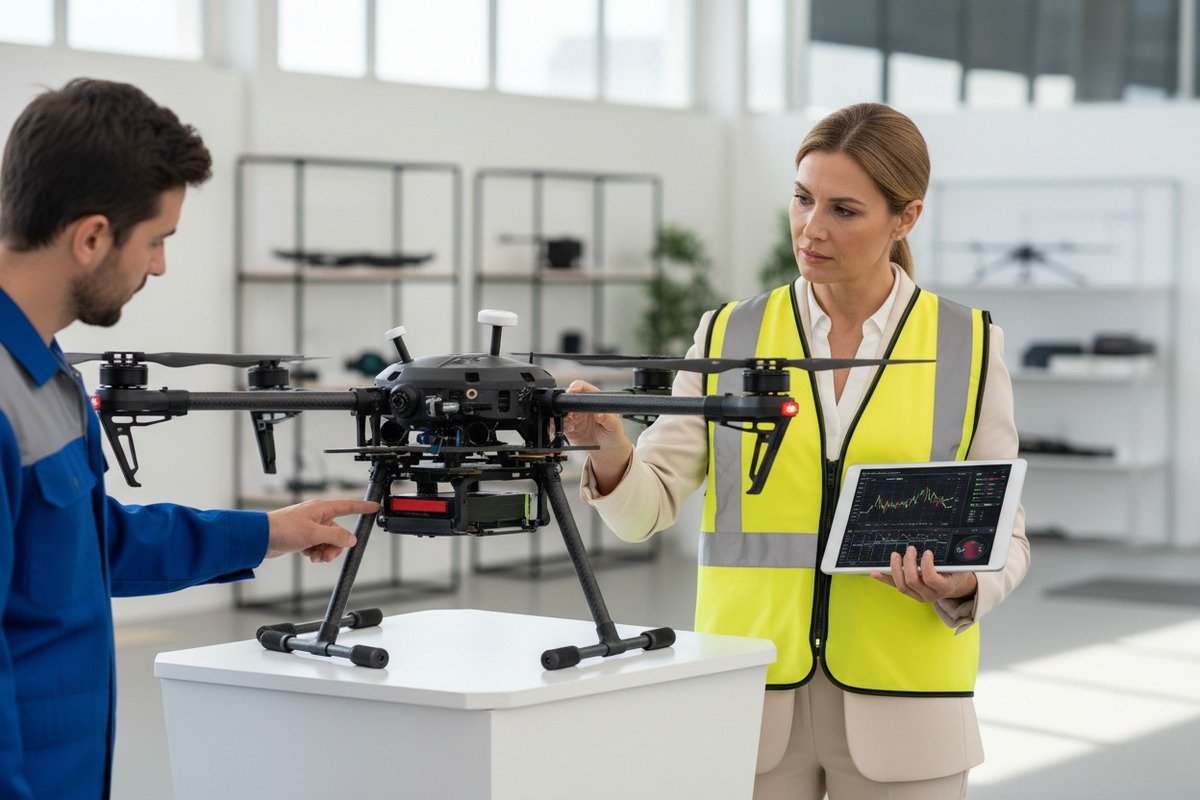
Um das CoG-Design zu bewerten, prüfen Sie die Rahmensymmetrie der Drohne, fragen Sie nach den Spezifikationen für die Nutzlastbalance, prüfen Sie, ob verstellbare Montagesysteme vorhanden sind, und fordern Sie ESC-Diagnosedaten an, die die Motordrehzahlvarianz während des Schwebeflugs zeigen. Qualitätshersteller stellen CoG-Dokumentationen zur Verfügung und demonstrieren einen stabilen Flug mit voller Nutzlast.
Was CoG wirklich bedeutet
Der Schwerpunkt ist der einzige Punkt, an dem das gesamte Gewicht Ihrer Drohne ausbalanciert ist. Stellen Sie es sich als Drehpunkt für alle Bewegungen vor. Ihre Drohne dreht sich um diesen Punkt, wenn sie nach vorne kippt, seitlich rollt oder nach links und rechts schwenkt.
Wenn der CoG am geometrischen Zentrum 3 Ihrer Drohne liegt, teilen sich alle Motoren die Last gleichmäßig. Der Fluglotse 4 sendet identische Leistungssignale. Ihre Drohne schwebt flach und reagiert vorhersehbar auf Befehle.
Wenn der CoG außer Zentrierung gerät, vervielfachen sich die Probleme. Motoren auf einer Seite arbeiten härter, um dies auszugleichen. Der Batterieverbrauch wird ungleichmäßig. Der Flugregler kämpft ständig darum, den Geradeausflug aufrechtzuerhalten. Bei böigen Feldverhältnissen wird dieser Kampf gefährlich.
Wichtige Spezifikationen, die angefordert werden müssen
| Spezifikation | Was Sie fragen sollten | Warum es wichtig ist |
|---|---|---|
| Rahmensymmetrie | Dokumentation der planaren Symmetrie | Sorgt für gleiche Gewichtsverteilung |
| Armversatz | <2mm Toleranzbereich | Verhindert vibrationsbedingtes Driften |
| Körpermassenanteil | <30% des Gesamtgewichts | Lässt Platz für Nutzlast ohne Schwerpunktverschiebung |
| Toleranz des Navigationsbereichs | <0,1mm Verschiebung | Schützt Sensoren vor Vibrationsschäden |
| Verstellbare Halterungen | Ja/Nein mit Bereichsspezifikationen | Ermöglicht Anpassung der Nutzlast |
Rote Flaggen, auf die man achten sollte
Einige Hersteller sparen beim Rahmendesign. Sie verwenden asymmetrische Batterieplatzierungen oder montieren die Elektronik außermittig. Diese Drohnen erfordern ständige Korrektureingaben vom Flugcontroller.
Bitten Sie potenzielle Lieferanten um Schwebetestvideos mit voller Nutzlast. Eine gut konstruierte Drohne hält ihre Position ohne sichtbares Wackeln. Die Motorengeräusche bleiben über alle Arme hinweg konstant. Jedes Jaulen oder jede Geschwindigkeitsvariation deutet auf Schwerpunktprobleme hin.
Unser Qualitätssicherungsteam lehnt Rahmen mit Armlängenabweichungen von mehr als 2 mm ab. Diese enge Toleranz hält den Schwerpunkt über Produktionschargen hinweg vorhersagbar. Fragen Sie, ob Ihr potenzieller Lieferant ähnliche Standards einhält.
Vergleich von festen vs. verstellbaren Systemen
Festrahmenkonstruktionen eignen sich gut, wenn Sie immer die gleiche Nutzlast tragen. Sie sind kostengünstiger und haben weniger mechanische Fehlerquellen. Topologieoptimierte Uni-Body-Rahmen fallen in diese Kategorie.
Verstellbare Systeme eignen sich für Einsätze mit variablen Nutzlasten. An manchen Tagen sprühen Sie Flüssigkeiten. An anderen Tagen montieren Sie Multispektralkamera 5s. Rotierbare Montageplattformen und verschiebbare Akkuschubladen ermöglichen es Ihnen, das Gewicht nach Bedarf neu zu positionieren.
Kein Ansatz ist universell besser. Passen Sie das Design an die Bedürfnisse Ihres Betriebs an.
Wird das sich verlagernde Gewicht meines Flüssigkeitssprühbehälters die Flugstabilität der von mir gekauften Drohne beeinträchtigen?
Während Feldtests in der Provinz Shaanxi im letzten Sommer beobachteten wir, wie eine Drohne eines Konkurrenten bei einer scharfen Kurve umkippte. Der Pilot machte den Wind dafür verantwortlich. Unsere Ingenieure wussten es besser. Das Schwappen von Flüssigkeit in einem halb leeren Tank brachte den CoG über die wiederherstellbaren Grenzen hinaus.
Ja, die Verlagerung der Flüssiglast wirkt sich erheblich auf die Stabilität aus. Wenn sich Spritztanks ungleichmäßig entleeren oder Flüssigkeit bei Manövern schwappt, bewegt sich der CoG dynamisch. Hochwertige Agrardrohnen verfügen über Tanks mit Schwallblechen, adaptive Flugsteuerungen und Echtzeit-Kompensationssysteme, um während des gesamten Sprühvorgangs einen stabilen Flug zu gewährleisten.
Die Physik des Flüssigkeitsschwappens
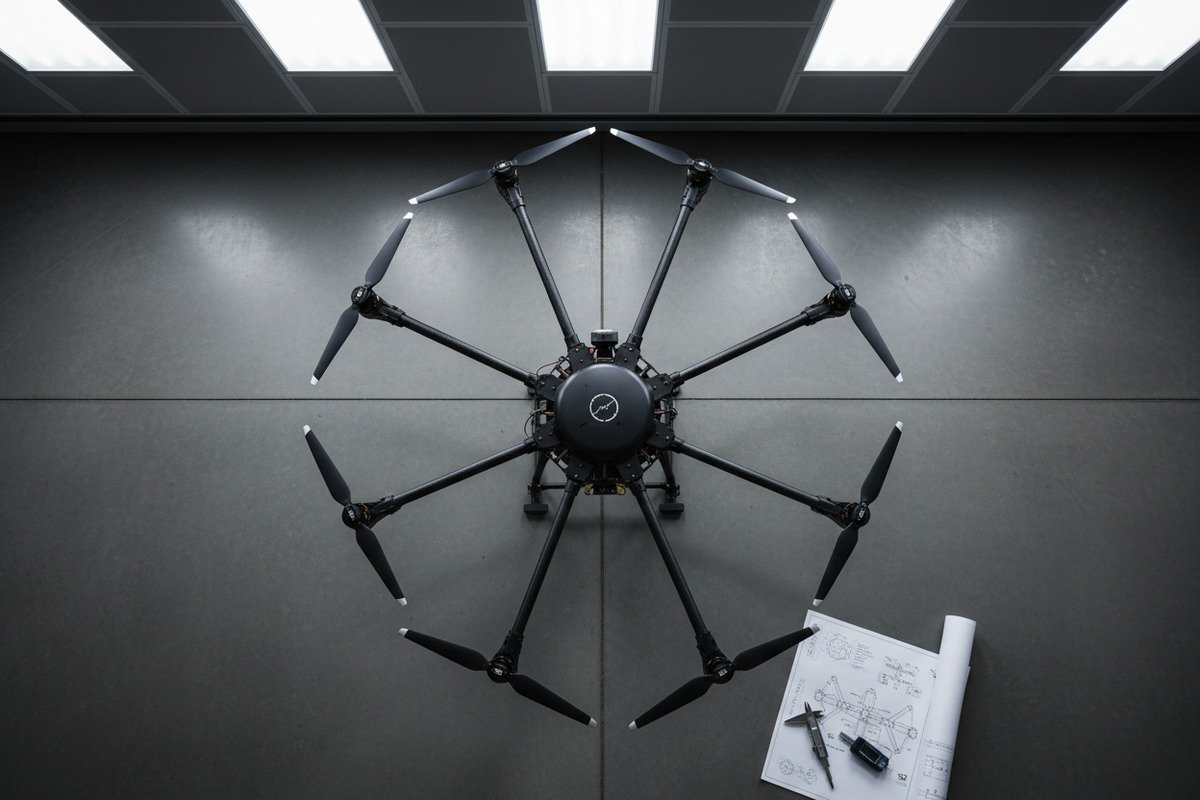
Flüssigkeit in einem Tank bleibt nicht still. Wenn Ihre Drohne beschleunigt, strömt die Flüssigkeit nach hinten. Bei Kurven verschiebt sie sich seitlich. Harte Stopps schicken sie nach vorne. Jede Bewegung verlagert Masse und ändert die CoG-Position.
Dies erzeugt Kräfte, denen der Flugregler entgegenwirken muss. Kleine Tanks verursachen geringe Verschiebungen. Große 50-kg-Sprühbehälter erzeugen dramatische CoG-Bewegungen, die selbst fortschrittliche Stabilisierungssysteme herausfordern.
Das Problem verschärft sich, während Sie sprühen. Ein voller Tank hat eine vorhersehbare Gewichtsverteilung. Ein halb leerer Tank bietet mehr Raum für Flüssigkeitsbewegung. Der CoG wird im Laufe Ihrer Mission immer unvorhersehbarer.
Tankdesignmerkmale, die helfen
| Merkmal | Funktion | Effektivität |
|---|---|---|
| Interne Leitbleche 6 | Begrenzen Sie die Entfernung der Flüssigkeitsbewegung | Reduziert Schwall um 60-70% |
| Zelluläre Kompartimente | Teilt den Tank in kleine Abschnitte | Minimiert den Stofftransport |
| Flache Bauform | Reduziert vertikale Schwerpunktbewegung | Verbessert die Rollstabilität |
| Mittig montierte Position | Hält das Gewicht nahe dem geometrischen Zentrum | Behält das Gleichgewicht während des Entleerens bei |
| Graduelles Entleeren | Entleert von der Mitte nach außen | Bewahrt symmetrisches Gewicht |
Flugregler-Kompensation
Moderne Agrardrohnen verwenden adaptive Flugregelsysteme 7. Diese Systeme erkennen CoG-Verschiebungen durch Beschleunigungsdaten und Änderungen der Motorlast. Sie passen die Leistungsverteilung in Echtzeit an, um den Horizontalflug aufrechtzuerhalten.
Wenn wir unsere Flugsteuerungen im Werk kalibrieren, führen wir Simulationen mit unterschiedlichen Füllständen durch. Die Steuerung lernt erwartete CoG-Bereiche und reagiert schneller auf tatsächliche Verschiebungen im Feld.
Fragen Sie potenzielle Lieferanten nach ihren Kompensationsalgorithmen. Qualitätssysteme antizipieren CoG-Änderungen basierend auf Sprührate und Missionszeit. Sie passen sich proaktiv statt reaktiv an.
Praktische Missionsplanung
Eine intelligente Missionsplanung reduziert die Auswirkungen von Flüssigkeitsschwappen. Sanfte Beschleunigungsprofile geben der Flüssigkeit Zeit, sich zu beruhigen. Langsame Kurven verhindern dramatische seitliche Verschiebungen. Gleichmäßige Sprühmuster leeren den Tank gleichmäßig.
Unsere Schulungsmaterialien für Kunden enthalten Empfehlungen zur optimalen Fluggeschwindigkeit für verschiedene Füllstände. Volle Tanks vertragen aggressivere Manöver. Halb leere Tanks erfordern eine sanftere Handhabung.
Einige Betreiber bevorzugen mehrere kürzere Flüge mit kleineren Lasten gegenüber einzelnen schweren Missionen. Dieser Ansatz hält den Tank während des Betriebs voller, reduziert die Schwere des Schwappens und verbessert die Gesamtstabilität.
Wie kann ich sicherstellen, dass die Drohne ihr Gleichgewicht hält, wenn ich die Nutzlast für meine spezifischen Bedürfnisse anpasse?
Unser Ingenieur-Support-Team bearbeitet wöchentlich Anpassungsanfragen. Landwirte wünschen sich spezialisierte Düsenanordnungen. Forscher benötigen Multispektralsensorhalterungen. Jede Modifikation verschiebt Gewicht und verändert die Flugeigenschaften. Falsch ausgeführt, schafft die Anpassung Fluggefahren.
Um das Gleichgewicht mit benutzerdefinierten Nutzlasten zu halten, berechnen Sie die gesamte Gewichtsverteilung vor der Modifikation, verwenden Sie verstellbare Montage schienen in der Nähe des CoG, fügen Sie Gegengewichte hinzu, um asymmetrische Ergänzungen auszugleichen, und kalibrieren Sie den Flugregler nach jeder Änderung neu. Dokumentieren Sie jede Konfiguration für einen wiederholbaren, sicheren Betrieb.

Schritt-für-Schritt-Anpassungsprozess
Bevor Sie kundenspezifische Ausrüstung hinzufügen, wiegen Sie Ihre Drohne in ihrer Standardkonfiguration. Notieren Sie das Leergewicht und messen Sie die CoG-Position mit einer Schwerpunktmethode. Dies gibt Ihnen eine Vergleichsbasis.
Wiegen Sie als Nächstes Ihre kundenspezifische Nutzlast. Notieren Sie ihre vorgesehene Montageposition. Berechnen Sie, wie diese Ergänzung den Gesamtschwerpunkt verschieben wird. Verschieben Sie den Montagepunkt oder fügen Sie Gegengewicht hinzu, bis der neue Schwerpunkt innerhalb akzeptabler Grenzen liegt.
Führen Sie nach der physischen Installation einen angekesselten Schwebetest durch. Achten Sie auf Neigung oder Drift. Achten Sie auf ungleichmäßige Motorgeräusche. Nehmen Sie Anpassungen vor, bis die Drohne ohne Piloteninput eine horizontale Position hält.
Gewichtverteilungsrichtlinien
| Nutzlast Typ | Typisches Gewicht | Montage-Best-Practice |
|---|---|---|
| Multispektralkamera | 0,5-2 kg | Mitte-unten, unterhalb des Schwerpunktes |
| Zusätzliche Sprühdüsen | 1-3 kg | Symmetrisch an den Auslegerarmen |
| Kollisionsvermeidungssensoren | 0,2-0,5 kg | Ausgewogene Paare, vorne/hinten |
| Erweiterter Akkupack | 2-5kg | Mitte-oben oder geteilte Seiten |
| Sämaschinenaufsatz | 5-15 kg | Mitte-hinten mit Gegengewicht |
Verwendung von verstellbaren Montagesystemen
Hochwertige Agrardrohnen verfügen über Schienensysteme zur Nutzlastanpassung. Schiebemounts ermöglichen es Ihnen, Geräte nach vorne oder hinten zu positionieren. Dies gleicht unterschiedliche Nutzlastgewichte aus, ohne dass dauerhafte Änderungen erforderlich sind.
Unsere Schwerlastmodelle verfügen über gitterbasierte Befestigungspunkte mit 2 cm Abstand. Diese feingranulare Einstellung ermöglicht eine präzise Schwerpunktanpassung. Wir liefern eine Dokumentation, die optimale Positionen für gängige Nutzlastkombinationen zeigt.
Montieren Sie bei asymmetrischer Ausrüstung die gegenüberliegende Seite für Batterien oder Gegengewichte. Halten Sie die Gesamtgewichtsverteilung so symmetrisch wie möglich. Selbst kleine Ungleichgewichte verstärken sich bei aggressiven Manövern.
Kalibrierungsanforderungen
Jede Nutzlaständerung erfordert eine Neukalibrierung des Flugreglers. Der Regler verwendet gespeicherte Parameter, um das Verhalten der Drohne vorherzusagen. Alte Parameter führen zu trägen oder überempfindlichen Reaktionen bei neuen Gewichtsverteilungen.
Die Neukalibrierung beinhaltet typischerweise das Aufstellen der Drohne auf ebenem Boden und das Ausführen einer automatischen Sensor-Ausrichtungsroutine. Einige Systeme erfordern die manuelle Eingabe des neuen Gesamtgewichts. Andere erkennen Änderungen automatisch während des ersten Schwebens.
Dokumentieren Sie jede Konfiguration, die Sie regelmäßig verwenden. Notieren Sie die Nutzlastanordnung, das Gesamtgewicht und die Kalibrierungseinstellungen. Dies ermöglicht ein schnelles Umschalten zwischen Missionen, ohne jedes Mal eine vollständige Neukalibrierung durchführen zu müssen.
Wann professionelle Hilfe in Anspruch nehmen
Komplexe Anpassungen, die strukturelle Änderungen beinhalten, sollten den Hersteller einbeziehen. Das Bohren neuer Befestigungslöcher kann Rahmen schwächen. Elektrische Zusätze können Stromsysteme überlasten. Unsachgemäße Installationen führen zum Erlöschen der Garantie und schaffen Haftungsrisiken.
Unser Ingenieurteam bietet Fernberatung für kundenspezifische Projekte. Wir überprüfen vorgeschlagene Änderungen und geben Anleitungen zur Einhaltung der Schwerpunktvorgaben. Dieser Service hat unseren Kunden zahlreiche kostspielige Fehler erspart.
Auf welche technischen Spezifikationen sollte ich achten, um sicherzustellen, dass meine Drohne bei schweren landwirtschaftlichen Einsätzen stabil bleibt?
Nach dem Versand Tausender Einheiten an landwirtschaftliche Betriebe in ganz Amerika und Europa haben wir gelernt, welche Spezifikationen den Erfolg im Feld tatsächlich vorhersagen. Marketingblätter betonen auffällige Zahlen. Erfahrene Käufer schauen tiefer auf strukturelle Integrität und die Raffinesse des Steuerungssystems.
Zu den wichtigsten Stabilitätsspezifikationen gehören eine Rahmenarmverschiebung von unter 2 mm, eine Navigationssensorflächenverschiebung von unter 0,1 mm, ein Fahrwerk, das für eine vertikale Aufpralllast von 176 N ausgelegt ist, adaptive Flugsteuerungen mit Echtzeit-CoG-Kompensation und ein Körpermassenanteil von unter 30%. Diese technischen Parameter gewährleisten eine zuverlässige Leistung unter anspruchsvollen landwirtschaftlichen Bedingungen.

Strukturelle Rahmenspezifikationen
| Spezifikation | Mindeststandard | Premium-Standard | Warum es wichtig ist |
|---|---|---|---|
| Armversatz | <3mm | <2mm | Verhindert Vibrationsverstärkung |
| Material des Rahmens | Aluminiumlegierung | Kohlefaserverbundwerkstoff 8 | Gewicht und Steifigkeit im Gleichgewicht |
| Verbindungsfestigkeit | 100N Scherlast | 150N Scherlast | Übersteht harte Landungen |
| Vibrationsdämpfung | Einfache Gummilager | Abgestimmte Dämpfer | Schützt empfindliche Elektronik |
| Wetterschutz | IP43 | IP54+ | Ermöglicht den Betrieb bei Staub und leichtem Regen |
Flugcontroller-Funktionen
Der Flugcontroller ist das Gehirn Ihrer Drohne. Einfache Einheiten halten den Geradeausflug bei ruhigen Bedingungen aufrecht. Fortgeschrittene Einheiten bewältigen böige Winde, Lastverschiebungen und aggressive Manöver.
Suchen Sie nach Controllern mit hochfrequenter Sensorfusion. Sie kombinieren Beschleunigungs-, Gyroskop- und Barometerdaten viele Male pro Sekunde. Schnellere Verarbeitung bedeutet schnellere Reaktion auf Störungen.
Adaptive Algorithmen lernen die spezifischen Eigenschaften Ihrer Drohne. Sie bemerken, wenn ein Motor härter arbeitet, und kompensieren automatisch. Diese Selbstoptimierung verbessert die Stabilität im Laufe der Zeit und über verschiedene Nutzlastkonfigurationen hinweg.
Motor- und ESC-Anforderungen
Motoren müssen über alle Arme hinweg einen konstanten Schub liefern. Fertigungsschwankungen führen dazu, dass einige Motoren bei identischen Leistungseinstellungen etwas schneller oder langsamer drehen. Qualitätskontrollen identifizieren und passen Motoren für eine gleichmäßige Leistung an.
Elektronische Drehzahlregler 9 handhaben die Stromversorgung der Motoren. Hochauflösende ESCs passen die Motordrehzahl in winzigen Schritten an. Diese Präzision ermöglicht eine sanftere Schwerpunktkompensation. Billige ESCs reagieren in großen Schritten und verursachen ruckartige Korrekturen.
Bitten Sie Lieferanten um Dokumentation zur Motorenabstimmung. Premium-Drohnen verwenden Motoren, die nach Leistungsmerkmalen getestet und gruppiert wurden. Budget-Drohnen verwenden eine zufällige Motorauswahl mit größeren Leistungsschwankungen.
Haltbarkeit des Fahrwerks
Agrardrohnen landen häufig auf unebenem Gelände. Weicher Boden, Erntereste und Fahrspuren schaffen unvorhersehbare Oberflächen. Das Fahrwerk muss Stöße absorbieren, ohne den Rahmen und die Nutzlast zu belasten.
Moderne, topologieoptimierte Fahrwerke verwenden Gitterstrukturen. Unsere Designs reduzieren das Gewicht von 258 g auf 203 g bei gleichzeitiger Beibehaltung einer Stoßfestigkeit von 176 N. Die maximale Spannung bleibt mit 11,2 MPa unter dem zulässigen Grenzwert von 23 MPa und bietet einen Sicherheitsfaktor von 2.
Untersuchen Sie die Befestigungspunkte des Fahrwerks an jeder Drohne, die Sie in Betracht ziehen. Risse oder Verbiegungen in diesem Bereich deuten auf Konstruktionsschwächen hin. Ausfälle im Feld führen hier oft zu teuren Schäden an Motoren und Elektronik.
Standards für den Sensorschutz
Navigationssensoren erfordern extreme Stabilität. Verschiebungen von mehr als 0,1 mm während der Vibration verschlechtern die GPS-Genauigkeit und die Kompasszuverlässigkeit. Montagesysteme müssen Sensoren von Rahmenvibrationen isolieren.
Sensoren zur Kollisionsvermeidung stehen vor ähnlichen Herausforderungen. Vibrationen verursachen Fehlalarme bei Hinderniserkennung und unregelmäßiges Flugverhalten. Qualitätsdrohnen verwenden gedämpfte Montageplatten, die hochfrequente Vibrationen filtern und gleichzeitig eine genaue Umwelterfassung ermöglichen.
Fragen Sie nach den Spezifikationen für die Sensorbefestigung. Suchen Sie nach Dokumentation von Vibrationstests. Zuverlässige Lieferanten stellen diese Daten offen zur Verfügung.
Umweltbeständigkeit
Agrarumgebungen greifen Drohnen ständig an. Staub verstopft Motoren. Feuchtigkeit korrodiert Elektronik. Rückstände von chemischen Sprays sammeln sich auf Oberflächen an. UV-Strahlung zersetzt Kunststoffe.
Mit der Zeit ändern diese Faktoren die Gewichtsverteilung. Staubansammlungen sind selten symmetrisch. Rückstände lagern sich stärker auf sprühzugewandten Oberflächen ab. Regelmäßige Reinigung verhindert eine allmähliche Verlagerung des Schwerpunkts, die die Flugleistung verschlechtert.
Achten Sie auf Drohnen mit abgedichteten Motorgehäusen, konform beschichteter Elektronik und UV-beständigen Materialien. Diese Merkmale verlängern die Lebensdauer und erhalten die werkseitige Schwerpunktkalibrierung länger.
Schlussfolgerung
Der Schwerpunkt bestimmt, ob Ihre Investition in eine Agrardrohne erfolgreich oder erfolglos ist. Priorisieren Sie verstellbare Montagesysteme, adaptive Flugsteuerungen und strukturelle Spezifikationen gegenüber reinen Leistungszahlen. Eine gut ausbalancierte Drohne verdient ihre Kosten durch zuverlässigen Betrieb und reduzierte Absturzverluste zurück.
Fußnoten
1. Erklärt das grundlegende Konzept des Schwerpunkts in der Physik. ︎
2. Wikipedia bietet einen umfassenden und maßgeblichen Überblick über Agrardrohnen. ︎
3. Wikipedias Seite ‘Zentroid’ definiert sie klar als auch als geometrisches Zentrum bekannt. ︎
4. Erklärt die Rolle eines Flugcontrollers als zentrale Verarbeitungseinheit der Drohne. ︎
5. Beschreibt, wie multispektrale Kameras in der Landwirtschaft zur Überwachung von Nutzpflanzen eingesetzt werden. ︎
6. Beschreibt, wie interne Leitbleche die Flüssigkeitsbewegung reduzieren und die Stabilität in Tanks verbessern. ︎
7. Erklärt, wie adaptive Steuerungssysteme Parameter für sich ändernde Flugbedingungen anpassen. ︎
8. Wikipedia bietet einen umfassenden und maßgeblichen Überblick über kohlenstofffaserverstärkte Polymere. ︎
9. Mechtex bietet eine klare Erklärung der Rolle und des Funktionsprinzips von elektronischen Drehzahlreglern in Drohnenmotoren. ︎
 English
  Español de México
  Deutsch
  Français
  Русский
  العربية
Comments
No comments yet. Be the first to share your thoughts!
Leave a Comment