
Wenn unser Exportteam Feuerlöschdrohnen ins Ausland versendet, überprüfen wir ständig Zollaufzeichnungen 1. Viele Käufer haben Schwierigkeiten zu überprüfen, ob chinesische Lieferanten tatsächlich das exportieren, was sie behaupten. Diese Lücke birgt Risiken.
Sie können die Exportvolumina chinesischer Lieferanten von Feuerlöschdrohnen analysieren, indem Sie ZollDatenbanken mit spezifischen HS-Codes (8806 oder 8802) abfragen, nach Produktbeschreibungen wie “Feuerlösch-UAV” filtern und Exporteur Namen, Versandmengen, Werte und Zielländer über Plattformen wie Tendata oder öffentliche GACC-Daten überprüfen.
Im Folgenden erläutern wir jeden Schritt. Sie erfahren, wie Sie auf zuverlässige Daten zugreifen, die Erfahrung des Lieferanten überprüfen, die richtige auswählen HS-Codes 2, und die Produktionskapazität anhand der Exportfrequenz beurteilen.
Wie kann ich auf zuverlässige Zolldaten zugreifen, um die Exportvolumina chinesischer Feuerlöschdrohnenhersteller zu verfolgen?
Vertrauenswürdige ZollDaten zu finden, erscheint zunächst überwältigend Lieferkettenunterbrechungen 3. Unser Logistikteam hat Monate damit verbracht, verschiedene Quellen zu testen, bevor es herausfand, was funktioniert. Der Schlüssel liegt darin, zu wissen, wo man suchen muss und was man erwarten kann.
Sie können über die Allgemeine Zollverwaltung Chinas (GACC) kostenlos aggregierte Berichte mit zuverlässigen chinesischen Zolldaten abrufen oder kostenpflichtige Plattformen wie Tendata, OreaTAI und ImportGenius für detaillierte Sendungsdatensätze nutzen, einschließlich Exporteur Namen, Mengen, Werte und Bestimmungsorte.

Ihre Datenquellenoptionen verstehen
Chinesische ZollDaten stammen aus zwei Hauptquellen. Erstens veröffentlicht die GACC offizielle monatliche Statistiken. Allgemeine Zollverwaltung Chinas (GACC) 4 Diese sind kostenlos, aber aggregiert. Sie sehen die gesamten Exportwerte nach HS-Code und Land. Sie sehen keine einzelnen Firmennamen.
Zweitens bieten kommerzielle Plattformen granulare Daten. Sie ziehen Daten aus Versandmanifesten, Frachtbriefen und Zollanmeldungen. Diese zeigen spezifische Exporteure, Importeure, Mengen und Stückpreise.
| Datentyp | Kosten | Detailgrad | Am besten für |
|---|---|---|---|
| Öffentliche GACC-Daten | Kostenlos | Aggregierte monatliche Summen | Marktübersicht |
| Tendata 5 | $200-500/Monat | Sendungsebene mit Kontakten | Lieferantenverifizierung |
| ImportGenius | $99-299/Monat | Konnossementaufzeichnungen | Importeur-Tracking |
| Panjiva | Unternehmenspreise | Länderspezifische Abdeckung | Globale Lieferkette |
Wie man Tendata für Drohnenexportanfragen verwendet
Wenn wir Kunden helfen, unsere Exportgeschichte zu verifizieren, leiten wir sie zu Tendata. Hier ist der Prozess:
- Erstellen Sie ein Konto und wählen Sie China-Exportdaten aus
- Geben Sie den HS-Code 8806 ein (unbemanntes Luftfahrzeug 6) im Suchfeld
- Fügen Sie Schlüsselwortfilter wie "Brandbekämpfung" oder "Brandunterdrückung" hinzu"
- Legen Sie den Datumsbereich für die letzten 12-24 Monate fest
- Filtern Sie nach Provinz, wenn Sie den Standort des Lieferanten kennen
- Exportieren Sie die Ergebnisse zur Analyse nach Excel
Die Plattform gibt Exportunternehmen, registrierte Adressen, Produktbeschreibungen, Mengen, Gesamt-USD-Werte, Stückpreise, Zielländer und Transaktionsdaten zurück.
Überlegungen zur Datenrichtigkeit
Keine Datenquelle ist perfekt. Unsere Exportaufzeichnungen verzögern sich manchmal um 30-60 Tage. Re-Exporte aus Hongkong verursachen Verwirrung. Eine Drohne, die von Shenzhen nach Hongkong und dann in die USA versandt wird, kann zweimal erscheinen.
Importdaten aus Partnerländern zeigen oft höhere Werte. Dies liegt daran, dass China FOB-Preise (frei an Bord) meldet. Importländer melden CIF-Preise (Kosten, Versicherung, Fracht). Der Unterschied beträgt 5-15%.
Überprüfen Sie durch Abgleich der chinesischen Exportaufzeichnungen und der Importaufzeichnungen Ihres Landes. Wenn die Zahlen innerhalb von 15% übereinstimmen, sind die Daten zuverlässig.
How do I use historical shipment records to verify if a supplier has experience exporting to my specific market?
Unsere Kunden bitten uns oft zu beweisen, dass wir zuvor in ihr Land geliefert haben. Kluge Käufer überprüfen Ansprüche, bevor sie Bestellungen aufgeben. Historische Sendungsaufzeichnungen erzählen die Wahrheit.
Um die Exporterfahrung eines Lieferanten zu überprüfen, durchsuchen Sie Zoll-Datenbanken nach dem eingetragenen Firmennamen des Lieferanten, filtern Sie die Ergebnisse nach Ihrem Zielland und überprüfen Sie die Versandhäufigkeit, Mengen und Werte über 12-24 Monate, um eine konsistente Exportaktivität in Ihren spezifischen Markt zu bestätigen.

Schritt-für-Schritt-Überprüfungsprozess
Beginnen Sie mit dem genauen rechtlichen Namen des Lieferanten. Chinesische Unternehmen verwenden oft englische Handelsnamen, die von den registrierten Namen abweichen. Fragen Sie nach ihrem offiziellen Namen auf der Geschäftslizenz in chinesischen Schriftzeichen.
Geben Sie diesen Namen in Tendata oder ähnlichen Plattformen ein. Die Suche liefert alle Zollaufzeichnungen, die mit dieser Entität verknüpft sind. Filtern Sie nach Zielland, um Sendungen in Ihren Markt zu sehen.
Achten Sie auf diese Indikatoren:
- Anzahl der Sendungen: Mehr als 10 Sendungen pro Jahr zeigen aktiven Export an
- Wertkonsistenz: Ähnliche Dollarbeträge deuten auf Standardprodukte hin
- Häufigkeitsmuster: Monatliche Sendungen deuten auf stabile Abläufe hin
- Produktbeschreibungen: Übereinstimmung mit Ihren Bedürfnissen bestätigt die Relevanz
Warnsignale in Lieferantenaufzeichnungen
Unser Ingenieurteam hat einmal die Behauptungen eines Wettbewerbers bewertet. Ihre Aufzeichnungen zeigten Probleme.
| Warnzeichen | Was es bedeutet | Risikostufe |
|---|---|---|
| Keine Aufzeichnungen gefunden | Neu im Export oder falscher Firmenname | Hoch |
| Nur 1-2 Sendungen insgesamt | Minimale Exporterfahrung | Mittel-Hoch |
| Große Lücken zwischen den Sendungen | Instabile Vorgänge | Mittel |
| Stark schwankende Stückpreise | Qualitätsinkonsistenzen oder Datenfehler | Mittel |
| Nur Hongkong-Ziele | Mögliche Re-Exporte, unklare Endkäufer | Niedrig bis mittel |
Analyse der Exportziele
Wenn unsere US-Kunden unsere Aufzeichnungen prüfen, stellen sie konsistente Lieferungen nach Nordamerika und Europa fest. Dies beweist, dass wir die westlichen Compliance-Anforderungen verstehen.
Ein Lieferant, der nur nach Südostasien exportiert, hat möglicherweise keine Erfahrung mit FDA-, FCC- oder CE-Anforderungen. Er weiß möglicherweise nicht, wie er die richtige Dokumentation für Ihre Zollabfertigung vorbereiten soll.
Prüfen Sie, ob der Lieferant in Länder mit ähnlichen regulatorischen Standards exportiert. Deutschland, Großbritannien, Australien und Kanada haben strenge Drohnenimportregeln. Erfolg dort deutet auf Kompetenz für Ihren Markt hin.
Verwendung von Importdaten zur Verifizierung
Drehen Sie die Suche um. Anstatt chinesische Exportaufzeichnungen abzufragen, fragen Sie die Importdatenbank Ihres Landes ab. Die US International Trade Commission stellt kostenlose Daten zur Verfügung. Europäische Länder haben Eurostat.
Suchen Sie nach dem Namen des Lieferanten in den Importeur-Aufzeichnungen. Oder suchen Sie nach Ihren bekannten Wettbewerbern, um deren chinesische Lieferanten zu sehen. Diese Wettbewerbsinformationen helfen Ihnen, bewährte Hersteller zu finden.
Welche HS-Codes sollte ich verwenden, um Daten von Feuerlöschdrohnen genau von anderen industriellen UAV-Kategorien zu filtern?
Diese Frage kommt in fast jedem Käufergespräch auf. Unser Team für Exportdokumentation bearbeitet HS-Codes täglich. Die Wahl falscher Codes liefert nutzlose Daten.
Verwenden Sie für Feuerwehrdrohnen den HS-Code 8806 (unbemannte Luft- und Raumfahrzeuge) als primären Filter, ergänzt durch 8525 (Kameras/Übertragungsausrüstung) und 8424 (Feuerlöschgeräte) für Komponenten. Kombinieren Sie HS-Codes mit Stichwortsuchen nach "firefighting", "fire suppression" oder "emergency response", um relevante Datensätze zu isolieren.
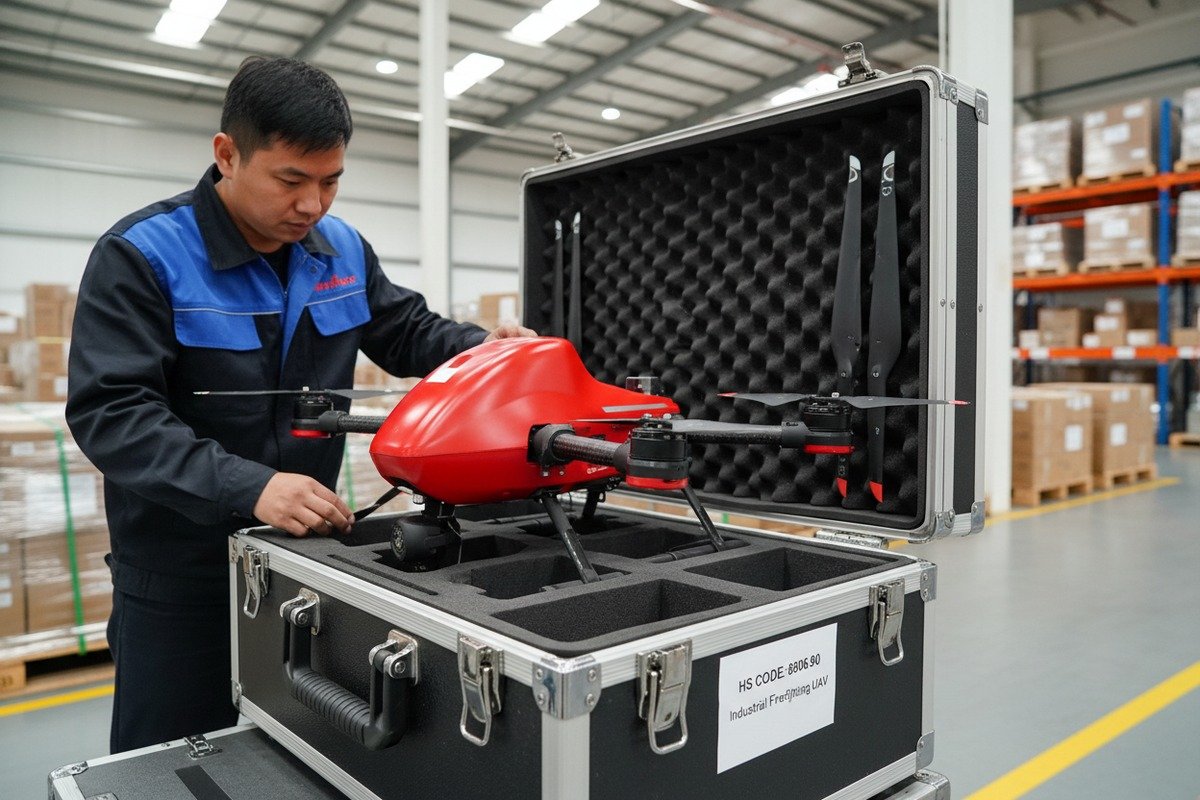
Primäre HS-Codes für Drohnenprodukte
Die Harmonisiertes System 7 klassifiziert Waren weltweit. Drohnen fallen je nach Funktion und Design unter mehrere mögliche Codes.
| HS-Code | Beschreibung | Wann zu verwenden |
|---|---|---|
| 8806.10 | Unbemannte Luftfahrzeuge mit einem maximalen Startgewicht von ≤250g | Mini-Konsumdrohnen |
| 8806.21 | Unbemannte Luftfahrzeuge >250g, aber ≤7kg | Kleine Industriedrohnen |
| 8806.22 | Unbemannte Luftfahrzeuge >7kg, aber ≤25kg | Mittlere Feuerwehrdrohnen |
| 8806.23 | Unbemannte Luftfahrzeuge >25kg, aber ≤150kg | Große Feuerwehrdrohnen mit hoher Nutzlast |
| 8806.24 | Unbemannte Luftfahrzeuge >150kg | Schwere UAVs für Notfalleinsätze |
| 8806.90 | Teile für unbemannte Luftfahrzeuge | Ersatzkomponenten |
Unsere Feuerlöschdrohnen fallen typischerweise unter 8806.22 oder 8806.23. Das Gewicht beinhaltet den Drohnenkörper plus die maximale Nutzlastkapazität.
Sekundäre Codes für Komponenten
Feuerlöschdrohnen beinhalten spezialisierte Ausrüstung. Diese Komponenten werden manchmal separat versendet und verwenden unterschiedliche Codes.
- 8525.80: Wärmebildkameras und Videoübertragungsgeräte
- 8424.10: Feuerlöscher und Löschsysteme
- 8526.91: Funkfernsteuergeräte
- 8501.10: Motoren unter 37,5W
- 8501.31: Gleichstrommotoren von 37,5W bis 750W
Wenn Sie die vollständigen Fähigkeiten eines Lieferanten recherchieren, fragen Sie alle zugehörigen Codes ab. Ein Hersteller, der komplette Drohnen plus Ersatzmotoren und Kameras versendet, zeigt eine integrierte Produktion.
Umgang mit Klassifikationsunsicherheiten
Hier wird es knifflig. Unser Zollagent diskutiert manchmal die Klassifizierung mit den Behörden. Eine Feuerlöschdrohne könnte theoretisch fallen unter:
- 8806: Als unbemanntes Luftfahrzeug
- 8479: Als Maschine mit spezifischer Funktion
- 8424: Wenn die Brandbekämpfungsnutzlast dominiert
Die meisten Länder erkennen 8806 jetzt als primären Drohnen-Code an. Aber ältere Aufzeichnungen vor 2017 könnten 8802 (andere Flugzeuge) oder 8479 (Maschinen, die nicht anderweitig spezifiziert sind) verwenden.
Führen Sie bei der Suche nach historischen Daten mehrere Abfragen durch. Verwenden Sie 8806 für 2017-heute. Fügen Sie 8802 und 8479 für Aufzeichnungen vor 2017 hinzu.
Keyword-Kombinationen, die funktionieren
HS-Codes allein geben alle Drohnen zurück, einschließlich Landwirtschafts- und Fotoeinheiten. Fügen Sie Schlüsselwortfilter hinzu, um Produkte zur Brandbekämpfung zu isolieren.
Effektive Suchbegriffe sind:
- Drohne zur Brandbekämpfung
- Feuerlösch-UAV
- Unbemannte Notfallreaktion
- Luftgestützter Brandmelder
- Feuerlöschflugzeug
- Waldbranddrohne
Kombinieren Sie den HS-Code 8806 mit diesen Schlüsselwörtern. Die Suche gibt nur Datensätze mit übereinstimmenden Beschreibungen zurück.
Kann ich die Produktionskapazität und Zuverlässigkeit eines Lieferanten anhand der Analyse seiner konsistenten monatlichen Exportfrequenz beurteilen?
In unserem Hauptsitz in Xi'an verfolgen wir monatlich unsere eigenen Exportdaten. Das Muster erzählt eine Geschichte. Käufer können diese Geschichte lesen, um Lieferanten zu beurteilen.
Ja, eine gleichbleibende monatliche Exportfrequenz deutet stark auf eine stabile Produktionskapazität und Zuverlässigkeit hin. Lieferanten, die über 12+ Monate hinweg regelmäßige Lieferungen ähnlicher Mengen zeigen, verfügen wahrscheinlich über etablierte Herstellungsprozesse, Qualitätskontrollsysteme und zuverlässige Lieferketten, während unregelmäßige Muster auf operative Instabilität hindeuten.
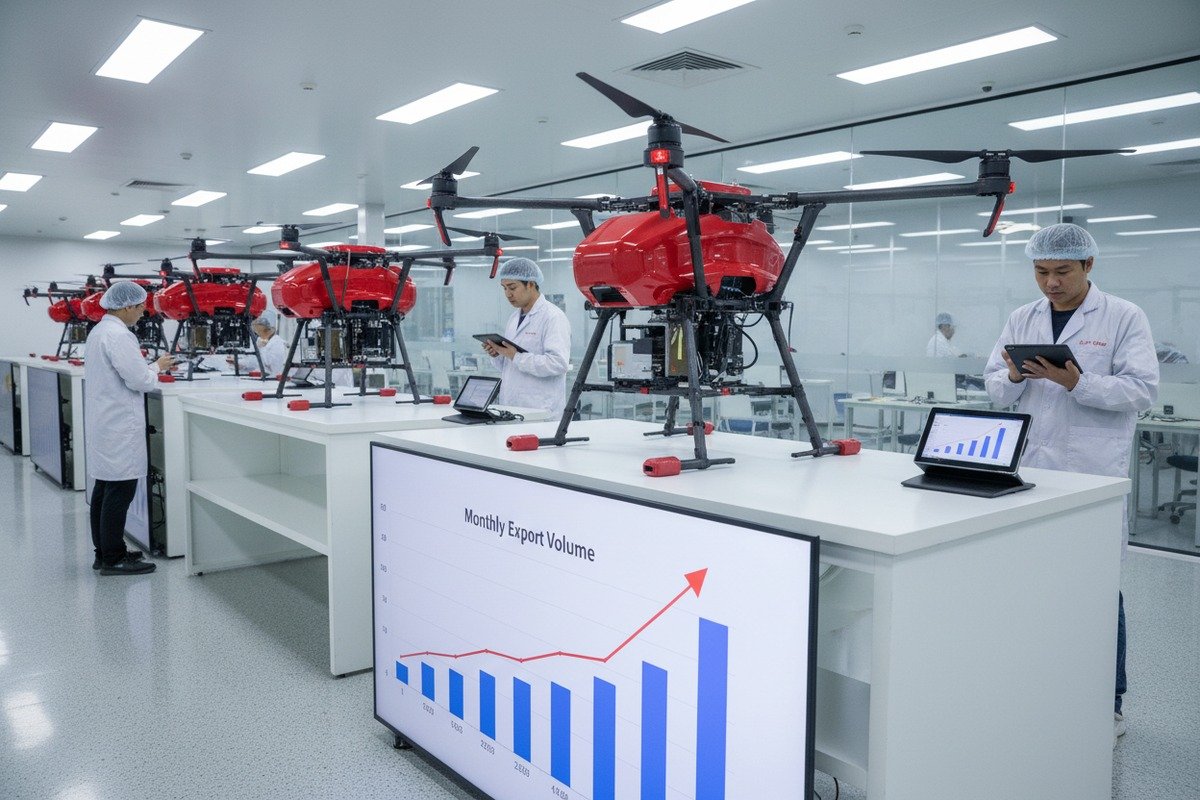
Was konsistente Exporte enthüllen
Wenn unsere Produktion reibungslos läuft, versenden wir jeden Monat. Rohstoffe kommen pünktlich an. Arbeiter befolgen etablierte Verfahren. Qualitätskontrollen bestehen. Sendungen gehen raus.
Suchen Sie in den Zolldaten nach diesen positiven Mustern:
- Monatliche Sendungen: Mindestens 8-10 Monate pro Jahr mit Exporten
- Ähnliche Mengen: Stückzahlen innerhalb einer Schwankung von 20-30%
- Stabile Stückpreise: Weniger als 15% Preisschwankung
- Wachsende Trends: Jährliche Zuwächse zeigen die Gesundheit des Geschäfts
Erstellung einer Lieferanten-Scorecard
Erstellen Sie ein einfaches Bewertungssystem aus Exportdaten:
| Metrisch | Punktzahl 5 | Punktzahl 3 | Punktzahl 1 |
|---|---|---|---|
| Monatliche Frequenz | 10-12 Monate aktiv | 6-9 Monate aktiv | <6 Monate aktiv |
| Mengenkonstanz | <20% Variation | 20-50% Variation | >50% Variation |
| Preisstabilität | <10% Änderung | 10-25% Änderung | >25% Änderung |
| Zielvielfalt | 5+ Länder | 2-4 Länder | 1 Land |
| Jahr-über-Jahr-Wachstum | >20% Steigerung | 0-20% Anstieg | Rückgang |
Ein Lieferant, der 20-25 Punkte erzielt, zeigt eine starke Zuverlässigkeit. Unter 15 Punkten gibt Anlass zur Sorge.
Interpretation von Exportlücken
Unsere Fabrik hatte einst eine dreimonatige Exportlücke. Ein wichtiger Batterielieferant hatte Produktionsprobleme. Käufer, die unsere Aufzeichnungen in dieser Zeit prüften, würden die Lücke sehen.
Häufige Erklärungen für Lücken sind:
- Chinesisches Neujahr: Januar-Februar-Verlangsamungen sind normal
- Unterbrechungen der Lieferkette: Komponentenknappheit betrifft jeden
- Saisonale Nachfrage: Einige Produkte erreichen in bestimmten Quartalen ihren Höhepunkt
- Anlagen-Upgrades: Produktionspausen zur Verbesserung
Ein fehlendes Quartal ist akzeptabel. Sechs fehlende Monate erfordern eine Erklärung. Ein volles fehlendes Jahr deutet auf ernsthafte Probleme hin.
Berechnung der Produktionskapazität aus dem Exportvolumen
Unsere monatliche Kapazität beträgt etwa 200 Löschdrohnen. Unsere Exportdaten spiegeln dies wider. Wenn Zollunterlagen zeigen, dass ein Lieferant monatlich 500 Einheiten exportiert, aber eine Kapazität von 1000 Einheiten angibt, ist Skepsis angebracht.
Verwenden Sie diese grobe Formel:
- Beanspruchte Kapazität sollte übersteigen maximale monatliche Exporte um 30-50%
- Höhere Verhältnisse deuten auf überhöhte Kapazitätsansprüche hin
- Niedrigere Verhältnisse deuten darauf hin, dass sie an ihrer maximalen Leistungsgrenze sind
Wenn die Aufzeichnungen eines Lieferanten maximal 50 Einheiten pro Monat zeigen, sie aber 200 Einheiten für Ihre Bestellung versprechen, stellen Sie kritische Fragen. Entweder verfügen sie über ungenutzte Kapazitäten (prüfen Sie dies bei einem Werksbesuch) oder sie versprechen zu viel.
Triangulierung mit anderen Datenpunkten
Die Exportfrequenz ist ein Indikator. Kombinieren Sie sie mit:
- Werkszertifizierungen: ISO 9001 8 deutet auf Prozesskontrolle hin
- Mitarbeiterzahl: 50+ Mitarbeiter für ernsthafte Fertigung
- Jahre im Geschäft: 5+ Jahre zeigt Stabilität
- Kundenreferenzen: Verifizieren Sie mit tatsächlichen Käufern
Unser 70-köpfiges Team in Xi'an unterstützt eine konsistente Produktion. Ein Lieferant mit 10 Mitarbeitern, der ähnliche Mengen beansprucht, verlässt sich möglicherweise auf Outsourcing, was die Qualitätskontrolle beeinträchtigt.
Schlussfolgerung
Zoll Daten verwandeln die Lieferantenbewertung von Rätselraten in evidenzbasierte Entscheidungen. Durch den Zugriff auf die richtigen Plattformen, die Verwendung korrekter HS-Codes, die Überprüfung historischer Aufzeichnungen und die Analyse von Exportmustern erhalten Sie Klarheit über chinesische Feuerlöschdrohnen-Lieferanten, bevor Sie Käufe tätigen.
Fußnoten
1. Erklärt die Rolle von Zolldaten in der internationalen Handelsklassifizierung und Berichterstattung. ︎
2. Bietet eine detaillierte Erklärung der Harmonized System Codes und ihrer Verwendung. ︎
3. Analyse der Ursachen und Auswirkungen von Störungen in der Lieferkette auf die Weltwirtschaft. ︎
4. Offizielle Website der chinesischen Zollbehörde, die offizielle Informationen und Statistiken bereitstellt. ︎
5. Offizielle Website von Tendata, einer kommerziellen Plattform für globale Import-Export-Daten. ︎
6. Erklärt das Harmonisierte System und seine Aktualisierungen, um neue Produkte wie Drohnen aufzunehmen. ︎
7. Offizieller Überblick über das Harmonisierte System durch die Weltzollorganisation. ︎
8. Offizielle Informationen zu ISO 9001, dem internationalen Standard für Qualitätsmanagementsysteme. ︎

 English
  Español de México
  Deutsch
  Français
  Русский
  العربية
