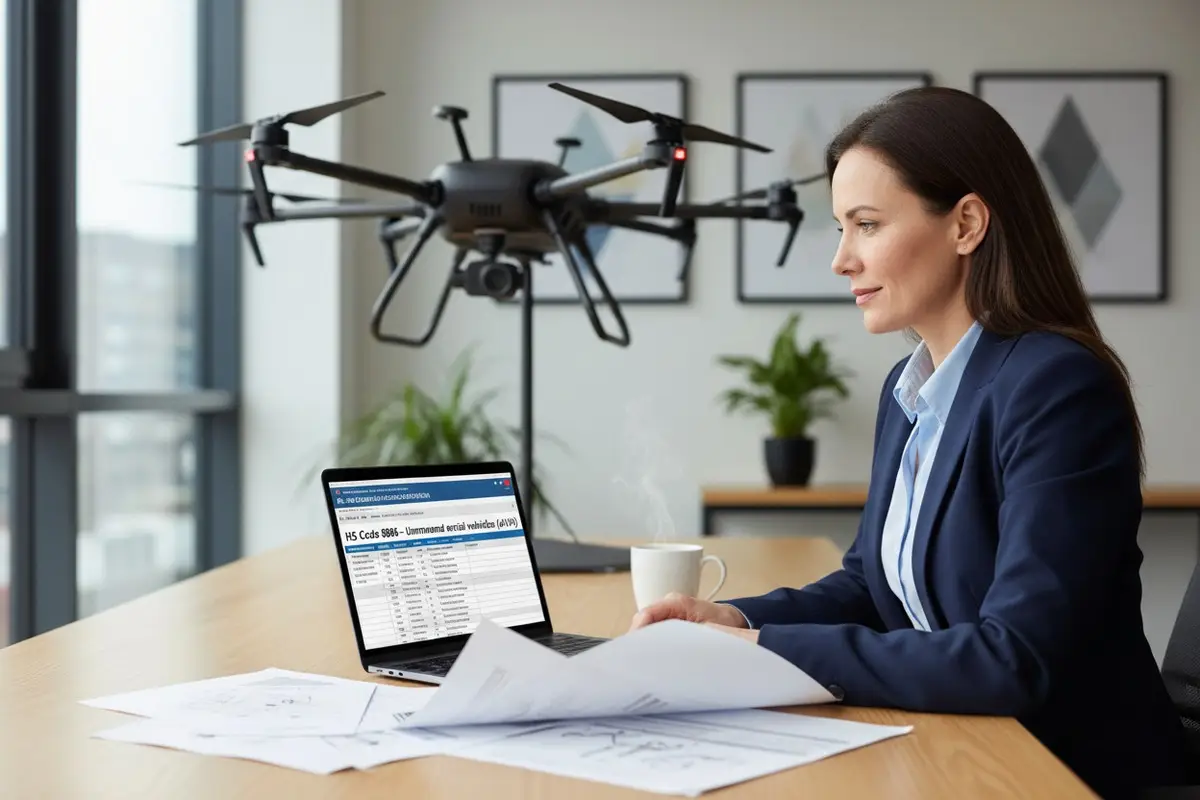

Letzten Monat erhielt unser Exportteam einen panischen Anruf von einem US-Vertriebspartner Lithium-Ionen-Zellen 1. Sie hatten unerwartete Zölle in Höhe von $12.000 auf eine einzige Lieferung von Agrardrohnen zu tragen. Der Schuldige? Ein falsch klassifizierter HS-Code, der den vollen 170% auslöste Abschnitt 301 Zoll 2.
Um den HS-Code für chinesische Agrardrohnen zu klassifizieren, identifizieren Sie die richtige Position in Kapitel 88 (8806 für unbemannte Luftfahrzeuge) oder Kapitel 84 (8424 für Sprühmaschinen), überprüfen Sie dies mit verbindlichen Entscheidungen des CBP und stellen Sie sicher, dass Ihr Lieferant konforme Dokumente bereitstellt, einschließlich Gewichtsspezifikationen und Endverwendungsbescheinigungen.
Dieser Leitfaden führt Sie Schritt für Schritt durch. Sie erfahren, wie Sie die richtigen Codes finden, Zölle minimieren und kostspielige Fehler vermeiden, die Ihre Gewinnmargen zerstören können.
Wie finde ich den richtigen HS-Code für den Import von Agrardrohnen aus China?
Wenn wir Agrardrohnen nach Nordamerika versenden, stellt sich bei fast jeder Bestellung die Frage nach der Klassifizierung. Käufer gehen oft davon aus, dass alle Drohnen einen Code teilen. Diese Annahme hat einige Kunden Zehntausende von Strafen gekostet.
Das Finden des richtigen HS-Codes erfordert die Analyse der Hauptfunktion, Gewichtsklasse und technischen Merkmale Ihrer Drohne. Landwirtschaftliche Drohnen fallen typischerweise unter HTS 8806.22.00 für unbemannte Luftfahrzeuge über 250 g, aber Modelle mit vorherrschender Sprühfunktion können unter 8424.49 für landwirtschaftliche Sprühmaschinen qualifiziert sein.

Verständnis der HS-Code-Struktur
Die Harmonisiertes System 3 verwendet einen 6-stelligen globalen Standard. Die USA erweitern diesen für Zollzwecke auf 10 Ziffern. So gliedert er sich auf:
- Kapitel (erste 2 Ziffern): Breite Kategorien wie 88 für Flugzeuge
- Positionen (erste 4 Ziffern): Spezifische Produkttypen wie 8806 für unbemannte Flugzeuge
- Unterpositionen (6 Ziffern): Weitere Details wie 8806.22 für Drohnen über 250g
- HTS-Codes (10 Ziffern): US-spezifische Sätze und Regeln
Wichtige HS-Codes für Agrardrohnen
| HS-Code | Beschreibung | Basiszollsatz | Abschnitt 301 Rate |
|---|---|---|---|
| 8806.21.00 | Unbemannte Flugzeuge <250g | 0% | Bis zu 170% |
| 8806.22.00 | Andere unbemannte Luftfahrzeuge | 4.4% | Bis zu 170% |
| 8806.91.00 | Teile für unbemannte Luftfahrzeuge | 0% | 25%+ |
| 8424.41.00 | Tragbare landwirtschaftliche Sprühgeräte | 2.4% | Variiert |
| 8424.49.00 | Andere landwirtschaftliche Sprühgeräte | 2.4% | Variiert |
Schritt-für-Schritt-Klassifizierungsprozess
Schritt 1: Dokumentieren Sie die Spezifikationen Ihrer Drohne. Unser Produktionsteam fügt immer das maximale Startgewicht (MTOW), die Tankkapazität, die Rotoranzahl und die Hauptfunktion in die Exportpapiere ein.
Schritt 2: Identifizieren Sie die Hauptfunktion. Ist die Drohne hauptsächlich zum Fliegen oder zum Sprühen bestimmt? CBP betrachtet den wesentlichen Charakter des Produkts.
Schritt 3: Verwenden Sie offizielle Nachschlagetools. Die USITC HTS-Suchdatenbank 4 und WCO-Tools bieten Anleitungen. Flexport bietet auch kostenlose HS-Nachschlage-Dienste an.
Schritt 4: Fordern Sie eine verbindliche Zolltarifauskunft an. Für Sendungen mit hohem Wert reichen Sie einen Antrag auf Zolltarifauskunft bei der CBP ein. Dies bindet den Zoll rechtlich an Ihre Klassifizierung. Verbindliche Zolltarifauskünfte der CBP 5
Die Debatte Flugzeug vs. Sprühgerät
Dies führt zu echter Verwirrung. Einige Importeure klassifizieren landwirtschaftliche Sprühdrohnen unter 8424 als Sprühgeräte. Andere verwenden 8806 als Flugzeuge. Die Antwort hängt davon ab, welche Funktion dominiert.
Unsere Hexacopter-Modelle mit 20-Liter-Tanks und GPS-gesteuerten Flugsystemen funktionieren eindeutig zuerst als Flugzeuge. Das Sprühsystem ist ein Anbaugerät. CBP hat diese konsequent unter 8806 klassifiziert.
Ein einfacher Sprühmechanismus, der auf einem einfachen Rahmen montiert ist, könnte jedoch als Sprühgerät gelten. Die HTSUS-Aktualisierungen vom Dezember 2021 fügten 11 UAS-spezifische Codes unter 8806 hinzu, wodurch die meisten kommerziellen Drohnen in die Flugzeugklassifizierung verschoben wurden.
Wie wirkt sich meine HS-Code-Klassifizierung auf die gesamten Einfuhrzölle und Steuern aus, die ich zahle?
Unsere Finanzabteilung verfolgt die Landungskosten für jede US-Sendung. Wir haben gesehen, dass dasselbe Drohnenmodell Zölle von über 150% allein aufgrund der Klassifizierung aufweist. Dies ist kein geringfügiges Papierkramproblem.
Die HS-Code-Klassifizierung bestimmt direkt Ihren Zollsatz, der für chinesische Agrardrohnen von 0% bis über 170% reicht. Ein Hexacopter, der unter 8806.22.00 klassifiziert wird, unterliegt einem Basiszollsatz von 4,4% zuzüglich bis zu 170% Section 301-Zöllen, während Teile unter 8806.91.00 kombinierten Sätzen von 25%+ unterliegen.

Die 170% Zollrealität
Ab April 2025 haben die Section 301-Zölle auf chinesische Drohnen verheerende Ausmaße erreicht:
| Komponente | Basissatz | Abschnitt 301 | Gesamtpotenzial |
|---|---|---|---|
| Komplette Drohne (8806.22) | 4.4% | 125%+ | ~170% |
| Drohnenteile (8806.91) | 0% | 25%+ | 25-50% |
| Sprühkomponenten (8424) | 2.4% | Variabel | 10-50% |
| Batterien (8507) | 3.4% | 25% | ~28% |
Beispiel für die tatsächlichen Kostenfolgen
Betrachten Sie eine $5.000 Agrardrohne:
- Korrekte Klassifizierung (8806.22.00): $5.000 × 170% = $8.500 an Zöllen
- Strafe für falsche Klassifizierung: Zusätzliche $1.000-$5.000 an Geldstrafen
- Hafengebühren: $500-$2.000 für Lagerung und Verzögerungen
Das Gesamtrisiko einer falschen Klassifizierung kann den Produktwert selbst übersteigen.
Strategische Überlegungen zur Klassifizierung
Einige Importeure versuchen, Drohnen unter 9503 als Spielzeug zu klassifizieren, um hohe Zölle zu vermeiden. Diese Strategie scheiterte nach der AR.Drone CBP-Entscheidung. Moderne Agrardrohnen mit GPS, autonomem Flug und kommerziellen Sprühsystemen qualifizieren sich eindeutig als Flugzeuge, nicht als Spielzeug.
Unsere technischen Spezifikationen dokumentieren jedes Merkmal, das die Klassifizierung als Flugzeug unterstützt. Dies schützt Käufer vor späteren Prüfungen. CBP kann Ihre Importe bis zu 5 Jahre rückwirkend prüfen.
Berechnung Ihrer gesamten Landungskosten
Berücksichtigen Sie neben Zöllen auch:
- Gebühr für die Bearbeitung von Waren: 0,3464% des Wertes
- Hafenerhaltungsgebühr: 0,125% für Seefracht
- Zollbürgschaft: Erforderlich für Importe über $2.500
- Maklergebühren: $150-$500 pro Anmeldung
Wenn wir DDP-Preise (Delivered Duty Paid) anbieten, sind alle diese Kosten enthalten. Dies schützt unsere Käufer vor unerwarteten Gebühren.
Welche Dokumentation sollte ich von meinem Lieferanten anfordern, um die Einhaltung des HS-Codes sicherzustellen?
Wenn unser Verkaufsteam Exportdokumente vorbereitet, fügen wir alles hinzu, was für eine reibungslose Zollabfertigung erforderlich ist. Diese Lektion haben wir auf die harte Tour gelernt, nachdem die Sendung eines Kunden drei Wochen im Hafen lag, weil die Papiere fehlten.
Anfrage von Ihrem Lieferanten: Handelsrechnung mit vollständigen technischen Spezifikationen, Packliste mit Gewichten und Abmessungen, Ursprungszeugnis, FCC-Zertifizierung, UFLPA-Konformitätserklärung, Endverbrauchererklärung für zivile Nutzung und detaillierte Produktdatenblätter, die das MTOW und die funktionalen Fähigkeiten zeigen.

Checkliste der wesentlichen Dokumente
| Dokument | Zweck | Wer liefert |
|---|---|---|
| Handelsrechnung | Wert und Beschreibung für Zölle | Anbieter |
| Packliste | Mengen und Gewichte überprüfen | Anbieter |
| Konnossement | Versandnachweis | Spediteur |
| Ursprungszeugnis | Länderprüfung | Lieferant/Kammer |
| FCC-Zertifizierung 6 | Konformität von Funkgeräten | Anbieter |
| UFLPA-Erklärung | Einhaltung der Bestimmungen zur Zwangsarbeit | Anbieter |
| Endbenutzer-Erklärung | Zivilrechtliche Nutzungsgenehmigung | Käufer |
| Technisches Datenblatt | Klassifizierungsunterstützung | Anbieter |
FCC-Zertifizierungsanforderungen
Alle Drohnen mit Funkkommunikation benötigen eine FCC-Zertifizierung für den US-Import. Unsere Drohnen umfassen:
- 2,4-GHz-Steuerfrequenzzertifizierung
- 5,8-GHz-Videoübertragungszertifizierung
- FCC-ID des Fernbedienungssenders
Ohne diese kann der Zoll Ihre Sendung festhalten. Wir liefern mit jeder Bestellung für den US-Markt FCC-Zertifikate.
UFLPA-Konformität
Die Uyghur Forced Labor Prevention Act 7 beeinflusst Drohnenimporte erheblich. Komponenten aus der Region Xinjiang unterliegen einer automatischen Beschlagnahmung. Unsere Lieferkettendokumentation verfolgt den Ursprung jeder Komponente.
Anfrage von Ihrem Lieferanten:
- Ursprungserklärungen für Komponenten
- Lieferketten-Mapping
- Audit-Zertifikate von Drittanbietern, falls verfügbar
Technische Spezifikationen für die Klassifizierung
Ihre Rechnung sollte klar angeben:
- Maximales Abfluggewicht (MTOW)
- Nutzlastkapazität
- Tankvolumen für Sprühgeräte
- Anzahl der Rotoren
- Flugreglertyp
- Hauptverwendungszweck
Unsere Handelsrechnungen enthalten alle diese Details. Dies hilft Ihrem Zollagenten bei der korrekten Klassifizierung und bietet Schutz bei Prüfungen.
Ursprungslandkennzeichnung
Die CBP verlangt eine klare Kennzeichnung des Ursprungslandes auf Produkten. Unsere Drohnen enthalten "Made in China"-Etiketten auf:
- Hauptflugzeugkörper
- Fernbedienung
- Akku-Packs
- Originalverpackung
Fehlende Kennzeichnungen können zu zusätzlichen Zollstrafen führen.
Wie klassifiziere ich Drohnensersatzteile und -batterien anders als das Hauptfluggerät?
Unser After-Sales-Team versendet monatlich Tausende von Ersatzteilen. Jeder Komponententyp erfordert eine separate Klassifizierung. Fehler bei den Teilecodes sind tatsächlich häufiger als die Fehlklassifizierung vollständiger Drohnen.
Ersatzteile fallen typischerweise unter HTS 8806.91.00 für Flugzeugteile, aber Batterien verwenden 8507.60.00 für Lithium-Ionen-Zellen. Kameras können unter 8525.89 klassifiziert werden, und Sprühdüsen unter 8424.90. Jede Komponente unterliegt unterschiedlichen Zollsätzen, wobei Lithiumbatterien auch die Einhaltung der Gefahrgutversandvorschriften erfordern.

Gängige Ersatzteilklassifizierungen
| Teiltyp | HS-Code | Basiszollsatz | Besondere Anforderungen |
|---|---|---|---|
| Propeller | 8806.91.00 | 0% | Keine |
| Flugsteuerungen | 8806.91.00 | 0% | Exportlizenz kann gelten |
| Motoren | 8501.31.00 | 4% | Keine |
| Kameras | 8525.89.00 | Kostenlos | FCC, falls drahtlos |
| Lithium-Batterien | 8507.60.00 | 3.4% | UN38.3, MSDS, Gefahrgutversand |
| Sprühdüsen | 8424.90.00 | 2.9% | Keine |
| GPS-Module | 8526.91.00 | Kostenlos | Exportkontrollprüfung |
| Rahmen aus Kohlefaser | 8806.91.00 | 0% | Keine |
Spezielle Anforderungen für Lithiumbatterien
Batterien erfordern zusätzliche Konformität über die HS-Klassifizierung hinaus:
UN38.3-Tests: Alle Lithiumbatterien müssen Transportsicherheitstests bestehen. Unsere Batterien enthalten UN38.3-Zertifikate bei jeder Lieferung.
MSDS-Dokumentation: Sicherheitsdatenblätter müssen Batterielieferungen beiliegen.
Versandbeschränkungen: Lithiumbatterien unterliegen Mengenbeschränkungen pro Paket. Unser Logistikteam verwaltet dies, um Lieferverzögerungen zu vermeiden.
Separate Verpackung: Einige Spediteure verlangen, dass Batterien getrennt von Geräten versendet werden. Dies wirkt sich auf Ihre Frachtkosten aus.
Strategie für Zölle auf Teile im Vergleich zu kompletten Flugzeugen
Hier ist etwas Wichtiges: Teile unter 8806.91.00 unterliegen niedrigeren Section 301-Zöllen als komplette Flugzeuge unter 8806.22.00. Einige Importeure erwägen den Versand von Drohnen demontiert.
Die CBP wendet jedoch die "Kit"-Regel an. Wenn Teile zusammen eine vollständige Drohne bilden, werden sie als Fertigprodukt klassifiziert. Der Versand von Propellern separat ist in Ordnung. Der Versand aller Komponenten einer Drohne separat ist es nicht.
Komponenten-Exportkontrollen
China hat die Exportkontrollen für Drohnentechnologie ausgeweitet. Einige Komponenten erfordern nun chinesische Exportlizenzen:
- Fortschrittliche Flugsteuerungen
- Hochauflösende Kameragimbals
- Bestimmte GPS-Module
- Infrarotsensoren
Unser Team für Exportkonformität kümmert sich vor dem Versand um diese Lizenzen. Verzögerungen beim chinesischen Zoll sind genauso kostspielig wie Verzögerungen in den USA.
Verwaltung gemischter Sendungen
Wenn Sie Drohnen plus Ersatzteile bestellen, muss jeder Artikel korrekt klassifiziert werden. Unsere Packlisten trennen:
- Vollständige Flugzeugeinheiten
- Ersatz-Akkupacks
- Ersatz-Propellersätze
- Service-Teile
Diese Klarheit hilft Ihrem Zollagenten, die Einfuhranmeldungen schneller zu bearbeiten und reduziert das Prüfungsrisiko.
Schlussfolgerung
HS-Code-Klassifizierung 8 bestimmt, ob Ihr Import von Agrardrohnen erfolgreich ist oder fehlschlägt. Arbeiten Sie mit Ihrem Lieferanten zusammen, um Spezifikationen zu dokumentieren, verbindliche Auskünfte für Großaufträge anzufordern und mit der sich schnell ändernden Zolllandschaft Schritt zu halten. Die richtige Klassifizierung macht die Beschaffung in China zu einem nachhaltigen Gewinn.
Fußnoten
1. Ersetzt durch einen umfassenden und maßgeblichen Wikipedia-Artikel über Lithium-Ionen-Batterien. ︎
2. Bietet offizielle Informationen und Kontext zu den Section 301-Zöllen. ︎
3. Definiert das internationale Harmonisierte System zur Produktklassifizierung durch die WCO. ︎
4. Ersetzt durch das offizielle Suchwerkzeug für den Harmonized Tariff Schedule (HTS), das von der U.S. International Trade Commission bereitgestellt wird. ︎
5. Erklärt den offiziellen Prozess und die rechtlichen Auswirkungen von CBP-verbindlichen Auskünften. ︎
6. Beschreibt die regulatorischen Anforderungen für Funkkommunikationssysteme von Drohnen in den USA. ︎
7. Erklärt den rechtlichen Rahmen und die Auswirkungen des UFLPA für Importe. ︎
8. Erklärt den Zweck und die Bedeutung von HS-Codes für den internationalen Handel. ︎
 English
  Español de México
  Deutsch
  Français
  Русский
  العربية
Comments
No comments yet. Be the first to share your thoughts!
Leave a Comment