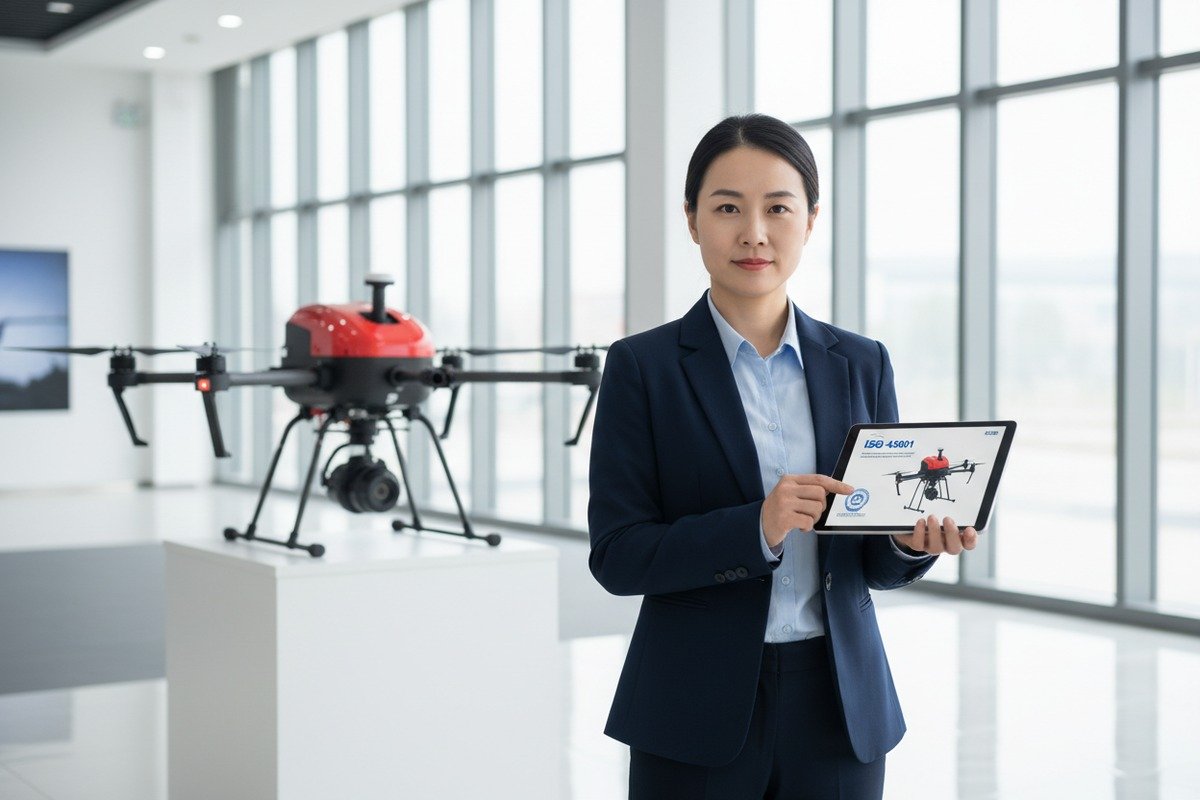

Wenn unser Produktionsteam Löschdrohnen zusammenbaut, stehen wir unter wachsendem Druck von US-Käufern, die hartnäckige Fragen zu Arbeitspraktiken stellen ISO 45001-Zertifizierungen 1. Die Einsätze sind hoch – ein falscher Schritt kann zu CBP-Festnahmen, verlorenen Verträgen und beschädigten Ruf führen.
Um die Einhaltung der Arbeitsrechte bei der Herstellung von Feuerlöschdrohnen zu überprüfen, sollten Käufer ISO 45001-Zertifizierungen anfordern, unabhängige Audits durchführen, Lieferanten anhand von UFLPA-Listen überprüfen, vollständige Lieferketten abbilden und dokumentierte Nachweise über faire Löhne, sichere Arbeitsbedingungen und Maßnahmen zur Verhinderung von Zwangsarbeit prüfen.
Dieser Leitfaden führt Sie durch praktische Schritte zur Prüfung von Herstellern, zum Verständnis wichtiger Zertifizierungen, zur Rückverfolgung von Lieferketten und zur Überwachung der Arbeitsbedingungen UFLPA-Entitätslisten 2. Lassen Sie uns das Abschnitt für Abschnitt aufschlüsseln.
Wie kann ich die Arbeitsbedingungen meines Herstellers von Feuerlöschdrohnen gründlich prüfen?
Unsere Fabrik in Xi'an hat im Laufe der Jahre Dutzende von Käuferprüfungen durchgeführt. Wir wissen, was funktioniert und was nicht. Viele Einkaufsmanager kommen unvorbereitet an und übersehen kritische Warnsignale, die eine strukturierte Prüfung aufdecken würde.
Eine gründliche Prüfung erfordert eine Dokumentenprüfung vor dem Besuch, eine Inspektion der Einrichtung vor Ort, vertrauliche Mitarbeitergespräche, die Überprüfung von Gehaltsabrechnungen und Arbeitszeiten sowie die Nachverfolgung von Korrekturmaßnahmen. Verwenden Sie unabhängige Drittanbieter-Prüfer, die mit der Elektronikfertigung und internationalen Arbeitsstandards vertraut sind.
Beginnen Sie mit der Dokumentensammlung
Fordern Sie vor dem Besuch einer Fabrik wichtige Dokumente an. Diese zeigen grundlegende Compliance-Niveaus auf. Fragen Sie nach Geschäftslizenzen, ISO-Zertifizierungen, Gehaltsabrechnungen, Arbeitsverträgen und Schulungsprotokollen zur Sicherheit.
Erstellen Sie eine Checkliste, um Ihre Überprüfung zu organisieren:
| Dokumenttyp | Was zu beachten ist | Rote Fahnen |
|---|---|---|
| Arbeitsverträge | Klare Bedingungen, lokale Sprache, unterschriebene Kopien | Fehlende Unterschriften, nur fremdsprachige Texte |
| Gehaltsabrechnungen | Regelmäßige Zahlungstermine, Überstundensätze | Lücken in Aufzeichnungen, Barzahlungen |
| Sicherheitsschulungsprotokolle | Datierte Einträge, Unterschriften der Arbeiter | Leere Protokolle, rückdatierte Einträge |
| Arbeitszeitblätter | Tägliche Aufzeichnungen, Ruhezeiten vermerkt | Übermäßige Überstunden, keine Pausen |
| ISO 45001 Zertifikat | Gültige Daten, akkreditierte Stelle | Abgelaufen, unbekannter Zertifizierer |
Inspektionen vor Ort durchführen
Gehen Sie durch die Produktionshalle. Betrachten Sie Arbeitsplätze, an denen Techniker Kohlefaserrahmen montieren und Leiterplatten löten. Prüfen Sie auf ausreichende Belüftung, Feuerlöscher und Notausgänge.
Achten Sie auf:
- Verwendung persönlicher Schutzausrüstung
- Maschinenschutzvorrichtungen und Sicherheitsetiketten
- Sauberkeit und Organisation
- Notfallverfahren in Landessprache veröffentlicht
- Erste-Hilfe-Stationen und geschultes Personal
Befragung von Arbeitnehmern vertraulich
Dieser Schritt ist entscheidend. Sprechen Sie mit den Arbeitnehmern getrennt von den Vorgesetzten. Verwenden Sie bei Bedarf lokale Dolmetscher. Fragen Sie nach tatsächlichen Arbeitszeiten, Zahlungszeitpunkten und Sicherheitsbedenken.
Beispielhafte Fragen sind:
- Wie viele Stunden arbeiten Sie pro Woche?
- Wann haben Sie zuletzt eine Sicherheitsschulung erhalten?
- Können Sie Überstunden ohne Strafen ablehnen?
- Behalten Sie Ihre eigenen Ausweisdokumente?
Lohnabrechnungen mit lokalen Gesetzen abgleichen
Gleichen Sie die Löhne mit den Mindestlohnstandards Chinas für die jeweilige Region ab. Der Mindestlohn in Xi'an unterscheidet sich von dem in Shenzhen. Überstunden müssen mit 150% für Wochentage und 200% für Wochenenden vergütet werden.
Externe Prüfer beauftragen
Unabhängige Prüfer bringen Fachwissen und Glaubwürdigkeit mit. Suchen Sie nach Unternehmen mit SA8000 3 oder SMETA-Audit-Erfahrung. Sie verstehen die Risiken der Elektronikfertigung wie Lötrauchbelastung und Überlastungsschäden.
Welche Zertifizierungen sollte ich anfordern, um sicherzustellen, dass mein Drohnenlieferant ethische Arbeitsstandards einhält?
Wenn wir Exportdokumente für US-Kunden vorbereiten, tauchen Zertifizierungen immer wieder auf. Unser Team pflegt die ISO 45001 und hält die Aufzeichnungen aktuell, gerade weil Käufer Beweise und keine Versprechungen verlangen.
Fordern Sie ISO 45001 für Arbeitsschutz, SA8000 für soziale Verantwortung und BSCI- oder SMETA-Auditberichte an. Überprüfen Sie außerdem, ob der Lieferant nicht auf den UFLPA-Entitätslisten oder der Consolidated Screening List der International Trade Administration für die Berechtigung zu Bundesverträgen aufgeführt ist.
Wichtige Zertifizierungen verstehen
Verschiedene Zertifizierungen dienen unterschiedlichen Zwecken. Hier ist eine Aufschlüsselung:
| Zertifizierung | Fokusbereich | Ausstellende Stelle | Gültigkeitsdauer |
|---|---|---|---|
| ISO 45001 | Arbeitsschutzmanagement | Akkreditierte Zertifizierungsstellen | 3 Jahre mit jährlicher Überwachung |
| SA8000 | Soziale Verantwortung, einschließlich Kinderarbeit, Zwangsarbeit, Diskriminierung | Social Accountability International | 3 Jahre mit Überwachungsaudits |
| BSCI | Soziale Compliance in der Wirtschaft | amfori | Audit-basiert, kein festes Zertifikat |
| SMETA | Sedex Members Ethical Trade Audit | Sedex-zugelassene Auditoren | Die Gültigkeit von Auditberichten variiert |
ISO 45001 erklärt
ISO 45001 ersetzte OHSAS 18001 im Jahr 2018. Sie umfasst Gefahrenidentifizierung, Risikobewertung und Arbeitnehmerbeteiligung. Für die Drohnenherstellung bedeutet dies die Bewältigung von Risiken durch den Umgang mit Batterien, Lötstationen und das Schneiden von Verbundwerkstoffen.
Unser Qualitätsteam führt monatliche Sicherheitsrundgänge durch. Wir protokollieren Beinaheunfälle und verfolgen Korrekturmaßnahmen. Dieser systematische Ansatz erfüllt die Anforderungen der ISO 45001.
SA8000 für soziale Verantwortung
SA8000 ist rigoros. Sie deckt neun Bereiche ab: Kinderarbeit, Zwangsarbeit, Gesundheit und Sicherheit, Vereinigungsfreiheit, Diskriminierung, Disziplinarmaßnahmen, Arbeitszeiten, Vergütung und Managementsysteme.
Nur wenige chinesische Hersteller verfügen über eine SA8000-Zertifizierung. Wenn Ihr Lieferant diese hat, ist dies ein starker Indikator für Engagement.
UFLPA und Entity List Screening
Die Uyghur Forced Labor Prevention Act 4 schafft eine widerlegbare Vermutung, dass Waren aus Xinjiang Zwangsarbeit beinhalten. CBP kann Sendungen ohne spezifische Beweise zurückhalten.
Im Juli 2025 widerlegte DJI erfolgreich die Zurückhaltungen des CBP, indem sie ISO 45001-Zertifikate und Nachweise vorlegten, dass sie nicht auf der UFLPA-Liste standen. Intelligente Hersteller pflegen proaktiv ähnliche Dokumentationen.
Überprüfen Sie Lieferanten anhand von:
- UFLPA Entity List
- Bureau of Industry and Security Entity List
- Consolidated Screening List
Blue UAS freigegebene Liste für Bundeskäufer
Wenn Sie an US-Regierungsbehörden verkaufen, beschränkt der American Security Drone Act Käufe von "abgedeckten ausländischen Unternehmen" wie DJI und Autel. Die Blue UAS-Liste bietet vorab geprüfte Alternativen.
Während dies in erster Linie die Datensicherheit betrifft, ist die Einhaltung von Arbeitsvorschriften Teil des umfassenderen Prüfverfahrens.
Wie überprüfe ich, ob meine industrielle Drohnenlieferkette frei von Arbeitsrechtsverletzungen ist?
Unsere Ingenieure beziehen Komponenten von Dutzenden von Lieferanten – Motoren aus Dongguan, Kohlefaser aus Wuxi, Batterien aus Shenzhen, Sensoren aus Suzhou. Jedes Glied birgt Risiken. Diese Komplexität zu kartieren, braucht Zeit, schützt aber Käufer und Verkäufer.
Überprüfen Sie die Einhaltung der Lieferkette, indem Sie alle Lieferantenebenen abbilden, Due-Diligence-Prüfungen für Hochrisikokomponenten wie Batterien und Seltene Erden durchführen, Lieferantenerklärungen anfordern, Blockchain-Rückverfolgbarkeitstools nutzen, wo verfügbar, und Stichprobenprüfungen in den Einrichtungen von Unterlieferanten durchführen.
Kartieren Sie Ihre vollständige Lieferkette
Die meisten Käufer sehen nur Tier 1 – den Endmontagebetrieb. Aber Arbeitsrisiken verbergen sich tiefer. Batteriezellen können aus Einrichtungen mit schlechten Bedingungen stammen. Die Verarbeitung von Seltenerdmetallen beinhaltet oft gefährliche Arbeit.
Erstellen Sie eine Lieferantenkarte:
| Segment | Komponente | Standort des Lieferanten | Risikostufe |
|---|---|---|---|
| Stufe 1 | Endmontage | Xi'an, China | Mittel |
| Stufe 2 | Motoren | Dongguan, China | Mittel |
| Stufe 2 | Rahmen aus Kohlefaser | Wuxi, China | Niedrig |
| Stufe 3 | Lithiumzellen | Shenzhen, China | Hoch |
| Tier 4 | Kobaltraffination | DR Kongo/China | Sehr hoch |
Fokus auf Hochrisikokomponenten
Batterien stellen das höchste Risiko dar. Kobaltabbau in der Demokratischen Republik Kongo 5 hat Kinderarbeit dokumentiert. Die Lithiumverarbeitung birgt chemische Gefahren.
Fragen Sie Ihren Lieferanten:
- Woher stammen Batteriezellen?
- Können Sie Dokumentationen zur Kobaltbeschaffung bereitstellen?
- Besitzen Zelllieferanten Zertifizierungen für verantwortungsvollen Bergbau?
Lieferantenerklärungen anfordern
Lassen Sie Lieferanten Erklärungen unterzeichnen, die Folgendes bestätigen:
- Keine Zwangsarbeit in irgendeiner Einrichtung
- Keine Kinderarbeit
- Einhaltung der lokalen Lohngesetze
- Recht auf Ablehnung von Überstunden
- Sichere Arbeitsbedingungen
Während Erklärungen kein Beweis sind, schaffen sie Verantwortlichkeit und eine rechtliche Aufzeichnung.
Technologie zur Rückverfolgbarkeit nutzen
Blockchain-basierte Systeme verfolgen nun Komponenten vom Rohmaterial bis zum fertigen Produkt. Blockchain-Rückverfolgbarkeitstools 6 Einige Batteriehersteller bieten Ursprungszeugnisse an, die auf verteilten Hauptbüchern verifiziert wurden.
KI-gestützte Analysen können Anomalien in Versandmustern kennzeichnen, die auf Lieferantenwechsel oder nicht deklarierte Unterauftragsvergabe hindeuten.
Stichprobenartige Audits durchführen
Unangekündigte Besuche bei Unterlieferanten decken tatsächliche Bedingungen auf. Planen Sie regelmäßige Stichproben, insbesondere nach Erhalt neuer Komponentenchargen.
Unser Einkaufsteam besucht Batteriehersteller vierteljährlich. Wir überprüfen die Bedingungen der Arbeiterunterkünfte, Überstundenaufzeichnungen und Altersverifizierungssysteme.
UFLPA spezifisch angehen
Das UFLPA verlangt "klare und überzeugende Beweise", um Vermutungen von Zwangsarbeit zu widerlegen. Erstellen Sie Dokumentationen, bevor eine Lieferung zurückgehalten wird:
- Vollständige Lieferkettenkarten
- Auditberichte von jeder Ebene
- Aufzeichnungen über die Arbeiterzahlungen
- Ursprungszeugnisse für Komponenten
Welche Schritte kann ich unternehmen, um die Arbeitsbedingungen und die Sicherheit in meiner Drohnenproduktionsanlage zu überwachen?
Unsere Produktionshalle arbeitet im Zweischichtbetrieb und montiert Drohnen zur Brandbekämpfung. Wir überwachen die Bedingungen täglich – nicht nur im Hinblick auf die Einhaltung von Vorschriften, sondern weil sichere Arbeiter bessere Produkte herstellen. Gehetzte, erschöpfte Teams machen Fehler, die sich im Feld bemerkbar machen.
Überwachen Sie die Arbeitsbedingungen durch tägliche Sicherheitsrundgänge, Echtzeit-Umweltsensoren, anonyme Rückmeldungen von Arbeitnehmern, regelmäßige OSHA-konforme Inspektionen, Überstundenverfolgungssysteme und regelmäßige Audits durch Dritte zur Gesundheits- und Sicherheit. Beheben Sie Probleme umgehend mit dokumentierten Korrekturmaßnahmen.
Tägliche Sicherheitsprotokolle einführen
Jede Schicht beginnt mit einer Sicherheitseinweisung. Vorgesetzte überprüfen die Verwendung von PSA, den Zustand der Ausrüstung und die Einrichtung des Arbeitsplatzes. Dies dauert fünf Minuten, verhindert aber stundenlange Probleme.
Tägliche Checklistenpunkte:
- Augenschutz an Lötstationen
- Lüftungssysteme betriebsbereit
- Notausgänge frei zugänglich
- Erste-Hilfe-Materialien aufgefüllt
- Feuerlöscher zugänglich
Umweltüberwachung installieren
Die Drohnenherstellung birgt chemische Expositionen. Lötflussmittel-Dämpfe, Kohlefaserstaub und Elektrolyte von Batterien bergen Risiken.
Sensoren installieren für:
| Gefahr | Überwachungsmethode | Aktionsschwelle |
|---|---|---|
| Löt rauch | Luftqualitätssensoren | VOC > 50 ppm |
| Kohlefaserstaub | Partikelmonitore | PM2,5 > 35 μg/m³ |
| Temperatur | Thermostate | > 28°C anhaltend |
| Lärm | Dezibelmeter | > 85 dB Durchschnitt |
Anonyme Feedback-Kanäle einrichten
Mitarbeiter scheuen sich oft, Probleme direkt zu melden. Richten Sie anonyme Kanäle ein – Vorschlagsboxen, Hotlines oder digitale Plattformen.
Überprüfen Sie das Feedback wöchentlich. Reagieren Sie umgehend auf berechtigte Anliegen. Veröffentlichen Sie Lösungen, um Vertrauen aufzubauen.
Überstunden systematisch verfolgen
Übermäßige Überstunden signalisieren Produktionsdruck, der zu Unfällen und Burnout führt. Das chinesische Arbeitsrecht begrenzt die reguläre Arbeitszeit auf 40 Stunden pro Woche mit maximal 36 Überstunden pro Monat.
Nutzen Sie digitale Zeiterfassung. Kennzeichnen Sie Mitarbeiter, die sich den Grenzwerten nähern. Passen Sie Produktionspläne an, anstatt gesetzliche Grenzen zu überschreiten.
Ausrichtung an OSHA-Standards
Auch für chinesische Fabriken, die in die USA exportieren, OSHA-Standards 7 bieten nützliche Benchmarks. Das OSHA-Memo zur Drohneninspektion aus dem Jahr 2018 zeigt das Interesse der Regulierungsbehörden an diesem Sektor.
Wichtige OSHA-konforme Praktiken:
- Schulung zur Gefahrenkommunikation
- Lockout/Tagout-Verfahren für Geräte
- Programme zum Atemschutz
- Notfallpläne
Durchführung regelmäßiger externer Audits
Interne Überwachung hat blinde Flecken. Jährliche externe Sicherheitsaudits decken Probleme auf, die Ihr Team übersieht. Suchen Sie nach Auditoren mit Erfahrung in der Elektronikfertigung.
Teilen Sie die Audit-Ergebnisse mit den Käufern. Transparenz schafft Vertrauen und differenziert verantwortungsbewusste Hersteller.
Alles dokumentieren
Bewahren Sie Aufzeichnungen auf über:
- Tägliche Sicherheitschecklisten
- Vorfallberichte und -untersuchungen
- Korrekturmaßnahmenabschluss
- Schulungsteilnahme
- Wartung der Ausrüstung
Diese Dokumentation beweist die Einhaltung während Käuferprüfungen und behördlichen Überprüfungen.
Schlussfolgerung
Die Überprüfung der Einhaltung von Arbeitsrechten schützt Ihr Unternehmen, Ihre Arbeiter und Ihre Käufer. Beginnen Sie mit Audits, fordern Sie Zertifizierungen an, kartieren Sie Ihre Lieferkette und überwachen Sie die Bedingungen kontinuierlich. Die Anstrengung zahlt sich in nachhaltigen Partnerschaften und sauberen behördlichen Aufzeichnungen aus.
Fußnoten
1. Offizielle Informationen zum Standard für das Managementsystem für Sicherheit und Gesundheit bei der Arbeit. ︎
2. Offizielle Regierungsmitteilungen zur Liste der Unternehmen gemäß dem Uyghur Forced Labor Prevention Act. ︎
3. Bietet Details zum Standard für soziale Verantwortung für ethische Arbeitspraktiken. ︎
4. Offizielle Regierungsmitteilungen zum Gesetz zur Bekämpfung von Zwangsarbeit. ︎
5. Bietet Kontext zur Kinderarbeit im Kobaltbergbau in der Demokratischen Republik Kongo. ︎
6. Erklärt, wie die Blockchain-Technologie die Transparenz und Rückverfolgbarkeit der Lieferkette verbessert. ︎
7. Offizielle Regierungsmitteilungen zu Standards für Sicherheit und Gesundheit am Arbeitsplatz. ︎
 English
  Español de México
  Deutsch
  Français
  Русский
  العربية
Comments
No comments yet. Be the first to share your thoughts!
Leave a Comment