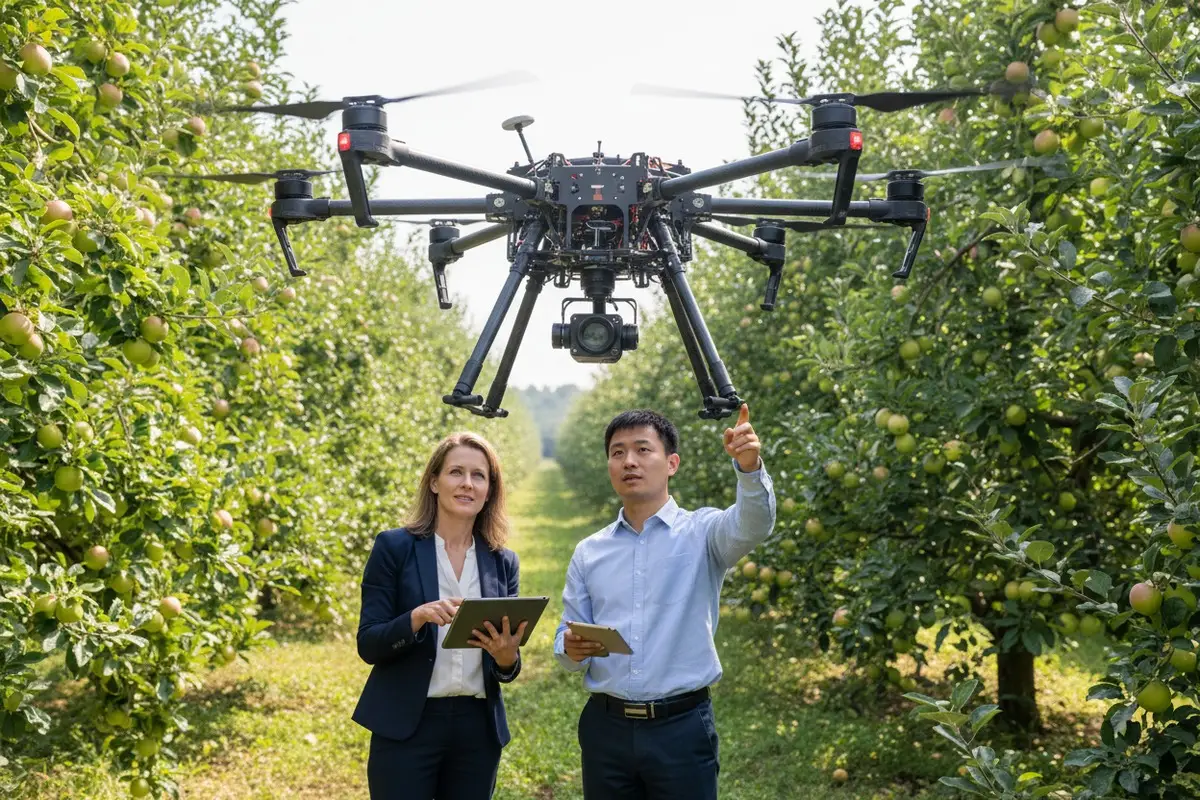

Als unser Ingenieurteam den Obstbaummodus für Agrardrohnen entwickelte, stellten wir schnell fest, dass Händler und Importeure vor einer echten Herausforderung stehen Teil 137 1. Sie müssen die richtigen Fragen stellen, wissen aber oft nicht, wo sie anfangen sollen.
Um die 3D-Flugroutenplanung eines Lieferanten für den Obstbaummodus zu bewerten, erkundigen Sie sich nach seinen Optimierungsalgorithmen, Hindernisvermeidungsfähigkeiten, Geländefolgemethoden und ob er Fallstudien aus der Praxis anbietet. Fordern Sie technische Dokumentationen an, erkundigen Sie sich nach Anpassungsoptionen und bestätigen Sie den Kundendienst für die Fernfehlerbehebung.
Dieser Leitfaden erläutert die genauen Fragen, die Sie Lieferanten von Agrardrohnen stellen sollten PPK (Post-Processed Kinematic) 2. Wir werden die Geländebewertung, die Softwareanpassung, die Dokumentationsanforderungen und den Kundendienst behandeln. Beginnen wir mit dem kritischsten Faktor: der Bewertung der 3D-Flugfähigkeiten.
Wie bewerte ich, ob die 3D-Flugroutenplanung Ihrer Drohne das komplexe Gelände der Obstgärten meiner Kunden bewältigen kann?
Unsere Feldtests in Apfelplantagen im Bundesstaat Washington und in Zitrusplantagen in Spanien haben uns eine klare Lektion gelehrt. Nicht jedes 3D-Flugsystem bewältigt Steigungsvariationen und Baumkronenhöhen gleich gut.
Bewerten Sie die 3D-Flugroutenplanung eines Lieferanten, indem Sie Algorithmus-Spezifikationen, Optionen für den Geländefolgemodus und reale Leistungsdaten anfordern. Fragen Sie nach Metriken zur Konvergenzzeit, nach Prozentsätzen der Routenoptimierung und nach Demonstrationen zur Hindernisvermeidung unter tatsächlichen Bedingungen im Obstgarten, bevor Sie eine Kaufverpflichtung eingehen.

Verständnis von Optimierungsalgorithmen
Der Algorithmus hinter der Flugroutenplanung bestimmt alles. Moderne Systeme verwenden hybride Ansätze. Der effektivste ist der Genetische Algorithmus 3 kombiniert mit Simulated Annealing (GA–SA). Diese Hybridmethode zeigt eine Verbesserung der Konvergenzzeit um 18,82% im Vergleich zu reinen genetischen Algorithmen.
Fragen Sie Ihren Lieferanten direkt: "Welchen Optimierungsalgorithmus verwendet Ihr System?" Wenn er keine klare Antwort geben kann, betrachten Sie dies als Warnsignal.
| Algorithmus Typ | Konvergenzzeit | Verbesserung der Weglänge | Energieeffizienzgewinn |
|---|---|---|---|
| Grundlegendes Gitternetzmuster | Basislinie | 0% | 0% |
| Nur Genetischer Algorithmus | 15% schneller | 6% | 25% |
| Simuliertes Abkühlen 4 Nur | 12% schneller | 5% | 20% |
| GA–SA-Hybrid | 18.82% schneller | 10% | Fast 50% |
Optionen für Geländefolgemodus
Unterschiedliche Obstgärten benötigen unterschiedliche Geländefolgemethoden. Echtzeit-Geländefolgung eignet sich für allgemeine Kartierungen. DSM (Digitales Oberflächenmodell 5) Import eignet sich für hochpräzise Arbeiten unter Verwendung früherer Vermessungsdaten. Globale Geoid-Methoden 6 bewältigen Flüge in großer Höhe über 650 Fuß.
Wenn wir Drohnen an Händler in hügeligen Regionen wie Nordkalifornien liefern, empfehlen wir immer die DSM-Importfunktion. Sie ermöglicht es den Betreibern, vorhandene Höhendaten für eine genaue Höhenhaltung zu verwenden.
Hindernisvermeidungstests
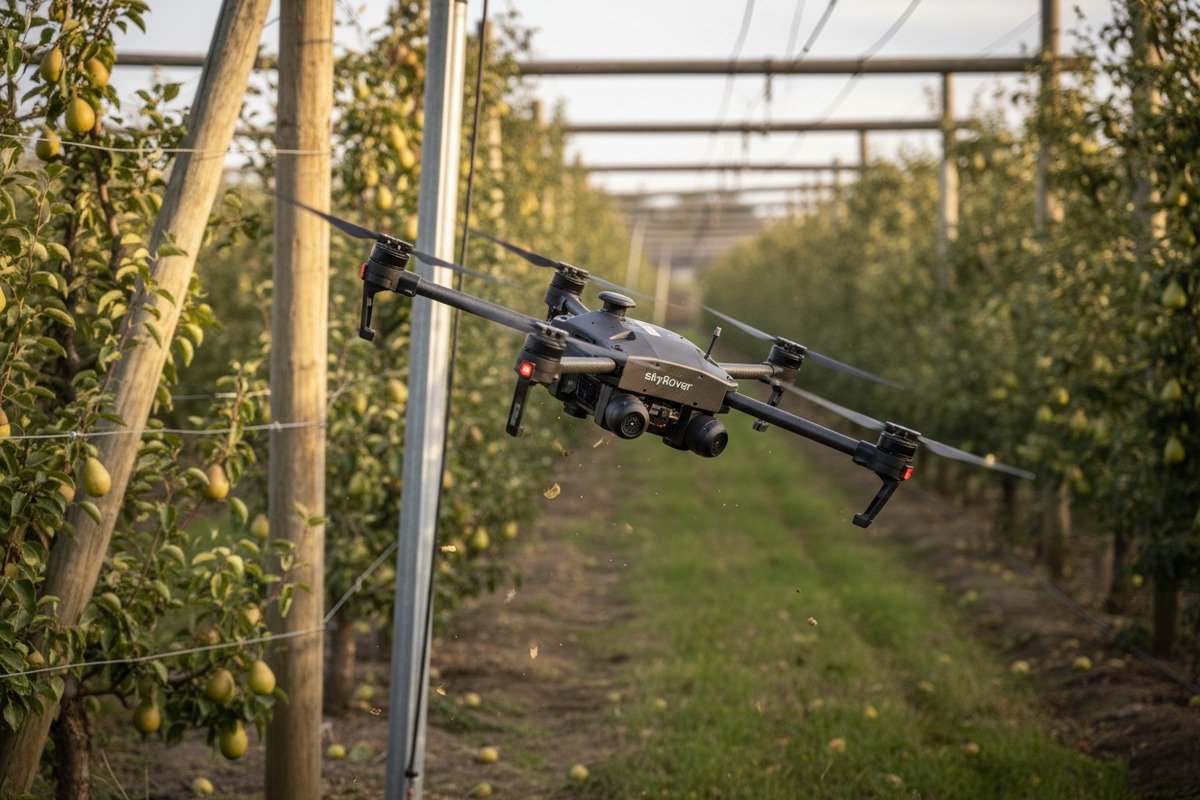
Obstgärten sind unordentlich. Bäume, Bewässerungsrohre, Spaliergerüste und Stromleitungen stellen Gefahren dar. Fragen Sie die Lieferanten nach ihren Techniken zur Flugbahnoptimierung. Gute Systeme sorgen für reibungslose Übergänge zwischen Wegpunkten anstelle von scharfen Winkeln.
Fordern Sie ein Demovideo an. Beobachten Sie, wie die Drohne mit plötzlichen Hindernissen umgeht. Prüfen Sie, ob sie sowohl globale Planer (für die Navigation zwischen Reihen) als auch lokale Planer (für die Bewegung innerhalb von Baumreihen) verwendet.
Wichtige Leistungskennzahlen, die Sie anfordern sollten
Bevor Sie einen Vertrag unterschreiben, lassen Sie sich diese Zahlen schriftlich geben:
- Berechnungsgeschwindigkeit für Flugbahnen (fortschrittliche Systeme erledigen dies in 0,68 Sekunden)
- Prozentuale Verbesserung der Flächenabdeckung
- Reduzierung des Batterieverbrauchs im Vergleich zur manuellen Planung
- Maximaler Neigungsgrad, den das System bewältigen kann
Unsere Erfahrung zeigt, dass optimierte Flugbahnen die Vermessungsgenauigkeit um 40 % erhöhen und die Flächenabdeckung um 21 % verbessern. Dies sind keine Marketingaussagen. Sie stammen aus veröffentlichter landwirtschaftlicher Forschung.
Kann ich mit Ihren Ingenieuren zusammenarbeiten, um die 3D-Flugsoftware für meine spezifischen Marken- und regionalen Anforderungen anzupassen?
In unserem Hauptsitz in Xi'an arbeiten wir mit Distributoren zusammen, die White-Label-Lösungen benötigen. Ihre Endkunden sehen nie unsere Marke. Sie sehen das Logo, das Farbschema und die benutzerdefinierte Benutzeroberfläche des Distributors. Das ist wichtiger, als die meisten Leute erkennen.
Ja, seriöse Lieferanten bieten Softwareanpassungen an, einschließlich OEM-Branding, Benutzeroberflächenlokalisierung, regionale Compliance-Einstellungen und benutzerdefinierte Flugparameter. Besprechen Sie den Umfang der technischen Zusammenarbeit, die Entwicklungszeitpläne, Mindestbestellmengen und das geistige Eigentum, bevor Sie mit einem Anpassungsprojekt beginnen.

Verfügbare Arten der Personalisierung
Softwareanpassungen lassen sich in drei Kategorien einteilen. Visuelle Anpassungen ändern Logos, Farben und Markenelemente. Funktionale Anpassungen modifizieren Flugparameter, Sprühmuster und Datenausgaben. Integrationsanpassungen verbinden das Drohnensystem mit bestehenden Farmmanagementplattformen.
| Anpassungsart | Was es beinhaltet | Typischer Zeitplan | Grad der Komplexität |
|---|---|---|---|
| Visuell/Branding | Logo, Farben, App-Name, Verpackung | 2-4 Wochen | Niedrig |
| Funktionale Parameter | Fluggeschwindigkeiten, Sprühraten, Überlappungseinstellungen | 4-8 Wochen | Mittel |
| Regionale Konformität | Höhenbeschränkungen, Flugverbotszonen, Zertifizierungsdaten | 6-10 Wochen | Mittel-Hoch |
| Vollständige Plattformintegration | API-Verbindungen, Datenexportformate, Links zu Drittanbietersoftware | 8-16 Wochen | Hoch |
Fragen zur technischen Zusammenarbeit
Seien Sie bei der Diskussion von Anpassungen spezifisch. Stellen Sie diese Fragen:
- Haben Sie dedizierte Ingenieure für OEM-Softwareprojekte?
- Was ist die Mindestbestellmenge für die kundenspezifische Softwareentwicklung?
- Wem gehört das geistige Eigentum von kundenspezifischen Funktionen?
- Kann ich auf den Quellcode zugreifen oder nur auf kompilierte Anwendungen?
- Wie gehen Sie mit Software-Updates für kundenspezifische Versionen um?
Unser Team hat gelernt, dass klare IP-Vereinbarungen spätere Streitigkeiten verhindern. Halten Sie alles schriftlich fest.
Überlegungen zur regionalen Konformität
Unterschiedliche Märkte haben unterschiedliche Regeln. Die Vereinigten Staaten verlangen FAA Part 107-Zertifizierung 7 für kommerzielle Drohnenbetreiber. Teil 137 deckt landwirtschaftliche Flugzeugbetriebe ab. Einige Betriebe benötigen Ausnahmegenehmigungen nach 44807.
Ein guter Lieferant versteht diese Anforderungen. Sie sollten Softwarekonfigurationen anbieten, die Höhenbeschränkungen erzwingen, Flugverbotszonen respektieren und Compliance-Dokumentationen automatisch generieren.
Phänologie und Wachstumsstadium-Integration
Fortgeschrittene Obstgärten verfolgen die Wachstumsstadien der Bäume. Sie sprühen unterschiedlich, wenn die Bäume ruhen, im Vergleich zu ihrer Blütezeit. Fragen Sie, ob die 3D-Flugplanungssoftware mit Phänologiemodellen integriert werden kann.
Diese Funktion ermöglicht die automatische Anpassung von Sprühzeitpunkt und -intensität basierend auf dem spezifischen Entwicklungsstadium von Obstgartenblöcken. Nicht alle Lieferanten bieten dies an. Diejenigen, die es tun, bieten einen erheblichen Mehrwert für Kunden der Präzisionslandwirtschaft.
Datensicherheit und Eigentum
Dieses Thema verdient besondere Aufmerksamkeit. Klären Sie, wem die gesammelten 3D-Kartierungsdaten und Flugprotokolle gehören. Verstehen Sie, wie Daten gespeichert und geschützt werden. Fragen Sie nach sicheren Freigabemethoden mit Farm-Management-Plattformen.
Einige Lieferanten behalten Datenrechte. Andere übertragen das volle Eigentum an die Kunden. Kennen Sie den Unterschied, bevor Sie sich festlegen.
Welche technischen Dokumentationen sollte ich anfordern, um zu beweisen, dass Ihre 3D-Kartierung im Obstbaummodus zuverlässig und importbereit ist?
Wenn wir Sendungen für unsere amerikanischen und europäischen Partner vorbereiten, nimmt die Dokumentation genauso viel Aufwand in Anspruch wie die Herstellung. Zollbeamte, Zertifizierungsstellen und Endkunden wollen alle Nachweise. Die richtige Bürokratie verhindert Verzögerungen und schafft Vertrauen.
Fordern Sie Algorithmusvalidierungsberichte, Flugtestzertifikate, RTK/PPK-Genauigkeitsspezifikationen, Dokumentation zur Einhaltung gesetzlicher Vorschriften und Leistungsbenchmark-Daten an. Fordern Sie Beispiel-Flugprotokolle, Testergebnisse von Drittanbietern und Wartungspläne an, um die Behauptungen des Lieferanten zu überprüfen, bevor Sie sich zu großen Bestellungen verpflichten.

Checkliste für wichtige Unterlagen
Jeder Importeur sollte diese Dokumente anfordern. Fehlende Unterlagen verursachen Zollverzögerungen und Kundenbeschwerden.
| Dokumentenkategorie | Besondere Punkte | Warum es wichtig ist |
|---|---|---|
| Technische Daten | Algorithmenbeschreibungen, Sensordaten, Genauigkeitsdaten | Validiert Leistungsansprüche |
| Konformitätszertifikate | CE-Kennzeichnung, FCC-Zertifizierung, FAA-Konformitätsschreiben | Gesetzliche Anforderung für den Import |
| Testberichte | Flugtestdaten, Belastungstest-Ergebnisse, Umwelttests | Beweist Haltbarkeit und Zuverlässigkeit |
| Benutzerdokumentation | Bedienungsanleitungen, Wartungshandbücher, Fehlerbehebungstabellen | Unterstützt Endkunden |
| Qualitätssicherung | ISO-Zertifizierungen, Qualitätskontrollberichte, Chargentestaufzeichnungen | Bestätigt Herstellungsstandards |
RTK/PPK-Genauigkeitsdokumentation
Zentimetergenaue Positionierungsgenauigkeit erfordert RTK (Real-Time Kinematic) 8 oder PPK (Post-Processed Kinematic)-Technologie. Fordern Sie dokumentierte Genauigkeitsspezifikationen an. Gute Systeme erreichen eine horizontale Genauigkeit von 2-3 Zentimetern und eine vertikale Genauigkeit von 3-5 Zentimetern.
Fordern Sie Beispiel-Flugprotokolle mit tatsächlichen Positionsdaten an. Vergleichen Sie die beanspruchte Genauigkeit mit der realen Leistung. Abweichungen deuten auf schlechte Ausrüstung oder irreführende Werbung hin.
Drittanbieter-Validierung
Lieferantenangaben bedeuten wenig ohne unabhängige Verifizierung. Fragen Sie, ob landwirtschaftliche Forschungseinrichtungen das System getestet haben. Universitäten und staatliche landwirtschaftliche Behörden veröffentlichen oft Leistungsvergleiche.
Unsere Drohnen wurden von Partnern in mehreren Ländern getestet. Wir stellen diese Testberichte den Händlern zur Verfügung. Diese Transparenz schafft Vertrauen.
Wartungs- und Ersatzteil-Dokumentation
Langlebigkeit ist für den Obstbaubetrieb wichtig. Staubige Bedingungen, Feuchtigkeit und gelegentliche Stöße fordern ihren Tribut. Fordern Sie Wartungspläne an, die Folgendes angeben:
- Empfohlene Serviceintervalle
- Häufige Verschleißteile und Austauschhäufigkeit
- Garantiebedingungen
- Verfügbarkeit und Preise von Ersatzteilen
Eine Beschwerde, die wir oft von Importeuren hören: Frühere Lieferanten lieferten keine Ersatzteile oder die Teile waren teuer und hatten lange Lieferzeiten. Holen Sie sich diese Informationen im Voraus.
Software-Update-Verlauf
Fordern Sie das Software-Update-Protokoll an. Wie oft veröffentlicht der Lieferant Updates? Welche Verbesserungen wurden in den letzten 12 Monaten vorgenommen? Aktive Softwareentwicklung deutet auf einen engagierten Lieferanten hin.
Verlassene Software bedeutet, dass Ihre Kunden mit Fehlern konfrontiert werden, die nie behoben werden. Dies führt zu Support-Problemen für Sie und Beschwerden von Endbenutzern.
Wie wird Ihr Team mich unterstützen, wenn meine Kunden Fernunterstützung bei der Einrichtung der 3D-Pfadplanung und Hindernisvermeidung benötigen?
Während einer Lieferung an einen Händler in Florida rief dessen Kunde mit einem dringenden Problem an. Die Drohne erkannte die Baumkronenhöhen von Zitrusbäumen nicht richtig. Unser Ingenieurteam schaltete sich innerhalb von zwei Stunden per Videoanruf ein. Das Problem war eine Kalibrierungseinstellung. Wir haben es aus der Ferne behoben. Dieser Kunde ist jetzt einer unserer größten Stammkunden.
Bewerten Sie den Lieferanten-Support, indem Sie sich nach Reaktionszeitgarantien, Fernwartungsfähigkeiten, Zeitzonenabdeckung, Sprachunterstützung und Eskalationsverfahren erkundigen. Fordern Sie Details zu Schulungsprogrammen, Dokumentationsqualität und ob dedizierte technische Ansprechpartner für Händlerkonten zur Verfügung gestellt werden.
Erwartete Reaktionszeiten
Wenn die Drohne eines Landwirts während der Hauptsprühsaison am Boden bleibt, zählt jede Stunde. Fragen Sie die Lieferanten nach ihren Reaktionszeiten im Support.
| Stufe der Unterstützung | Reaktionszeit | Verfügbarkeit | Am besten für |
|---|---|---|---|
| Standard-E-Mail | 24-48 Stunden | Nur während der Geschäftszeiten | Nicht dringende Fragen |
| Standard Support | 8-12 Stunden | Verlängerte Öffnungszeiten | Allgemeine technische Probleme |
| Prioritäts-Support | 2-4 Stunden | 16+ Stunden täglich | Aktive Saisonbetrieb |
| Notfall-Support | 1 Stunde oder weniger | 24/7 | Kritische Ausfälle |
Unser Team deckt mehrere Zeitzonen ab. Wenn es in Kalifornien Morgen ist, ist es in Xi'an Abend. Wir strukturieren Schichten, um schnelle Reaktionen während der nordamerikanischen Geschäftszeiten zu gewährleisten.
Ferngesteuerte Diagnosewerkzeuge
Moderne landwirtschaftliche Drohnen generieren detaillierte Flugprotokolle. Fragen Sie, ob das System des Lieferanten Diagnosedaten remote übertragen kann. Dies ermöglicht es Ingenieuren, Probleme ohne physischen Zugriff auf die Drohne zu analysieren.
Wichtige Fähigkeiten, nach denen Sie fragen sollten:
- Echtzeit-Telemetrieanzeige
- Hochladen und Analysieren von Flugprotokollen
- Remote-Parameteranpassung
- Videoanruf-Integration für visuelle Fehlerbehebung
Ausbildung und Wissenstransfer
Gute Lieferanten verkaufen nicht nur Produkte. Sie schulen Distributoren, um den First-Level-Support zu übernehmen. Dies reduziert Ihre Abhängigkeit vom Lieferanten für jede Frage.
Fragen Sie nach Schulungsprogrammen. Sind sie online oder persönlich? Enthalten sie eine Zertifizierung? Können Sie Ihr eigenes technisches Personal schulen, um häufige Probleme zu lösen?
Wir bieten Schulungen für Distributoren an, die 3D-Pfadplanungs-Setup, Kalibrierung der Hindernisvermeidung und gängige Fehlerbehebungsszenarien abdecken. Dies befähigt unsere Partner, ihre Kunden direkt zu unterstützen.
Ersatzteile und Reparaturlogistik
Support umfasst physische Komponenten, nicht nur Ratschläge. Fragen Sie nach dem Ersatzteilbestand. Haben sie gängige Ersatzartikel auf Lager? Wie sind die Lieferzeiten für Notfallteile?
Für Obstbaudrohnen umfassen häufig benötigte Teile Propeller, Sprühdüsen, RTK-Antennen und Batteriezellen. Lieferanten sollten diese für den sofortigen Versand bereithalten.
Dokumentationsqualität
Die beste Unterstützung erfolgt, wenn Kunden Probleme selbst lösen. Dies erfordert eine ausgezeichnete Dokumentation. Fordern Sie Beispiel-Benutzerhandbücher an. Prüfen Sie, ob diese Folgendes enthalten:
- Schritt-für-Schritt-Tutorials zur 3D-Flugplanung
- Anleitungen zur Konfiguration der Hindernisvermeidung
- Fehlerbehebungsflussdiagramme
- Video-Tutorials mit tatsächlichen Obstgartenaufnahmen
Schlechte Dokumentation führt zu Support-Tickets. Gute Dokumentation verhindert diese.
Schlussfolgerung
Die richtigen Fragen zu stellen, trennt erfolgreiche Importeure von Agrardrohnen von denen, die Schwierigkeiten haben. Konzentrieren Sie sich auf Algorithmus-Spezifikationen, Anpassungsfähigkeiten, Dokumentationsqualität und Support-Infrastruktur. Die Obstgärten Ihrer Kunden verdienen eine zuverlässige 3D-Flugplanung, die von Lieferanten unterstützt wird, die hinter ihren Produkten stehen.
Fußnoten
1. Umreißt die föderalen Vorschriften für den Betrieb von Agrarflugzeugen, einschließlich Drohnen. ︎
2. Beschreibt Post-Processed Kinematic (PPK) als eine hochpräzise GNSS-Datenverarbeitungsmethode. ︎
3. Erklärt die Definition und Prinzipien genetischer Algorithmen in der Optimierung. ︎
4. Bietet eine klare Definition und Erklärung der Simulated Annealing-Optimierungstechnik. ︎
5. Definiert Digital Surface Model (DSM) als eine 3D-Darstellung der Erdoberfläche einschließlich Objekten. ︎
6. HTTP 404 durch eine maßgebliche staatliche Quelle zu Geoid-Konzepten und -Methoden ersetzt. ︎
7. Beschreibt die Anforderungen und den Prozess für die Erlangung der FAA Part 107-Zertifizierung für Drohnenpiloten. ︎
8. Erklärt die Real-Time Kinematic (RTK)-Technologie zur Erzielung von Zentimeter-genauer GPS-Genauigkeit. ︎
 English
  Español de México
  Deutsch
  Français
  Русский
  العربية
Comments
No comments yet. Be the first to share your thoughts!
Leave a Comment