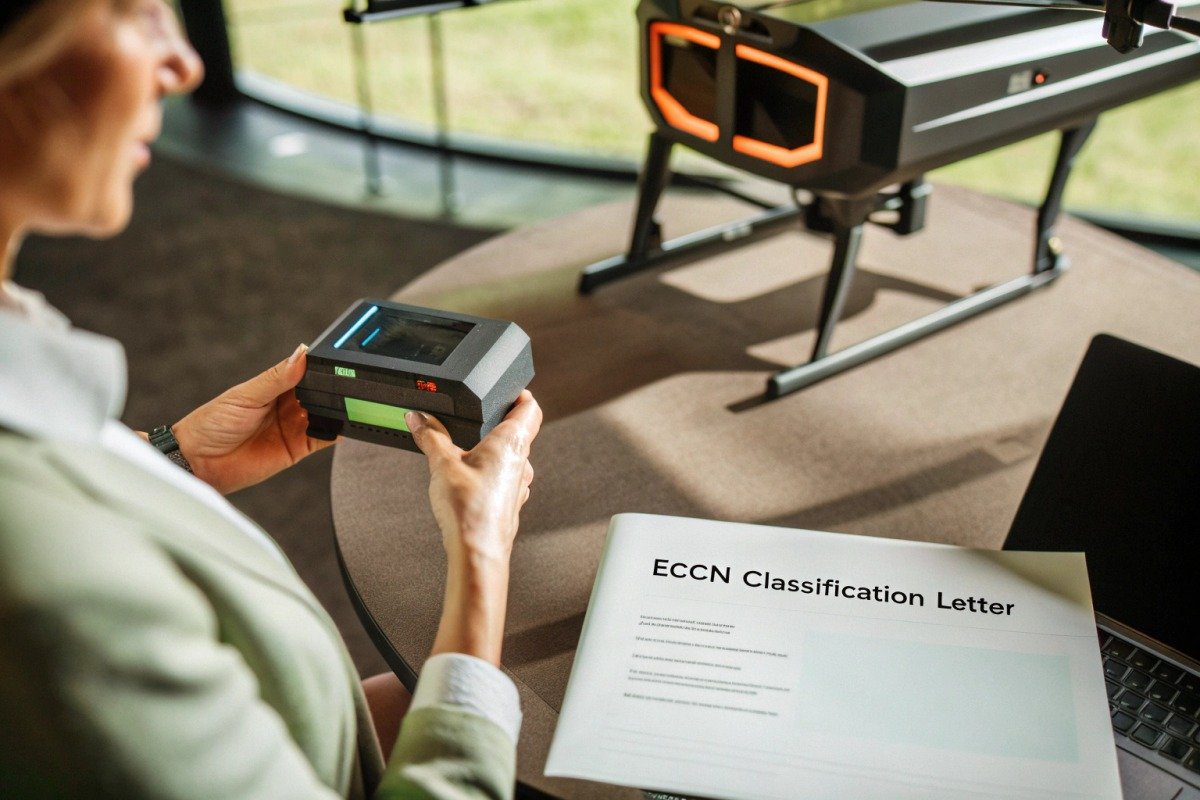
Unser Ingenieurteam stand kürzlich vor einer herausfordernden Situation, als die Lieferung von Wärmesensoren eines US-Kunden wochenlang am Zoll festgehalten wurde Export Control Classification Number (ECCN) 1. Das Problem? Unvollständige Exportdokumentation. Diese Erfahrung lehrte uns, dass die Überprüfung von Exportkontrollen keine Option ist – sie ist unerlässlich für einen reibungslosen internationalen Handel.
Um die Exportkontrollen für Infrarotsensoren von Feuerlöschdrohnen zu überprüfen, müssen Sie die Export Control Classification Number (ECCN) von Ihrem Lieferanten erhalten, bestätigen, dass die Sensoren nicht auf Listen von eingeschränkten Gütern mit doppeltem Verwendungszweck stehen, die entsprechenden Exportlizenzen beantragen und sicherstellen, dass die Dokumentation den Vorschriften des exportierenden und des importierenden Landes entspricht.
Lassen Sie uns die spezifischen Schritte und Dokumente durchgehen, die Sie benötigen, um Ihr Unternehmen vor kostspieligen Verzögerungen und rechtlichen Risiken zu schützen.
Welche spezifischen Exportlizenzen sollte ich von meinem Lieferanten anfordern, um sicherzustellen, dass meine Infrarotsensoren beim Zoll nicht beanstandet werden?
Wenn wir Sendungen für unsere Übersee-Partner vorbereiten, ist die Lizenzdokumentation immer der erste Kontrollpunkt Commerce Control List (CCL) 2. Fehlende oder falsche Lizenzen können zur Beschlagnahmung von Waren, zu Geldstrafen oder zu einer dauerhaften Sperrung führen. Dies ist ein Problem, dem kein Käufer oder Verkäufer gegenüberstehen möchte.
Fordern Sie die BIS-Exportlizenz oder die Dokumentation zur Lizenz ausnahme (wie STA oder TMP), das ECCN-Klassifizierungsschreiben, Endverbrauchsbescheinigungen und die Exportanmeldung des Spediteurs an. Diese Dokumente belegen, dass Ihr Lieferant die rechtliche Befugnis zum Export von kontrollierten Infrarotsensoren hat.

Verständnis der wichtigsten Exportlizenzen
Die U.S. Bureau of Industry and Security (BIS) 3 kontrolliert die meisten Dual-Use-Infrarotsensoren unter den Export Administration Regulations (EAR) 4. Einige Hochleistungs-Wärmesensoren können unter ITAR fallen, wenn sie militärische Anwendungen haben.
Hier ist, was Sie anfordern sollten:
| Dokumenttyp | Zweck | Wer stellt sie aus? |
|---|---|---|
| BIS-Exportlizenz | Genehmigt den Export von kontrollierten Gütern | U.S. Bureau of Industry and Security |
| Lizenz-Ausnahme (STA, TMP, etc.) | Ermöglicht den Export ohne vollständige Lizenz unter bestimmten Bedingungen | Lieferant erklärt selbst basierend auf BIS-Regeln |
| ECCN-Klassifizierungsbrief | Zeigt die Kontrollkategorie des Sensors | Hersteller oder BIS |
| Endverbrauchsbescheinigung | Gibt die endgültige Anwendung an (Brandbekämpfung) | Käufer stellt zur Verfügung, Lieferant behält sie auf |
| Spediteur-Exportdeklaration (SED) | Zollaufzeichnung für US-Exporte | Lieferant reicht beim US-Zoll ein |
Lizenz-Ausnahme STA: Ein wichtiges Update für 2026
Die vorläufige Endgültige Regel der BIS vom Januar 2026 erweiterte Lizenz Ausnahmeregelung Strategic Trade Authorization (STA) 5. Drohnen und Infrarotsensoren mit einer Ausdauer von weniger als einer Stunde unterliegen nun geringeren Beschränkungen. Wenn Ihre Sensoren unter ECCN 9A012.a.1 fallen und Sie sich in einem Wassenaar-Abkommen-Land befinden 6 (außer Russland, Ukraine oder Malta), benötigen Sie möglicherweise keine vollständige Lizenz.
Gehen Sie jedoch nicht davon aus, dass dies automatisch gilt. Bitten Sie Ihren Lieferanten, schriftlich zu bestätigen, welche Ausnahmeregelung er verwendet und warum.
Rote Flaggen, auf die man achten sollte
Seien Sie vorsichtig, wenn Ihr Lieferant:
- Keine ECCN-Klassifizierung bereitstellen kann
- "Keine Lizenz erforderlich" ohne Dokumentation beansprucht
- Sich weigert, Endverbrauchsbescheinigungen auszustellen
- Verbindungen zu Unternehmen auf der Entity List hat
Dies sind Warnzeichen für mögliche Compliance-Verstöße.
Wie kann ich bestätigen, ob die von mir beschafften Infrarotsensoren unter die Kategorien eingeschränkter Dual-Use-Technologien fallen?
Unser Qualitätssicherungsteam prüft jede Sensor-Spezifikation vor der Beschaffung. Wir haben dies auf die harte Tour gelernt, nachdem ein Partner feststellte, dass seine Sensoren anders klassifiziert wurden als erwartet. Die technischen Parameter bestimmen alles.
Überprüfen Sie die Auflösung, Bildrate und thermische Empfindlichkeit Ihres Sensors anhand der Commerce Control List (CCL). Sensoren, die die ECCN 6A003-Schwellenwerte erfüllen (wie z. B. bestimmte Spezifikationen für Focal Plane Arrays), unterliegen einer Dual-Use-Kontrolle. Fordern Sie zur Bestätigung das ECCN-Bestimmungsschreiben des Herstellers an.

Der Dual-Use-Klassifizierungsprozess
Dual-Use-Güter haben sowohl zivile als auch militärische Anwendungen. Infrarotsensoren sind klassische Beispiele, da die gleiche Technologie, die Waldbrände erkennt, auch Raketen lenken kann.
Die Klassifizierung hängt von den technischen Spezifikationen ab:
| Technischer Parameter | Kontrollschwelle | Warum es wichtig ist |
|---|---|---|
| Pixelauflösung | >320×240 in einigen Fällen | Höhere Auflösung ermöglicht militärische Zielerfassung |
| Thermische Empfindlichkeit (NETD) | <50mK für einige Kategorien | Bessere Empfindlichkeit unterstützt die Überwachung |
| Bildfrequenz | >60Hz für bestimmte Anwendungen | Schnelle Raten unterstützen die Waffenführung |
| Spektralbereich | 8-14μm (LWIR) oft kontrolliert | Dieser Bereich ist Standard für militärische IR |
| Fokusebenen-Array-Typ | Gekühlt vs. ungekühlt ist wichtig | Gekühlte Arrays unterliegen in der Regel strengeren Kontrollen |
Schritt-für-Schritt-Überprüfungsprozess
- Holen Sie sich die vollständigen technischen Spezifikationen von Ihrem Lieferanten
- Gleichen Sie diese mit ECCN 6A003 ab (Infrarotkameras und Fokusebenen-Arrays)
- Überprüfen Sie ECCN 6A002 (optische Sensoren, die sich überschneiden können)
- Fordern Sie ein formelles ECCN-Bestimmungsschreiben an vom Hersteller
- Wenn Sie unsicher sind, reichen Sie einen Klassifizierungsantrag ein bei BIS (dauert 60+ Tage)
Die Komplikation der "600er Serie"
Einige Infrarotsensoren, die ursprünglich für militärische Zwecke entwickelt, aber für den kommerziellen Verkauf freigegeben wurden, fallen unter die "600er Serie"-Kontrollen der EAR. Diese erfordern zusätzliche Prüfung. Wenn der Sensor Ihres Lieferanten eine Design-Abstammung mit militärischer Ausrüstung teilt, untersuchen Sie dies weiter.
Praktisches Beispiel
Stellen Sie sich vor, Sie beschaffen einen ungekühlten thermischen Sensor mit einer Auflösung von 640 × 512 und einer Empfindlichkeit von 30 mK zur Waldbranderkennung. Dies fällt wahrscheinlich unter ECCN 6A003.b.4. Ihr Lieferant sollte Dokumente vorlegen, die diese Klassifizierung und alle geltenden Lizenzbefreiungen bestätigen.
Wenn unsere Exportabteilung Sendungen in die USA oder nach Europa vorbereitet, stellen wir umfangreiche Dokumentationspakete zusammen. Käufer fordern diese Informationen zunehmend im Voraus an. Der Grund ist einfach: China hat seine eigenen Exportkontrollen, und Ihr Lieferant muss sowohl die chinesischen als auch die Regeln des Ziellandes einhalten.
Ihr chinesischer Hersteller muss die chinesische Exportlizenz (falls erforderlich), eine Ausfuhrgenehmigung für Güter mit doppeltem Verwendungszweck vom MOFCOM, technische Spezifikationen mit ECCN-Klassifizierung, Endverbraucherzertifikate und eine Unternehmensregistrierung, die die rechtmäßige Exportbefugnis nachweist, vorlegen. Ohne diese riskiert Ihre Sendung eine Beschlagnahmung.

Chinas Rahmen für Exportkontrollen
China hat im Dezember 2020 aktualisierte Exportkontrollgesetze erlassen, die doppelt verwendbare Güter, einschließlich bestimmter Infrarotsensoren, abdecken. Im August 2023 fügte China drohnenbezogene Komponenten seiner Liste der exportbeschränkten Güter hinzu.
Ihr chinesischer Lieferant benötigt:
| Dokument | Ausstellende Behörde | Zweck |
|---|---|---|
| Genehmigung für den Export von doppelt verwendbaren Gütern | Handelsministerium (MOFCOM) 7 | Genehmigt den Export kontrollierter Technologie |
| Geschäftslizenz (营业执照) | Staatliche Verwaltung für Marktregulierung | Bestätigt den rechtlichen Status des Unternehmens |
| Exportqualifizierungszertifikat | Zollverwaltung | Zeigt, dass das Unternehmen legal exportieren kann |
| Technisches Datenpaket | Hersteller | Details zu den Sensorspezifikationen |
| Endbenutzer-Erklärung | Käufer stellt dem Lieferanten zur Verfügung | Bestätigt zivile Feuerwehreinsätze |
Warum das für US-Importeure wichtig ist
Selbst wenn Ihr chinesischer Lieferant den chinesischen Zoll passiert, wird die US-CBP prüfen, ob die Waren:
- Von einem Unternehmen auf der Entity List stammen
- Kontrollierte Technologie enthalten, die eine US-Importlizenz erfordert
- Vollständige und genaue Dokumentation aufweisen
Überprüfung Ihres chinesischen Lieferanten
Wir empfehlen diese Verifizierungsschritte:
- Überprüfen Sie die BIS Entity List nach dem Namen Ihres Lieferanten
- Fordern Sie ihre MOFCOM-Exportgenehmigung an für thermische Sensoren
- Überprüfen Sie ihre Geschäftslizenz ist aktuell und deckt den Exportverkehr ab
- Bestätigen Sie, dass sie nicht verbunden sind mit militärbezogenen Einrichtungen
- Holen Sie schriftliche Bestätigung ein ihrer Einhaltung der chinesischen Exportkontrollen
Der DJI-Faktor
Einige chinesische Hersteller verwenden DJI-verbundene Komponenten oder Sensoren. DJI unterliegt US-Beschränkungen, daher können Sensoren mit DJI-Verbindungen eine verstärkte Prüfung auslösen. Fragen Sie Ihren Lieferanten direkt nach der Herkunft der Komponenten.
Wie kann ich überprüfen, ob die Exportkontrollkonformität meines Lieferanten mit den Einfuhrbestimmungen meiner lokalen Regierung übereinstimmt?
Unser Kundenservice-Team begleitet Käufer häufig durch diesen Abstimmungsprozess. Wir haben erlebt, dass Sendungen monatelang verzögert wurden, weil die Export- und Importunterlagen nicht übereinstimmten. Der Schlüssel ist die frühzeitige Überprüfung vor der Auftragserteilung.
Vergleichen Sie die ECCN-Klassifizierung Ihres Lieferanten mit der Importkontrollliste Ihres Landes, überprüfen Sie die Berechtigung für Lizenzbefreiungen für Ihr Ziel, bestätigen Sie, dass die Endverwendungsdokumentation den Anforderungen beider Länder entspricht, und erstellen Sie einen Technologiekontrollplan, wenn Nicht-US-Personen Zugang zu kontrollierter Technologie erhalten.

Erstellung einer Checkliste für die Compliance-Abstimmung
Verwenden Sie dieses Framework zur Überprüfung der Ausrichtung:
| Schritt der Verifizierung | Exportseite (Lieferant) | Importseite (Käufer) |
|---|---|---|
| Klassifizierung | ECCN von BIS oder China-Kontrollen | Abgleich mit lokaler Importkontrollliste |
| Lizenzstatus | BIS-Lizenz- oder Ausnahmedokumentation | Importgenehmigung, falls erforderlich |
| Endverwendungsbescheinigung | Lieferant behält die Erklärung des Käufers | Käufer muss möglicherweise beim Zoll anmelden |
| Technische Daten | Vollständige Spezifikationen bereitgestellt | Stimmt mit der Importanmeldung überein |
| Parteien-Screening | Lieferant prüft Käufer | Käufer prüft Lieferanten anhand von Sperrlisten |
Die Herausforderung der "Deemed Export"
Hier stoßen viele Käufer auf unerwartete Compliance-Probleme. Wenn Nicht-US-Personen (einschließlich Ihrer Mitarbeiter) die Infrarotsensoren bedienen, warten oder kalibrieren, können die "Deemed Export"-Regeln ausgelöst werden.
Beispiel: Sie importieren Sensoren in die USA. Ihr Techniker aus einem anderen Land führt die Kalibrierung durch. Dieser "Nutzungszugriff" kann eine Exportlizenz erfordern – auch wenn die Sensoren die USA nie verlassen haben.
Technology Control Plans (TCPs)
Wenn Ihr Unternehmen Nicht-US-Personen beschäftigt, die Zugang zu kontrollierter Sensortechnologie haben werden, implementieren Sie einen TCP:
- Identifizieren Sie kontrollierte Technologie in Ihrem Besitz
- Beschränken Sie den physischen Zugang nur für autorisiertes Personal
- Sichern Sie technische Daten (Handbücher, Software, Spezifikationen)
- Schulen Sie Mitarbeiter zu Exportkontrollverantwortlichkeiten
- Dokumentieren Sie allen Zugriff zu Audit-Zwecken
Zusammenarbeit mit Exportkontrollbeauftragten
Große Organisationen sollten einen Exportkontrollbeauftragten (ECO) haben. Konsultieren Sie vor der Beschaffung Ihren ECO, um:
- Importlizenzanforderungen zu bestätigen
- Lieferantendokumentation zu überprüfen
- Zugangskontrollen einzurichten
- Compliance-Audits zu planen
Praktisches Ausrichtungsbeispiel
Sie beschaffen Sensoren der ECCN-Klassifizierung 6A003.b.4 aus China für US-Feuerwehreinsätze:
- Der Lieferant stellt ein ECCN-Klassifizierungsschreiben und eine chinesische Exportgenehmigung zur Verfügung
- Sie verifizieren, dass für ECCN 6A003.b.4 keine US-Importlizenz für zivile Endverwendung erforderlich ist
- Sie bestätigen, dass die Lizenzbefreiung STA für die Wiederausfuhr in verbündete Länder gilt
- Sie implementieren TCP, da Ihr Wartungstechniker Kanadier ist
- Sie bewahren alle Dokumentationen fünf Jahre lang auf
Schlussfolgerung
Die Überprüfung der Exportkontrolle für Infrarotsensoren von Feuerlöschdrohnen erfordert eine systematische Dokumentenprüfung, technische Klassifizierungsprüfungen und eine Abstimmung zwischen Export- und Importvorschriften. Beginnen Sie frühzeitig, fordern Sie vollständige Dokumentation an und konsultieren Sie Compliance-Experten, um Ihr Unternehmen zu schützen.
Fußnoten
1. Definiert ECCN als Schlüsselidentifikator für exportkontrollierte Artikel. ︎
2. Erklärt die Liste, die Artikel kategorisiert, die der Exportlizenzbehörde unterliegen. ︎
3. Identifiziert die primäre US-Regierungsbehörde für Exportkontrollen. ︎
4. Bietet offizielle Informationen zu den Vorschriften für Güter mit doppeltem Verwendungszweck. ︎
5. Beschreibt eine spezifische Ausnahme von der Exportlizenz gemäß den US-Vorschriften. ︎
6. Listet die Mitgliedsländer des multilateralen Exportkontrollregimes auf. ︎
7. Identifiziert die chinesische Behörde für Exportkontrollpolitik und -genehmigungen. ︎

 English
  Español de México
  Deutsch
  Français
  Русский
  العربية
