
Wenn wir die Batteriemanagementsysteme für unsere SkyRover-Serie entwickeln Batteriemanagementsysteme 1, ringen wir ständig mit dem Gleichgewicht zwischen aggressiver Leistungsabgabe und langfristiger Zellhaltbarkeit. Wir wissen, dass nichts für einen Einkaufsmanager frustrierender ist, als eine Flotte zu kaufen, die zwei Jahre Dienstzeit verspricht, nur um festzustellen, dass die Batterien mitten in der Saison ausfallen, ohne Möglichkeit auf Abhilfe. Sie müssen genau wissen, wofür Sie bezahlen, bevor die Ware das Werk verlässt.
Um effektiv nachzufragen, müssen Sie die technische Definition des Herstellers für einen “Zyklus”, den spezifischen Prozentsatz des Gesundheitszustands (State of Health, SoH), der einen Austausch auslöst, und die obligatorischen Lagerungsprotokolle, die zur Aufrechterhaltung der Gültigkeit erforderlich sind, anfordern. Fordern Sie immer eine schriftliche Garantieerklärung an, die klärt, ob die Deckung nach Kalendermonaten oder Zyklusgrenzen endet, je nachdem, was zuerst eintritt.
Hier ist eine detaillierte Aufschlüsselung der kritischen Fragen, die Sie stellen müssen, um Ihre Investition zu schützen.
Wie bestätige ich die spezifische Definition eines Batteriekreislaufs durch den Hersteller?
Nach unserer Erfahrung bei der Analyse von Rückgabe Kapitalrendite 2 daten von unseren US-Distributoren entstehen oft Verwirrung, da der Begriff “Zyklus” in der Branche nicht standardisiert ist. Wir haben gesehen, dass Produkte von Wettbewerbern jeden Ladevorgang als ’Zyklus“ zählen, unabhängig von der Startspannung der Batterie, was die Verschleißdaten künstlich aufbläht.
Sie sollten ausdrücklich fragen, ob die Garantie einen Zyklus basierend auf einer kumulativen Entladung von 100% oder einem einzelnen Einsteckereignis berechnet. Eine faire Garantie verwendet den kumulativen Standard, bei dem das zweimalige Entladen einer Batterie von 100% auf 50% nur als ein voller Zyklus zählt, um sicherzustellen, dass Sie für kurze Sprühmissionen nicht bestraft werden.
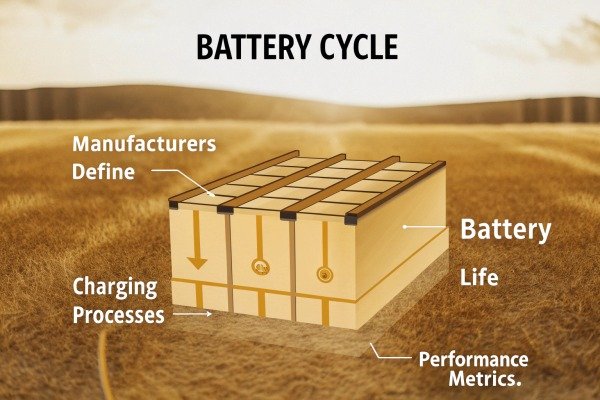
Wenn Sie mit einem Lieferanten verhandeln oder technische Spezifikationen durchlesen, ist die Definition eines "Zyklus" die wichtigste Kennzahl zur Berechnung Ihres Return on Investment (ROI) Kapitalrendite (ROI) 3. Im Agrardrohnen-Sektor variieren die Missionen stark. Manchmal sprühen Sie ein großes Feld und entladen den Akku auf 15%; manchmal führen Sie eine Punktbesprühung durch und verbrauchen nur 30%.
Wenn ein Hersteller einen Zyklus als "ein Lade-/Entladeereignis" definiert, haben Sie ein Problem. In diesem Szenario zählt das Aufladen eines Akkus, der bei 80% liegt, als voller Zyklus. Dies ist bei preisgünstigeren Unterhaltungselektronik üblich, aber für industrielle Agrardrohnen inakzeptabel.
Der kumulative Entladungsstandard
Der Goldstandard, den wir in unserer Technik verwenden, ist Kumulative Entladung. Das bedeutet, dass das Batteriemanagementsystem (BMS) den gesamten Energiefluss verfolgt Energiefluss 4.
- Flug 1: Sie verbrauchen 40% der Batterie.
- Flug 2: Sie verbrauchen 60% der Batterie.
- Ergebnis: Das BMS zeichnet genau auf 1 Zyklus (40% + 60% = 100%).
Dieser Unterschied ist enorm. Unter einer "Plug-in"-Definition würden diese beiden Flüge als 2 Zyklen zählen. Über eine Sprühsaison könnte dieser Unterschied die Dauer Ihrer Garantieabdeckung halbieren.
Fragen an den Händler
Um sicherzustellen, dass Sie nicht in eine Falle tappen, verwenden Sie den folgenden Rahmen während Ihrer Anfrage. Akzeptieren Sie keine mündlichen Zusicherungen; suchen Sie nach diesen Begriffen im Handbuch oder im Garantievertrag.
| Merkmal | Bevorzugter Standard | Warnsignal (Vermeiden) |
|---|---|---|
| Zyklenberechnung | Kumulativ (summiert sich zu 100%) | Pro Plug-in / Pro Ladeereignis |
| Teilweises Laden | Ohne Strafe erlaubt | Zählt als voller Zyklus |
| Tiefentladung | Definierte Grenze (z. B. <10% normalerweise ungültig) | Keine klare Definition |
| Speichermodus | Automatische Entladefunktion enthalten | Manuelle Entladung erforderlich |
Wenn der Hersteller nicht erklären kann, wie sein BMS einen Zyklus berechnet, ist dies ein erhebliches Warnsignal. Es deutet entweder darauf hin, dass seine Technologie veraltet ist, oder dass er bewusst vage ist, um zukünftige Ansprüche abzulehnen.
Deckt die Garantie meine Batterien für Kapazitätsverlust oder nur für den Totalausfall ab?
Wenn unser Ingenieurteam Zellen auf Langlebigkeit testet, definieren wir einen Ausfall nicht nur als eine Batterie, die sich nicht einschalten lässt, sondern als eine, die keine nützliche Ladung mehr halten kann. Wir wissen, dass für Ihre Einsätze eine Batterie, die die Drohne nach vier Minuten landen lässt, genauso nutzlos ist wie eine tote.
Überprüfen Sie, ob die Garantie einen garantierten Gesundheitszustand (SoH) Schwellenwert enthält, der in der Regel den Austausch abdeckt, wenn die Kapazität innerhalb des Zykluslimits unter 70% oder 80% fällt. Garantien, die nur “Totalausfall” oder “Verarbeitungsfehler” abdecken, schützen Sie nicht vor vorzeitigem Verschleiß, der durch schlechte Zellqualität verursacht wird.
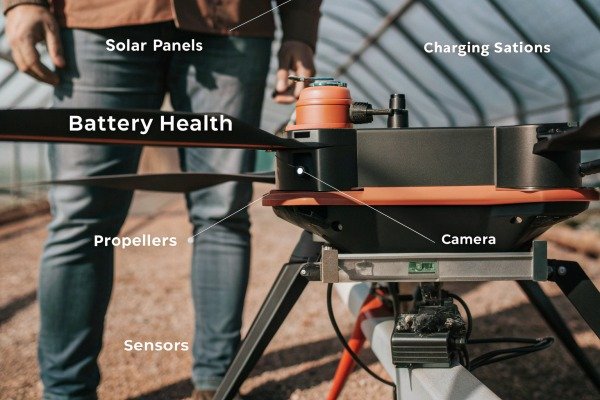
Es gibt einen riesigen Unterschied zwischen einer "Dead on Arrival" (DOA) Garantie Bei Ankunft defekt 5 und einer "Leistungsgarantie". Viele Lieferanten im niedrigeren Preissegment bieten Garantien an, die ausschließlich Herstellungsfehler abdecken. Das bedeutet, wenn sich ein Draht im Inneren der Batterie löst oder das Gehäuse bricht, werden sie diese ersetzen. Wenn die Batterie jedoch nach 200 Zyklen einfach müde und schwach wird, werden sie behaupten, es sei "normaler Verschleiß"."
Verständnis des Gesundheitszustands (SoH)
Für landwirtschaftliche Anwendungen ist der "Kapazitätsverlust" der wahre Feind. Sie müssen nach einer Klausel bezüglich suchen Gesundheitszustand (SoH).
- Der Standard: Die meisten seriösen Marken garantieren, dass der Akku während der garantierten Zyklen (z. B. 1.000 Zyklen) mindestens 80 % seiner ursprünglichen Kapazität behält.
- Die Falle: Wenn die Garantie SoH oder Kapazitätsprozentsatz nicht erwähnt, kann der Hersteller Ihren Anspruch ablehnen, solange der Akku noch etwas Ladung aufnimmt.
Physikalische Verformung (Aufblähen)
Ein weiterer kritischer Aspekt des Kapazitätsverlusts ist die physikalische Schwellung, oft als "Aufblähen" bezeichnet. Dies geschieht normalerweise, wenn Lithium-Ionen-Zellen überbeansprucht oder überhitzt werden Lithium-Ionen-Zellen 6.
- High-End-Abdeckung: Deckt das Aufblähen ab, wenn es innerhalb des Zykluslimits auftritt, vorausgesetzt, die Protokolle zeigen keinen Bedienfehler (wie z. B. das Verlassen im heißen LKW).
- Low-End-Abdeckung: Schließt das Aufblähen oft vollständig aus und stuft es standardmäßig als "unsachgemäße Verwendung" ein.
Vergleich der Garantieabdeckungsstufen
| Art der Deckung | Was es schützt | Was es normalerweise ausschließt | Urteil |
|---|---|---|---|
| Nur Defekt | Lose Kabel, BMS-Ausfall, Zellen bei Ankunft tot. | Kapazitätsverlust, kurze Flugzeiten, Aufblähen. | Riskant |
| SoH-Garantie | Ersatz, wenn die Kapazität unter 70-80% fällt. | Schäden durch Abstürze, Wasserschäden. | Empfohlen |
| Zeitanteilig | Teilweise Gutschrift für eine neue Batterie basierend auf der Nutzung. | Vollständiger kostenloser Ersatz nach bestimmter Nutzung. | Akzeptabel |
Die ständige Frage "Was passiert, wenn die Flugzeit auf 50 % sinkt?" enthüllt die wahre Natur der Garantie.
Wie kann ich die vom Managementsystem der Drohne aufgezeichneten Zykluszählerdaten überprüfen?
Wir integrieren Verschlüsselung in unsere Flugprotokolle, um sowohl den Benutzer Verschlüsselung 7 als auch uns selbst zu schützen und sicherzustellen, dass die präsentierten Daten ein genaues Abbild der Historie sind. Streitigkeiten entstehen oft, wenn ein Benutzer das Gefühl hat, nicht viel geflogen zu haben, die digitalen Protokolle jedoch eine andere Geschichte über die Nutzungsintensität erzählen.
Sie müssen bestätigen, dass das Batteriemanagementsystem (BMS) der Drohne eine für den Benutzer zugängliche Überprüfung der Zykluszähler über eine mobile App oder Desktop-Software ermöglicht. Vermeiden Sie Systeme, bei denen Zyklusdaten verborgen sind oder nur vom Hersteller gelesen werden können, da dies Sie daran hindert, den Status der Batterie unabhängig zu überprüfen, bevor Sie einen Anspruch geltend machen.

Vertrauen ist gut, aber Daten sind besser. Wenn Sie eine landwirtschaftliche Drohne kaufen, kaufen Sie einen fliegenden Computer. Die Batterie selbst hat oft einen intelligenten Chip, der die Historie unabhängig vom Drohnenrahmen protokolliert.
Verifikationsschnittstellen
Sie müssen wissen wie Sie werden diese Daten sehen.
- Mobile App: Die bequemste Methode. Wenn Sie den Akku in die Drohne einstecken und Ihren Controller verbinden, sollte die App (wie eine Sprühbetriebs-App) sofort "Zykluszahl", "Spannung" und "SoH" anzeigen.
- Ladegerät-Anzeige: Einige intelligente Ladegeräte verfügen über Bildschirme, die die Zykluszahl des gerade geladenen Akkus anzeigen. Dies ist eine ausgezeichnete Funktion für Flottenmanager, um den Zustand schnell zu überprüfen, ohne die Drohne einzuschalten.
- PC-Diagnosetool: Dies ist normalerweise für eine Tiefenanalyse. Sie verbinden den Akku oder die Drohne mit einem Laptop. Dies liefert oft eine detaillierte Grafik der Zellspannungsabweichung.
Das "Black Box"-Problem
Einige Hersteller halten diese Daten gesperrt. Sie müssen den Akku an sie zurücksenden, um die Zyklen zu "lesen". Dies bringt Sie in eine schwache Position. Wenn sie sagen: "Er hat 1.600 Zyklen", und Sie denken, er hat nur 800, haben Sie keinen Beweis.
Datenintegrität und Manipulation
In unseren Systemen verwenden wir einen rollierenden Zähler, der nicht durch ein Firmware-Update zurückgesetzt werden kann. Dies schützt auch den Käufer von gebrauchten Drohnen. Fragen Sie bei Anfragen:
- "Kann ich die Zykluszahl auf dem Bildschirm des Controllers sehen?"
- "Zeigt das Ladegerät die Akkuhistorie an?"
- "Wird die Historie auf dem Akku selbst oder auf der Drohne gespeichert?" (Idealerweise sollte sie auf dem Akku sein).
Wenn die Daten auf der Drohne gespeichert sind, kann das Verschieben eines alten Akkus in eine neue Drohne die Aufzeichnungen verwirren. Bestehen Sie immer auf intelligente Akkus, die über eigene interne Protokolle verfügen.
Welche Zykluszählergarantie sollte ich für High-End-Agrardrohnen erwarten?
Wenn wir unsere Produkte mit Giganten wie DJI oder XAG vergleichen DJI 8, wissen wir, dass sich der Markt von der Betrachtung von Akkus als billige Verbrauchsmaterialien hin zu langfristigen Vermögenswerten verschoben hat. Käufer verlangen heute zu Recht eine Langlebigkeit, die den hohen Anschaffungskosten der Ausrüstung entspricht.
Bei professionellen High-End-Agrardrohnen sollten Sie eine Garantie von 1.000 bis 1.500 Zyklen innerhalb eines Zeitraums von 12 Monaten erwarten. Führende Modelle bieten in der Regel 1.500 Zyklen, während Mittelklasseoptionen die Abdeckung möglicherweise streng auf 600 Zyklen beschränken, was sich erheblich auf Ihre langfristigen Betriebskosten und die Austauschhäufigkeit auswirkt.

Die richtige Erwartungshaltung ist entscheidend für Ihr Budget. Die richtige Erwartungshaltung 9 Wenn Sie eine Agrardrohnen-Einrichtung im Wert von 15.000 bis 25.000 € kaufen, kosten die Akkus wahrscheinlich 1.500 bis 2.000 € pro Stück. Sie können es sich nicht leisten, sie alle 300 Flüge zu ersetzen.
Branchen-Benchmarks
Derzeit haben die Marktführer die Messlatte hoch gelegt:
- Stufe 1 (Marktführer): 1.500 Zyklen garantiert. Dies entspricht in der Regel den "Pro"- oder Flaggschiffmodellen (z. B. DJI T50, EAVision J150).
- Stufe 2 (Vorgängergeneration/Mittelklasse): 1.000 bis 1.200 Zyklen. (z. B. DJI T40, T20P).
- Stufe 3 (Einsteiger/Generisch): 300 bis 600 Zyklen. Viele generische Lipo-Akkus fallen hierunter.
Die Klausel "Was zuerst eintritt"
Dies ist der kritischste "Kleingedruckte" im Vertrag. Fast alle Garantien funktionieren nach einem doppelten Schwellenwert: Zeit vs. Nutzung.
- Beispiel: "12 Monate ODER 1.500 Zyklen."
Wenn Sie unglaublich intensiv fliegen und 1.500 Zyklen in 6 Monaten erreichen, endet Ihre Garantie im 6. Monat.
Wenn Sie die Drohne kaufen, 5 Mal fliegen und sie ein Jahr lang im Regal stehen lassen, endet Ihre Garantie im 12. Monat, obwohl Sie noch 1.495 Zyklen übrig haben.
Berechnen Sie Ihren Bedarf
Um effektiv nachzufragen, rechnen Sie zuerst Ihre eigenen Betriebsabläufe durch.
- Intensiver Nutzer: 40 Flüge/Tag x 90 Tage = 3.600 Flüge/Jahr. Sie werden die Garantiezyklusgrenzen schnell aufbrauchen. Sie benötigen eine Garantie mit hoher Zyklenzahl.
- Gelegentlicher Nutzer: 5 Flüge/Tag x 60 Tage = 300 Flüge/Jahr. Sie werden wahrscheinlich die 12-monatige Zeitgrenze vor der Zyklengrenze erreichen. Verhandeln Sie in diesem Fall über eine längere Zeit Garantie (z. B. 24 Monate) anstelle von mehr Zyklen, wenn möglich.
ROI-Auswirkungstabelle
Hier sehen Sie, wie sich die Zyklen-Garantie über 3.000 Flüge (ungefähr eine intensive Saison für eine Flotte) auf Ihren Geldbeutel auswirkt.
| Garantiegrenze | Benötigte Batterien für 3.000 Flüge | Ungefähre Kosten (bei $1.500/Batterie) |
|---|---|---|
| 300 Zyklen | 10 Batterien | $15,000 |
| 1.000 Zyklen | 3 Akkus | $4,500 |
| 1.500 Zyklen | 2 Batterien | $3,000 |
Wie Sie sehen können, kann die Akzeptanz einer niedrigeren Zyklen-Garantie Sie $12.000 mehr an Betriebskosten kosten Betriebskosten 10. Fordern Sie immer mindestens 1.000 Zyklen für industrielle Agrargeräte an.
Schlussfolgerung
Bei der Anfrage nach Batteriegarantien müssen Sie über die fetten Marketingaussagen auf der Broschüre hinausgehen. Sie müssen sich mit den technischen Definitionen von "Zyklen" auseinandersetzen, die Abdeckung des Gesundheitszustands (State of Health) überprüfen und sicherstellen, dass Sie über die Werkzeuge verfügen, um die Daten selbst zu überprüfen. Indem Sie diese spezifischen Fragen stellen, stellen Sie sicher, dass Ihre Flotte in der Luft bleibt und profitabel ist, anstatt durch unerwartete Ersatzkosten am Boden zu bleiben.
Fußnoten
1. Definition des Fachbegriffs. ︎
2. Allgemeiner Hintergrund zur finanziellen Kennzahl für die Geräteevaluierung. ︎
3. Definition der finanziellen Kennzahl. ︎
4. Technische Erklärung der Batteriekennzahl. ︎
5. Definition des Garantiebegriffs. ︎
6. Maßgebliche Erklärung der Batterietechnologie. ︎
7. Erklärung der Sicherheitstechnologie. ︎
8. Link zum erwähnten Branchenführer. ︎
9. Referenz für branchenführende Zykluszahl-Benchmarks, die im Text erwähnt werden. ︎
10. Definition eines Finanzbegriffs. ︎

 English
  Español de México
  Deutsch
  Français
  Русский
  العربية
