
Every week, our customer service team receives calls from frustrated buyers full charge cycles 1. Their drones failed mid-spray. Crops went untreated. Money was lost. The root cause? Battery problems that proper guidelines could have prevented.
Yes, you absolutely must check battery maintenance and storage guidelines when sourcing agricultural drones. Batteries represent the most failure-prone component, directly affecting flight reliability, safety, and ROI. Proper battery care extends lifespan by 50% and reduces annual costs by 30-40%, making guideline verification essential before any purchase decision.
Let me walk you through exactly what to look for and why it matters for your operation.
How will following strict maintenance guidelines improve the ROI of my agricultural drone investment?
When we first started exporting to the United States market, many buyers focused only on drone specs technical documentation 2. They ignored battery documentation. Within months, they faced costly replacements and downtime. This taught us an expensive lesson about education flight endurance 3.
Following strict battery maintenance guidelines can improve your ROI by 30-50% over the drone's operational life. Properly maintained batteries achieve 200-300 full charge cycles versus fewer than 150 cycles with neglect. This translates to thousands of dollars saved annually and significantly reduced operational disruptions during critical spraying seasons.

The True Cost of Battery Neglect
Battery replacement costs often surprise new operators. In our experience manufacturing agricultural drones 4, batteries typically account for 20-30% of the total drone price. Replace them twice as often as necessary, and your operating costs spiral upward.
Consider this scenario. A farmer buys a $15,000 agricultural drone. The battery pack costs $3,500. With proper care, it lasts 300 cycles over three seasons. Without proper care, it fails after 150 cycles in 18 months. That farmer now pays $7,000 for batteries instead of $3,500. The ROI calculation changes dramatically.
ROI Impact Table
| Factor | With Proper Maintenance | Without Proper Maintenance | Financial Impact |
|---|---|---|---|
| Battery Lifespan | 200-300 cycles | 100-150 cycles | 50% higher replacement costs |
| Annual Replacement Cost | $1,500 | $3,000+ | $1,500+ loss per year |
| Downtime During Season | 2-3 days | 10-15 days | Lost revenue from untreated fields |
| Warranty Coverage | Full coverage | Often voided | $3,500+ repair liability |
| Resale Value | Higher | Lower | 20-30% value reduction |
Hidden Costs of Poor Battery Management
Downtime costs more than replacement batteries. When a battery fails mid-season, you lose spraying days. Crops suffer. Pests spread. Disease takes hold. Our engineering team has calculated that one day of downtime during peak spraying season can cost commercial operators $500-2,000 in lost productivity and crop damage.
Furthermore, improper battery care often voids manufacturer warranties. We see this constantly. A customer skips balance charging. The battery swells. They request warranty replacement. The claim gets denied because they did not follow documented procedures. Always read and follow the guidelines to protect your investment.
Calculating Your Actual Savings
The math is straightforward. Spend five minutes per flight on battery checks. Save $2,000+ annually per drone. Our customers who follow recommended protocols report 40% lower total operating costs compared to those who skip maintenance steps. This adds up significantly for fleet operators managing multiple units.
What specific storage requirements must I meet to ensure the safety of my high-capacity drone batteries?
Our warehouse team handles thousands of lithium batteries 6 monthly. They have seen what happens when storage goes wrong. Swollen cells. Corroded terminals. Even small fires. Proper storage is not optional. It is mandatory for safe operations.
High-capacity agricultural drone batteries require storage at 40-60% state of charge in cool, dry environments between 10-25°C (50-77°F) with humidity below 60%. Store batteries in fireproof containers away from chemicals and direct sunlight. Check voltage quarterly and perform full charge-discharge cycles every three months to maintain battery health.

Temperature Control Is Critical
Temperature affects lithium batteries more than most operators realize. When we test batteries in our quality control lab, we consistently find that storage above 30°C accelerates chemical degradation by 20-30%. Cold storage below 0°C causes irreversible capacity loss.
The ideal storage range is 10-25°C. This means climate-controlled spaces for most agricultural operations. A shed that reaches 40°C in summer will damage your batteries. A barn that drops below freezing in winter will reduce capacity permanently. Invest in proper storage infrastructure.
State of Charge Requirements
Never store batteries fully charged or fully depleted. This is the most common mistake we see. Fully charged batteries experience constant stress on their cells. Fully depleted batteries suffer from deep discharge damage. Both conditions accelerate degradation significantly.
Target 40-60% charge for storage periods longer than one week. Our battery management systems 7 include storage mode features that automatically discharge to optimal levels. If your batteries lack this feature, manually discharge before seasonal storage.
Storage Environment Specifications Table
| Parameter | Optimal Range | Acceptable Range | Danger Zone |
|---|---|---|---|
| Temperature | 15-20°C | 10-25°C | Below 0°C or above 30°C |
| Humidity | 30-40% RH | Below 60% RH | Above 70% RH |
| State of Charge 8 | 50% | 40-60% | Below 20% or above 80% |
| Light Exposure | Dark | Indirect light | Direct sunlight |
| Chemical Proximity | Isolated | Separate room | Same shelf as pesticides |
Humidity and Chemical Exposure
Agricultural environments present unique challenges. Humidity accelerates corrosion on battery terminals and connectors. Chemical residue from pesticides and fertilizers attacks battery casings. Our drones designed for spraying applications include enhanced sealing, but storage environments still matter.
Use desiccant packs in battery storage containers. Install humidity monitors in storage areas. Clean batteries thoroughly after each spray operation using isopropyl alcohol wipes. These simple steps prevent the corrosion damage we frequently see in returned batteries.
Quarterly Maintenance Checks
Batteries in storage still need attention. Check voltage levels every three months. Perform full charge-discharge cycles to recalibrate the battery management system. Inspect for swelling, leaks, or physical damage. Replace any battery showing signs of degradation before it fails during operation.
Many of our customers create simple maintenance calendars. They schedule checks during slower farming periods. This proactive approach prevents surprises when spraying season begins.
Can my supplier provide the necessary technical documentation and support for my battery management?
When our sales team meets with new distributors, documentation questions come first. Experienced buyers know that product quality means nothing without proper support materials. They have been burned by suppliers who ship products and disappear.
Your supplier must provide comprehensive battery documentation including charging protocols, storage requirements, cycle limits, BMS specifications, warranty terms, and safety handling procedures. They should also offer ongoing technical support, training materials, replacement parts availability, and recycling guidance. Request sample documentation before committing to any supplier relationship.
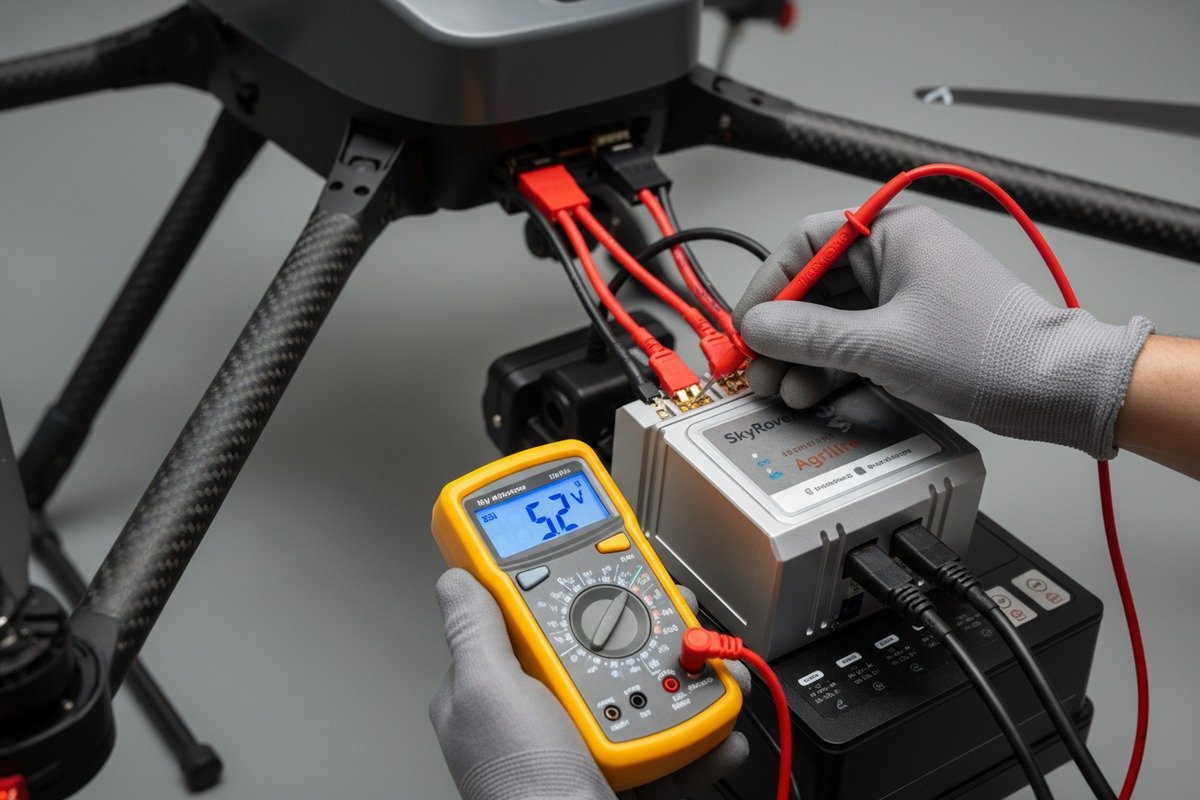
Essential Documentation Checklist
Before signing any purchase agreement, verify that your supplier provides complete documentation. Vague guidelines are not acceptable. You need specific parameters for every maintenance and storage requirement.
Our documentation packages include detailed manuals in multiple languages. We provide quick-reference cards for field operators. We offer video tutorials covering common procedures. This level of support prevents the confusion that leads to battery damage and warranty disputes.
Documentation Requirements Table
| Document Type | Must Include | Red Flags |
|---|---|---|
| User Manual | Specific charging parameters, storage temps, cycle limits | Generic advice without numbers |
| Safety Data Sheet | Fire response procedures, disposal methods | Missing or outdated |
| Warranty Terms | Coverage conditions, claim procedures | Vague exclusion clauses |
| BMS Specifications | Cell balancing details, cutoff voltages | No technical specifications |
| Maintenance Schedule | Inspection intervals, replacement criteria | No preventive maintenance guidance |
| Training Materials | Visual guides, video resources | Text-only instructions |
Technical Support Capabilities
Documentation alone is insufficient. You need access to human experts when problems arise. Ask potential suppliers about their support structure. Do they have English-speaking technical staff? What are their response times? Can they provide remote diagnostics?
At our company, we maintain a dedicated support team for international customers. They handle battery questions within 24 hours. They can access diagnostic data from smart batteries remotely. They guide customers through troubleshooting before shipping replacements. This level of support separates professional suppliers from parts vendors.
Spare Parts and Replacement Availability
Battery problems sometimes require physical parts. Corroded connectors need replacement. Damaged cables need repair. Entire battery packs occasionally need swapping. Your supplier must maintain inventory and ship quickly.
Ask about spare parts lead times. Request information about regional warehousing. Understand the replacement process before you need it urgently. Our US customers benefit from California warehouse stock that enables three-day delivery for most replacement parts.
Evaluating Supplier Competence
The quality of documentation reflects overall supplier competence. Sloppy manuals suggest sloppy manufacturing. Missing safety information indicates inadequate engineering. Poor translation reveals insufficient investment in international markets.
Request sample documentation before purchasing. Review it carefully. Contact their support team with technical questions. Evaluate response quality and speed. These pre-purchase tests predict your post-purchase experience accurately.
How does improper battery care impact the flight endurance and performance of my drone fleet?
Our flight testing engineers measure everything. Speed. Stability. Coverage area. And consistently, battery condition affects all these metrics. A degraded battery does not just die sooner. It compromises every aspect of drone performance throughout its declining life.
Improper battery care reduces flight endurance by 20-30% and degrades overall performance significantly. Cold batteries lose 25% capacity immediately. Heat-damaged batteries cannot deliver peak current for heavy spraying loads. Unbalanced cells cause power fluctuations that affect flight stability. These issues compound over time, creating unreliable operations and potential mid-flight failures.

Understanding Capacity Degradation
Battery capacity degrades gradually with poor care. Capacity Degradation 9 Each deep discharge removes a small percentage permanently. Each extreme temperature exposure causes microscopic damage. Each unbalanced charge stresses individual cells. These effects accumulate invisibly until performance drops noticeably.
When we receive returned batteries for analysis, we often find 30-40% capacity loss despite relatively low cycle counts. The owners thought they were maintaining their batteries. They were not following proper protocols. Their flight times decreased gradually. Eventually, coverage gaps appeared in their spray patterns.
Temperature Effects on Performance
Cold batteries cannot deliver rated power. This is physics, not opinion. At 0°C, expect 25% capacity reduction. At -10°C, capacity may drop by 40%. Your drone's flight controller compensates by reducing motor power, which decreases spray coverage and increases mission times.
Hot batteries face different problems. They cannot accept charge efficiently. They overheat during high-demand maneuvers. The battery management system may trigger protective shutdowns mid-flight. In agricultural applications where reliable operation matters most, temperature management is essential.
Performance Impact Summary
| Condition | Capacity Impact | Performance Effect | Operational Consequence |
|---|---|---|---|
| Cold Operation (<10°C) | -25% | Reduced motor power | Slower coverage, longer missions |
| Hot Operation (>40°C) | -15% | Thermal throttling | Mid-flight power reduction |
| Unbalanced Cells | -10-20% | Voltage fluctuations | Unstable flight control |
| Deep Discharge History | -20-50% | Reduced peak current | Cannot complete heavy spray runs |
| Chemical Corrosion | Variable | Connection resistance | Intermittent power delivery |
Fleet-Wide Implications
For operators managing multiple drones, battery inconsistency creates planning nightmares. One drone completes full missions. Another returns early. A third fails unexpectedly. Scheduling becomes impossible. Coverage gaps appear unpredictably. Customer complaints increase.
Consistent battery care across your entire fleet ensures predictable performance. Track cycles for each battery. Rotate batteries systematically. Replace degraded units before they cause operational problems. Our smart battery systems simplify this tracking through app-based monitoring.
Preventing Mid-Flight Failures
The worst outcome of poor battery care is mid-flight failure. A drone loses power over a field. It crashes. Crops get damaged. Equipment gets destroyed. Possibly, people get injured. These incidents trace back to preventable battery problems in nearly every case.
Follow landing thresholds religiously. Most manufacturers recommend landing at 20-30% remaining charge. This buffer protects against sudden voltage drops that occur in degraded batteries. Never push a battery to its absolute limits, especially one with uncertain maintenance history.
Conclusion
Battery guidelines matter more than most buyers realize. Check them thoroughly before purchasing. Follow them consistently during operation. Your investment, your safety, and your operational success depend on proper battery management.
Footnotes
1. Explains the concept of a battery’s complete charge and discharge cycle. ↩︎
2. Highlights the importance of detailed product information and user guidance. ↩︎
3. Authoritative Wikipedia page with a dedicated section on the endurance of unmanned aerial vehicles (drones). ↩︎
4. Provides information on the uses and benefits of drones in agriculture. ↩︎
5. Explains the processes and factors contributing to battery chemical degradation. ↩︎
6. Explains the fundamental working principles of lithium-ion batteries. ↩︎
7. Explains the functions and importance of a battery management system. ↩︎
8. Provides a clear definition of battery state of charge. ↩︎
9. Explains the phenomenon of battery capacity loss and its contributing factors. ↩︎

 English
  Español de México
  Deutsch
  Français
  Русский
  العربية
