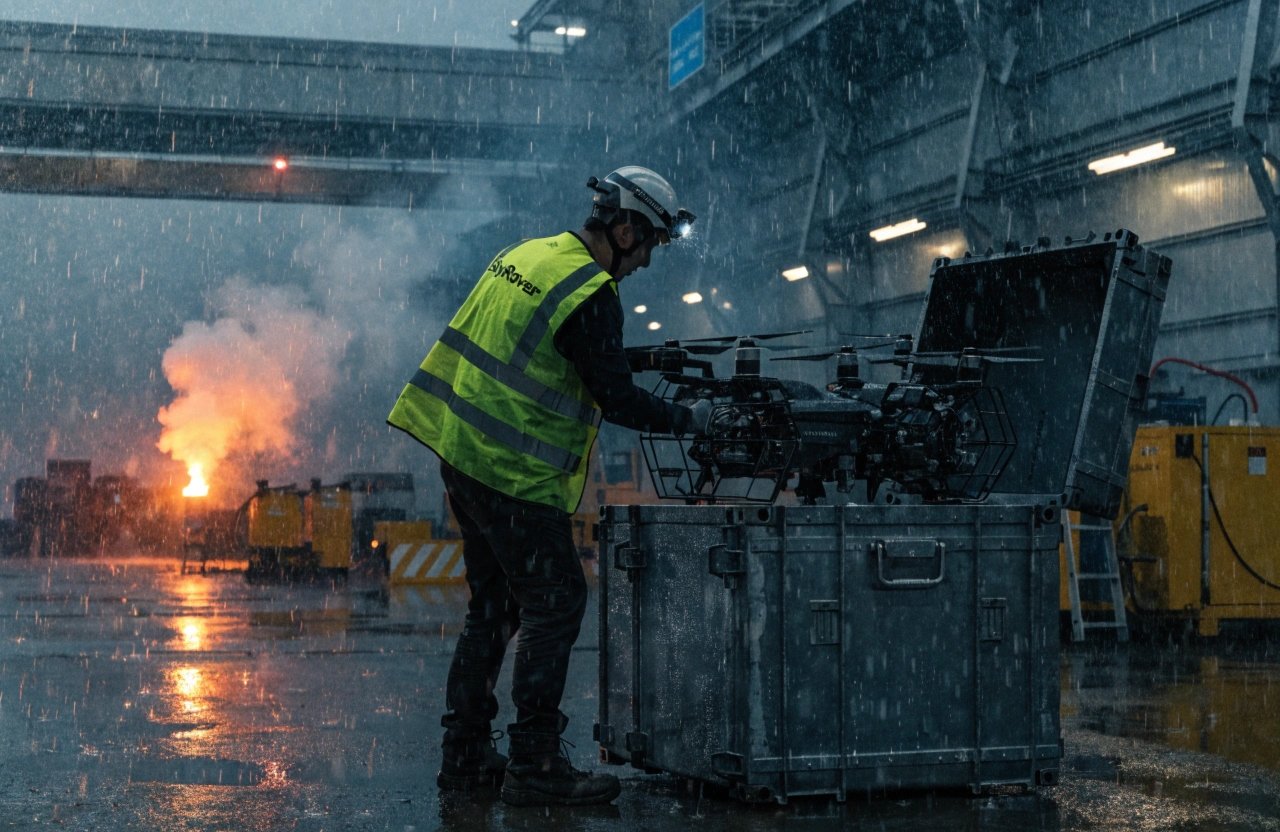
Navigating the complex world of industrial drones 1 can feel overwhelming. At SkyRover, we see many buyers struggle to match technology with real-world fire risks 2, leading to wasted budgets and safety gaps.
To choose the right firefighting drone, you must prioritize operational objectives, site-specific hazards like chemical storage, and regulatory compliance. Determine if you need early thermal detection or active suppression. This ensures the platform handles your specific MRO facility environment while meeting FAA Part 107 requirements.
Understanding these variables is the first step toward a successful procurement strategy. Let’s break down the specific scenarios and technical requirements. FAA Part 107 3 compliance is the baseline for any corporate drone program in the United States.
What specific operational scenarios should I analyze to choose between fixed-wing and multi-rotor drones?
When our engineering team in Chengdu designs new airframes, we focus heavily on the environment. Selecting the wrong drone type leads to poor visibility and maneuverability during a critical fire emergency.
Analyze your site’s geography and mission type. Multi-rotor drones are superior for localized industrial MRO facilities requiring stable hovering and precision thermal inspection. Fixed-wing drones suit large-scale area surveillance, such as forest fires or long pipelines, where high-speed travel and long-distance coverage are essential.
Understanding the Multi-Rotor Advantage
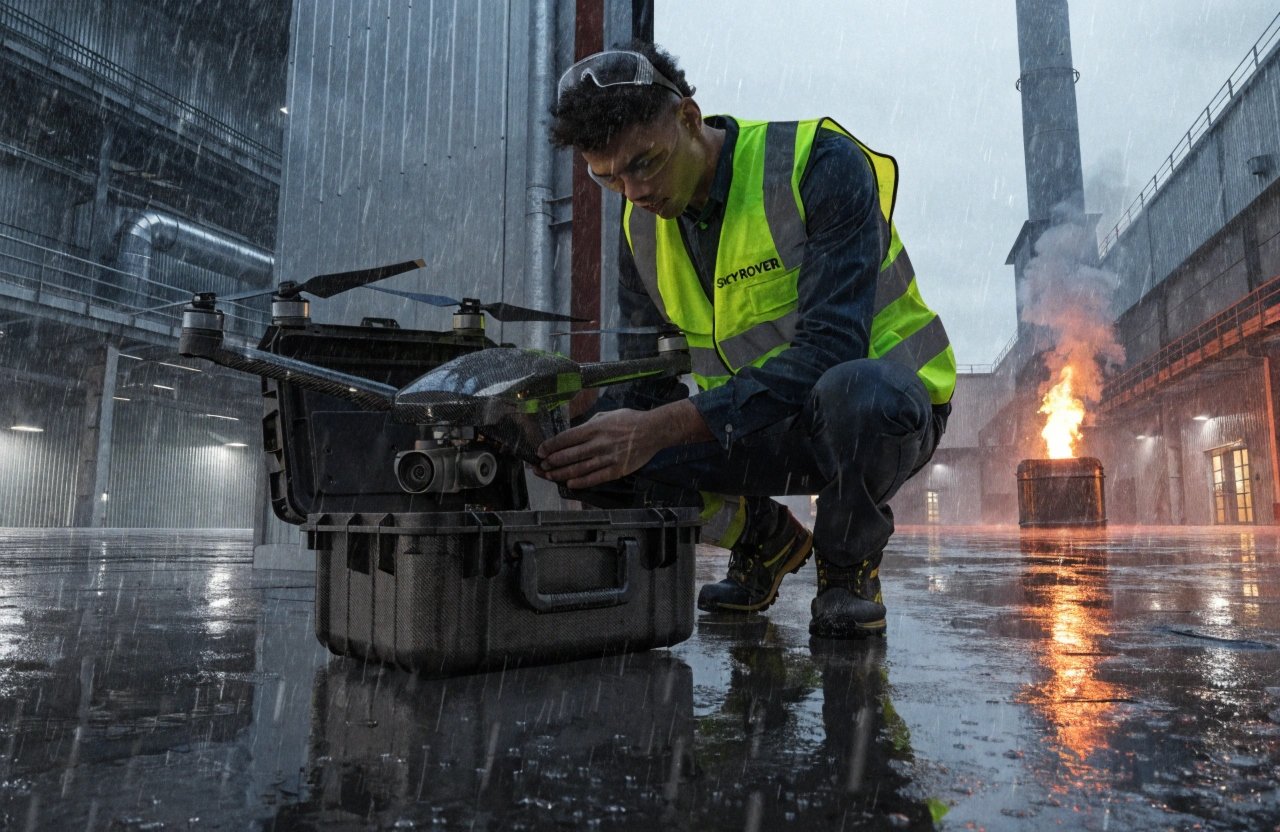
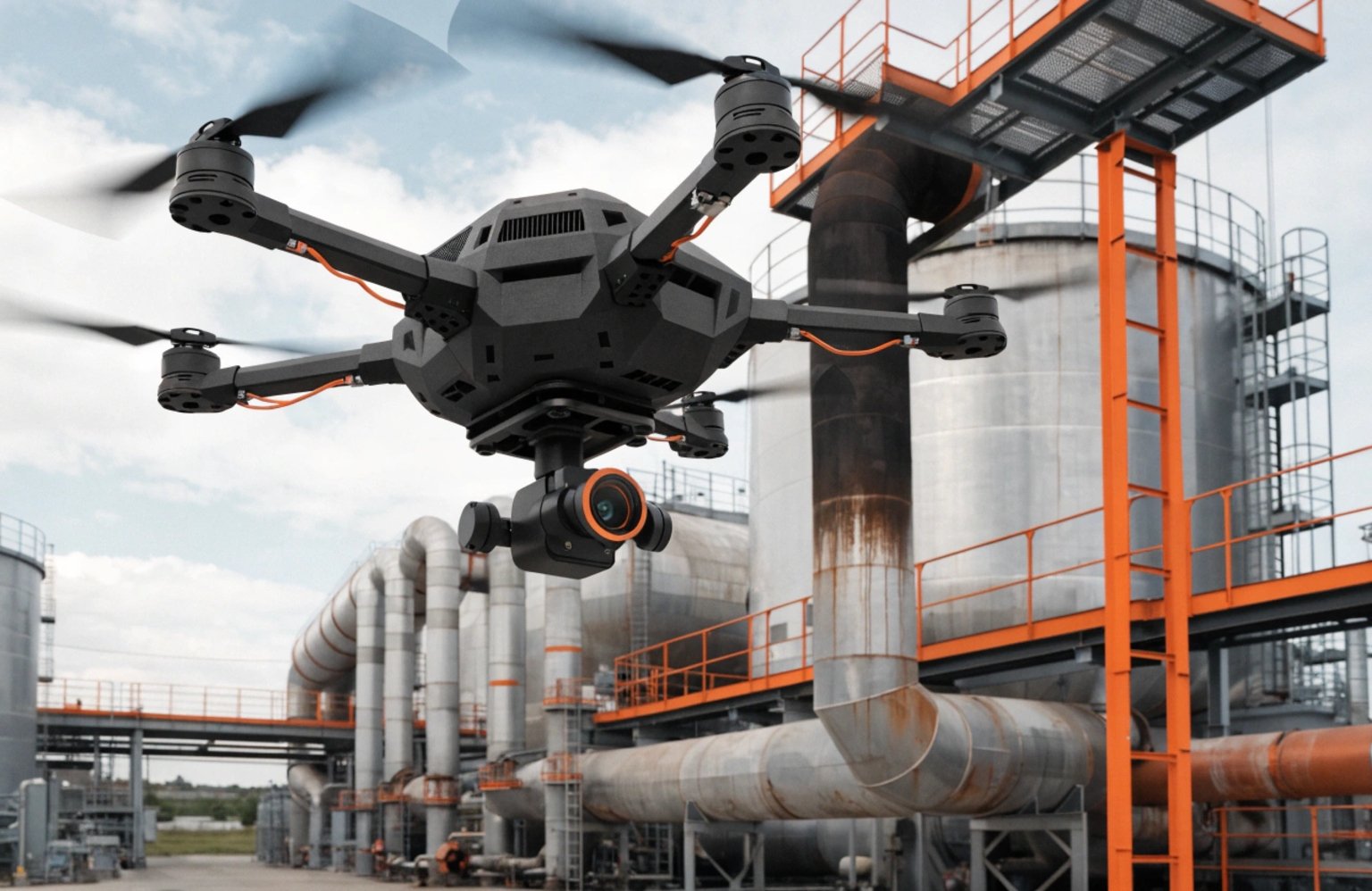
In an industrial MRO (Maintenance, Repair, and Overhaul) environment, the ability to stay still is your greatest asset. Multi-rotor drones, like the ones we manufacture, provide Vertical Take-Off and Landing 4 (VTOL) capabilities. This means you do not need a runway. You can launch a drone from a small parking lot or even a rooftop during a fire.
For a procurement manager like Olivia, the multi-rotor is often the "gold standard." It allows a pilot to hover near a suspected hot spot or a pressurized line. The stability of a multi-rotor ensures that high-resolution thermal sensors 5 can get a clear reading. If your company operates in tight urban spaces or crowded industrial parks, the agility of a multi-rotor is non-negotiable.
When Fixed-Wing Makes Sense
Fixed-wing drones operate more like traditional airplanes. They are efficient for covering hundreds of acres. If your company manages massive agricultural lands or sprawling remote infrastructure, a fixed-wing model might be the answer. However, they cannot hover. If you need to monitor a specific chemical tank that is currently venting gas, a fixed-wing drone will only give you a fleeting glimpse as it flies past.
Scenario Comparison for Decision Making
To help you decide, we have created a simple matrix based on common industrial needs.
| Feature | Multi-Rotor Drones | Fixed-Wing Drones |
|---|---|---|
| Launch Space | Minimal (VTOL) | Requires runway or catapult |
| Hover Capability | Excellent (Stationary) | None |
| Flight Speed | Slow to Moderate | High |
| Payload Capacity | High / Modular | Moderate |
| Best Use Case | Structural fires, MRO facilities | Forest fires, long-range patrol |
Critical Hazard Assessment
Before you sign a purchase order, conduct a site-specific hazard assessment 6. Identify high-risk zones such as chemical storage areas. In these zones, you need a drone that can fly slowly and maintain a safe distance while providing a clear zoom-in view. Fixed-wing drones often lack the sensor stability required for this level of detail in localized crises.
How do I determine the necessary flight endurance and range for my typical missions?
During our battery stress tests at SkyRover, we emphasize "time-on-station." If a drone runs out of power during a tactical assessment, it leaves your emergency team blind at the worst moment.
Calculate flight endurance by analyzing the time needed for "discovery, confirmation, and monitoring." For industrial MRO facilities, a minimum of 30–40 minutes of actual flight time is required. This allows the drone to orbit a crisis site and provide real-time telemetry to the Security Operations Center.
The Reality of Battery Life
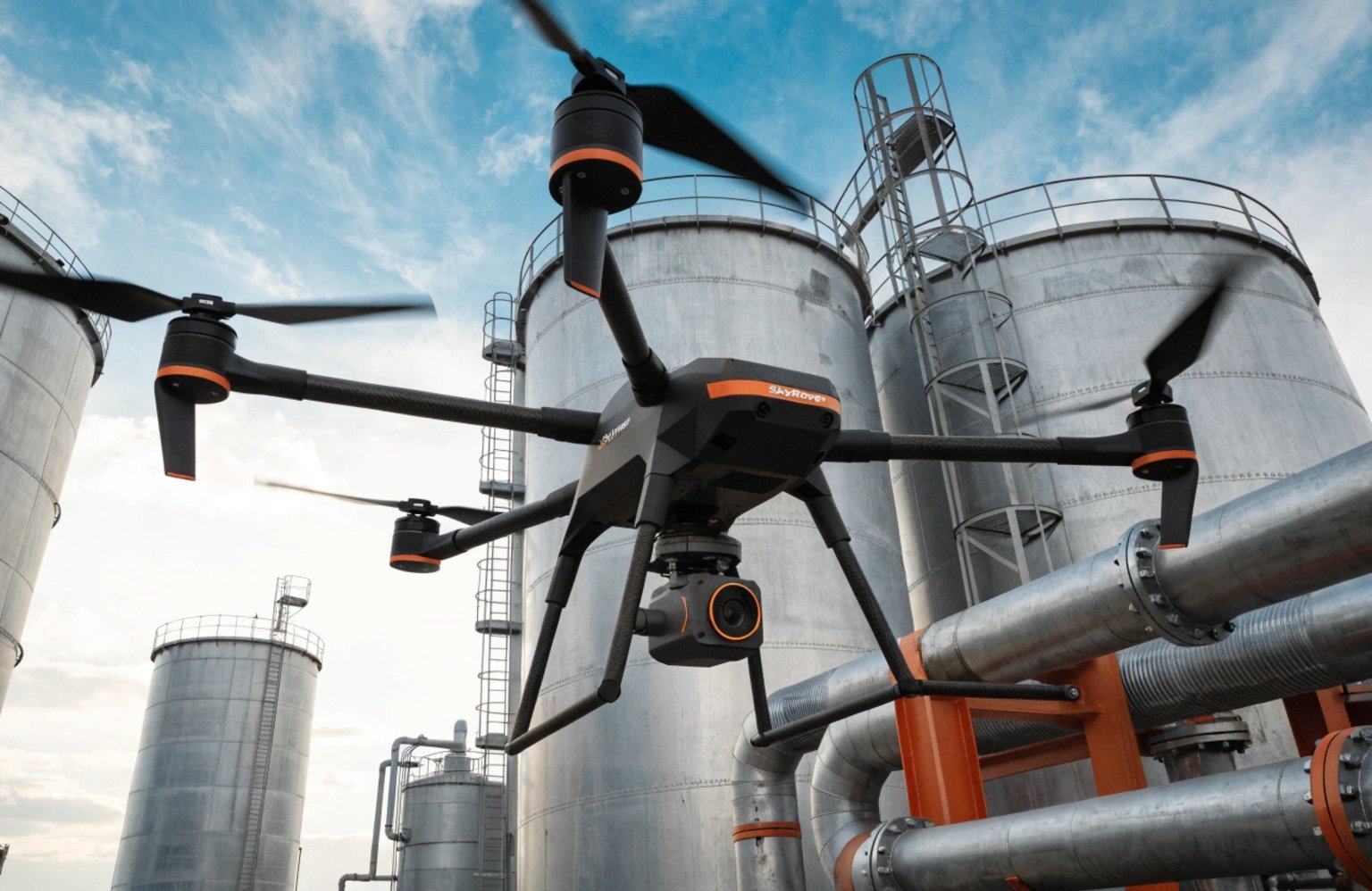
Most manufacturers list a "maximum flight time" under perfect conditions. In a real fire scenario, you face wind, heat, and heavy payloads. These factors drain batteries quickly. At our factory, we always advise clients to subtract 20% from the advertised flight time to get a realistic operational window.
If your drone needs to carry a heavy thermal camera and a spotlight, the weight reduces endurance. You should look for drones with high-density battery systems and fast-swapping capabilities. This ensures that when one drone lands, a second one can be in the air within sixty seconds.
Defining Your Mission Range
Range refers to how far the drone can fly from the controller while maintaining a stable video link. For industrial sites, Line of Sight 7 (LOS) is usually the legal requirement under FAA rules. However, the signal must be strong enough to penetrate smoke or pass around large metal structures.
Endurance Requirements by Mission Type
We suggest following this guide to determine your specific needs.
| Mission Type | Estimated Duration | Recommended Range |
|---|---|---|
| Initial Recon | 10 – 15 Minutes | Within 1 Mile |
| Continuous Tactical Support | 40 – 60 Minutes (Rotation) | Within 2 Miles |
| Post-Fire Forensic Analysis | 20 – 30 Minutes | Site-specific |
| Routine Facility Inspection | 45+ Minutes | Full Perimeter |
Factors Affecting Flight Time
- Payload Weight: Heavier sensors require more motor power.
- Wind Conditions: Fighting a 20mph wind can reduce battery life by 30%.
- Temperature: Extreme heat near a fire can affect battery chemistry and efficiency.
- Signal Strength: High-interference industrial zones may force the drone to use more power for data transmission.
What payload capabilities are essential for the types of fires my team encounters?
When we calibrate flight controllers at our facility, we always consider the payload balance. A drone is simply a delivery vehicle for sensors; the sensors are what actually save lives and property.
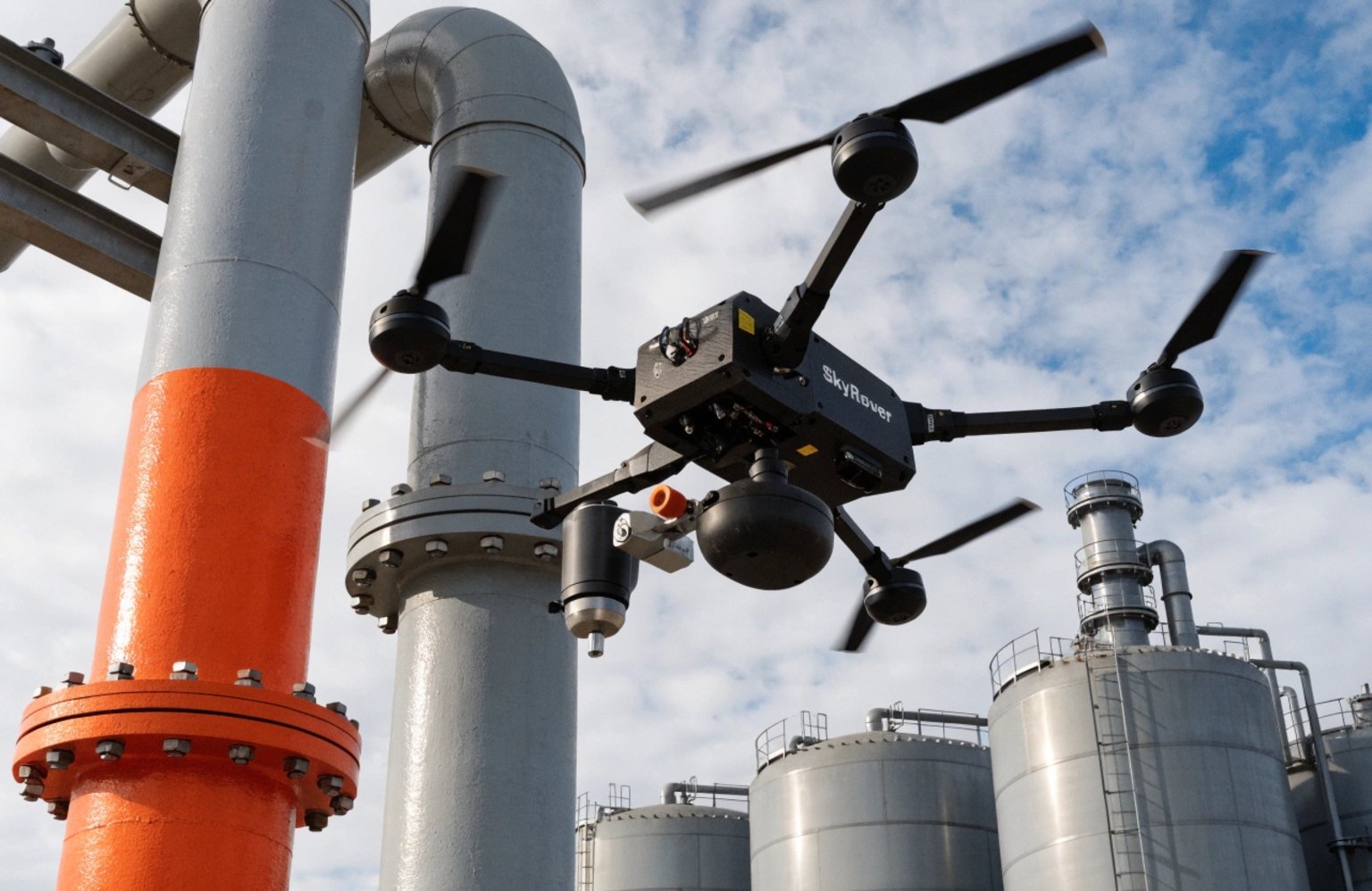
Essential payloads include high-resolution infrared (FLIR) sensors for heat mapping and laser rangefinders for distance calculation. For industrial fires, integrated gas sensors and encrypted low-latency video links are also critical. These tools allow ground teams to identify hazards and coordinate responses without entering dangerous zones.
Thermal Imaging: The Non-Negotiable Tool
Thermal cameras (Infrared 8) allow you to see through smoke. In an industrial warehouse fire, the smoke is often thick and toxic. A standard camera is useless. A thermal sensor identifies the "seat" of the fire. It helps you find people trapped in a building by detecting their body heat.
We recommend sensors with at least 640×512 resolution. Lower resolutions might save money, but they lack the detail needed to distinguish between a hot pipe and a growing fire.
Modular Sensor Ecosystems
At SkyRover, we advocate for modularity. You should not have to buy a new drone every time a new sensor is released. A modular ecosystem allows you to swap a zoom camera for a gas detector in seconds. This is vital for MRO facilities that might deal with chemical leaks today and structural fires tomorrow.
Communication and Coordination
Essential payloads include high-resolution infrared sensors for heat mapping and laser rangefinders 9 for distance calculation. Data is only useful if it reaches the right people. Your drone should support encrypted video streaming. This allows the procurement head or the fire chief to watch the live feed from a tablet or a command center.
Essential Payload Matrix
Use this table to check if your chosen supplier provides these critical components.
| Sensor Type | Purpose | Why it’s Critical |
|---|---|---|
| FLIR (Thermal) | Heat Mapping | Sees through smoke; finds hot spots |
| Optical Zoom (30x+) | Long-range Visuals | Inspects hazards from a safe distance |
| Laser Rangefinder | Distance Measurement | Coordinates water drops or personnel |
| Gas Multi-Sensor | Leak Detection | Identifies toxic or explosive atmospheres |
| Loudspeaker | Communication | Gives orders to people on the ground |
How do I budget for training and maintenance when selecting a new drone system?
In our experience exporting to the US, we’ve found that many companies forget to budget for "Day 2" operations. Buying the hardware is only 50% of the total cost of ownership.
Budgeting must include FAA Part 107 certification for pilots and recurring maintenance for airframes and sensors. Factor in the cost of spare parts like propellers and batteries, which degrade faster in corrosive industrial environments. A comprehensive lifecycle budget ensures your drone remains mission-ready for years.
The Cost of Human Capital
A drone is only as good as its pilot. In the United States, commercial drone operation requires an FAA Part 107 license. Training programs cost money and time. For a company like Olivia’s, she needs to ensure that her EHS or security team is fully trained not just to fly, but to operate in high-stress emergency scenarios.
Maintenance in Harsh Environments
Industrial fires often involve corrosive industrial environments 10, high heat, and heavy particulates. These elements damage the delicate optics of your cameras and the motors of your drone. At SkyRover, we provide detailed maintenance schedules. You should expect to replace propellers every 50-100 flight hours and inspect motors regularly.
Calculating the Lifecycle Budget
A smart procurement manager looks at the three-year cost, not just the initial price.
- Initial Purchase: Drone, batteries, and base sensors.
- Training: Licensing fees and specialized flight training for fire response.
- Insurance: Liability coverage specifically for industrial drone use.
- Maintenance: Replacement parts, software updates, and sensor calibration.
- Data Management: Cloud storage for flight logs and forensic video.
Conclusion
Choosing a firefighting drone requires a balance of scenario analysis and technical specs. By prioritizing thermal sensors, VTOL agility, and pilot training, you ensure a safer, more efficient industrial response.
Footnotes
1. Trends and market analysis for commercial UAV applications. ↩︎
2. Standardized codes for fire prevention and safety management. ↩︎
3. Official regulations for commercial drone operation in the US. ↩︎
4. Technical breakdown of vertical takeoff and landing mechanics. ↩︎
5. Guide to using thermal imaging for emergency response. ↩︎
6. Procedures for identifying workplace safety and health hazards. ↩︎
7. Understanding visual line-of-sight requirements for drone pilots. ↩︎
8. The science of infrared light and heat detection. ↩︎
9. Principles of laser-based distance measurement in robotics. ↩︎
10. Managing equipment degradation in chemically aggressive environments. ↩︎

 English
  Español de México
  Deutsch
  Français
  Русский
  العربية
