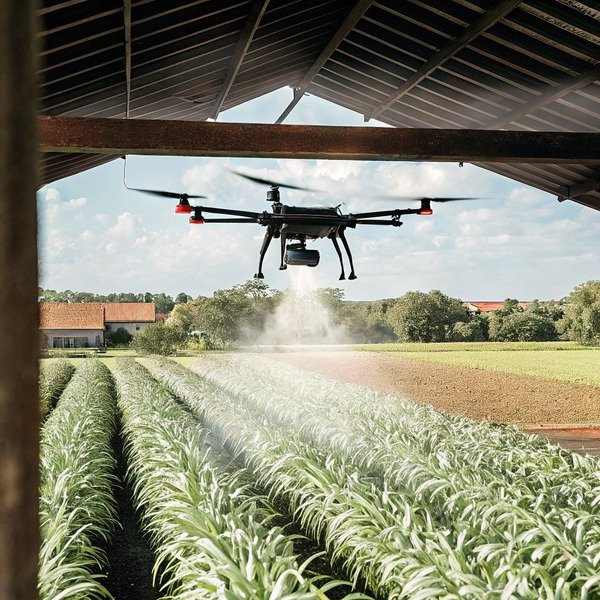
When we finalize our export crates in Chengdu, we often see buyers struggle with paperwork. Missing a single document can leave your valuable shipment stranded at Long Beach indefinitely, causing missed spraying seasons and financial loss.
You must request a commercial invoice with HS codes (8806.21), an FCC Grant of Equipment Authorization for radio compliance, and a UN38.3 test summary for battery safety. Additionally, secure a Certificate of Origin to navigate tariffs and proof of Section 44807 exemption eligibility for FAA operational legality.
Let’s break down the specific paperwork you need to clear customs and fly legally.
How do I verify that the agricultural drones have valid FCC certification for US market entry?
We test every radio module on our assembly line to ensure signal stability. Without this proof, your drones might never leave the port due to interference concerns, as US regulators are strict about radio frequency emissions.
Verify the supplier provides a valid FCC Grant of Equipment Authorization matching the drone’s specific FCC ID label. Cross-reference this ID on the official fccid.io database to ensure the certificate covers the exact frequency bands used for control and telemetry, complying with Title 47 CFR Part 15 regulations.

The Federal Communications Commission (FCC) certification is non-negotiable Federal Communications Commission (FCC) 1 for any device that emits radio frequencies. Agricultural drones rely heavily on wireless communication for telemetry, video transmission, and remote control commands. If a supplier cannot produce this document, the equipment is illegal to sell or operate in the United States.
Understanding the FCC Grant of Equipment Authorization
The primary document you need is the Grant of Equipment Authorization. This is not just a generic letter; it is an official record issued by an FCC-recognized Telecommunication Certification Body (TCB). When we certify our SkyRover models, we submit them to third-party labs to prove they do not cause harmful interference.
You should look for the FCC ID on the product itself. It is usually a string of characters printed on the back of the remote controller and the drone body.
How to Validate the Certificate
Do not blindly trust a PDF sent via email. Counterfeit certificates are common in the electronics market. Follow these steps to verify validity:
- Locate the FCC ID on the document.
- Go to the official FCC ID Search database or third-party sites like
fccid.io. - Enter the Grantee Code (first 3-5 characters) and Product Code.
- Check if the photos in the database match the drone you are buying.
- Confirm the operating frequencies listed (e.g., 2.4 GHz or 5.8 GHz) match the spec sheet.
Why "CE" Marking is Not Enough
Many suppliers will offer a CE (Conformité Européenne) certificate Conformité Européenne 2 instead. While valid for Europe, it holds no weight with US Customs or the FCC. The testing standards differ. A drone cleared for Europe might use radio power levels that are illegal in the US. Always insist on the specific FCC paperwork.
Common Risks of Non-Compliance
Importing drones without valid FCC authorization carries significant risks. US Customs and Border Protection (CBP) often works with the FCC to seize non-compliant electronics. If your shipment is flagged, you cannot simply pay a fine to release it; the hardware is often destroyed or re-exported at your expense.
| اسم المستند | الغرض | طريقة التحقق |
|---|---|---|
| FCC Grant of Authorization | Proves RF compliance with US law | Check FCC ID database online |
| User Manual (with FCC Statement) | Warns users about interference | Read the "Regulatory Information" section |
| Labeling Declaration | Shows where the ID is physically placed | Compare physical label to database photos |
| RF Exposure Report | Certifies safety for human proximity | Review SAR (Specific Absorption Rate) data |
What specific battery safety documents, such as UN38.3, must I obtain to avoid shipping delays?
Our logistics team spends hours packing lithium batteries to meet dangerous goods regulations. One paperwork error here can ground an entire air freight shipment instantly, as carriers are extremely cautious about fire risks.
You require a UN38.3 Test Summary Report verifying thermal, vibration, and shock stability, alongside a Material Safety Data Sheet (MSDS). These documents classify the lithium-ion batteries as Class 9 dangerous goods, ensuring carriers accept them for transport and Customs clears them for safe entry into the United States.
Lithium batteries used in agricultural drones are large بطاريات الليثيوم 3, powerful, and considered high-risk cargo. Unlike small phone batteries, the packs powering a 30-liter spray drone pack massive energy. Shipping them requires strict adherence to international safety standards.
The UN38.3 Test Summary Report
This is the most critical technical document for shipping. It proves that the battery model has passed the United Nations Manual of Tests and Criteria, Section 38.3. Without this, no reputable air or sea carrier will touch your cargo. The test ensures the battery won't catch fire under normal transport conditions.
The report must confirm the battery passed eight specific tests:
- T1 – Altitude Simulation: Simulates low pressure in cargo holds.
- T2 – Thermal Test: Extreme temperature cycling.
- T3 – Vibration: Simulates transport movement.
- T4 – Shock: Impact resistance.
- T5 – External Short Circuit: Protection against shorts.
- T6 – Impact/Crush: Structural integrity.
- T7 – Overcharge: Protection against charging faults.
- T8 – Forced Discharge: Stability under stress.
Material Safety Data Sheet (MSDS) / SDS
While often called MSDS, the modern standard is simply SDS (Safety Data Sheet). This document guides logistics handlers and emergency responders on how to manage the battery if it is damaged. It lists the chemical composition and emergency procedures.
Watt-Hour (Wh) Ratings and Shipping Limits
Pay close attention to the Watt-hour rating on the documentation Watt-hour rating 4. Agricultural drone batteries often exceed 100Wh, and frequently exceed 300Wh.
- >100 واط/ساعة: Requires Class 9 Dangerous Goods labeling.
- >300Wh: Typically forbidden on passenger aircraft and strictly regulated on cargo aircraft.
We often ship batteries via sea freight (DG Ocean Cargo) because air freight for high-capacity batteries is prohibitively expensive or restricted. The UN38.3 report is mandatory for sea freight as well.
Red Flags in Battery Documentation
Be wary if a supplier says, "We will just label them as plastic parts." This is illegal smuggling. If a fire occurs, you could be held criminally liable. Always demand the original test reports from the battery cell manufacturer.
| التصديق | Requirement Level | الوظيفة الأساسية |
|---|---|---|
| تقرير الاختبار UN38.3 | إلزامي | Proves mechanical and thermal stability |
| SDS (Safety Data Sheet) | إلزامي | Chemical safety and emergency handling guide |
| 1.2m Drop Test Report | Required for some Air Cargo | Ensures packaging survives a fall |
| وضع العلامات من الفئة 9 | إلزامي | Visual warning for logistics handlers |
Does the manufacturer provide documentation proving compliance with FAA Remote ID standards?
We integrate standard Remote ID modules into our flight controllers Remote ID modules 5 during production. Ignoring this requirement renders the drone illegal for commercial flight in US airspace immediately, putting your entire operation at risk of FAA fines.
Yes, manufacturers must provide a Declaration of Compliance (DOC) accepted by the FAA. You should verify the specific serial number series is listed on the FAA UAS Declaration of Compliance website, ensuring the drone broadcasts identification and location data as required by Part 89 regulations for all outdoor flights.
The FAA’s Remote ID rule (Part 89) is like a FAA’s Remote ID rule (Part 89) 6 Part 89 7 "digital license plate" for drones. Since September 2023, almost all drones operating in the US need this capability. For agricultural drones, which often operate autonomously, this is strictly enforced.
Standard Remote ID vs. Broadcast Modules
There are two ways to comply, but for new agricultural drones, you should insist on Standard Remote ID. This means the broadcasting capability is built into the drone's hardware by the manufacturer.
- Standard Remote ID: Integrated at the factory. The drone will not take off if the self-check fails.
- Broadcast Module: An add-on device. This is clunky for integrated ag-systems and less desirable for new purchases.
Verifying the Declaration of Compliance (DOC)
A supplier might say, "Yes, it has Remote ID," but you need proof that the FAA has accepted their technical standard.
- Ask the supplier for the DOC tracking number.
- Visit the FAA UAS Declaration of Compliance public database.
- Search for the drone model or manufacturer name.
- Confirm that the status is "Accepted."
Why This Matters for Your Business
If you buy a drone that is not on this list, you cannot register it legally with the FAA. When you attempt to register your drone at the FAA DroneZone, the system will ask for the Remote ID serial number. If that serial number is not linked to an accepted DOC, the registration will fail.
Future-Proofing Your Investment
Regulations evolve. By ensuring your supplier has a direct line to the FAA via their DOC, you ensure that firmware updates can keep you compliant. At SkyRover, we maintain our DOC status to ensure our US clients never face grounding orders due to regulatory software changes.
Documentation to Request
- Statement of Compliance: A document in the box stating the drone meets Part 89.
- Serial Number Map: Guidance on where the Remote ID serial number is located (often different from the airframe serial number).
Which essential commercial and technical documents will US Customs demand for drone clearance?
Our export department prepares these files daily to prevent container inspections. Accurate descriptions and origin data are the only way to avoid expensive storage fees at the border and ensure you pay the correct tariff rates.
US Customs demands a detailed Commercial Invoice with the correct HS code (8806.21), a Packing List, and a Certificate of Origin to determine duties. Additionally, you need UFLPA supply chain tracing documents and a Toxic Substances Control Act (TSCA) certification to prove the electronics contain no banned hazardous materials.

Clearing US Customs (CBP) is the final hurdle US Customs (CBP) 8. The complexity here lies in the dual nature of drones: they are both aviation products and electronic devices.
The Commercial Invoice and HS Codes
Your invoice must be precise. Vague terms like "Farm Equipment" trigger inspections.
- HS Code: The Harmonized System code for drones is generally under 8806. For agricultural drones (carrying a payload), it is often 8806.21 (for max takeoff weight between 250g and 7kg) or 8806.22 / 8806.23 for heavier units.
- Description: Must clearly state "Unmanned Aircraft for Agricultural Spraying."
Certificate of Origin and Section 301 Tariffs
Since many drones are made in China, they are subject to Section 301 trade tariffs, which can add 25% to your cost. A شهادة المنشأ is required to calculate this duty. If you are sourcing from a country with a Free Trade Agreement (FTA), this document is your golden ticket to lower taxes.
Uyghur Forced Labor Prevention Act (UFLPA)
This is a critical, newer requirement. CBP is aggressively detaining electronics from China to ensure no forced labor was used, particularly in the sourcing of aluminum, magnesium, or silica.
- What to ask for: A supply chain tracing map or a "Non-Forced Labor Declaration." We provide our clients with affidavits linking our raw materials to compliant regions to prevent detention.
TSCA Certification (EPA)
The Toxic Substances Control Act (TSCA) requires a declaration Toxic Substances Control Act 9 that the imported composite wood or chemicals (in the drone's plastic/glue) comply with EPA standards.
- TSCA Form: A positive or negative certification statement signed by the importer (you), usually based on data we provide.
FDA Accession Number (For Lasers/LiDAR)
If your agricultural drone uses LiDAR for terrain following ليدار 10 or obstacle avoidance, it contains a laser.
- Form FDA 2877: You must declare that the laser products comply with performance standards.
- Accession Number: The manufacturer must provide this number, proving they registered the laser component with the FDA CDRH.
| المستند | Regulatory Body | Critical Detail |
|---|---|---|
| الفاتورة التجارية | CBP | Must use correct HS Code (8806.xx) |
| TSCA Certification | EPA | Confirms non-toxic materials |
| Form FDA 2877 | FDA | Required only if LiDAR/Laser is present |
| UFLPA Tracing | CBP | Proof of ethical supply chain sourcing |
الخاتمة
Sourcing agricultural drones requires diligence beyond comparing specs. By requesting these specific certifications—FCC grants, UN38.3 reports, Remote ID DOCs, and precise customs paperwork—you ensure seamless customs entry and legal operation, protecting your investment and reputation in the American agricultural market.
الحواشي
1. Official website of the US regulatory body governing radio frequency emissions. ︎
2. General encyclopedia entry explaining the European CE marking standard. ︎
3. Educational resource explaining lithium-ion battery technology and science. ︎
4. Industry guidance on shipping lithium batteries based on energy capacity. ︎
5. Product page from a major manufacturer of Remote ID hardware. ︎
6. Official FAA guidance page explaining the specific regulation cited. ︎
7. Official US government regulation text detailing Remote ID requirements. ︎
8. Official website of the US border control agency mentioned. ︎
9. Official EPA summary of the TSCA regulations for imports. ︎
10. Website of a leading manufacturer of LiDAR sensor technology. ︎

 English
  Spanish
  German
  French
  Dutch
Dutch  Arabic
