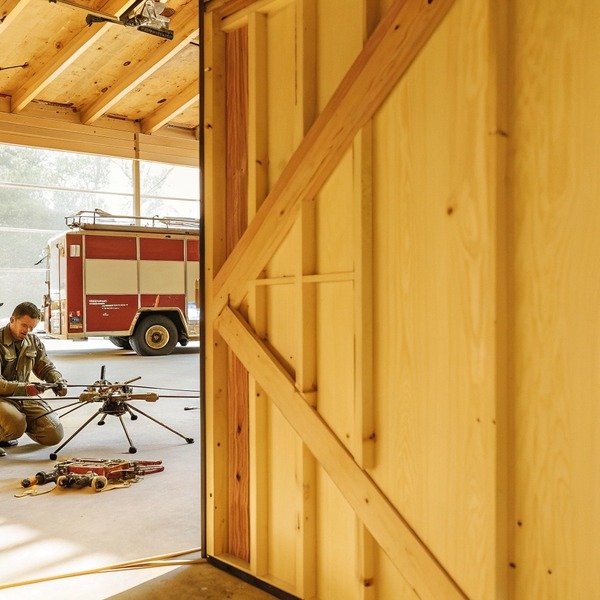
When our engineering team finalizes a new octocopter design, we know the hardware is only half the solution for a successful rescue mission.
Most firefighting drone suppliers do not provide official regulatory certification courses directly; instead, they offer technical product familiarization while relying on third-party academies or government bodies like the FAA to handle legal operator licensing and tactical fire certification.
Understanding where manufacturer support ends and professional certification begins is vital for your department’s budget and legal safety.
Can I request on-site or remote training support for my firefighting drone team?
Our export clients frequently ask if we can fly engineers to their station to teach their team how to handle our heavy-lift drones.
You can typically request remote technical onboarding or expensive on-site handover sessions, but these focus strictly on hardware setup and maintenance rather than teaching tactical flight maneuvers or emergency response protocols.
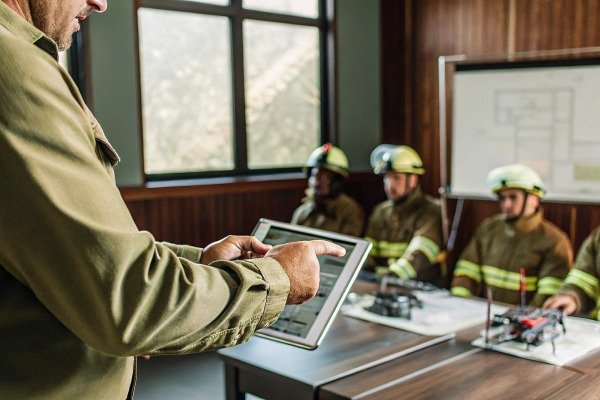
Requesting support is a standard part of the procurement process. However, the type of support you receive depends heavily on the supplier's business model. When we ship a batch of SkyRover drones to a distributor in the United States or Europe, we provide them with extensive technical manuals and video guides. We do this because direct on-site training from the factory is often logistically difficult and costly for the end-user.
Factory-Direct Remote Support
For most international orders, remote support is the standard. We use video calls to walk your technical lead through the initial setup. This includes binding the controller to the aircraft, updating firmware, and calibrating the compass. This is not "flight school." It is "hardware activation."
We find that procurement managers often confuse technical troubleshooting with pilot training. Our engineers can tell you why a motor is vibrating or how to swap a camera module. They cannot teach your team how to approach a burning chemical plant from the windward side. That is a tactical skill, not a mechanical one.
On-Site Training via Distributors
If you purchase through a local dealer, you have a better chance of getting on-site support. Many of our partners add this as a value-added service. They might charge a daily rate to send a technician to your fire station.
This technician will show you how to launch the drone, how to change batteries safely, and how to pack the equipment. They ensure your team is comfortable with the physical asset. However, even this on-site visit is rarely a certification course. It is a handover process designed to prove the equipment works and that you know how not to break it on day one.
Support Scope Comparison
It is important to manage expectations regarding what a manufacturer or distributor will teach versus what a flight academy teaches.
| الميزة | Manufacturer/Supplier Support | Professional Flight Academy |
|---|---|---|
| Primary Goal | Ensure hardware functions correctly. | Ensure pilot flies legally and safely. |
| طريقة التوصيل | Zoom calls, manuals, or brief on-site demo. | Classroom theory + field flight hours. |
| Instructor Background | Drone Engineer or Sales Technician. | Certified Flight Instructor / Retired Firefighter. |
| Cost Structure | Often included or low-cost add-on. | Separate tuition fees per student. |
| النتيجة | "Ready to turn on." | "Certified to fly." |
What specific flight skills and safety protocols are included in the operator curriculum?
When we calibrate our thermal payloads in the lab, we focus on sensor accuracy, not on how to interpret heat signatures during a structural collapse. thermal payloads 1
Manufacturer-provided curriculum focuses almost exclusively on payload operation, battery management, and automated flight modes, omitting critical fire service skills like incident command coordination and smoke plume navigation. incident command coordination 2

The curriculum provided by a hardware supplier is manual-centric. It is designed to reduce warranty claims, not to save lives. When we write our user guides, our priority is ensuring the operator does not crash the drone due to a technical error. Therefore, the training materials we provide cover the specific functions of our machine.
Hardware-Specific Proficiency
The core of supplier training is "buttonology." This refers to knowing which button does what. Your pilots will learn how to toggle between the visual camera and the thermal camera. They will learn how to activate the spotlight or release a payload if the drone is equipped with a drop mechanism.
We also emphasize battery safety protocols. Lithium polymer batteries used in industrial drones are powerful and volatile. Lithium polymer batteries 3 Our training ensures your team knows how to store, charge, and transport transport these batteries 4 these batteries to prevent fires in the station. We also cover emergency "Return to Home" settings. This is a safety feature that brings the drone back if the signal is lost.
The Missing Tactical Element
What is missing from our curriculum—and the curriculum of almost all hardware vendors—is the application of these tools in a fire scenario. We teach you how to turn on the thermal camera. We do not teach you how to read the thermal gradient to identify a hidden fire inside a wall.
We also do not cover flight dynamics in hazardous environments. Flying near a large fire involves turbulence created by heat columns. Smoke can confuse obstacle avoidance sensors. These are tactical skills that must be learned through experience or specialized public safety courses. A manufacturer’s guide will simply tell you to "avoid flying in smoke," which is not practical advice for a firefighter.
Curriculum Gap Analysis
To help you understand what you are getting, here is a breakdown of skills. You will see that the manufacturer covers the "Machine," while you need training for the "Mission."
| Skill Category | Included in Supplier Training? | Why or Why Not? |
|---|---|---|
| Payload Calibration | نعم | Essential for the device to work. |
| سلامة البطارية | نعم | Critical to prevent hardware damage/liability. |
| Emergency Failsafes | نعم | Reduces risk of "flyaway" drones. |
| العمليات الليلية | لا يوجد | Requires regulatory waiver and specific tactical training. |
| Search Patterns | لا يوجد | This is a police/fire tactic, not a hardware feature. |
| Radio Communication | لا يوجد | Part of Incident Command System (ICS), not drone tech. |
Selling our drones globally requires us to track regulations like EASA in Europe and FAA in the US, but we cannot legally certify your pilots. EASA in Europe 5
Manufacturer training rarely satisfies legal certification requirements like FAA Part 107; operators must seek accredited third-party courses to legally operate in national airspace.
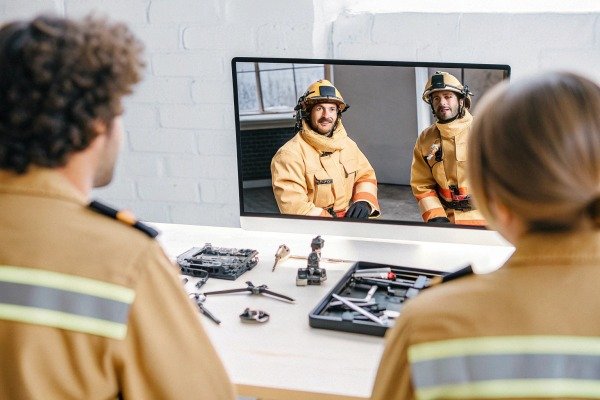
This is perhaps the most common misconception we encounter. A certificate of completion from a drone factory has no legal standing with aviation authorities. In the United States, the Federal Aviation Administration (FAA) requires commercial and public safety operators to hold a Remote Pilot Certificate (Part 107). Remote Pilot Certificate (Part 107) 6 Remote Pilot Certificate 7
The Distinction Between Certificate and Certification
When you finish a training session with a drone vendor, you might get a "Certificate of Completion." This is a nice document for your personnel file, but it is not a license. It simply proves you attended the session.
True certification, like the FAA Part 107, requires passing a federal aeronautical knowledge test. This test covers airspace classification, weather patterns, and aviation laws. As a manufacturer, we are not authorized to administer this test. We can build the drone to be compliant (with Remote ID, for example), but we cannot license the pilot. المعرف عن بُعد 8
إجراءات التشغيل القياسية (SOPs)
Another regulatory aspect is the development of Standard Operating Procedures (SOPs). Aviation authorities often require public safety agencies to have documented SOPs for their drone programs. These documents outline how you maintain the aircraft, how you log flights, and how you report accidents.
Suppliers rarely provide these. We can give you a maintenance schedule for the motors, but we cannot write your department's policy on privacy or data retention. That is a legal framework that you must build, often with the help of consultants or specialized training organizations.
Regulatory Responsibilities
It is crucial to understand who is responsible for what. If a pilot flies our drone into restricted airspace, the liability falls on the operator, not the manufacturer.
- Manufacturer Role: Provide a compliant aircraft (e.g., Remote ID ready). Provide accurate weight and performance data for your waivers.
- Operator Role: Obtain Part 107 license. Apply for Certificates of Waiver or Authorization (COA) for night flying or Beyond Visual Line of Sight (BVLOS). Certificates of Waiver 9
- Third-Party Role: Specialized schools (like Pilot Institute or DARTdrones) offer "Part 107 Prep Courses" to help you pass the federal exam.
Do I need to budget extra funds for professional drone operator certification courses?
Our pricing strategy focuses on delivering durable carbon fiber frames and reliable motors, which leaves little room for bundled comprehensive education. إطارات من ألياف الكربون 10
Yes, fire departments should allocate separate funds for third-party certification and tactical courses, as these essential services are rarely included in standard hardware procurement contracts.
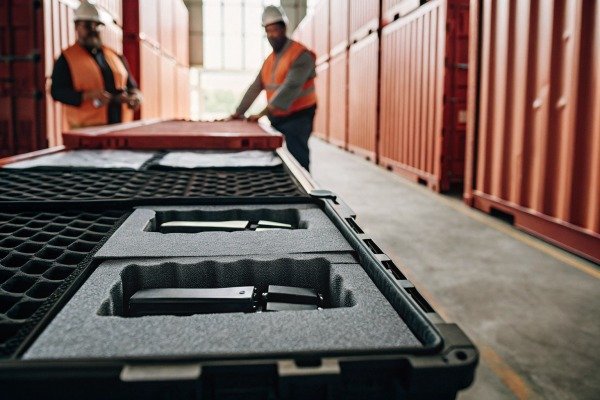
When we quote a price to a procurement manager like Olivia, the invoice covers the hardware, the ground station, the batteries, and shipping. It does not cover the "human software"—the training of your pilots. If you do not budget for this separately, you will end up with an expensive asset that no one is qualified to use.
The Hidden Cost of "Flight Readiness"
We have seen departments buy a high-end thermal drone and then let it sit in a case for six months because they did not have the budget to train their staff. Basic Part 107 certification costs money for the exam and the study materials.
But for firefighting, basic certification is not enough. You need advanced courses. A thermal imaging course can cost over $1,000 per student. A disaster response course might cost even more. If you assume the drone purchase price includes this, your program will stall.
Investing in "Train the Trainer"
A smart strategy we see successful departments use is the "Train the Trainer" model. Instead of paying for an outside company to train every single firefighter, you budget to send two senior officers to a comprehensive, high-level flight academy.
These officers return as certified instructors for your department. They can then conduct regular drills using the hardware we provided. This saves money in the long run. However, the initial investment for those two officers must be in your Year 1 budget.
Sample Budget Allocation
To help you plan, here is a rough breakdown of how funds should be distributed. Notice that hardware is often only about 60-70% of the total Year 1 cost.
| عنصر التكلفة | التكلفة التقديرية (بالدولار الأمريكي) | Source |
|---|---|---|
| Drone Hardware Package | $15,000 – $30,000+ | Manufacturer (SkyRover) |
| FAA Part 107 Exam Fees | $175 per pilot | Federal Government |
| Initial Prep Course | $150 – $300 per pilot | Online Flight School |
| Tactical/Thermal Training | $1,500 per pilot | Specialized Academy |
| Program Consulting (SOPs) | $2,000 - $5,000 | Consultant (Optional) |
| التأمين | متغير | Insurance Provider |
الخاتمة
Suppliers generally do not provide regulatory certification or tactical fire training. We provide the tool and the technical knowledge to keep it running, but the license to fly and the skill to fight fires from the air must come from specialized third-party sources. Budget accordingly to ensure your team is legal, safe, and effective.
الحواشي
1. Technical specifications and capabilities of thermal imaging sensors for industrial and rescue use. ︎
2. Official government definition of the Incident Command System structure. ︎
3. Technical overview of lithium polymer battery technology and its common applications. ︎
4. Official US Department of Transportation guidelines for safe lithium battery transport. ︎
5. Regulatory framework and safety rules for drone operations within the European Union. ︎
6. Official FAA requirements for commercial drone operator certification. ︎
7. Official FAA requirements for obtaining a commercial drone pilot license in the United States. ︎
8. Official FAA information regarding the Remote Identification requirement for unmanned aircraft. ︎
9. Official FAA page explaining the waiver process for complex drone operations. ︎
10. Background information on the properties and manufacturing of carbon fiber reinforced polymers. ︎

 English
  Spanish
  German
  French
  Dutch
Dutch  Arabic
