
We often receive detailed inquiries from global partners who worry that sharing their deployment strategy deployment strategy 1 might expose their market edge to competitors. It is frustrating to invest months in planning a unique firefighting drone service, only to fear your supplier firefighting drone service 2 might leak your ideas or replicate your business model elsewhere.
Yes, most reputable industrial drone suppliers are willing to sign an NDA, especially when the project involves custom software, unique payload integration, or joint development. However, for standard off-the-shelf purchases, manufacturers rarely sign agreements to protect general business plans unless there is significant proprietary customization involved in the procurement.
Let’s explore the specific conditions under which we agree to confidentiality terms confidentiality terms 3 and how you can effectively protect your interests during negotiation.
Is it standard practice for industrial drone manufacturers to sign an NDA before negotiations?
When our sales team receives a request for a generic price list accompanied by a strict 20-page NDA, it often slows down the initial conversation significantly. You need to know if your sensitive project details are safe before sharing them with a factory overseas, but timing is everything in our industry.
Signing an NDA is not standard practice for buying standard hardware, but it becomes routine for projects requiring OEM customization or system integration. Manufacturers readily agree to confidentiality terms when the buyer provides specific engineering files, proprietary algorithms, or requires unique modifications to the drone's flight control system.

Understanding when to request an NDA is crucial for a smooth procurement process. In our daily operations at the factory in Xi'an, we categorize inquiries into two main buckets: standard commodity purchases and strategic partnerships. If you are buying a standard SkyRover model that is already listed on our website, asking for an NDA regarding your "business plan" usually signals to us that the buyer might be inexperienced. Manufacturers generally do not sign NDAs just to hear about a distributor's marketing strategy or end-user pricing, as this does not involve proprietary technology transfer.
However, the dynamic changes completely when you require Original Equipment Manufacturing Original Equipment Manufacturing 4 (OEM) services. If you approach us with a request to redesign the airframe for a specific thermal camera or to integrate a new fire extinguishing projectile system that you have patented, we expect to sign an NDA. In these cases, we are no longer just selling a product; we are entering a collaborative engineering phase. We understand that your technical specifications are the result of expensive R&D, and we are prepared to legally bind our team to secrecy to secure that order.
The Role of Volume and Customization
The willingness to sign also depends heavily on the volume of the order and the depth of customization. A request to simply change the color of the drone or print your logo does not typically warrant a complex legal agreement. Conversely, if you are developing a fleet of autonomous drones for a specific government tender that requires unique frequency hopping protocols, an NDA is mandatory.
When to Introduce the NDA
We recommend introducing the NDA after the initial vetting phase but before sharing technical schematics. If you send it too early, you risk being ignored by busy sales teams. If you send it too late, you may have already exposed critical data.
Table: Manufacturer Response Likelihood to NDA Requests
| Procurement Type | Request Content | Likelihood of NDA Signature | Reasoning |
|---|---|---|---|
| Standard Retail | Buying < 10 units of off-the-shelf models. | منخفضة جداً | Transactional nature; no IP is exchanged. |
| White Label / OEM | Rebranding existing models with minor tweaks. | معتدل | Protects the brand identity but not deep tech. |
| Custom Development | New airframe design or custom flight software. | عالية جداً | Involves sensitive engineering data and trade secrets. |
| System Integration | Integrating buyer's proprietary sensor payload. | عالية | Protects the interface protocols and sensor data. |
Will the agreement protect my custom software and engineering designs from competitors?
Our engineers spend countless hours integrating third-party software for clients, and we understand the fear that your unique code could end up in a rival's hands. Losing your intellectual property to a copycat product is a nightmare scenario الملكية الفكرية 5 for any technology business, particularly in the competitive firefighting sector.
A well-drafted NDA effectively protects your custom software and engineering designs by defining them as confidential trade secrets. While hardware acts as the carrier, the agreement legally binds the supplier to keep your source code, API integrations, and proprietary data processing logic strictly private and separate from other clients.

When we collaborate with clients on design and development, we treat software and hardware assets differently. Physical hardware is harder to protect in absolute terms because once a product is launched, competitors can buy it and reverse-engineer the mechanical design reverse-engineer the mechanical design 6. However, software and firmware are the "black box" of the drone industry. An NDA is highly effective here because it prevents the manufacturer from accessing, copying, or reusing your source code for other customers.
Segregation of Development Teams
To truly protect your designs, legal paper is not enough; you need to ensure your supplier has internal protocols in place. At our facility, when we work on a sensitive project for a US client, we often assign a dedicated project team. This "Clean Room" approach ensures that the engineers working on your flight control algorithms are not the same ones flight control algorithms 7 developing our standard product line. In your NDA, you should specifically require that the supplier restricts access to your data on a "need-to-know" basis. This prevents a junior engineer from accidentally using your code snippet in another project.
Differentiating "Know-How" from "Design"
It is vital to distinguish between general industry knowledge and your specific IP. For example, the fact that a firefighting drone needs high-torque motors is general knowledge. However, the specific algorithm you developed to stabilize the drone while discharging a high-pressure fire hose is proprietary IP. Your agreement must explicitly list these algorithms and software binaries as "Confidential Information."
The Risk of Third-Party Suppliers
Often, a drone manufacturer might outsource specific components, such as the video transmission module video transmission module 8 or the ground station software. You must ensure your agreement includes a clause that holds the primary manufacturer liable for any breaches caused by their subcontractors. We always advise our clients to ask if we are doing the coding in-house or outsourcing it.
Table: Protectable Elements in Firefighting Drones
| Asset Category | Protection Viability | Recommended NDA Focus |
|---|---|---|
| Flight Control Code | ممتاز | Source code, PID tuning parameters, autonomy logic. |
| Mechanical Frame | معتدل | CAD files, mold designs (hard to hide once sold). |
| Payload Integration | عالية | Communication protocols (API/SDK) between drone and camera. |
| Business Logic | منخفضة | General ideas (e.g., "drones for forest fires") are not protectable. |
How do I ensure the non-disclosure agreement is legally enforceable in China?
We have seen many international buyers use generic templates that have no legal standing in our local jurisdiction, leaving them vulnerable to intellectual property theft. If a contract cannot be enforced in the supplier's home court, it offers zero real protection against data leaks or manufacturing bypass.
To ensure enforceability in China, the agreement must be written in Chinese or be bilingual with Chinese as the governing language. It should specify a local Chinese court or arbitration commission, like CIETAC, for dispute resolution and use the supplier’s official company name and social credit code rather than just a brand name.
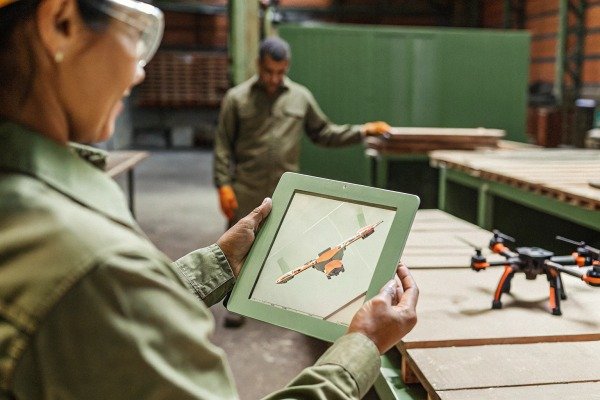
The most common mistake we see from Western buyers is sending a standard NDA drafted under US law (e.g., "Governing Law: State of California") to a Chinese factory. While this might look professional, it is practically useless if you need to sue a company in China. Chinese courts generally do not enforce judgments from US courts. To protect your business, you must play by the local rules where the assets and the factory are located.
The Importance of the "Chop"
In China, a signature by a CEO is not enough. The only thing that legally binds a company is the official red company seal, known as the "Chop" or "Gongzhang." When we sign contracts, we must stamp them with this seal. If your NDA only has a scribbled signature without the red seal, the company can later claim the person who signed it was not authorized to do so. Always insist that the electronic or physical copy includes this red circular stamp.
Accurate Company Identification
You must use the supplier's official Chinese registered name. For instance, "SkyRover" is our international brand, but our legal entity has a specific Chinese name registered in Xi'an. Using the English brand name in a legal contract can create a loophole where the defendant claims they are a different entity. Always ask for the supplier's Business License and record their "Unified Social Credit Code" in the contract. Social Credit Code 9
Dispute Resolution: Arbitration vs. Litigation
Litigation in Chinese local courts can be unpredictable for foreign companies. We strongly recommend selecting arbitration Arbitration Commission (CIETAC) 10 through the China International Economic and Trade Arbitration Commission (CIETAC) in Beijing or Shanghai. CIETAC panels are experienced with international trade, often have English-speaking arbitrators, and their rulings are generally faster and more strictly enforced than local court verdicts.
H3: Key Elements for a China-Enforceable NDA
- Governing Language: Chinese (or bilingual with Chinese prevailing).
- Governing Law: PRC Law.
- Dispute Resolution: CIETAC Arbitration.
- Identity: Full Chinese Legal Name + Social Credit Code.
- التنفيذ: Signature + Official Red Company Seal.
What specific clauses should I include to secure my business strategy and client list?
During our years exporting to the US and Europe, we have noticed that vague contracts often lead to misunderstandings about who owns the customer relationship. You need to prevent your supplier from bypassing you and selling directly to your hard-won fire department clients once the product is developed.
You must include a Non-Circumvention clause to prevent the supplier from contacting your clients directly and a Non-Solicitation clause to protect your employees. Additionally, define "Confidential Information" broadly to cover customer lists, pricing strategies, and tender details, ensuring these specific business assets remain exclusive to your company.

For distributors and procurement managers, the biggest risk is not just IP theft, but "cutting out the middleman." You spend years building relationships with local fire departments and securing government tenders, only for the factory to find out who the end-user is and offer them a lower price directly. To prevent this, your agreement needs to go beyond simple non-disclosure and become an NNN Agreement: Non-Disclosure, Non-Use, and Non-Circumvention.
The Non-Circumvention Clause
This is the most critical clause for your business model. It explicitly forbids the manufacturer from transacting directly with any contacts you introduce. For example, if you bring us a tender from the "California Department of Forestry," a non-circumvention clause prevents us from approaching them directly. It ensures that the value you add as a distributor or integrator is respected and protected.
Defining "Confidential Information" Correctly
Do not rely on generic definitions. Be specific. If you are sharing a spreadsheet of 500 potential fire department contacts, explicitly state that "Customer Lists," "Pricing Models," and "Tender Bid Strategies" are confidential. If you leave these out, a supplier might argue that knowing who the local fire chief is falls under public information.
Liquidated Damages
Proving the exact monetary loss from a breach is difficult. How much is a stolen client list worth? To avoid this legal headache, include a "Liquidated Damages" clause. This sets a specific penalty amount (e.g., $50,000 per breach) that the supplier must pay if they violate the agreement. In the Chinese legal context, this is very effective because it gives the judge a clear figure to enforce, rather than requiring you to prove abstract economic damages.
Table: Essential Clauses for Firefighting Drone NDAs
| نوع البند | الغرض | Why it matters for Buyers |
|---|---|---|
| Non-Disclosure | Keeps technical data secret. | Prevents competitors from seeing your drone specs. |
| Non-Use | Prevents internal use by supplier. | Ensures supplier doesn't use your molds for their own brand. |
| Non-Circumvention | Protects client relationships. | Stops the factory from selling directly to your customers. |
| Liquidated Damages | Sets a fixed penalty fee. | Makes the contract threatening and easier to enforce. |
| Non-Solicitation | Protects your staff. | Prevents the supplier from hiring your key engineers. |
الخاتمة
Securing a Non-Disclosure Agreement when purchasing firefighting drones is not just possible; it is a critical step for protecting your custom designs and market position. By understanding that manufacturers like us are open to NDAs for customized projects, and by ensuring your contract includes NNN clauses and is enforceable under Chinese law, you can collaborate safely. Proper legal preparation allows you to leverage our manufacturing capabilities while keeping your business plan secure.
الحواشي
1. Links to official emergency management strategies for firefighting context. ︎
2. Reference to international standards for unmanned aircraft systems. ︎
3. General background on the legal concept of NDAs. ︎
4. Explains the OEM business model mentioned in the text. ︎
5. Official definition and protection of intellectual property rights globally. ︎
6. Academic resource explaining the legal and technical aspects of reverse engineering. ︎
7. Technical documentation from a leading provider of drone flight control software. ︎
8. Example of high-end video transmission technology in the drone industry. ︎
9. Official Chinese government portal for verifying company registration and credit codes. ︎
10. Official site of the China International Economic and Trade Arbitration Commission. ︎

 English
  Spanish
  German
  French
  Dutch
Dutch  Arabic
