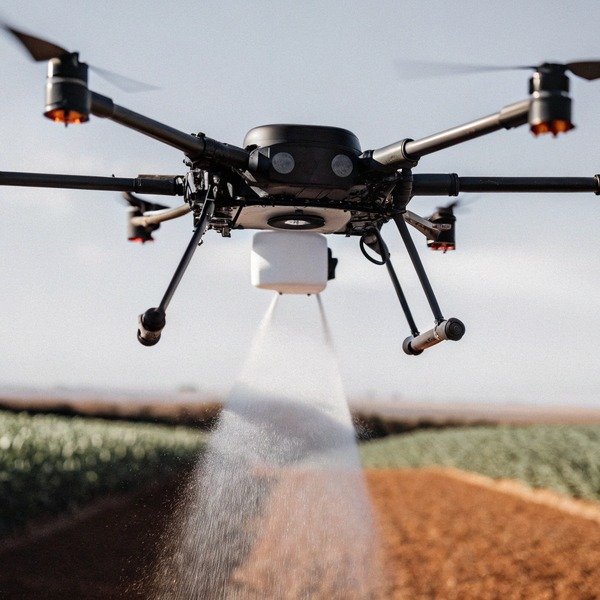
When we test our latest sprayer drones in the fields outside our Xi’an headquarters, we focus entirely on flight stability and nozzle pressure. However, once those units are packed and ready for our US clients, the focus shifts to logistics. We often see buyers get excited about the technology but then struggle with the complex alphabet soup of shipping terms, leading to unexpected fees or delayed planting seasons.
When buying agricultural drones internationally, choose FOB if you have logistics expertise or local partners to handle freight, insurance, and import duties, as it minimizes seller markups and gives you control over costs. Opt for DDP if you are a small buyer prioritizing simplicity, despite the higher upfront prices covering import clearance.
To help you protect your investment and budget effectively, let’s examine the specific implications of these choices for your business.
What are the actual cost differences between FOB and DDP for my agricultural drone order?
We frequently review invoices with our long-term distributors, and the price gap between shipping methods is often the first thing they notice. When we calculate quotes for a container heading to California, we have to factor in every potential risk, which changes the final number you see significantly.
FOB offers transparency, allowing you to pay the factory price plus actual freight costs, often saving 20–30% on the total landed cost. In contrast, DDP includes a significant premium, as sellers bundle risk margins, administrative fees, and third-party logistics markups into the final delivered price to cover potential import variables.
When you are importing high-value industrial equipment like our SkyRover agricultural drones, the sticker price is just the beginning. Understanding where your money goes under Free On Board (FOB) versus Delivered Duty Paid Free On Board (FOB) 1 (DDP) is crucial for maintaining your profit margins.
The Hidden Buffer in DDP Pricing
When you ask us for a DDP quote, we must ensure that we do not lose money on shipping. Since we are drone manufacturers, not a freight company, we hire third-party forwarders to handle the delivery to your door. Because international shipping rates fluctuate—especially with recent disruptions in global shipping lanes—we add a "safety buffer" to the price.
For example, if the actual shipping cost is $2,000, a supplier might charge you $3,000 under DDP terms to protect against sudden rate spikes or unexpected destination charges. You are essentially paying for an insurance policy against logistical headaches. While this gives you a predictable final price, you are almost certainly paying more than the actual market rate for freight.
FOB: The "Unbundled" Approach
With FOB, our financial relationship ends once we load the drones onto the ship at the Chinese port. You pay us for the drone and the local transport to the port. Then, you pay your own freight forwarder for the ocean or air transport.
This separation is powerful. It allows you to shop around for the best freight rates. If you have a good relationship with a US-based logistics provider, you can often secure shipping rates far lower than what a Chinese manufacturer can offer. You also avoid paying a markup on the freight cost itself.
Cost Breakdown Simulation
To visualize this, let’s look at a hypothetical scenario for importing a batch of spraying drones valued at $50,000.
| مكون التكلفة | فوب (مجاناً على متن الطائرة) | تسليم DDP (تسليم مدفوع الرسوم المدفوعة) |
|---|---|---|
| Drone Unit Cost | $50,000 | $50,000 |
| Export Clearance & Local Transport | متضمنة | متضمنة |
| International Freight | $2,500 (Paid by Buyer directly) | $4,500 (Built into price, markup included) |
| Import Duties & Taxes (25%) | $12,500 (Paid by Buyer directly) | $15,000 (Built into price, risk buffer added) |
| Customs Brokerage Fees | $300 | متضمنة |
| Last Mile Delivery | $500 | متضمنة |
| التكلفة الإجمالية المقدرة | $65,800 | $69,500 + |
As you can see, the DDP price is higher because the seller (us) must account for the worst-case scenario regarding duties and delivery fees. By managing it yourself under FOB, you keep those savings.
The Volatility Factor
Shipping rates for lithium-battery-powered devices are volatile. Drones are classified as Dangerous Goods (Class 9). البضائع الخطرة 2 If you choose DDP, the seller locks in a high price to cover this complexity. If you choose FOB, you can negotiate spot rates. In 2025, with shipping costs stabilizing but still high, the ability to negotiate your own freight contract can save you thousands of dollars per container.
Does choosing DDP simplify customs clearance and duties for my drone imports?
Our export team spends hours every week ensuring that battery certifications and chemical tank specifications meet international standards. We know that for many of our clients, the thought of dealing with US Customs and Border Protection is daunting and stressful.
Yes, DDP significantly simplifies the process because the seller assumes full responsibility for all import formalities, duties, and taxes. This is ideal for buyers without a customs broker, as it removes the administrative burden of handling complex agricultural drone regulations and tariff codes directly with government agencies.

For many procurement managers like yourself, the primary appeal of DDP is the "hands-off" experience. It transforms an international trade transaction into something that feels like a domestic purchase. However, when dealing with specialized agricultural technology, "simple" does not always mean "trouble-free."
The "Set It and Forget It" Appeal
Under DDP, the seller is the one who must clear the goods for import. This means we, as the manufacturer, are responsible for:
- Providing the correct Harmonized System (HS) codes. Harmonized System 3
- Paying the import duties and tariffs (which can be substantial for Chinese tech).
- Handling the paperwork for the battery regulations.
For a small farm or a startup distributor with no logistics department, this is a massive advantage. You do not need to apply for a customs bond or hire a broker. You simply wait for the truck to arrive at your warehouse.
The Regulatory Trap: Agricultural Nuances
However, agricultural drones face scrutiny that standard consumer electronics do not. طائرات زراعية بدون طيار 4 They are often subject to regulation by multiple agencies, including the EPA (because they dispense chemicals) and the DOT (due to large lithium batteries).
If you choose DDP, you are relying on the seller's freight forwarder to understand these US-specific nuances. If the seller’s forwarder misclassifies the drone to save money, the shipment could be flagged. Even though it is DDP, if the goods are seized, your business suffers the delay.
Who is the Importer of Record (IOR)?
This is a critical technicality. Under DDP, the seller acts as the Importer of Record. However, many foreign sellers do not have a registered business entity in the US. This can cause complications with the IRS and Customs.
Sometimes, sellers will use a "courier" method for DDP, which works for small parcels but is risky for palletized cargo. If you need to reclaim import VAT or have a paper trail for tax deductions, DDP can make accounting messy because you lack the official import documentation (Entry Summary 7501) since you didn't pay the duties directly.
Responsibilities Matrix
Here is how the workload shifts between you and the seller depending on your choice.
| Task | FOB Responsibility | DDP Responsibility |
|---|---|---|
| Hiring a Freight Forwarder | المشتري (أنت) | Seller (Us) |
| Paying Import Duties | المشتري (أنت) | Seller (Us) |
| Obtaining Customs Bond | المشتري (أنت) | Seller (Us) |
| Ensuring FDA/EPA Compliance | المشتري (أنت) | Seller (Us) |
| Handling Inland Trucking (US) | المشتري (أنت) | Seller (Us) |
| Unloading at Destination | المشتري (أنت) | المشتري (أنت) |
The Certification Gap
We have strong engineering capabilities and provide all necessary FCC and battery certifications. However, under DDP, the communication chain is longer. If Customs asks a question about the flight controller's frequency, the question goes to the trucker, then the broker, then the forwarder, then us. This game of "telephone" can cause delays. With FOB, your broker calls you, you email us, and we solve it immediately.
Am I liable for transit damage if I choose FOB for my industrial drone shipment?
We build our drone frames from high-strength carbon fiber, but even the toughest materials can suffer during a trans-Pacific voyage if a container is mishandled. We always advise our clients to think carefully about who bears the financial burden if a crate arrives crushed.
Under FOB terms, you become liable for damage the moment the cargo is loaded onto the vessel at the origin port. Therefore, you must arrange your own cargo insurance to protect your investment against rough handling, theft, or accidents during the long transit from China to your facility.
The concept concept of "risk transfer" 5 of "risk transfer" is central central to Incoterms 6 to Incoterms. In the world of precision agriculture, where a single drone can cost as much as a small car, understanding when you own the risk is vital.
The Critical Moment: Crossing the Ship's Rail
In an FOB agreement, the risk passes from us (the seller) to you (the buyer) the moment the goods are loaded on board the shipping vessel in China. If the crane operator at the port of Shanghai drops the container قبل it is on the ship, that is our problem. If the ship encounters a storm in the Pacific and the container slides overboard, or if the goods are damaged by saltwater leaks خلال the voyage, that is your problem.
This sounds intimidating, but it is standard practice for B2B transactions. The solution is simple: التأمين على البضائع.
Why Buyer-Controlled Insurance is Better
When you control the insurance (as you do with FOB), you control the claim process.
- FOB Scenario: You buy a policy from a reputable US insurer. If the drones arrive damaged, you file a claim locally. You get paid quickly and can order replacements.
- DDP Scenario: The seller is responsible for the goods until they reach your door. If goods arrive damaged, you have to prove it to the seller. The seller then has to claim it from their Chinese insurance provider. This process can take months. Meanwhile, you have broken drones and no refund.
Packaging Matters More Than Terms
Regardless of the term, physical protection is key. At our factory, we use custom-molded foam and reinforced flight cases for every unit. However, we have seen instances where consolidators (people who combine shipments from different factories) unpack and repack goods to save space.
If you choose FOB, you choose the consolidator. You can instruct them strictly: "Do not open the pallets." If you choose DDP, the seller chooses the cheapest consolidator, who might stack heavy steel pipes on top of your precision drones.
Managing High-Value Risks
Agricultural drones are not just plastic toys; they contain sensitive IMUs (Inertial Inertial Measurement Units 7 Measurement Units) and spray systems.
- Shock Damage: Even if the box looks fine, a hard drop can decalibrate sensors.
- Moisture: Sea freight is humid. Under FOB, you can specify that your forwarder uses moisture-absorbing desiccants or temperature-controlled containers.
- Theft: High-tech drones are targets for theft. Your own insurance policy can cover "all risks," whereas a seller's DDP policy might only cover "total loss" (meaning they only pay if the whole ship sinks).
Liability Checklist
Before signing an FOB contract, ensure you have these three things:
- An "All-Risk" marine cargo insurance policy.
- A clause in your purchase order requiring photographic evidence of the loaded container before the doors are sealed.
- A trusted freight forwarder who specializes in electronics or delicate machinery.
Which Incoterm offers better security for my supply chain when importing drones from China?
Our production schedule is rigorous, and we know that a delay in shipping can mean a distributor misses the crucial spring planting window. When we analyze successful deliveries versus problematic ones, the level of control the buyer retains over the logistics often determines the outcome.
FOB generally offers better security for experienced buyers because it grants total control over carrier selection and routing. By managing the logistics, you can avoid unreliable budget carriers often used by sellers to save money and ensure compliance with strict lithium battery transport regulations.

Security in the supply chain isn't just about preventing theft; it is about ensuring predictability and compliance. This is where the difference between "Seller's Choice" (DDP) and "Buyer's Choice" (FOB) becomes apparent.
The "Black Box" of DDP Shipping
When you buy DDP, the logistics process is a black box. You generally do not know:
- Which shipping line is carrying your goods.
- The exact route the ship is taking (is it going through conflict zones?).
- Where your goods are being transloaded (moved from ship to train/truck).
Sellers are incentivized to find the cheapest route, not the most secure one. This often means using indirect routes with multiple transshipments. Every time your drones are moved from one vessel to another, the risk of damage, loss, or delay increases.
FOB: Strategic Control
With FOB, you or your logistics partner act as the architect of the journey.
- Carrier Selection: You can choose premium carriers with better reliability records.
- Direct Routing: You can pay a bit more for a direct sailing from China to Long Beach or Savannah, cutting weeks off transit time.
- Visibilty: Modern freight forwarders provide real-time tracking dashboards. You know exactly where your inventory is.
The Lithium Battery Hurdle
This is the most critical security aspect for drones. Large agricultural drones run on high-capacity lithium polymer batteries. These are Class 9 Dangerous Goods. البضائع الخطرة من الفئة 9 8
Shipping lines are extremely strict about this. If paperwork is slightly wrong, the container stays on the dock.
- DDP Risk: If the seller's cheap forwarder tries to cut corners or misdeclare the batteries to save fees, the shipment can be held by the Coast Guard or maritime authorities. You might face fines even if you didn't organize the shipping.
- FOB Advantage: You hire a specialist forwarder who knows how to handle DG cargo. They ensure the UN3480 classification is correct on the Bill of Lading بوليصة الشحن 9. UN3480 classification 10 This compliance security is priceless.
Supply Chain Security Comparison
To help you decide which level of control suits your business model, consider this comparison.
| الميزة | FOB (Buyer Controlled) | DDP (Seller Controlled) |
|---|---|---|
| Route Visibility | High (Real-time tracking) | Low (Updates only when asked) |
| Speed of Delivery | Optimized (You choose direct routes) | Variable (Seller chooses cheapest) |
| Compliance Safety | High (You vet the forwarder) | Riskier (Seller may cut corners) |
| المرونة | High (Can reroute if needed) | None (Locked into seller's plan) |
| تسوية المنازعات | Direct with your local agent | Difficult (Must go through seller overseas) |
Future-Proofing Your Supply Chain
In the current geopolitical climate, tariffs and regulations change fast. If you are controlling the freight (FOB), you can react faster. For example, if a new tariff hits goods entering West Coast ports, you can divert your shipment to an East Coast port before it arrives. Under DDP, you are at the mercy of the seller's existing plan.
For a professional procurement manager, the ability to pivot and control the flow of goods is the ultimate security. While DDP feels safer because it is "easy," FOB is safer because it is "smart."
الخاتمة
Choosing between FOB and DDP for agricultural drones ultimately depends on your internal resources. If you are a large operation or distributor with a relationship with a freight forwarder, FOB is the superior choice; it saves you money, grants you control over compliance, and ensures you handle the insurance claims. However, if you are a smaller farm or first-time importer without logistics support, البرنامج الإنمائي provides a necessary shield against the complexities of customs and global freight, albeit at a higher cost. We recommend assessing your ability to manage the "Dangerous Goods" aspect of drone batteries before making your final decision.
الحواشي
1. Official US government definition of the specific trade term. ︎
2. International standards for the air transport of hazardous materials. ︎
3. Explains the international standard for classifying traded products. ︎
4. Reference to a leading manufacturer’s product documentation for context. ︎
5. The ICC defines the official rules regarding risk transfer in global trade. ︎
6. Official source for the definition and rules of Incoterms. ︎
7. General background on the technical components used in drone stabilization. ︎
8. Official US regulations for shipping hazardous lithium batteries. ︎
9. Definition of the legal document between shipper and carrier. ︎
10. Industry standard guidelines for classifying standalone lithium batteries in transport. ︎

 English
  Spanish
  German
  French
  Dutch
Dutch  Arabic
