
Seeing a new drone arrive at our factory loading dock is exciting, but shipping risks worry us. shipping risks 1 Damaged equipment causes costly downtime during critical spraying seasons.
Organize an efficient unboxing process by setting up a clean workspace and immediately verifying outer packaging integrity. Cross-reference all components against the packing list, perform a physical structural inspection, and conduct initial power-on tests. Document every step with photos to facilitate quick warranty claims if defects arise.
Follow these specific steps to ensure your fleet is ready for the field immediately.
What specific signs of transit damage should I check for on the outer packaging before accepting the delivery?
We pack our drones securely in Xi'an, yet rough international logistics can crush boxes. Accepting a damaged shipment blindly transfers liability to you, risking your investment.
Inspect the outer packaging for crushing, deep punctures, or water stains indicating exposure. Check shock-watch stickers or tilt indicators if present. Photograph any visible distress on the pallet or box corners before signing the delivery receipt to establish a clear chain of custody for insurance claims.
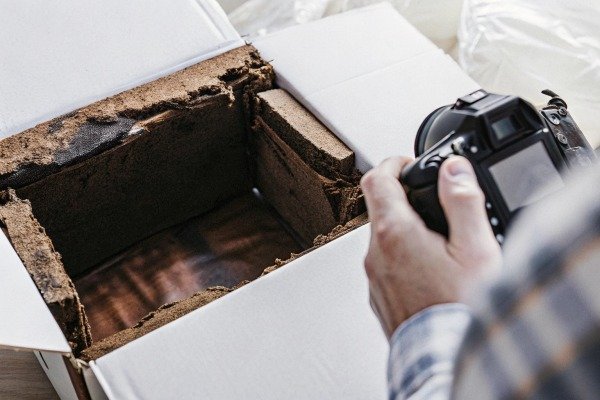
When we ship heavy industrial equipment like agricultural drones, the journey from the factory floor to your farm involves multiple transfer points. Trucks, forklifts, and cargo planes all pose potential risks. The outer packaging is your first line of defense and your first indicator of potential internal trouble. You must treat the acceptance of the package as a critical inspection point. If you sign for a package as "received in good condition" and later find internal damage caused by crushing, insurance claims become significantly harder to process.
Visual Indicators of Stress
You should look for specific red flags that suggest the box was mishandled. Drones contain sensitive IMUs (Inertial Measurement Units) and calibration sensors that can be de-calibrated Inertial Measurement Units 2 by severe shocks Inertial Measurement Units 3, even if the plastic shell looks fine. A crushed corner on a cardboard box often indicates a drop. Punctures suggest a forklift tyne might have pierced the protective layers.
Water stains are another critical sign. Electronic components and moisture do not mix. If you see watermarks or warping on the cardboard, moisture may have penetrated the internal foam. Additionally, look for "Tip N Tell" or "ShockWatch" indicators. We often apply these stickers to crates. If the indicator has turned red, the package was dropped or tilted beyond a safe angle.
Handling "Concealed Damage"
Sometimes the box looks perfect, but the item inside is broken. This is called concealed damage. However, you must still note any minor exterior anomaly on the delivery receipt (Bill of Lading) before the driver leaves. بوليصة الشحن 4 بوليصة الشحن 5 A simple note like "Box corner dented" preserves your right to file a claim later.
Assessment Checklist
Use the following table to guide your inspection of the outer shipping container:
| Damage Indicator | Potential Internal Issue | الإجراء المطلوب |
|---|---|---|
| Crushed Corners | Impact damage to motor arms or props. | Note on receipt; open immediately. |
| Punctures/Holes | Direct trauma to tank or electronics. | Refuse shipment if deep; else note and photograph. |
| Water/Oil Stains | PCB corrosion or battery shorting. | Inspect internal moisture indicators. |
| Broken Pallet | Drone crate dropped or destabilized. | Check for structural frame warping. |
| Resealed Tape | Tampering or customs inspection. | Verify inventory count instantly. |
By catching these signs early, you protect your business from assuming the cost of carrier negligence.
How do I cross-reference the packing list to ensure all agricultural drone components and spare parts are present?
Missing a single nozzle or specialized cable halts our clients' operations for weeks. Incomplete shipments frustrate field teams and delay urgent crop protection schedules.
Systematically match every item against the official commercial invoice and packing slip immediately upon opening. Verify the presence of the airframe, remote controller, batteries, charging hub, and small accessories like spare propellers and nozzle kits. Mark off each serial number to ensure inventory accuracy.

The excitement of unboxing a new high-tech tool often leads people to overlook small, critical components. In our experience, the items most frequently reported as "missing" are often just hidden in sub-compartments of the foam packaging. However, genuine shortages do happen. Agricultural drones are complex systems comprising not just the aircraft, but a liquid system, power system, and ground control station. ground control station 6 liquid system 7 You need a methodical approach to inventory management right out of the box.
The Critical Component Inventory
Do not simply glance at the box and assume everything is there. Take the packing list provided inside the box (or the commercial invoice from your email) and physically touch each item as you check it off. Organize the items on a clean table. Group them by category: airframe, power, control, and accessories.
Pay special attention to the "consumables" and small hardware. A missing gasket for the spray tank lid might seem minor, but it renders the entire liquid system unusable. Similarly, RTK dongles or specific data cables are often small and tucked into pockets within the remote controller case.
تتبع الرقم التسلسلي
This is the best time to start your asset management. Every major component—the drone frame, the remote controller, and the batteries—will have a unique serial number. remote controller 8 Record these immediately. If you need support from our engineering team later, we will ask for these numbers to trace the production batch.
Essential Agricultural Drone Checklist
Below is a breakdown of what you should typically expect and verify in a standard agricultural drone kit:
| فئة المكوّنات | Key Items to Verify | ما أهمية ذلك |
|---|---|---|
| Main Airframe | Center fuselage, folding arms, motors. | The core flying unit; check arm locking mechanisms. |
| نظام الرذاذ | Liquid tank, pump, hoses, nozzles. | Essential for operation; check for tank cracks. |
| نظام الطاقة | Intelligent batteries, charging hub, AC cables. | High-value items; verify count and plug types. |
| Control System | Remote controller, strap, RTK module. | The pilot's interface; check stick condition. |
| الإكسسوارات | Spare props, tools, screws, gaskets. | Critical for field repairs and maintenance. |
If you find a discrepancy, stop. Do not throw away any packaging material. Often, small parts are taped to the underside of cardboard inserts. If an item is truly missing, notify the supplier immediately with the packing slip reference number.
What are the critical first steps for assembling and powering on the drone to verify basic functionality?
A loose motor arm from the factory can lead to catastrophic crashes. Skipping bench tests risks destroying the machine before it ever sprays a single acre.
Assemble the landing gear and unfold arms, checking for secure locking mechanisms and structural rigidity. Install charged batteries and power on the remote first, then the drone, to verify connection status. Check motor rotation smoothness and sensor initialization without mounting propellers to prevent accidental injury.

Once you have verified the inventory, the physical setup begins. This is not the time to rush to the field. You need to perform a "bench test" in a controlled environment. We design these machines to be robust, but assembly errors or shipping vibrations can loosen vital connections. Your goal here is to prove that the hardware works before you put it in the air.
Structural Integrity Checks
Start with the mechanical assembly. Unfold the arms and lock them into place. The locking sleeves should be tight and secure; there should be no "play" or wobble in the arms. If an arm wiggles, the vibration during flight will confuse the flight controller, leading to instability. وحدة التحكم في الطيران 9 Check the landing gear mounts and the spray tank attachment points. Everything should feel solid.
Rotate the motors by hand. They should spin smoothly with no grinding noise or resistance. If a motor feels "gritty," it may have been damaged by an impact. Do not power it up; contact support.
The "Dry" Power-On Sequence
For the first power-on, do not install the propellers. This is a safety rule we cannot stress enough. If the drone behaves unexpectedly, spinning props can cause serious injury.
- Turn on the Remote Controller (RC) first.
- Insert the battery into the drone and power it on.
- Wait for the connection. The RC should display "Connected" and show live telemetry.
Software and Firmware Handshake
Once connected, check the app interface. You are looking for error messages. Does the GPS initialize? Do the radar and obstacle avoidance sensors show active status? تجنب العوائق 10 You should also perform a "dry spray" test. Listen for the pump engaging when you trigger the spray command (do this briefly to avoid running the pump dry for too long, or use a small amount of distilled water).
Pre-Flight Bench Test Parameters
Use this table to guide your functional verification:
| System | Test Action | Expected Outcome |
|---|---|---|
| Link Quality | Power on RC and Drone. | Solid green link light; video transmission clear. |
| المحركات | Idle spin test (No Props). | All motors spin evenly; no abnormal noise. |
| IMU/Compass | Check status in App. | Interference levels low; "Ready to Fly" status (GPS). |
| نظام الرذاذ | Manual pump toggle. | Pump motor sound is audible and consistent. |
| البطارية | Check cell voltage. | All cells balanced; voltage difference <0.05V. |
If any of these tests fail, do not attempt to fly. A bench failure is a safety warning. Resolve the issue or contact the manufacturer before heading to the field.
What documentation and photos should I prepare if I find defects or discrepancies during the unboxing process?
Vague emails about "broken parts" delay our engineering team's ability to help you. Without clear evidence, warranty claims stall while crops remain untreated and vulnerable.
Capture high-resolution photos and continuous video of the unboxing to prove the condition upon arrival. Photograph the shipping label, the specific damage clearly, and the serial number of the affected component. Compile a detailed report referencing the packing list item number to expedite the replacement process.

When a problem arises, time is money. As a buyer, you want a resolution immediately—either a refund or a replacement part sent via express airmail. To get this, you must provide undeniable evidence. From our side as manufacturers, we need to know if the damage happened during shipping (insurance claim) or assembly (factory defect). Clear documentation bridges this gap and removes ambiguity.
Creating an Evidence Package
The most powerful tool you have is your smartphone camera. We strongly recommend recording a continuous video of the entire unboxing process. Start filming before you cut the tape. Show the label, the sealed box, and the opening of the package. If you find a broken part, zoom in on it immediately in the video. This "unboxing video" is irrefutable proof that the damage existed before you touched the product.
If you are past the video stage, take high-resolution photos. Do not just take a close-up of the scratch. Take three types of photos:
- Wide shot: Shows the entire unit and the box.
- Medium shot: Contextualizes where the damage is on the drone.
- Macro shot: Shows the detail of the defect (crack, bent pin, etc.).
The Warranty Claim Workflow
Always photograph the serial number (SN) of the specific part. If a motor is broken, we need the motor's SN or the arm's SN, not just the general drone SN. This helps us track the batch quality. When writing your email, be precise. Instead of saying "It's broken," say "The left-front motor arm (M2) has a hairline crack near the folding joint. Box showed impact marks on that corner."
Evidence Checklist for Claims
Include these elements in your report to ensure a fast response:
| Document Item | الغرض | Tip |
|---|---|---|
| Shipping Label Photo | Proves tracking and carrier details. | Ensure text is legible. |
| فيديو فتح العلبة | Proves item arrived damaged. | Keep it one continuous take. |
| Defect Photos | Shows specific technical issue. | Use good lighting; no blur. |
| صورة الرقم التسلسلي | Identifies the exact unit. | Essential for warranty validation. |
| Packing List Copy | Identifies missing items. | Circle the missing item. |
By preparing this package قبل you contact support, you reduce the back-and-forth emails from ten to one. We can look at the evidence, validate the claim, and ship the replacement part immediately.
الخاتمة
Rigorous inspection secures your investment and ensures field readiness. Efficient unboxing prevents downtime, allowing you to focus on precision agriculture rather than equipment troubleshooting.
الحواشي
1. International authority on packaging standards to mitigate transit damage. ︎
2. General overview of the technology used in drone stabilization. ︎
3. IEEE technical standards for Inertial Measurement Units used in navigation and control systems. ︎
4. General background on the legal and logistical importance of the Bill of Lading. ︎
5. Legal definition of this critical shipping document. ︎
6. Technical overview of UAV control system components. ︎
7. Technical details on the liquid spraying systems used in industrial agricultural drones. ︎
8. Technical specifications for a standard agricultural drone remote controller from a market leader. ︎
9. Documentation from a leading open-source drone flight control standard. ︎
10. Explanation of the robotic and sensor concepts behind obstacle avoidance systems. ︎

 English
  Spanish
  German
  French
  Dutch
Dutch  Arabic
