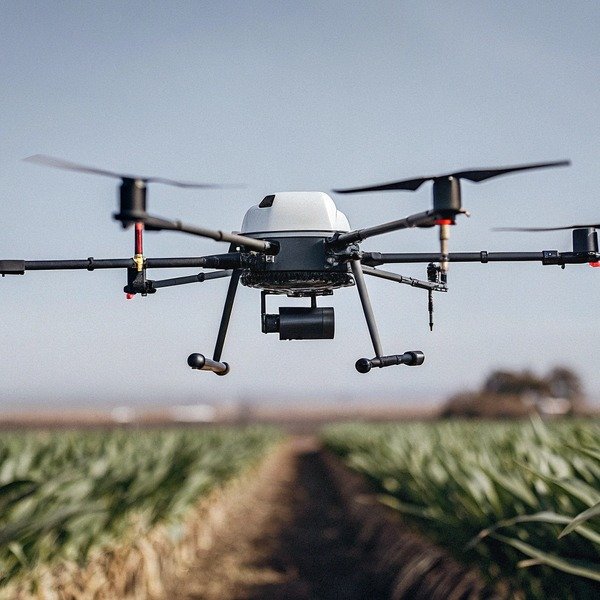
Watching a heavy drone struggle against the wind with a depleted battery is a nightmare scenario we work tirelessly to eliminate in our flight control labs. flight control labs 1
You should evaluate the RTH strategy by verifying if the system uses dynamic power calculations rather than static percentages. Prioritize drones with omnidirectional obstacle avoidance that functions during low-power modes and ensure the software allows configurable safety thresholds based on wind resistance and payload weight.
Let’s examine the specific technical criteria you must check to protect your equipment investment.
How does the system calculate the precise power needed to return to my specific home point?
When our engineers calibrate flight algorithms calibrate flight algorithms 2, we find that relying on simple distance checks is dangerous for heavy agricultural payloads.
Advanced systems calculate power needs by analyzing real-time distance, current wind speed, and payload weight simultaneously. Instead of a fixed battery percentage, the flight controller dynamically estimates the energy required to fly back against wind resistance, ensuring the drone lands with a safe buffer.
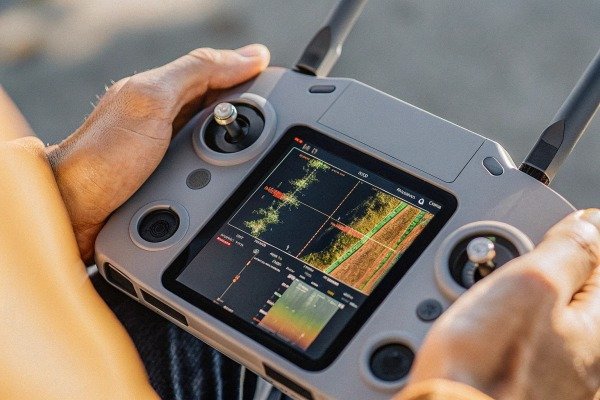
The Danger of Static Percentage Triggers
In the early days of drone development, many systems used a simple rule: if the battery hits 20%, come home. For a photography drone, this is usually fine. For an agricultural drone carrying 40 liters of liquid, this can be catastrophic.
If your drone is 500 meters away, flying downwind with a full tank, it consumes very little power. However, when it turns around to come home, it might be fighting a 15 mph headwind fighting a 15 mph headwind 3. If the system only looks at the "20%" number, it will not have enough energy to overcome that wind resistance. We see this often with entry-level controllers that do not account for environmental physics.
Dynamic Energy Estimation
High-end agricultural drones use "Smart RTH" or dynamic logic. This software constantly runs a math equation in the background. dynamic logic 4 It looks at three main factors:
- Distance to Home: The exact path length to the landing pad.
- Current Consumption Rate: How much power the motors are drawing right now to maintain position.
- External Resistance: The impact of wind speed and direction.
When the flight controller detects that the energy required to return is approaching the current battery level (plus a safety buffer), it triggers the return immediately, whether the battery is at 15% or 35%.
The Impact of Payload Weight
A unique challenge in agriculture is the changing weight of the aircraft. A drone returning with an empty tank is significantly lighter and more agile than one returning with a partial load.
Superior systems monitor the flow meter data. They know if the tank is empty or half-full. If the tank has liquid, the drone is heavier. The system calculates that the motors need more voltage to lift that weight. Consequently, it will trigger the Return-to-Home (RTH) sequence earlier than if the tank were empty. This prevents the battery from sagging below critical voltage levels under load.
Comparison of Calculation Methods
To help you distinguish between basic and professional systems, refer to the comparison table below.
| الميزة | Basic RTH System | Intelligent RTH System |
|---|---|---|
| Trigger Logic | Fixed % (e.g., always at 20%) | Dynamic calculation (Real-time needs) |
| Wind Factor | Ignored | Adjusted for headwind/tailwind |
| Payload Factor | Ignored | Adjusts for liquid weight in tank |
| Safety Margin | Often insufficient in high winds | Guarantees safe landing buffer |
| مستوى المخاطرة | High for large fields | Low for all conditions |
Can I adjust the low-battery trigger percentage based on my field size and flight conditions?
We frequently advise our international clients that rigid software settings destroy operational efficiency on large farms operational efficiency 5 with variable terrain.
Yes, professional agricultural drones allow you to customize low-battery triggers to match your operational reality. You can set conservative thresholds for large, windy fields to ensure safety, or lower percentages for small, controlled environments to maximize flight time and chemical application per battery cycle.
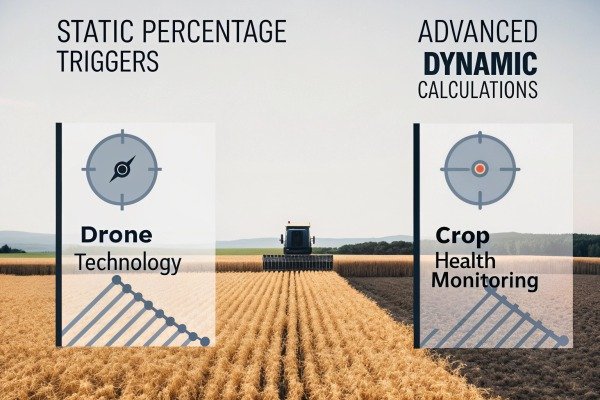
Balancing Safety and Efficiency
One of the most frequent questions we receive from procurement managers is about flight time. Everyone wants longer duration. However, duration is directly linked to how aggressively you discharge the battery.
If you are spraying a small, flat field that is only 200 meters from your truck, you do not need a 30% battery buffer. You might safely fly down to 15%, squeezing out an extra few acres of coverage. Conversely, if you are operating over a 100-acre cornfield with hills and strong gusts, leaving the setting at 15% is reckless. You need the ability to manually raise that trigger to 25% or 30%.
User-Configurable Parameters
When evaluating a new drone platform, ask to see the settings menu. You should look for a slider or an input field for "Low Battery RTH."
This flexibility allows you to adapt to daily conditions. On a calm morning, you can be aggressive. On a windy afternoon, you can be conservative. Some advanced ground station software even allows you to set different profiles for different fields. If you know "Field A" has a line of tall trees that requires the drone to climb high to return, you can save a profile with a higher energy reserve requirement for that specific location.
Accounting for Battery Age (State of Health)
Another critical reason for adjustable triggers is the aging of your power packs. Lithium batteries degrade over time Lithium batteries degrade over time 6. A battery with 500 cycles does not hold voltage as well as a brand new one.
As batteries get older, their internal resistance increases. المقاومة الداخلية 7 When the drone demands high power (like during a fast return flight), the voltage drops faster. If your software allows adjustment, you can increase the return threshold for older batteries. This compensates for their reduced performance and prevents sudden power loss during the return leg.
Recommended Settings for Different Scenarios
Here is a guide on how you might adjust these settings based on common operational variables.
| السيناريو التشغيلي | Recommended RTH Trigger | Reason for Adjustment |
|---|---|---|
| Small Field / Calm Weather | 15% - 20% | Close proximity allows for maximum flight time efficiency. |
| Large Field / High Wind | 25% – 30% | Headwinds increase energy consumption significantly during return. |
| Hilly Terrain / Obstacles | 25% – 30% | Climbing altitude to clear obstacles requires extra power bursts. |
| Old/Degraded Batteries | +5% to Standard | Compensates for voltage sag under heavy load. |
| Cold Weather (<10°C) | +5% to +10% | Low temperatures reduce chemical reaction speed in batteries. |
Will the obstacle avoidance radar remain fully functional during a low-battery emergency return?
During our safety trials, we intentionally deplete batteries to the limit to ensure our obstacle avoidance sensors never shut down prematurely.
The obstacle avoidance radar must remain active during low-battery returns to prevent collisions with trees or silos. High-quality drones prioritize power to these sensors even in critical energy states, whereas cheaper models might disable them to save power, significantly increasing the risk of a crash.
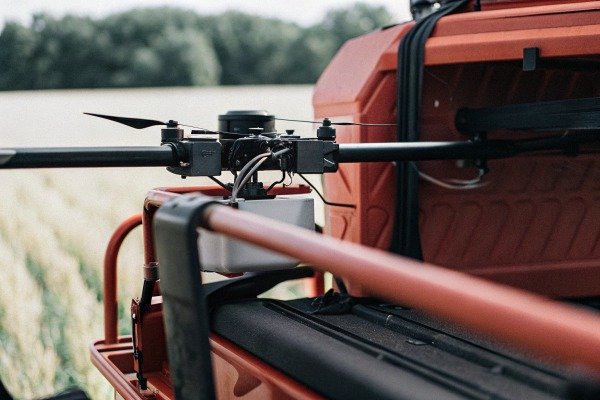
The Power Prioritization Dilemma
When a battery is critically low, the drone's power management unit (PMU) has to make tough decisions. It needs to send electricity to the motors to keep the aircraft in the air. However, ancillary systems like radars, cameras, and spray pumps also consume power.
In poorly designed systems, the drone enters a "Power Saving Mode" that shuts off non-essential systems. If the manufacturer classifies the radar as "non-essential," the drone becomes blind. It will fly a straight line back to home. If there is a tree or a power line in that path, the drone will crash.
Why Radar is Critical During RTH
The Return-to-Home path is often a straight line from the drone's current position to the landing pad. Unlike the carefully planned mission path you created, this return line might cross unexpected obstacles.
For example, you might be spraying behind a windbreak. When the battery hits the trigger, the drone climbs to a "Safe RTH Altitude" and flies home. If that altitude isn't set high enough, or if there is a new structure, the obstacle avoidance radar is the only thing saving the machine. It needs to detect the object and actively fly around or over it.
Omnidirectional Protection
You should specifically look for "Omnidirectional" sensing. Some drones only have front-facing radar. If the drone is flying sideways or rotating during its return adjustment, it might hit something it cannot see.
We recommend testing this safely. Ask the supplier for a demonstration video of an RTH sequence where an obstacle is placed in the path. Does the drone stop? Does it bypass? Does the radar warning appear on the controller screen even when the battery icon is flashing red?
Energy Cost of Avoidance
Navigating around an obstacle takes more energy than flying straight. Intelligent systems factor this in. If the drone encounters an obstacle during a low-battery return, it calculates if it has enough power to fly around it. If going around takes too much energy, it may force a landing immediately rather than risk falling out of the sky while trying to bypass the tree. This decision-making process is a hallmark of premium flight controllers.
Sensor Functionality Checklist
| المكوّن | Status in Low Battery Mode | ما أهمية ذلك؟ |
|---|---|---|
| المحركات | Full Power | Essential for flight. |
| Spray Pump | Auto-OFF | Saves power and stops chemical waste. |
| Radar/Vision | MUST BE ON | Prevents collision during autonomous return. |
| Video Link | Low Quality / ON | Allows operator to see where the drone is landing. |
| RTK Module | ON | Ensures the landing is precise, not just approximate. |
What safety protocols trigger if the drone cannot reach my landing spot before the battery is fully depleted?
We design specific fail-safes because specific fail-safes 8 we understand that unexpected wind shifts can sometimes make the original home point unreachable. design specific fail-safes 9
If the battery is too low to reach the home point, the drone initiates a forced landing safety protocol. It will descend slowly at its current location or divert to a pre-set alternate safe zone, using visual sensors to find flat ground and avoid damaging the crop or the aircraft.

The "Point of No Return"
There comes a moment in every flight where the battery voltage is so low that the drone physically cannot fly another 100 meters. If the drone is still far from home, continuing the return journey is dangerous. The battery could cut out completely, causing the drone to drop like a stone.
To prevent this "falling out of the sky" scenario, flight controllers use a tiered safety logic. The final tier is the Critical Low Battery Warning. At this stage, the drone ignores the "Return to Home" command and switches to "Land Here."
Emergency Forced Landing
When this protocol triggers, the drone will stop its horizontal movement and begin to descend vertically. This is a controlled descent. The motors are still running, but the goal is to get the hardware on the ground immediately.
However, landing blindly is risky. The drone might be over a pond, a rocky patch, or valuable equipment. Advanced drones use their downward-facing cameras and sensors to scan the ground. If they detect water or uneven terrain, they may nudge horizontally to find a safer patch within a few meters.
Multi-Home Points and Safe Zones
A newer feature we see in the industry is the ability to set "Alternate Landing Points." In your mission planning software, you can designate a few clear areas around the field as safety zones.
If the drone calculates that it cannot make it back to the truck (Home Point A), it checks if it can reach Safe Zone B or C. If Safe Zone B is closer, it diverts there. This is much better than landing in the middle of a tall corn crop, where retrieving a heavy drone is physically exhausting and damages the plants.
Breakpoint Memory for Recovery
Once the drone lands due to low battery, the mission is paused. A crucial feature to evaluate is "Breakpoint Memory."
After you walk out, swap the battery, and relaunch the drone, does it remember where it stopped? Good systems save the exact GPS coordinate and the percentage of the field covered. GPS coordinate 10 When you power up with a fresh battery, the software should ask: "Resume mission from breakpoint?" This saves you from having to manually reprogram the flight path or guess where the drone left off.
Protocol Hierarchy Table
| مستوى الأولوية | حالة البطارية | Drone Action | Operator Control |
|---|---|---|---|
| المستوى 1 | Low Warning (e.g., 30%) | Trigger RTH (Return to Home) | Can cancel and continue flying |
| المستوى 2 | Critical Warning (e.g., 15%) | Force RTH (Cannot Cancel) | Can steer to avoid obstacles |
| المستوى 3 | Emergency Landing (e.g., 5%) | Descend vertically immediately | Limited lateral movement only |
| المستوى 4 | Voltage Cutoff | Motor shutdown (Crash risk) | لا يوجد |
الخاتمة
Evaluating the intelligent return-to-home strategy is about more than just ensuring the drone comes back; it is about guaranteeing safety under pressure. By selecting a system with dynamic power calculation, adjustable triggers, active obstacle avoidance, and robust emergency protocols, you protect your investment and ensure operational continuity. Always verify these features before you buy.
الحواشي
1. The FAA provides the regulatory framework and safety standards for unmanned aircraft systems and flight control. ︎
2. Technical reference on UAV flight algorithm calibration. ︎
3. Scientific study on wind impact on drone flight energy. ︎
4. Official documentation from a leading manufacturer explaining the logic behind intelligent return-to-home systems. ︎
5. Government source on efficiency in precision agriculture. ︎
6. National lab research on battery aging physics. ︎
7. Background information on how internal resistance affects battery voltage drop and overall performance over time. ︎
8. Regulatory standards for drone safety mechanisms. ︎
9. ASTM International develops consensus standards for unmanned aircraft system safety, performance, and fail-safe protocols. ︎
10. General reference for the global positioning system used for precise drone navigation and mission breakpoints. ︎

 English
  Spanish
  German
  French
  Dutch
Dutch  Arabic
