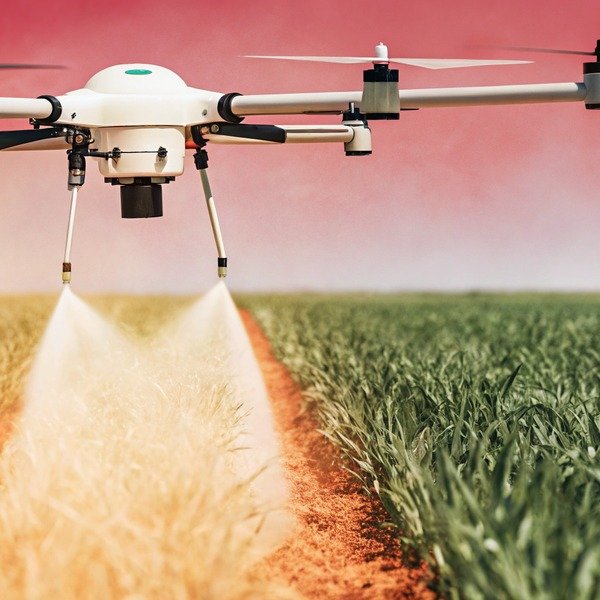
When our team in Xi’an finalizes the specs for a new heavy-lift sprayer, we often worry that customers only look at the sticker price. Buying a drone without calculating long-term expenses is a recipe for stalled operations and blown budgets.
Beyond the initial hardware cost, you must budget for significant ownership expenses including battery replacements, generator fuel, annual maintenance, insurance, and software subscriptions. These operational costs can comprise up to 75% of the total investment over five years, driving per-acre costs to over $12 for typical farming operations.
Let’s break down the specific financial realities that often catch procurement managers off guard.
What should I expect to spend on annual maintenance and spare parts replacements?
We frequently analyze returned components at our service centers to see exactly how field conditions degrade hardware. Ignoring the reality of wear and tear leads to unexpected downtime right in the middle of a critical spraying window.
You should budget approximately 10% to 20% of the drone’s initial value annually for maintenance, covering high-wear parts like spray nozzles, pump seals, and propellers. For a heavy-use commercial fleet, this ensures safety and application precision, preventing minor issues from becoming total airframe failures.
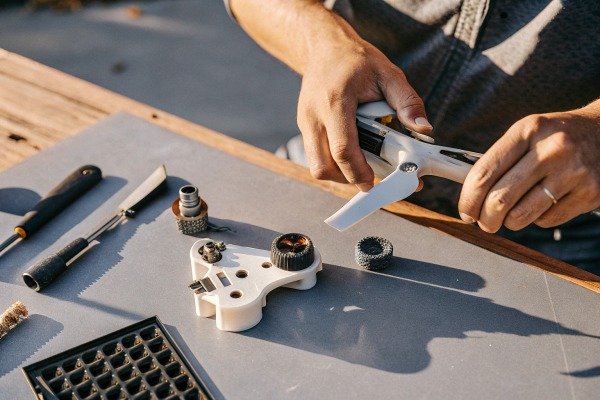
When we design our SkyRover frames, we aim for durability, but the harsh environment of agricultural spraying—involving corrosive chemicals, dust, and high humidity—inevitably takes a toll on the hardware. Many buyers assume the drone will fly perfectly for years with zero input. The reality is that an agricultural drone is more like a tractor than a consumer camera drone; it requires a strict service schedule.
The Reality of Consumables
The most immediate hidden costs are "consumables." These are parts that are designed to wear out. Nozzles, for instance, are constantly subjected to abrasive chemical flow. If you are using wettable powders, your nozzles might lose their calibration wettable powders 1 after just a few hundred acres. Flying with worn nozzles results in uneven application, which wastes expensive chemicals and risks crop health.
Propellers are another critical cost. Even without a crash, the leading edges of carbon fiber props get pitted by dust and insects. This pitting reduces aerodynamic efficiency, forcing the motors to work harder and draining batteries faster. We recommend swapping props at least once a season or every 200 flight hours, whichever comes first.
The "Crash Kit" Necessity
Smart fleet managers do not wait for a part to break before ordering a replacement. Shipping times from China to the US can vary, and a three-day delay during fungicide season can cost you thousands in lost crop yield. We strongly advise purchasing a "crash kit" or a redundancy package alongside the main unit. This kit typically includes extra landing gear, motor mounts, and arms. While this adds to the upfront capital expenditure (CapEx), it saves money in operational expenditure (OpEx) by minimizing downtime.
Maintenance Cost Projections
Below is a breakdown of typical maintenance costs for a standard 40-liter agricultural drone operating over 1,500 acres annually.
| فئة المكوّنات | Frequency of Replacement | Estimated Annual Cost (USD) | Impact on Operation |
|---|---|---|---|
| نظام الرذاذ | Every 200-300 hours | $300 – $500 | Prevents leaks and ensures dosage accuracy. Includes pumps and nozzles. |
| نظام الدفع | Every season (or damage) | $200 – $400 | Worn props reduce flight time and stability. |
| الأجزاء الهيكلية | On incident/Annual check | $500 – $1,500 | Landing gear shock absorption often wears out first. |
| Labor/Service Fees | Annual Overhaul | $500 – $800 | Professional diagnostic and deep cleaning. |
Do I need to budget significant amounts for battery replacements and charging infrastructure?
During our flight endurance tests in Chengdu, we see firsthand how quickly aggressive flight profiles deplete energy reserves. If you do not plan for power cycling limits, your expensive drone becomes nothing more than a static display piece.
Yes, battery costs are substantial, often requiring a budget of $2,500 per battery with a lifespan of 300 to 500 cycles. To maintain continuous flight operations, you need at least three to four batteries per drone, plus high-capacity generators for field charging, adding thousands to your initial outlay.
The battery is the single most expensive consumable in the electric aviation ecosystem. Many procurement managers calculate the drone price but forget that the "fuel tank" needs to be replaced regularly. Unlike a diesel tractor tank that lasts for decades, lithium-polymer batteries degrade chemically lithium-polymer batteries 2 lithium-polymer batteries 3 with every charge and discharge cycle.
The Cycle Life Math
Most intelligent flight batteries used in heavy-lift agricultural drones are rated for roughly 500 to 1,000 charge cycles. However, "rated" life and "useful" life are different. In high-temperature field conditions, or when pushing the drone to maximum payload, degradation accelerates. If you are spraying 1,000 acres a year, you might cycle your battery set hundreds of times.
Financially, this means a battery costing $2,000 to $2,500 is a recurring expense every 1 to 2 years, depending on volume. If you run a fleet, this cost scales linearly. You cannot skimp here; using degraded batteries risks sudden voltage drops mid-flight, which can lead to catastrophic crashes.
Field Power Logistics
The drone does not plug into a wall outlet in the middle of a cornfield. You need robust field charging infrastructure. A standard household generator is insufficient for the rapid charging rates required to keep a drone in the air continuously. You need an industrial-grade generator (often 9,000 watts or higher) capable of 220V output.
This introduces a secondary hidden cost: fuel for the generator. For every hour the drone flies, the generator is running hard to charge the standby batteries. We have seen data suggesting generator fuel costs can range from $0.20 to $0.72 per acre sprayed. Furthermore, you need a vehicle capable of transporting the drone, the generator, the water tank, and the mixing equipment. A standard pickup truck might need a specialized trailer, adding another $5,000 to $10,000 to your startup costs.
| Cost Item | Estimated Price (USD) | Lifespan/Frequency | الملاحظات |
|---|---|---|---|
| Intelligent Flight Battery | $2,000 – $3,000 each | 300-600 Cycles | Need 3-5 per drone for continuous rotation. |
| Fast Charging Station | $1,500 – $2,500 | 3-5 سنوات | High-wattage output required for fast turnaround. |
| Industrial Generator | $1,500 – $3,000 | 5+ Years | Fuel consumption adds to operational cost per acre. |
| Cooling Equipment | $200 – $500 | 3-5 سنوات | Water baths or AC units to cool batteries before charging. |
Are there recurring subscription fees for flight planning software or data analysis platforms?
Our software engineers work hard to integrate open protocols, but we know that advanced farming requires specialized third-party intelligence. Hardware provides the muscle, but without paid software updates and data processing, the drone lacks the brain to perform efficiently.
Recurring software fees are common, ranging from $500 for basic certification compliance to over $10,000 annually for advanced fleet management and spectral analysis platforms. While basic manual flight is often free, automated missions and RTK precision services usually require paid subscriptions.
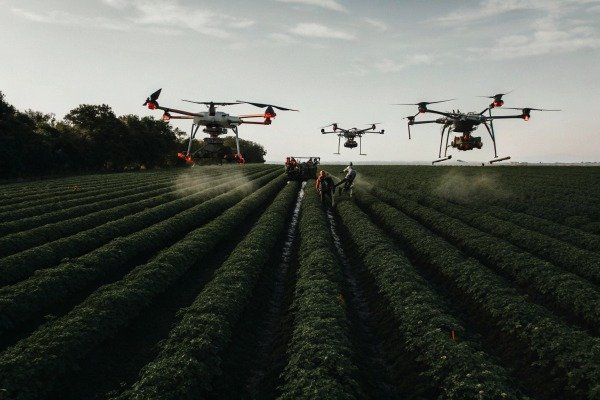
The days of "buy it once, own it forever" are fading in the ag-tech sector. While the basic flight control app provided by manufacturers like us is usually free and sufficient for manual spraying, commercial operations require much more sophistication. This is where Software-as-a-Service (SaaS) fees enter your budget.
The Cost of Precision (RTK)
Standard GPS is accurate to within a few meters. For crop spraying, this is not good enough—you need centimeter-level accuracy to avoid skips and overlaps. To achieve this, your drone connects to an RTK (Real-Time Kinematic) network.
Some farmers buy their own D-RTK base station (a one-time hardware cost of roughly $3,000), but many prefer connecting to a network via NTRIP. These network corrections are subscriptions. Depending on your region in the US, an RTK network subscription can cost anywhere from $1,000 to $2,500 per year per login. Without this, your autonomous flight lines will drift, reducing the effectiveness of the treatment.
Mapping and Analysis
If your workflow involves scouting fields to create prescription maps (spot spraying), you need photogrammetry software. photogrammetry software 4 Processing multispectral images into NDVI maps requires immense computing power NDVI maps 5. Cloud-based platforms charge based on the acreage processed or strictly by monthly subscription.
- Basic Stitching: Free or low cost (e.g., $50/month).
- Advanced Ag Analysis: Can reach $300+ per month.
- إدارة الأسطول: If you have 5 drones, you need software to track pilot logs, battery health across the fleet, and maintenance schedules.
Data Storage
Drone maps are massive files. A single field scan can generate gigabytes of data. Storing this securely in the cloud for year-over-year comparison (to track soil health improvements) incurs additional cloud storage fees.
Software Tier Breakdown
| Software Type | الغرض | نموذج التسعير | Estimated Annual Cost |
|---|---|---|---|
| Flight Control App | Basic operation & mission planning | usually Free (bundled) | $0 |
| RTK Network Service | High-precision positioning | الاشتراك السنوي | $1,000 - $2,500 |
| Photogrammetry (Cloud) | Creating maps from images | Monthly/Per Acre | $2,000 – $5,000 |
| Fleet Management | Logging flights, compliance | Per User/Drone | $600 – $1,500 |
How much do international shipping and customs duties add to the final landed cost?
We handle export paperwork daily for our US clients, and it is painful to see excitement turn to frustration over unexpected invoices at the port. A transparent conversation about logistics ensures that the price on the contract matches the reality of your bank transfer.
International shipping and customs duties can increase the final landed cost by 15% to 25% above the factory price. You must account for Section 301 tariffs on Chinese technology, freight insurance, and brokerage fees, which vary significantly based on the chosen Incoterms.

When importing industrial technology from China to the United States, the "Landed Cost" is the only number that matters. Many buyers look at the FOB (Free on Board) price listed on a website and assume that is what they will pay. This is a dangerous assumption.
Understanding Incoterms
The price we quote depends heavily on the Incoterms (International Commercial Terms) agreed upon المصطلحات التجارية الدولية 6. المصطلحات التجارية الدولية 7
- EXW (أعمال سابقة): You pay for everything from our factory door in Chengdu to your doorstep. This looks cheapest but carries the most risk and logistical work for you.
- DDP (التسليم مدفوع الرسوم المدفوعة): We handle shipping and taxes. The price is higher, but it is fixed. This is what we recommend for clients like Olivia Smith who want zero surprises.
- CIF (Cost, Insurance, and Freight): We get it to a US port, but you handle customs and final delivery. This is where hidden costs often explode.
The Tariff Impact
The United States imposes specific tariffs on Chinese-origin technology. Under Section 301 trade actions, drones and their associated parts may face additional duties Section 301 trade actions 8 on top of standard rates. While these rates fluctuate based on trade policy, they have historically added significantly to the import bill. A $20,000 drone package could easily attract $5,000 in duties and taxes.
Freight Volatility
Air freight for large batteries is classified as Dangerous Goods (DG Class 9). Dangerous Goods 9 This is expensive. Shipping a drone via sea freight is cheaper but takes 30-45 days. Air freight is fast (5-7 days) but can cost 3-4 times more. Furthermore, you will likely need a customs broker to file your entry with US Customs and Border Protection (CBP). Their fees, plus the Merchandise Processing Fee (MPF), add another layer of expense.
Landed Cost Example (Estimates)
| مكون التكلفة | الوصف | Estimated Percentage impact |
|---|---|---|
| Unit Price | Payment to manufacturer | 100% (Base) |
| freight (Air/DG) | Dangerous goods shipping | +5% to 10% |
| Cargo Insurance | Protection against loss/damage | +0.5% to 1% |
| Customs Duty | Standard import duty | +0% to 5% (varies by HS code) |
| Section 301 Tariff | Special trade tariff | +25% (Subject to current policy) |
| Brokerage Fees | Agent fees for clearance | Flat fee ($150 – $300) |
| Total Hidden Cost | Effective markup on unit price | +30% to 40% typically |
الخاتمة
Purchasing an agricultural drone is not a one-time transaction; it is an investment in a system requiring ongoing capital. To determine true viability, you must look beyond the sticker price and calculate the Total Cost of Ownership التكلفة الإجمالية للملكية 10 (TCO), including batteries, maintenance, software, and logistics. We always encourage buyers to run these numbers early to ensure their path to ROI is realistic and profitable.
الحواشي
1. Authoritative university extension resource explaining agricultural pesticide formulations. ︎
2. Official Department of Energy page explaining lithium battery technology. ︎
3. Technical explanation of battery chemistry and degradation cycles from a specialized battery knowledge resource. ︎
4. General background on the science of making measurements from photographs for mapping purposes. ︎
5. NASA is the primary scientific authority on remote sensing and vegetation indices. ︎
6. The International Chamber of Commerce is the official governing body for Incoterms. ︎
7. The International Chamber of Commerce defines these global trade standards for shipping and responsibility. ︎
8. Official US Trade Representative page explaining the legal basis for tariffs on Chinese goods. ︎
9. IATA provides the global standards for shipping hazardous materials like large lithium batteries. ︎
10. Definition of the financial estimate intended to help buyers determine direct and indirect costs. ︎

 English
  Spanish
  German
  French
  Dutch
Dutch  Arabic
