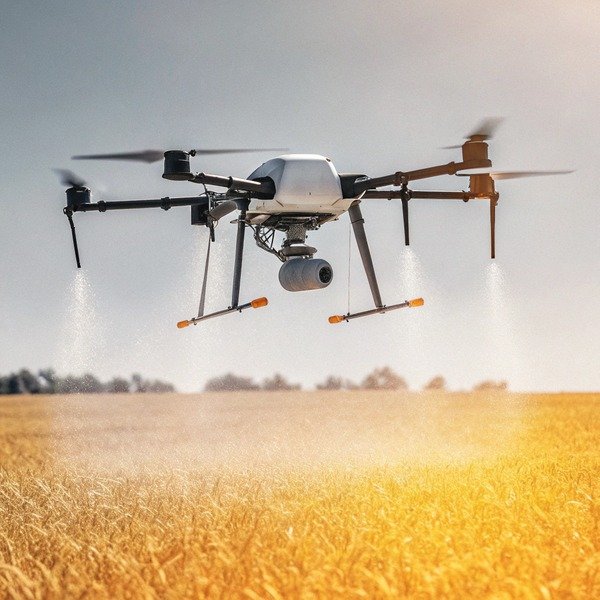
We often see US distributors struggle when a client asks about coverage risks for the heavy sprayers rolling off our Chengdu assembly lines. Ignoring this can lead to lawsuits that bankrupt your business before the first tank is empty.
US importers must recommend general liability for ground operations, aviation liability for flight risks, and specific chemical drift coverage for pesticide application. Crucially, importers need product liability insurance to cover manufacturing defects, while end-users require FAA Part 137 compliance to validate any chemical liability claims.
Let’s break down exactly what your clients need to stay legal and protected.
Do I need specific product liability insurance when reselling imported agricultural drones in the US?
When we ship containers to the West Coast, we know that once the seal is broken, US law often treats the importer as the manufacturer. You face immense financial exposure if a malfunction causes injury.
Yes, importers generally require product liability insurance because US courts often hold the domestic seller responsible for foreign manufacturing defects. This coverage protects your business against lawsuits alleging design flaws, warning label errors, or hardware failures that result in third-party injury or property damage.
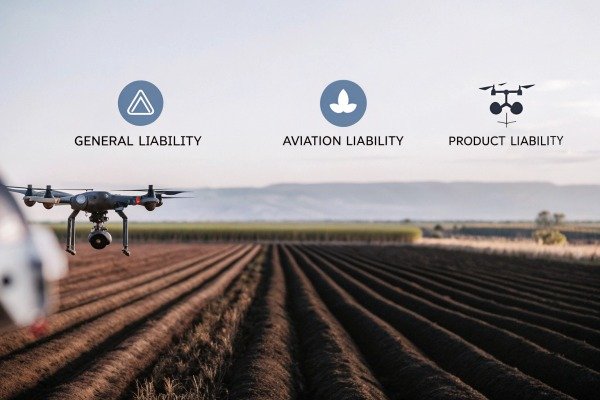
The "Importer as Manufacturer" Risk
Many of our partners assume that because they did not build the drone, they are not responsible for how it flies. This is a dangerous misconception in the United States legal system. When you import technology from our factory in China and resell it under your brand or even as a distributor, you become the primary point of contact for liability.
If a motor fails or a battery overheats, the injured party’s lawyer will rarely try to sue a factory in Xi'an. It is too difficult and expensive. Instead, they will sue the US entity that sold the product. Strict Liability 1 This is known as "Strict Liability." Strict Liability 2 You can be held liable even if you did not cause the defect.
We strongly advise our distributors to carry robust Product Liability Insurance. This is different from General Liability (GL). Standard GL covers slips and falls in your warehouse. It does not cover a drone falling from the sky due to a firmware glitch.
Critical Coverage Extensions
When setting up your policy, you must look for specific clauses. A standard policy might exclude "aviation products." You need to ensure your broker removes this exclusion.
Another vital component is "Discontinued Products" or "Tail" coverage. Suppose you stop selling a specific model next year. If a unit you sold three years ago crashes today, you are still liable. Tail coverage 3 Tail coverage protects you from these legacy claims.
Below is a comparison of liability types you must understand as an importer:
| Liability Type | Who is Protected? | What is Covered? | Critical for Importers? |
|---|---|---|---|
| General Liability (CGL) | The Business Entity | Slips, falls, advertising injury at your office. | Yes, but insufficient alone. |
| مسؤولية المنتج | The Seller/Importer | Injury/damage caused by a product defect. | Absolutely Critical. |
| Completed Operations | The Service Provider | Damage occurring after a service is finished. | Important if you offer training. |
| المسؤولية السيبرانية | The Data Handler | Data breaches or firmware hacking risks. | Highly Recommended. |
The Cost of Negligence
Without this coverage, a single lawsuit can exceed $1 million in legal fees and settlements. We build our SkyRover units with high redundancy, but we cannot control every variable. If a user alleges that a "design defect" caused a crash design defect 4, your insurance needs to step in to pay for the defense attorneys. Do not rely on a standard business owner's policy. You need a specialized aviation product liability policy.
What third-party liability limits should I recommend to clients operating heavy crop spraying drones?
During our flight stability tests in Xi'an, we simulate worst-case scenarios, but real-world accidents in American cornfields can be far more costly. Clients underinsuring their operations is a recipe for disaster.
We recommend a "1/3/1" structure: $1 million for non-chemical aviation liability, $300,000 for chemical drift coverage, and $1 million for general business liability. For high-risk operations near urban areas or valuable crops, increasing the general limit to $2 million or more is safer.
Understanding the "1/3/1" Standard
In the US agricultural aviation market, the "1/3/1" limit structure has become a standard recommendation for 2026. This shorthand helps simplified complex policy details for your buyers.
- $1 Million Non-Chemical Liability: This covers physical impact. If our drone crashes into a barn, a tractor, or a person, this pays for the damages. Given that our heavy-lift drones can weigh over 50kg when loaded, the kinetic energy is massive. A $500,000 limit is often too low for serious accidents involving bodily injury.
- $300,000 Chemical Liability: This is the most specific and expensive part. It covers damage caused by the pesticide itself.
- $1 Million General Liability: This covers ground operations, such as a truck backing into a client's fence or a battery fire starting in the charging station.
The Reality of Chemical Drift
The biggest financial risk for your customers is not the drone crashing; it is the wind. "Drift" happens when the spray moves off-target to a neighbor's property.
If a drone sprays herbicide on corn, and the wind carries it to a neighbor's organic vineyard, the claim could be astronomical. The neighbor loses their organic certification and their crop. Standard aviation liability excludes pollution and chemicals. Your customers specifically need "Chemical Drift" or "Crops and Chemicals" coverage.
The premiums for this are high. A policy with $100,000 in drift coverage might cost $3,500 per year. Increasing that limit to $300,000 or $500,000 increases the price significantly. However, compared to a lawsuit from a vineyard owner, the premium is cheap.
Assessing Risk Factors
You should help your customer assess their specific risk profile to choose the right limits. A farmer spraying isolated wheat fields in North Dakota has a different risk profile than an operator spraying near suburban housing in Florida.
Here is a guide to help you recommend limits based on their operation:
| مستوى المخاطرة | Typical Environment | Recommended Non-Chemical Limit | Recommended Chemical Drift Limit |
|---|---|---|---|
| مخاطر منخفضة | Isolated rural areas, low-value adjacent crops (e.g., pasture). | $500,000 – $1 Million | $25،000 - $50،000 |
| مخاطر متوسطة | Mixed agriculture, standard row crops nearby. | $1 Million | $100,000 – $300,000 |
| مخاطر عالية | Near organic farms, vineyards, beehives, or residential areas. | $2 Million+ | $500,000 – $1 Million |
The "Overspray" vs. "Drift" Distinction
Educate your clients on the difference. "Drift" is moved by wind. "Overspray" is pilot error (flying over the wrong line). Comprehensive chemical coverage should address both, but many cheaper policies have strict exclusions. If the pilot did not check the wind speed and it was above the label limit, the insurance might deny the claim. This is why training is as important as the policy itself.
Are there mandatory aviation insurance requirements I need to explain to my US customers?
While checking flight logs from our test pilots, we ensure every protocol matches federal standards, yet many buyers assume FAA compliance automatically equals insurance coverage. This misconception often leaves operators legally exposed.
While the federal government does not mandate aviation insurance for private drone operators, most states and insurers require it for commercial agricultural spraying. Furthermore, obtaining chemical drift coverage universally demands proof of FAA Part 137 certification and a state pesticide applicator license.
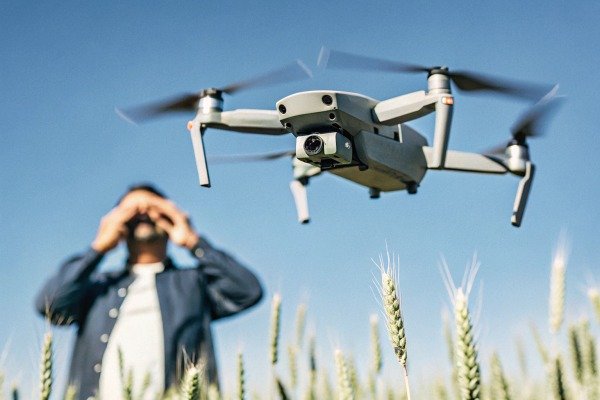
The Federal vs. Commercial Reality
Technically, the FAA (Federal Aviation Administration) does not force a drone pilot Part 107 license 5 to buy insurance to receive a Part 107 license. Part 107 license 6 You can legally fly a drone commercially without a penny of coverage. However, for agricultural operations, this technicality is misleading.
To spray chemicals legally, an operator needs a شهادة تشغيل الجزء 137. During this certification process, the FAA reviews safety manuals and pilot skills. While the FAA itself focuses on safety, the business ecosystem mandates insurance.
Most US states require proof of financial responsibility (insurance) to issue a ترخيص مرش المبيدات الحشرية الحكومي. You cannot legally spray without this state license, even if you have the federal Part 137. Therefore, insurance effectively becomes mandatory.
The "Void Policy" Trap
A critical warning you must give your customers is about compliance. Insurance policies are contracts. They almost always contain a clause stating that the policy is void if the operator breaks the law.
If your customer buys a policy but does not have their Part 137 certificate شهادة تشغيل الجزء 137 7, or if they are spraying a chemical not labeled for aerial use, the insurer can deny the claim. We see this happen too often. The customer thinks they are protected, but because they skipped a regulatory step, they are flying with a worthless piece of paper.
State-Specific Variations
The rules change when you cross state lines. In Minnesota, for example, there are strict insurance minimums for aerial applicators. In other states, the bond requirements might be lower.
We advise importers to provide a "Compliance Checklist" rather than just selling the hardware. This adds value to your service.
Checklist for Valid Coverage
To ensure their insurance will actually pay out a claim, your customer needs to provide the underwriter with the following:
| Document/Requirement | الغرض | التأثير على التأمين |
|---|---|---|
| قانون الطيران الفيدرالي الجزء 107 | شهادة الطيار عن بعد. | Basic requirement for any commercial flight. |
| الجزء 137 من إدارة الطيران الفيدرالية | Agricultural Aircraft Operations. | Mandatory for chemical liability coverage. |
| State Applicator License | State-level permission to spray. | Required by state law and insurers. |
| تسجيل الطائرة | FAA N-Number. | Identifies the specific asset on the policy. |
| سجلات الرحلات | Record of operations. | Critical evidence during a claim investigation. |
The Role of NAAA Membership
Many top-tier insurers in the US prefer or require membership in the National Agricultural Aviation Association (NAAA). الجمعية الوطنية للطيران الزراعي 8 While traditionally for manned aircraft, the NAAA now offers resources for drone safety (PAASS PAASS program 9 program). Membership signals to the insurer that the pilot is professional, which can sometimes lower premiums or unlock better coverage options.
Should I advise buyers to purchase hull insurance to cover potential equipment damage?
We build our carbon fiber frames to withstand harsh field conditions, but a pilot error crashing into a power line is something no engineering can prevent. Replacing a fully loaded sprayer unit is a significant financial hit.
Yes, advising buyers to purchase hull insurance is smart because agricultural drones are high-value assets prone to crashes. This coverage pays for repairs or replacement of the drone itself, which is distinct from liability insurance that only covers damage done to others.

Protecting the Asset, Not Just the Victim
Liability insurance is money you pay to protect others. Hull insurance is money you pay to protect yourself.
Agricultural drones are expensive. A fully equipped spray drone with batteries, chargers, and spreading tanks can cost between $20,000 and $40,000. If an operator crashes this unit into a tree, the financial loss is immediate.
Hull insurance typically costs about 8% to 15% of the drone's insured value per year. For a $30,000 drone, that is roughly $3,000 to $4,500 annually.
We recommend this coverage especially for:
- New Pilots: The risk of crashing is highest in the first 50 flight hours.
- Financed Equipment: If the customer took out a loan to buy the drone, the bank will likely mandate hull insurance.
- High-Tempo Operations: Flying 10 hours a day increases the statistical probability of hardware fatigue or error.
Payload and Ground Equipment
Standard hull insurance might only cover the drone airframe. You must remind clients to insure the "Payload."
For agricultural drones, the payload includes:
- Multispectral cameras (often expensive).
- Spray tanks and spreading systems.
- RTK Base Stations.
Additionally, ground equipment like generators and high-capacity chargers are often left in trucks or fields. These are targets for theft. An "Inland Marine" or "Ground Equipment" add-on covers these items against theft or fire. Inland Marine 10
Cyber Liability: A Hidden Necessity
As a manufacturer of Chinese drones, we are aware of the scrutiny regarding data security. While our systems are secure, US businesses face "Cyber Liability" risks.
If a drone collects data on a client's farm (crop yields, land issues) and that data is hacked or leaked, the operator can be sued. Furthermore, some modern policies offer "Cyber" coverage that protects against "Hijacking" (someone taking control of the drone electronically). Given the political and technological climate in 2026, adding Cyber Liability is a forward-thinking recommendation.
Deductibles and Depreciation
Warn your clients about deductibles. Hull policies often have a deductible ranging from 5% to 10% of the insured value.
Also, ask about "Agreed Value" vs. "Actual Cash Value."
- Agreed Value: If the drone is totaled, the insurer pays the original amount you agreed upon (e.g., $30,000).
- Actual Cash Value: The insurer pays the current market value. Since electronics depreciate fast, a 2-year-old drone might only be "worth" $10,000 to the insurer. Always recommend "Agreed Value" for commercial equipment.
الخاتمة
Helping your US customers navigate the insurance maze is not just about compliance; it is about ensuring their business survives the first season. By recommending a mix of product liability for yourself and a robust "1/3/1" liability package (Chemical, Hull, Aviation) for them, you position yourself as a trusted partner, not just a hardware supplier. Verify their Part 137 status, suggest hull coverage for their high-value assets, and ensure they understand the strict liability risks of aerial application.
الحواشي
1. Defines the legal concept holding sellers responsible regardless of fault. ︎
2. Explains the legal doctrine where importers are held responsible for product defects regardless of negligence. ︎
3. Industry definition of coverage for claims made after policy expiration. ︎
4. Legal explanation of product liability claims based on inherent flaws. ︎
5. Official FAA requirements for commercial drone operators. ︎
6. Official FAA regulations for the commercial operation of small unmanned aircraft systems in the US. ︎
7. Official FAA regulations for agricultural aircraft operations. ︎
8. The primary US industry organization providing safety standards and advocacy for agricultural aviation operators. ︎
9. An industry-led safety education program designed to reduce accidents in the agricultural aviation sector. ︎
10. Defines the specialized insurance category used to protect mobile equipment and tools used in field operations. ︎

 English
  Español de México
  Deutsch
  Français
  Русский
  العربية
