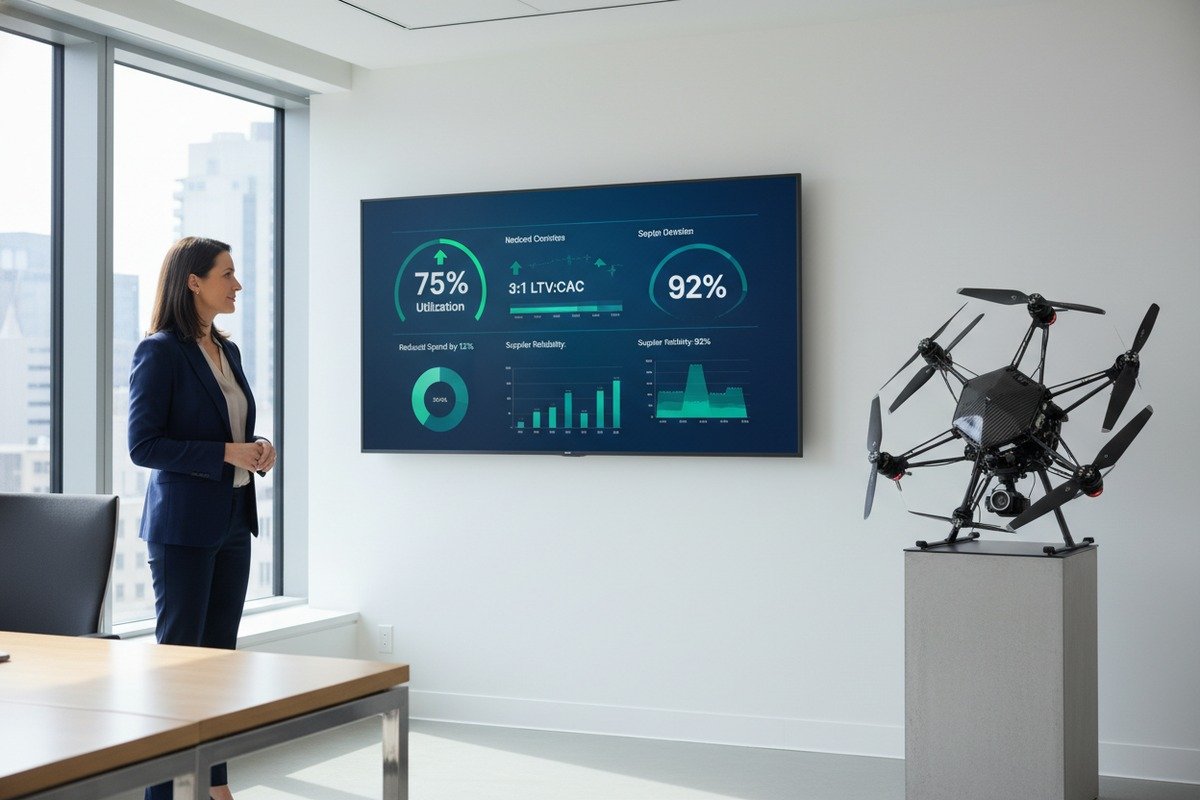
When our engineering team develops agricultural drones for global markets, we constantly hear from service providers struggling to choose the right equipment Mean Time Between Failures 1. Many buyers feel overwhelmed by specifications and marketing claims. The wrong purchase decision can cripple your business for years.
Service providers should prioritize flight endurance, spraying efficiency, utilization rate (target 75%+), contribution margin (aim for 71%), drone durability, maintenance costs, LTV:CAC ratio (above 3:1), manufacturer engineering support, software customization options, and export certifications. These KPIs directly determine ROI and long-term profitability.
إن agricultural drone market 2 is projected to grow from $4.17 billion in 2022 to $18.22 billion by 2030. This growth creates massive opportunities for service providers who select equipment wisely CE marking for Europe 3. Let me walk you through the critical metrics that separate profitable operations from struggling businesses.
How do I measure the flight endurance and spraying efficiency to ensure maximum ROI for my clients?
Our production line runs performance tests on every drone before shipping FCC certification for US radio equipment 4. We see service providers lose thousands of dollars annually because they never calculated actual field performance versus manufacturer claims. This gap between specs and reality frustrates many buyers UN38.3 for lithium battery transport 5.
Measure flight endurance by tracking actual payload-carrying flight time under real conditions—not empty test flights. Calculate spraying efficiency using acres covered per hour, chemical consumption accuracy, and drift control. Target 480+ minutes total daily operation, 90 km/h cruise speed, and consistent 1.2cm ground resolution for optimal ROI.
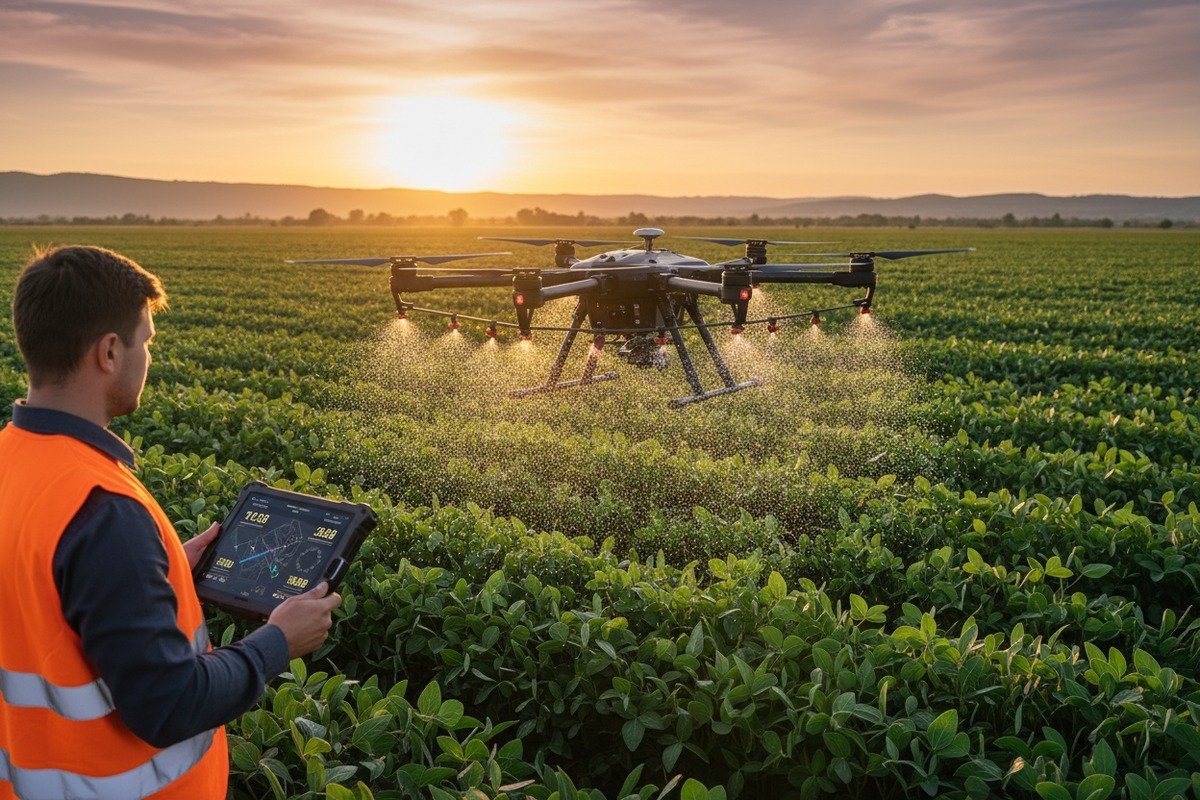
Understanding Real-World Flight Time
Factory specifications often show maximum flight times under ideal conditions. These numbers rarely match field reality. Temperature, wind, payload weight, and altitude all reduce actual performance.
When we calibrate our flight controllers, we test across multiple environmental conditions. A drone rated for 45 minutes might deliver only 28 minutes when carrying a full 20-liter spray tank in hot weather. Service providers must demand realistic performance data.
Calculate your effective daily capacity using this formula: Total Daily Flight Hours = (Battery Cycles × Actual Flight Time) – Transition Time. Most operations achieve 6-8 productive hours from a 10-hour workday.
Spraying Efficiency Metrics That Matter
Efficiency goes beyond speed. Precision determines profitability. Poor spray patterns waste chemicals and damage client relationships.
| متري | Budget Drone | Mid-Range Drone | Premium Drone |
|---|---|---|---|
| Spray Width | 3-4 meters | 5-6 meters | 7-8 meters |
| Flow Rate Accuracy | ±15% | ±8% | ±3% |
| Droplet Size Control | الأساسيات | Adjustable | AI-optimized |
| Acres Per Hour | 15-20 | 25-35 | 40-60 |
| Chemical Waste | 12-18% | 5-10% | 2-5% |
Track your cost per acre religiously. Include battery depreciation, chemical costs, labor, and equipment wear. Top-performing service providers achieve costs below $8 per acre while charging $15-25.
Calculating True ROI
Your breakeven timeline depends on utilization rate. At 75% utilization, most mid-range drones reach breakeven within 8 months. Below 60% utilization, payback extends to 14+ months.
Monitor these weekly KPIs:
- Billable flight hours versus available hours
- Revenue per flight hour
- Chemical consumption versus planned usage
- Client rebooking rate
Our clients who track these metrics consistently outperform those who rely on gut feeling. Data-driven decisions separate successful operations from struggling ones.
What durability and hardware reliability metrics should I demand to minimize my long-term maintenance costs?
During stress testing at our facility, we push components beyond normal limits. We discovered that many service providers choose drones based on initial price rather than total cost of ownership 6. This approach often doubles expenses within two years.
Demand minimum 2,000 flight hours motor lifespan, IP54+ water/dust protection, carbon fiber or aviation-grade aluminum frames, modular component design, and documented MTBF (Mean Time Between Failures) above 500 hours. Request maintenance cost projections and spare parts pricing before purchase to calculate true ownership costs.
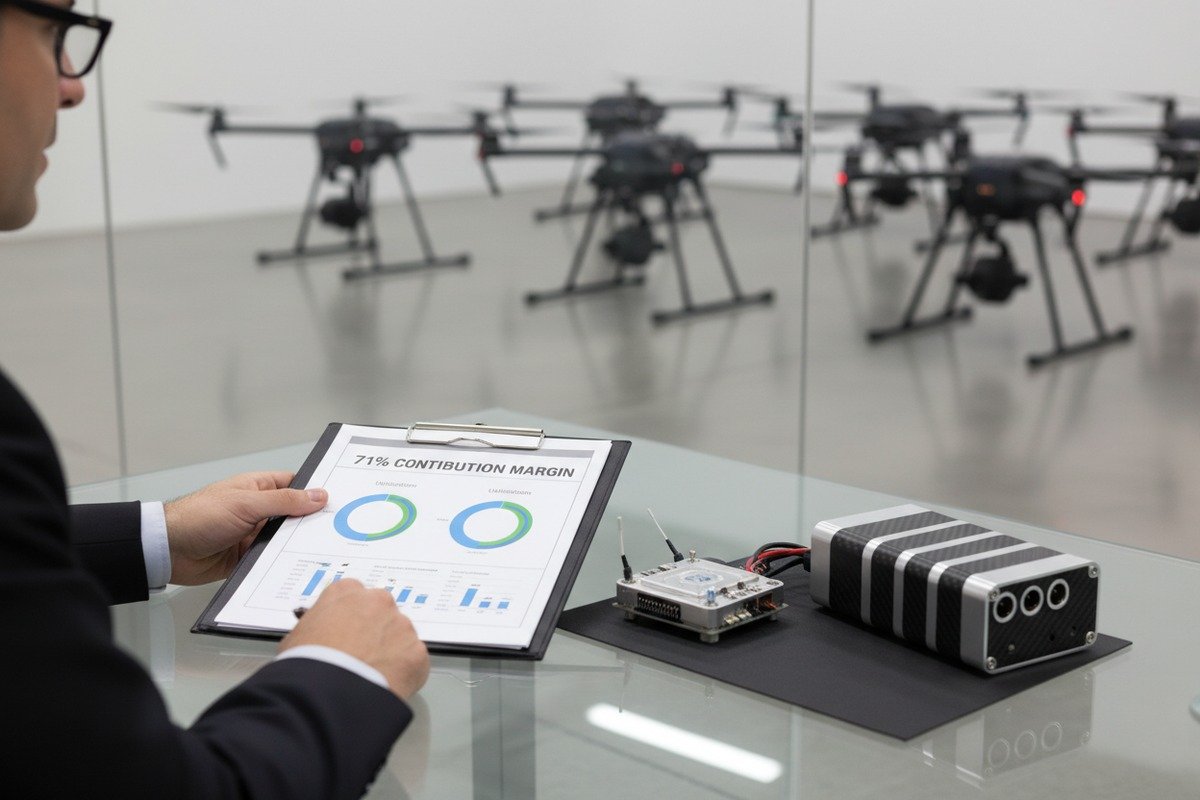
Critical Hardware Components to Evaluate
Frame construction determines crash survivability. Carbon fiber frames cost more initially but resist field damage better than plastic alternatives. Our hexacopter designs distribute stress across multiple arms, reducing single-point failures.
Motors face extreme conditions in agricultural work. Dust, moisture, and chemical exposure accelerate wear. Brushless motors with sealed bearings last 3-4 times longer than standard designs.
| المكوّن | العمر المتوقع | Replacement Cost | العلامات التحذيرية |
|---|---|---|---|
| المحركات | 1,500-2,500 hours | $150-400 each | اهتزازات غير عادية، حرارة |
| مراكز الخدمات الإلكترونية | 2,000-3,000 hours | $80-200 each | Erratic response |
| وحدة التحكم في الطيران | 3,000+ hours | $300-800 | Software glitches |
| Spray Pumps | 800-1,200 ساعة - 1200 ساعة | $100-250 | Pressure inconsistency |
| البطاريات | 300-500 دورة | $400-1,200 | Capacity drop >20% |
| GPS Module | 2,500+ hours | $150-400 | Signal loss patterns |
Calculating Total Maintenance Costs
Budget 15-20% of drone purchase price annually for maintenance. This covers routine replacements, unexpected repairs, and calibration services.
Create a maintenance schedule before purchasing. Ask manufacturers for recommended service intervals and associated costs. Some brands require expensive proprietary parts while others accept generic components.
Our engineering team designs for field serviceability. Modular construction allows replacing individual components without specialized tools. This reduces downtime from days to hours.
Downtime Impact on Revenue
Every hour of downtime costs money. Calculate your hourly revenue rate and multiply by expected annual downtime. This reveals true maintenance cost impact.
Top service providers maintain backup equipment or components for critical systems. A spare set of propellers, one extra battery, and basic repair tools prevent multi-day service interruptions.
Track your maintenance downtime percentage monthly. Target below 8% for profitable operations. Anything above 15% signals equipment problems or inadequate maintenance practices.
Request warranty terms in writing. Standard coverage should include 12 months on electronics and 6 months on wear components. Extended warranty options indicate manufacturer confidence in product quality.
How can I verify a manufacturer's engineering support and software customization capabilities before I commit?
Our support team handles calls from frustrated service providers weekly. Many purchased from manufacturers who disappeared after the sale. No documentation, no firmware updates, no technical assistance. These buyers face expensive equipment they cannot fully utilize.
Verify engineering support by requesting documented response time guarantees (under 24 hours), reviewing existing client testimonials, testing technical support channels before purchase, confirming software update frequency, and evaluating customization case studies. Demand API documentation and SDK availability for integration needs.
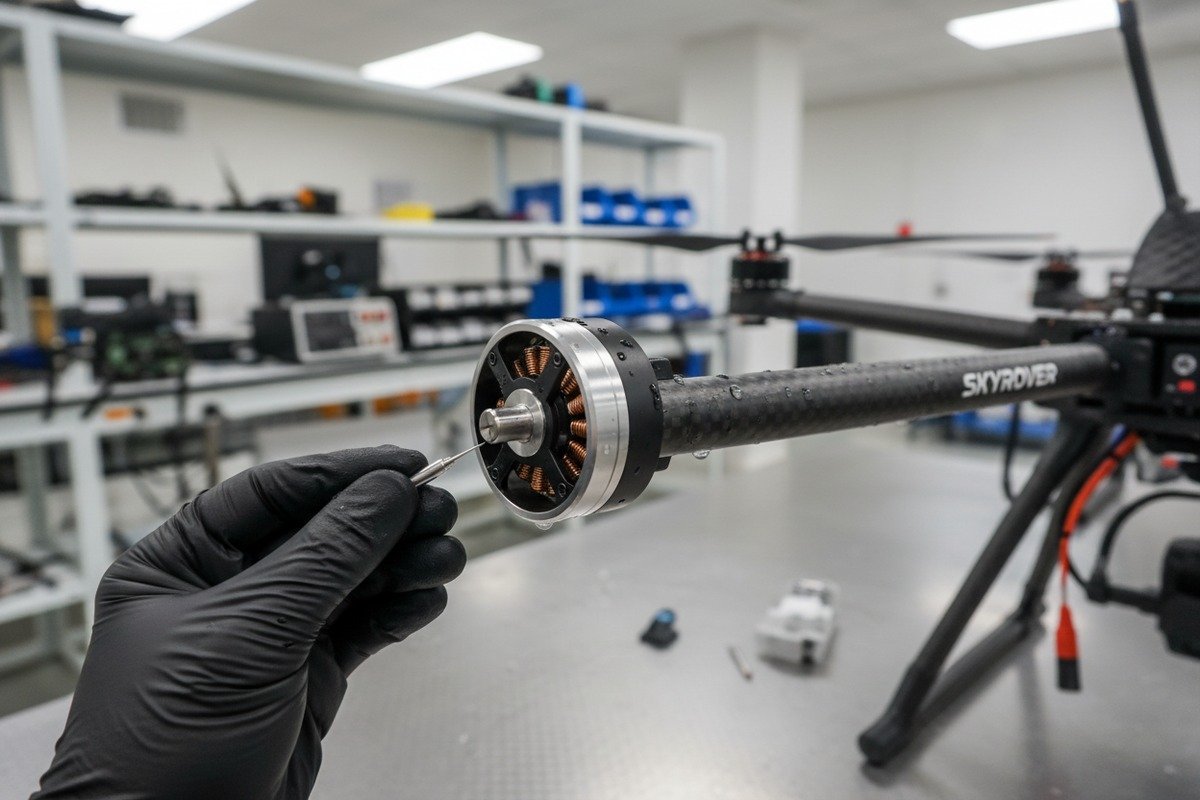
Evaluating Technical Support Quality
Contact the manufacturer's support team with technical questions before purchasing. Response time and answer quality reveal post-purchase experience. Slow or vague responses indicate limited support capabilities.
Ask for references from existing service provider clients. Speak directly with operators in similar markets. Their experience predicts your future relationship with the manufacturer.
When we onboard new clients, we provide dedicated technical contacts for the first 90 days. This ensures smooth integration and addresses field-specific challenges quickly. Not all manufacturers offer this level of engagement.
Software Capabilities Assessment
Modern agricultural drones require sophisticated software for mission planning, data analysis, and fleet management. Evaluate these capabilities carefully.
| Software Feature | الأساسيات | متقدم | Enterprise |
|---|---|---|---|
| Mission Planning | Manual waypoints | Auto-generated paths | AI-optimized routes |
| Data Processing | Raw image export | Basic analytics | Full NDVI/thermal analysis |
| إدارة الأسطول | Single drone | 3-5 drones | Unlimited fleet |
| Client Reporting | Manual creation | Template-based | Automated delivery |
| API Access | لا يوجد | Limited | Full SDK |
| تواتر التحديث | سنوي | ربع سنوي | مستمر |
Service providers targeting high-value services need advanced data processing capabilities. Basic systems limit your service offerings and client value proposition.
إمكانيات التخصيص
Growing service businesses require software modifications. Ask manufacturers about customization timelines, costs, and limitations.
Our development team collaborates with clients on custom features. Recent projects include specialized crop analysis algorithms, integration with farm management platforms, and white-label client portals. These capabilities differentiate service offerings.
Request documentation of previous customization projects. Manufacturers with established development processes complete modifications faster and more reliably than those building capabilities from scratch.
Verify firmware update procedures. Over-the-air updates save time and reduce service interruptions. Manual update requirements create operational burden and safety risks if updates are delayed.
Integration Requirements
Your drone must work within existing business systems. CRM integration, accounting software connections, and client portal links streamline operations and reduce administrative overhead.
Check API documentation 7 before purchasing. Well-documented APIs enable custom integrations without manufacturer involvement. Poor documentation creates dependency on manufacturer development resources.
Test data export formats. Standard formats like GeoTIFF, CSV, and PDF ensure compatibility with client systems and third-party analysis tools. Proprietary formats lock you into specific workflows.
What export certifications and delivery guarantees should I prioritize to avoid delays in my supply chain?
In our experience exporting to the US and Europe, we have seen shipments delayed for months due to missing paperwork. Service providers who planned seasonal launches missed entire growing seasons. Proper certification verification prevents these disasters.
Prioritize CE marking for Europe, FCC certification for US radio equipment, DOT/UN38.3 for lithium battery transport, phytosanitary certificates where required, and manufacturer's certificate of conformity. Demand written delivery timelines with penalty clauses, confirmed shipping methods, and customs clearance support documentation.

Essential Certifications by Market
Different markets require different certifications. Missing documents stop shipments at customs and trigger expensive storage fees or return shipping costs.
| التصديق | Required For | الغرض | وقت المعالجة |
|---|---|---|---|
| علامة CE | الاتحاد الأوروبي | Safety compliance | 4-8 أسابيع |
| FCC Part 15/107 | الولايات المتحدة الأمريكية | Radio frequency approval | 6-12 weeks |
| رقم الأمم المتحدة 38.3 | Global shipping | Lithium battery safety | Pre-certified |
| RoHS | EU, many others | Hazardous substance limits | Included with CE |
| تصنيف IP | Insurance, clients | Water/dust protection proof | Factory certified |
| آيزو 9001 | Professional buyers | Quality management system | Manufacturer level |
Request copies of all relevant certifications before ordering. Verify authenticity through issuing authority databases when possible. Some suppliers provide fraudulent documentation that fails customs inspection.
Shipping and Logistics Considerations
Agricultural drones contain lithium batteries, classified as dangerous goods for air transport. This classification affects shipping options, costs, and timelines.
Sea freight offers cost savings but extends delivery to 4-6 weeks. Air freight arrives in 5-10 days but costs significantly more and has stricter battery limitations. Ground shipping within continents balances speed and cost for regional deliveries.
Our logistics team handles export documentation and coordinates with freight forwarders experienced in drone shipments. This expertise prevents common delays from incorrect paperwork or improper packaging.
Delivery Guarantee Structures
Professional suppliers offer written delivery commitments. These should include specific timelines, delay compensation terms, and communication requirements.
Negotiate milestone payments tied to delivery stages: deposit on order confirmation, partial payment on shipping, final payment on delivery confirmation. This structure protects against non-delivery while providing suppliers reasonable cash flow.
Request tracking information and regular status updates. Proactive communication about potential delays allows contingency planning. Suppliers who hide problems until delivery dates pass demonstrate poor partnership quality.
Customs Clearance Support
Import regulations for drones vary by country and change frequently. Experienced exporters provide guidance on current requirements and necessary documentation.
Some countries require import licenses for drone equipment. Processing these licenses takes weeks or months. Start the application process before ordering to align equipment arrival with permit approval.
Our export team provides destination-specific documentation packages. These include commercial invoices formatted for customs requirements, packing lists with HS codes, and certificates of origin. Complete documentation accelerates customs clearance and reduces inspection likelihood.
Verify insurance coverage for international shipments. Standard shipping insurance may exclude drone equipment or lithium batteries. Specialized coverage protects against loss, damage, and delay costs.
الخاتمة
Successful agricultural drone service providers choose equipment based on comprehensive KPI analysis, not marketing materials alone. Prioritize flight endurance 8, durability metrics, manufacturer support capabilities, and proper export documentation. These factors determine whether your investment generates strong returns or creates ongoing frustration. Take time to verify claims, test support responsiveness, and confirm certification validity before committing your capital.
الحواشي
1. Replaced with the Wikipedia page for Mean Time Between Failures, an authoritative source. ︎
2. Provides market size, share, and growth forecast for agricultural drones. ︎
3. Official EU portal explaining CE marking requirements for products sold in Europe. ︎
4. Official FCC procedures for equipment authorization, including certification for radio devices. ︎
5. IATA’s guidance document on transport requirements for lithium batteries, including UN38.3 tests. ︎
6. Replaced with the Wikipedia page for Total Cost of Ownership, an authoritative source. ︎
7. Replaced with the Wikipedia section on API documentation, an authoritative source. ︎
8. Explains factors contributing to drone flight endurance and extended flight times. ︎

 English
  Spanish
  German
  French
  Dutch
Dutch  Arabic
