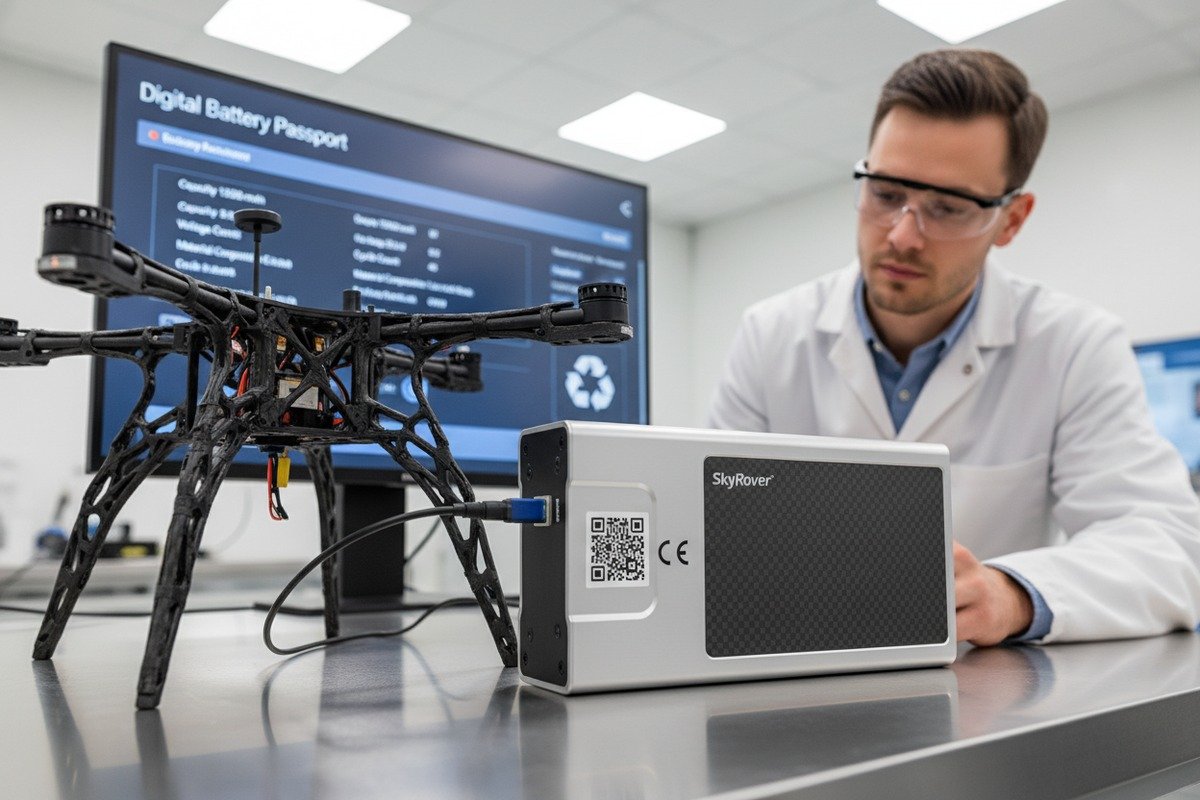
When our engineering team designs battery compartments for agricultural hexacopters, we face a real challenge EU Battery Regulation (EU 2023/1542) 1. The EU’s new battery regulations have changed everything. Farmers and distributors across Europe now ask us detailed questions about compliance before placing orders.
EU lithium battery recycling and disposal rules for agricultural drones fall under the EU Battery Regulation (EU 2023/1542), effective since August 2023. These rules mandate producer registration, Extended Producer Responsibility (EPR) schemes, collection targets of 63% by 2027, material recovery requirements, QR code labeling, and Digital Battery Passports for batteries over 2 kWh.
Understanding these regulations protects your business from fines and ensures smooth market access Extended Producer Responsibility (EPR) schemes 2. Let me walk you through the key requirements and practical steps for compliance.
How do I comply with the latest EU Battery Regulation for my agricultural drones?
Our production line ships hundreds of agricultural drones to Europe monthly QR code labeling 3. Each unit carries lithium-ion batteries that must meet strict new standards. Missing even one requirement can block your entire shipment at customs lithium-ion batteries 4.
To comply with the EU Battery Regulation for agricultural drones, you must register in national producer registers by 2025, join an EPR scheme by January 2026, ensure batteries are easily removable by 2027, apply proper CE marks and QR codes, and prepare Digital Battery Passports for batteries exceeding 2 kWh capacity.

Understanding Battery Classification for Drones
Agricultural drone batteries fall into different categories based on capacity CE marks 5. This classification determines which rules apply to you.
| Battery Type | Capacity Range | Key Requirements | Deadline |
|---|---|---|---|
| Portable | Under 2 kWh | EPR, removability, collection targets | 2027 |
| LMT (Light Means of Transport) | Under 5 kWh | 51% collection target, passports | 2028 |
| Industrial | Over 2 kWh | Digital Battery Passport, carbon reporting | Feb 2027 |
Most agricultural drone batteries fall under the portable category. However, larger spraying drones may qualify as LMT or industrial batteries 6. Check your battery specifications carefully.
Step-by-Step Compliance Roadmap
First, register your company in each EU member state's national battery producer register. This deadline hits in 2025. Without registration, you cannot legally sell batteries in that country.
Second, join an Extended Producer Responsibility scheme before January 2026. These schemes handle collection and recycling logistics on your behalf. They cost money but simplify compliance significantly.
Third, redesign battery compartments for easy removal. By 2027, users must remove batteries without special tools. Our engineers now use quick-release mechanisms in all new drone models.
Fourth, update all labeling. Every battery needs the CE mark, separate collection symbol, and QR code. The QR code must link to capacity, durability, and recycling information.
Producer Responsibility Obligations
The regulation places significant burdens on manufacturers and importers. You must:
- Finance collection and recycling operations
- Run awareness campaigns about proper disposal
- Provide financial guarantees for end-of-life management
- Report annual sales and collection data to authorities
These costs range from €2-5 billion annually across the industry. Factor them into your pricing strategy now.
When we ship replacement battery packs to our European distributors, they always ask about return logistics. The dispersed nature of agricultural operations makes collection challenging. Farmers work in remote areas far from urban recycling centers.
Authorized collection points for industrial drone batteries in Europe include producer-operated take-back schemes, municipal waste facilities registered for hazardous materials, specialized battery recycling companies certified under national EPR programs, and agricultural equipment dealers participating in manufacturer collection networks.

Types of Authorized Collection Facilities
The EU requires multiple collection channels to ensure accessibility. Each type serves different operator needs.
Municipal hazardous waste centers accept lithium batteries but may lack drone-specific handling knowledge. They work well for individual farmers disposing of one or two batteries.
Producer take-back programs offer the most reliable option. Major drone manufacturers operate return shipping programs. At our company, we partner with certified recyclers to accept batteries from any customer who purchased our drones.
Agricultural cooperatives increasingly establish collection hubs. These local facilities reduce transportation distances and serve farming communities efficiently.
Finding Collection Points by Country
| البلد | Primary Collection Network | Registration Body | Contact Method |
|---|---|---|---|
| ألمانيا | GRS Batterien, REBAT | Umweltbundesamt | Online portal |
| فرنسا | Corepile, Screlec | ADEME | Producer scheme |
| هولندا | Stibat | RIVM | Municipal + retail |
| اسبانيا | Ecopilas | MITECO | Take-back points |
| بولندا | REBA | GIOŚ | Dealer network |
Contact your local EPR scheme administrator for the complete list of authorized facilities. They maintain updated databases of certified collection points.
Logistics Considerations for Agricultural Operations
Rural farmers face unique challenges. Collection points concentrate in urban areas. Transportation costs add up quickly for heavy battery packs.
Consider these solutions:
Coordinate collection with equipment service visits. When technicians visit farms for maintenance, they can collect spent batteries simultaneously.
Establish regional collection days. Work with agricultural associations to organize periodic battery collection events in farming regions.
Use reverse logistics from distributors. Many of our dealers accept old batteries when delivering new drone equipment.
Specialized Handling Requirements
Industrial drone batteries require specific handling during transport and storage. Damaged batteries pose fire risks and need immediate professional attention.
Store spent batteries in fireproof containers away from combustible materials. Never stack damaged batteries together. Keep them at temperatures below 30°C until collection.
Transport regulations follow IATA Dangerous Goods standards 7. State of Charge must not exceed 30% for air transport. Most collection services use ground transport to avoid these restrictions.
What documentation must my supplier provide to meet EU lithium battery recycling standards?
Our quality control team reviews supplier documentation daily. Before any battery cell enters our production facility, we verify compliance certificates. A single missing document can halt production lines and delay customer shipments.
Suppliers must provide EU Declaration of Conformity, CE marking certificates, test reports proving safety compliance with IEC 62133, material composition declarations, carbon footprint documentation for batteries over 2 kWh, due diligence reports on raw material sourcing, and Digital Battery Passport data by February 2027.

Essential Supplier Documentation Checklist
Every battery supplier serving the EU market must provide comprehensive paperwork. Missing documents create legal liability for drone manufacturers.
| نوع المستند | الغرض | Required From | Deadline |
|---|---|---|---|
| EU Declaration of Conformity | Confirms regulatory compliance | All suppliers | Now |
| شهادة علامة CE | Proves safety testing passed | All suppliers | Now |
| IEC 62133 Test Report | Battery safety verification | All suppliers | Now |
| Material Composition | Lists hazardous substances | All suppliers | Now |
| Carbon Footprint Report | Environmental impact data | Industrial >2 kWh | Feb 2026 |
| Supply Chain Due Diligence | Ethical sourcing verification | All suppliers | 2028 |
| Digital Passport Data | Lifecycle traceability | >2 kWh batteries | Feb 2027 |
Understanding the Digital Battery Passport
The Digital Battery Passport represents a major documentation shift. Starting February 2027, batteries over 2 kWh need digital tracking throughout their lifecycle.
Suppliers must provide:
- Unique battery identifier codes
- Manufacturing date and location
- Cell chemistry specifications
- Capacity and expected lifespan data
- Recycled content percentages
- Carbon footprint calculations
- Instructions for safe removal and recycling
This data links to a QR code on each battery. Inspectors can scan and verify compliance instantly. Our factory has invested in new tracking systems to manage this requirement.
Verifying Supplier Claims
Trust but verify. We audit our battery suppliers annually. Request third-party certification from recognized testing bodies like TÜV, SGS, or Bureau Veritas.
Check these specific items:
Recycled content claims must be verifiable. By 2030, batteries need minimum 4% recycled lithium, 12% recycled cobalt, and 4% recycled nickel. Suppliers should provide material flow documentation proving these percentages.
Carbon footprint declarations require standardized calculation methods. The EU specifies Product Environmental Footprint methodology. Generic claims without detailed calculations indicate non-compliance risk.
Due diligence reports cover raw material sourcing. While enforcement starts in 2028, responsible suppliers already document their supply chains. Ask about cobalt and lithium origins specifically.
Red Flags in Supplier Documentation
Watch for these warning signs:
Generic certificates without specific product references often indicate fraudulent documentation. Every certificate should list exact battery model numbers.
Test reports from unknown laboratories may not hold legal validity. Verify laboratory accreditation with national authorities.
Missing traceability data suggests poor quality management systems. If a supplier cannot trace materials, they likely cannot guarantee compliance.
Resistance to audits indicates potential problems. Reputable suppliers welcome verification visits. Our company maintains open-door policies for customer audits.
How do I handle the disposal of damaged high-voltage batteries from my drone fleet?
Last year, our technical support team received urgent calls about crashed drones with swollen battery packs. Damaged lithium batteries pose serious safety risks. Improper handling causes fires, toxic exposure, and regulatory violations. We developed strict protocols after learning from these incidents.
Handling damaged high-voltage drone batteries requires immediate isolation in fireproof containers, notification of your EPR scheme or certified hazardous waste handler, documentation of damage for insurance and compliance records, specialized transport by licensed dangerous goods carriers, and processing only at facilities certified for damaged lithium battery treatment.

Immediate Safety Protocols
When a battery shows damage signs, act quickly. Do not touch it with bare hands. Do not attempt to charge or discharge it. Do not store it near other batteries or flammable materials.
Signs of damaged batteries include:
- Swelling or bulging casing
- Unusual heat during storage
- Visible punctures or cracks
- Smoke or unusual odors
- Electrolyte leakage
Isolate the damaged battery immediately. Place it in a sand-filled metal container or specialized lithium battery containment bag. Keep it outdoors if possible, away from buildings.
Step-by-Step Disposal Process
| الخطوة | الإجراء | الجدول الزمني | Responsible Party |
|---|---|---|---|
| 1 | Isolate battery in fireproof container | Immediately | Drone operator |
| 2 | Document damage with photos | Within 24 hours | Drone operator |
| 3 | Contact EPR scheme or hazmat handler | Within 48 hours | Drone operator |
| 4 | Arrange specialized transport | Within 1 week | Licensed carrier |
| 5 | Obtain disposal certificate | After processing | Recycling facility |
Finding Qualified Disposal Services
Not all recycling facilities handle damaged batteries. Specialized treatment requires additional equipment and training.
Contact your EPR scheme administrator first. They maintain lists of certified facilities for damaged battery processing. These facilities charge higher fees but ensure proper treatment.
In emergencies, local fire departments can provide guidance. Many have المواد الخطرة 9 units familiar with lithium battery incidents.
Our company maintains partnerships with specialized handlers across Europe. We can connect customers with certified disposal services in their region.
Legal Requirements for Damaged Battery Disposal
The EU prohibits landfill disposal and incineration of lithium batteries from 2027. This applies especially to damaged units. Improper disposal results in significant fines.
Document every step of the disposal process. Keep records for at least five years. Inspectors may request proof of compliant disposal during audits.
Transport of damaged batteries follows stricter rules than intact units. Only carriers licensed for dangerous goods class 9 may transport them. State of Charge restrictions are particularly important for damaged cells.
Costs and Insurance Considerations
Damaged battery disposal costs significantly more than routine recycling. Expect fees ranging from €50-200 per battery depending on damage severity and local regulations.
Many commercial insurance policies cover disposal costs from accidental damage. Review your policy terms. Document incidents thoroughly to support claims.
Consider extended warranty programs that include disposal services. Our premium warranty packages cover damaged battery return shipping and processing costs. This protects customers from unexpected expenses.
Preventing Battery Damage
Prevention reduces disposal headaches. Follow these practices:
Store batteries at recommended temperatures between 15-25°C. Extreme heat accelerates degradation and increases damage risk.
Avoid full discharge cycles. Maintain State of Charge between 20-80% during storage. Our drone firmware includes automatic discharge protection.
Inspect batteries regularly for early damage signs. Replace batteries showing capacity degradation beyond 80% before they become safety hazards.
Train all personnel handling batteries. Proper training prevents accidents that cause damage requiring specialized disposal.
الخاتمة
EU lithium battery regulations for agricultural drones require serious attention. From producer registration to damaged battery disposal, compliance demands systematic preparation. The investment in proper processes protects your business and supports environmental goals. Start preparing now for 2026 and 2027 deadlines.
الحواشي
1. Official text of the EU Battery Regulation. ︎
2. Explains the concept of Extended Producer Responsibility. ︎
3. Details the QR code and labeling requirements for batteries in the EU. ︎
4. Provides a comprehensive overview of lithium-ion battery technology. ︎
5. Official information on the CE marking requirements in the EU. ︎
6. Official EU summary of Regulation (EU) 2023/1542, outlining the scope and categories of batteries covered, including LMT and industrial batteries. ︎
7. Official source for IATA’s Dangerous Goods Regulations. ︎
8. Information on the Digital Battery Passport under EU regulation. ︎
9. Defines hazardous waste and materials, relevant for disposal. ︎

 English
  Spanish
  German
  French
  Dutch
Dutch  Arabic
