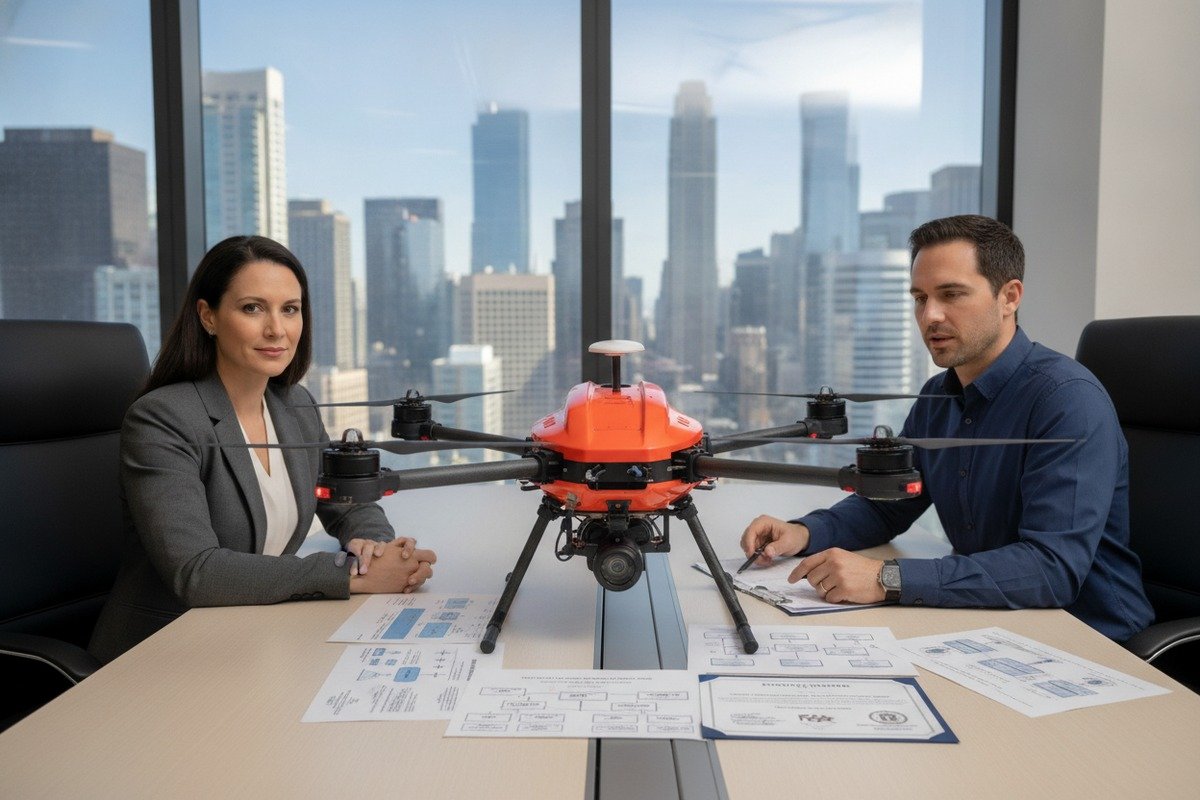
Too many distributors lose time and money sourcing طائرات بدون طيار لمكافحة الحرائق 1 that never match what US fire departments actually need. Our production line builds multiple drone configurations every month, and we see the same costly mistakes repeated: buyers skip the requirements conversation and jump straight to price comparisons.
US distributors sourcing firefighting drones should clarify mission profiles, FAA regulatory compliance, sensor and payload specifications, environmental durability ratings, data transmission requirements, cybersecurity standards, supply chain trust status, and long-term technical support commitments before selecting any platform or manufacturer.
A “firefighting drone” is not a single product. It is a set of use cases with very different hardware, software, and compliance demands الامتثال التنظيمي لإدارة الطيران الفيدرالية 2. Wildfire reconnaissance, structure-fire overwatch, hazmat assessment, and search and rescue each require a distinct configuration. This guide breaks down the core requirements every US distributor should clarify before placing an order.
How can I ensure the firefighting drones I source meet the durability and performance standards required by US fire departments?
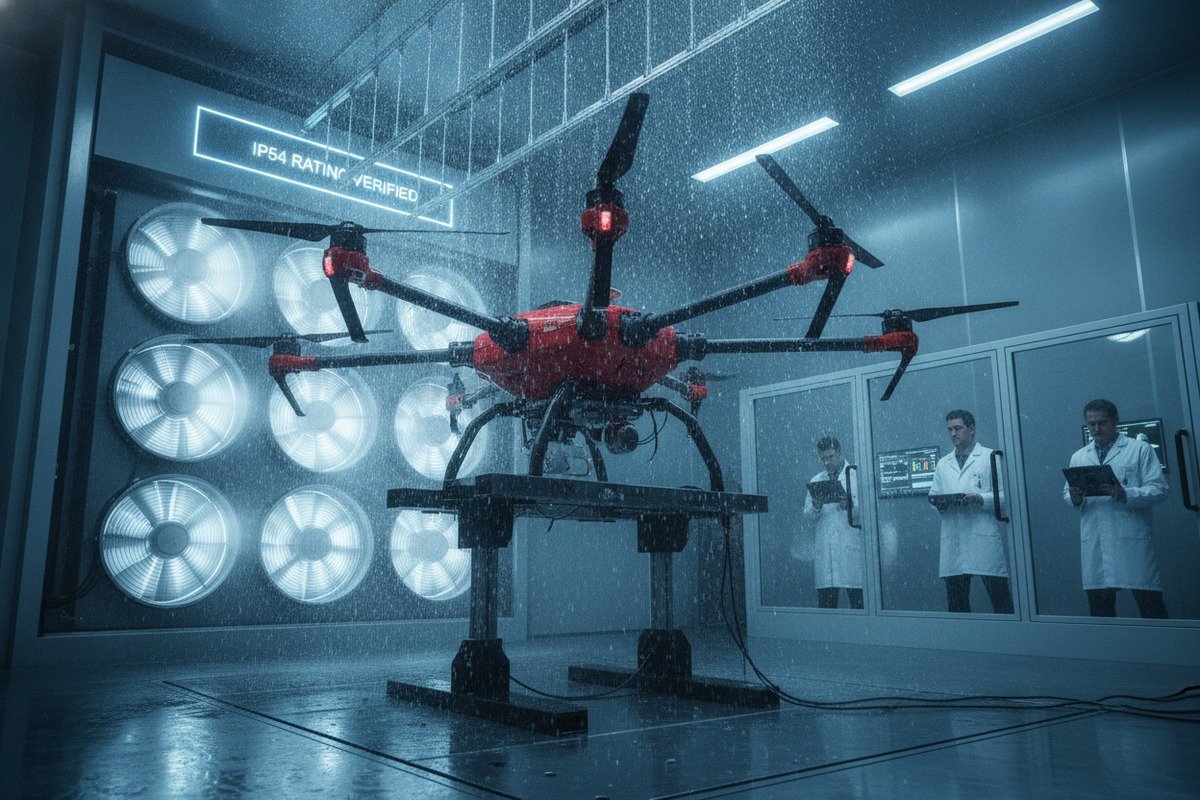
Every batch we ship to the US goes through thermal stress testing, wind tunnel validation, and extended flight cycling NFPA 2400 guidelines 3. Still, distributors often ask us the wrong questions about durability because they do not fully understand the operational environment their clients face.
To ensure firefighting drones meet US fire department standards, distributors must verify IP ratings, heat resistance thresholds, wind tolerance specs, flight endurance under load, hot-swappable battery support, and compliance with NFPA 2400 guidelines before committing to any platform.
Define the Mission First
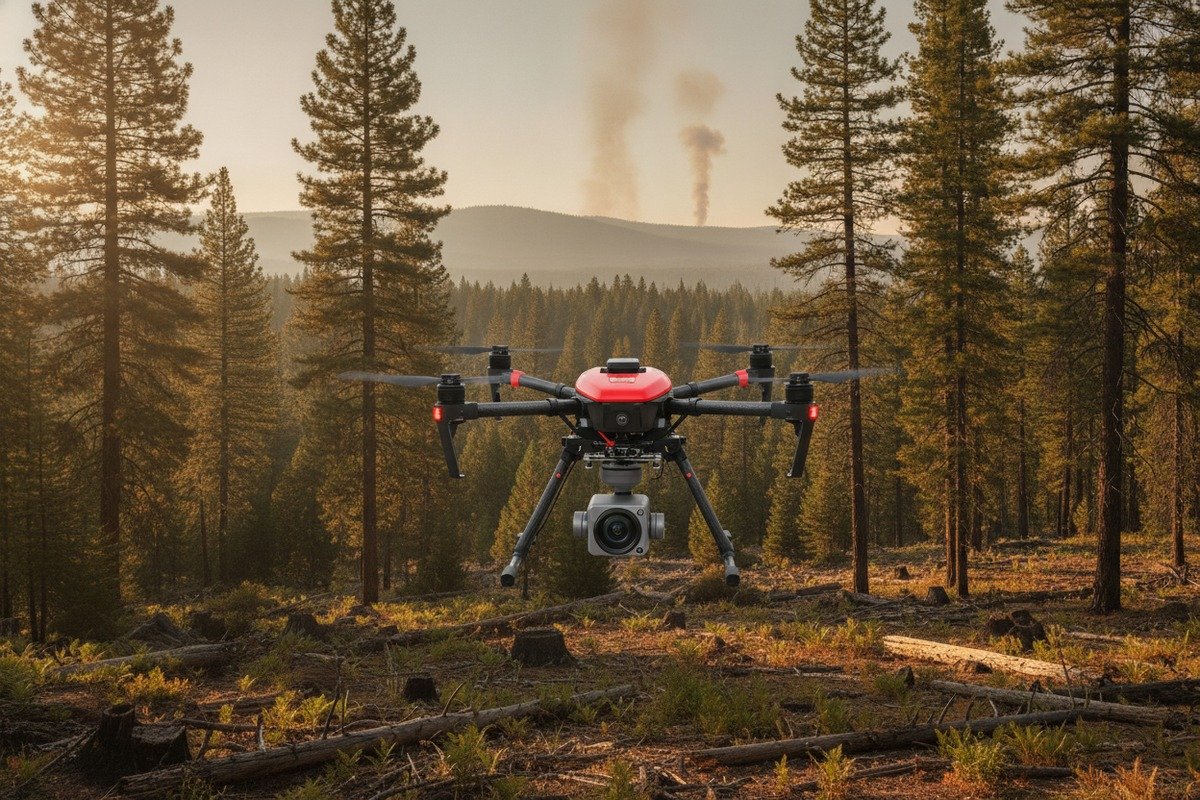
Before evaluating any hardware spec, you need to know what the drone will actually do نظام المعلومات الجغرافية 4. Wildland fire missions prioritize broad-area mapping, containment-line monitoring, and rugged terrain access. Structure-fire missions focus on thermal hotspot detection, roof integrity assessment, and victim search in smoke-filled environments. Hazmat incidents may require chemical or gas sensing payloads. Each mission type drives a completely different set of durability requirements.
When we design a firefighting platform at our facility in Xi'an, the first question our engineers ask is: "What is the worst-case environment this aircraft will face?" A drone flying over a California wildfire faces radiant heat exceeding 200°C at low altitude, heavy smoke particulates, and gusting winds above 30 mph. A drone performing structure-fire overwatch in a dense urban area faces turbulent thermals, low visibility, and close proximity to obstacles. These are not the same engineering challenges.
Key Durability and Performance Metrics
Distributors should request documented test data for every metric below. If a manufacturer cannot provide third-party test reports, treat that as a red flag.
| مقياس الأداء | Wildland Fire Requirement | Structure Fire Requirement |
|---|---|---|
| تصنيف IP | IP54 minimum (dust + splash) | IP54 كحد أدنى |
| درجة حرارة التشغيل | -20°C to +60°C ambient | -10°C to +50°C ambient |
| مقاومة الرياح | 12–15 m/s sustained | 10–12 m/s sustained |
| Flight Endurance (loaded) | 40–55 دقيقة | 30–45 minutes |
| Hot-Swap Battery | Strongly recommended | موصى به |
| Smoke/Fog Operation | مطلوب | مطلوب |
| Night Flight Capability | مطلوب | مطلوب |
| Rapid Deployment Time | Under 5 minutes from case to air | أقل من 3 دقائق |
Sensor and Payload Considerations
Thermal imaging is essential for firefighting drones, but it is not sufficient on its own. Visual cameras, optical zoom, and communication relays are all necessary for command decisions. For hazmat incidents, distributors should ask whether the platform supports modular payloads like gas or particulate sensors.
Our engineering team has found that many distributors over-specify sensor suites because they try to cover every possible use case with one aircraft. This raises cost and complexity without improving mission outcomes. A better approach is to offer two or three configurations tailored to the agency's primary mission.
The USDA Forest Service Benchmark
إن خدمة الغابات الأمريكية (USDA Forest Service) 5 has documented that UAS reduce exposure of aircrews to high-risk missions and can be cheaper than helicopter contracting. Their programs confirm drones can operate in smoke, fog, and at night. Distributors should use this as a benchmark when evaluating whether a platform truly meets the operational demands of US firefighting agencies.
Extended flight time is another critical factor. Fire incidents last hours, not minutes. If the drone requires 20 minutes of downtime between battery swaps, it creates dangerous gaps in situational awareness. Hot-swappable battery systems 6 that keep the drone ready for relaunch in under 60 seconds are becoming a baseline expectation.
What specific certifications and export documentation should I verify to ensure smooth customs clearance into the United States?
We have shipped industrial drones to more than 30 countries, and the United States consistently has the most demanding import and compliance framework. Distributors who skip the documentation checklist often face costly customs holds, re-export orders, or product seizures.
Distributors should verify FAA Part 107 pilot compatibility, FCC emissions certification, Remote ID compliance, NDAA Section 848 supply chain status, Blue UAS list eligibility, CE/UL markings where applicable, and complete export documentation including commercial invoices, HS codes, and certificates of origin.
FAA Regulatory Landscape
Public-safety drone programs in the US must comply with FAA requirements. Part 107 is the baseline certification for commercial drone pilots. However, firefighting operations often require additional waivers. Night flying, beyond visual line of sight (BVLOS), and operations over people each need separate FAA approvals. Distributors should confirm the drone platform supports the operational profiles that their clients will seek waivers for.
NFPA 2400 provides guidance specifically for public-safety drone programs. While it is not a federal law, many fire departments use it as a procurement standard. If your drone does not align with NFPA 2400 recommendations, you may lose bids.
Remote ID is now mandatory for nearly all drones operating in US airspace. The drone must broadcast identification and location data. If the aircraft you source does not have built-in الامتثال للهوية عن بُعد 7, your customer will need an add-on module, which complicates deployment and adds cost.
Supply Chain Trust and National Security
This is where many Chinese-manufactured drones face scrutiny. The US Department of Defense maintains the قائمة Blue UAS 8, which identifies drone platforms cleared for government use based on cybersecurity and supply chain reviews. If your target customer is a government fire department, being on or aligned with the Blue UAS framework matters significantly.
المادة 848 من قانون تفويض الدفاع الوطني 9 restricts the use of certain foreign-manufactured drones by federal agencies. Distributors should understand whether their platform's components, software, and data handling practices meet these requirements. At our facility, we work with distributors to provide full component origin documentation and software architecture transparency to support these reviews.
Export and Import Documentation Checklist
| المستند | الغرض | من يقدمها |
|---|---|---|
| الفاتورة التجارية | التقييم الجمركي | Manufacturer/Exporter |
| قائمة التعبئة | التحقق من المحتويات | الشركة المصنعة |
| شهادة المنشأ | بلد التصنيع | Manufacturer or Chamber of Commerce |
| شهادة FCC | Radio emissions compliance | Manufacturer (pre-certified) |
| تصنيف رمز النظام المنسق (HS) | Tariff and duty calculation | Customs broker or exporter |
| بيان الامتثال لمعرف الهوية عن بعد | FAA airspace regulation | الشركة المصنعة |
| NDAA/Blue UAS Documentation | الأهلية للمشتريات الحكومية | Manufacturer with distributor support |
| Battery Safety Certification (UN 38.3) | Lithium battery transport compliance | الشركة المصنعة للبطارية |
| شهادة المستخدم النهائي | الامتثال لضوابط التصدير | Distributor/Buyer |
Cybersecurity as a Compliance Requirement
Encrypted data links, secure firmware update channels, and protected telemetry storage are no longer optional features. They are compliance requirements for many government buyers. Distributors should ask manufacturers for detailed cybersecurity architecture documentation, including where data is stored, how it is transmitted, and whether any data flows to servers outside the United States.
Our approach has been to offer on-premise data processing options and fully documented encryption protocols. This gives distributors a clear answer when their clients ask: "Where does my data go?"
NWCG lists formal qualification requirements for UAS pilot roles in incident operations. This means firefighting drone programs are not plug-and-play. Distributors who sell to agencies operating under NWCG frameworks need to confirm their training packages align with task-book completion requirements.
How do I evaluate a manufacturer's capability to provide the OEM branding and custom software development my clients demand?
Our team of 70 people in Xi'an includes dedicated firmware engineers, industrial designers, and a rapid prototyping lab. Yet even with that capacity, we turn down OEM requests that are poorly scoped. The reason is simple: vague requirements produce vague results, and nobody wins.
Evaluate a manufacturer's OEM and custom software capability by reviewing past OEM project portfolios, confirming in-house software development teams, testing prototype turnaround times, verifying intellectual property agreements, and ensuring the manufacturer can integrate custom features into existing flight control and ground station platforms.
What OEM Branding Actually Involves
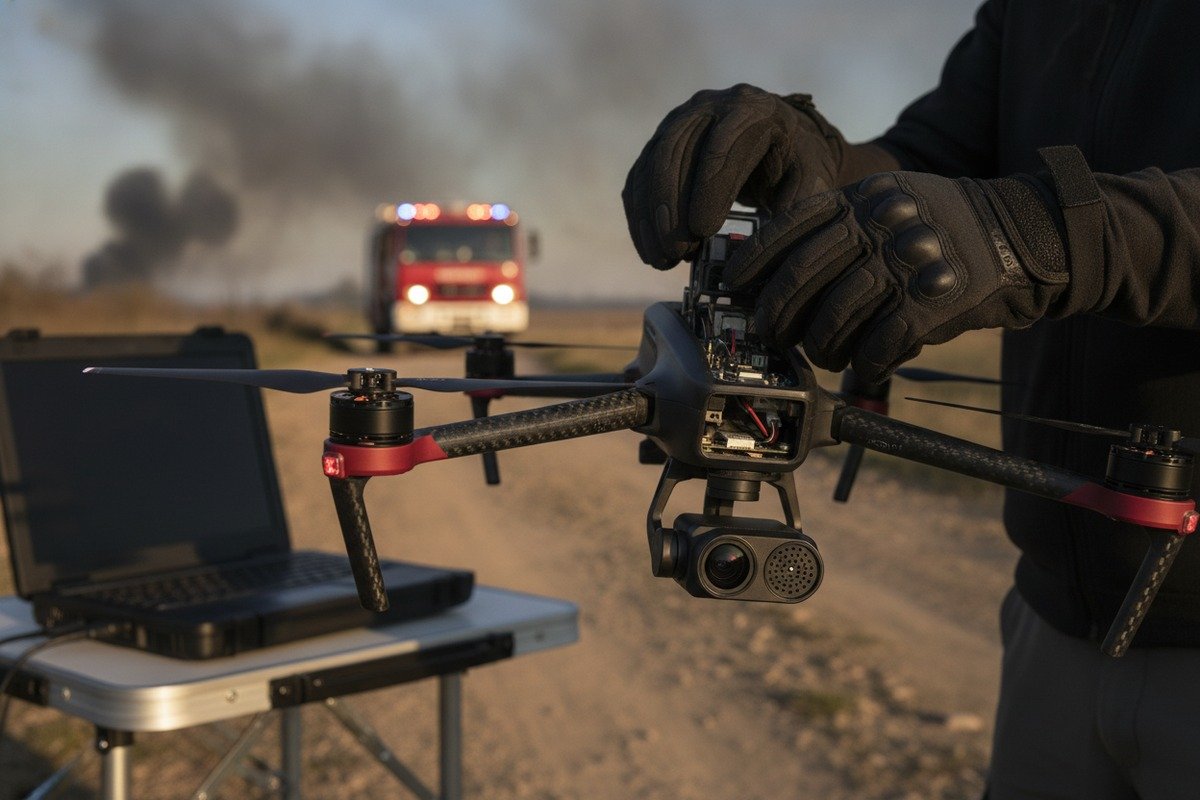
OEM branding is more than putting a logo on a drone. Distributors should clarify the full scope of customization they need. This includes physical branding on the airframe, custom color schemes, branded ground control station software, custom packaging, and co-branded user manuals. Each layer adds lead time and cost.
When we onboard a new OEM partner, our design team creates a branding specification document. This document covers every touchpoint where the distributor's brand appears. It prevents surprises at delivery.
Software Customization Depth
Software is where the real differentiation happens. Fire departments want ground station interfaces that integrate with their Incident Command Systems 10 (ICS) and Geographic Information System (GIS) platforms. They want mission planning tools that match their operational workflows. They want automated reporting features for post-incident documentation.
Distributors should ask manufacturers these specific questions:
- Do you have an in-house software development team, or do you outsource?
- Can you modify the ground control station UI to display our brand and custom workflows?
- Can you integrate real-time video feeds with third-party ICS platforms?
- What is your typical turnaround time for a custom software feature request?
- Do you provide SDK or API access for third-party developers?
Evaluating Development Capability
| معايير التقييم | مؤشر قوي | مؤشر ضعيف |
|---|---|---|
| In-house dev team | Dedicated software engineers on staff | All development outsourced |
| Past OEM projects | Portfolio with named references | لا توجد أمثلة متاحة |
| Prototype turnaround | 4–8 weeks for software builds | 6+ months with no clear timeline |
| IP protection | Clear contracts and NDA frameworks | Vague or no IP agreements |
| SDK/API availability | Open documentation for integrators | Closed system with no access |
| Post-launch updates | Scheduled firmware update roadmap | No update commitment |
حماية الملكية الفكرية
This is a critical concern for US distributors. If you invest in custom software development with a Chinese manufacturer, you need clear contractual protections. Confirm that the manufacturer will not reuse your custom features for other clients. Confirm that source code ownership or licensing terms are defined in writing. Our standard practice is to sign mutual NDAs and include IP clauses in every OEM development agreement.
Integration with Public-Safety Workflows
AI-driven features are becoming part of the conversation. Real-time anomaly detection, predictive fire behavior analysis, and autonomous navigation in GPS-denied environments are emerging capabilities. Distributors should ask manufacturers whether their software architecture supports these advanced features today or has a clear development roadmap.
The strongest manufacturers invest in modular software architectures. This means new features can be added without rebuilding the entire system. It also means distributors can offer tiered software packages to different customer segments.
What level of long-term technical support and spare parts availability should I secure to minimize my operational risks?
When we first started exporting drones to US distributors, the most frequent complaint was not about product quality. It was about what happened after the sale. A fire department grounded a drone because a single motor failed, and the distributor had no replacement parts in stock. That one incident cost the distributor a major account.
Distributors should secure contractual guarantees for remote and on-site technical support, spare parts inventory commitments with defined lead times, firmware update schedules, warranty terms covering at least 12–24 months, and dedicated training programs for both distributor technicians and end-user pilots.
Why After-Sales Support Defines Your Business
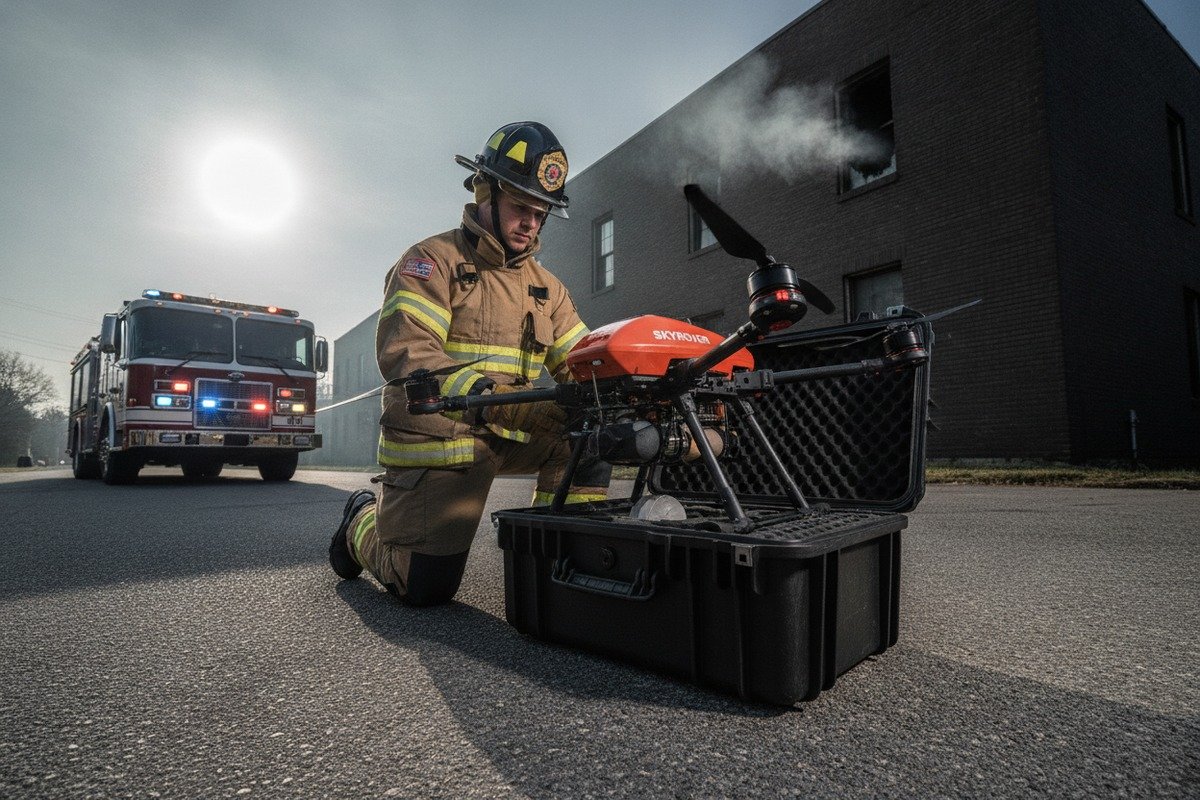
Firefighting drones are not consumer gadgets. They are life-safety tools. When a drone goes down during an active fire incident, the consequences are serious. Lost situational awareness can put firefighters at risk. Distributors who cannot resolve technical issues quickly will lose contracts and reputation.
The USDA Forest Service has noted that drones reduce exposure of aircrews to high-risk missions. But this benefit only holds when the drones are operational. A grounded fleet is worse than no fleet at all because the agency has already committed resources and training to drone-based operations.
استراتيجية قطع الغيار
Distributors should negotiate spare parts packages as part of the initial purchase agreement. Do not treat spare parts as an afterthought. Our recommendation is to stock the following items for every 10 units deployed:
- 4 complete propulsion sets (motors + propellers + ESCs)
- 6 battery packs
- 2 gimbal assemblies
- 2 camera/sensor modules
- 1 complete flight controller unit
- Assorted cables, connectors, and landing gear components
Lead time matters as much as availability. If replacement parts take 8 weeks to arrive from China, a fire department will not wait. They will switch to a competitor's product. We offer pre-positioned spare parts inventory at US-based warehouses for our key distributor partners, with a target restock cycle of 2 weeks.
Training and Qualification Support
Fire agencies use drones more effectively when pilots are trained for incident operations, not just recreational or general commercial flying. Distributors should ask whether the manufacturer provides:
- Initial pilot training for the specific platform
- Maintenance technician certification
- Mission-specific training modules (wildfire, structure fire, hazmat)
- Refresher training on firmware updates and new features
- Documentation aligned with NWCG qualification task books
التكلفة الإجمالية للملكية
Smart distributors compare total cost of ownership, not just purchase price. The table below illustrates how hidden costs can change the value equation.
| فئة التكلفة | Low-Support Manufacturer | Full-Support Manufacturer |
|---|---|---|
| Unit Purchase Price | $15,000 | $18,000 |
| Spare Parts (Year 1) | $3,500 (long lead times) | $2,000 (pre-positioned) |
| Training (Initial) | $0 (not offered) | $1,500 (included) |
| تحديثات البرامج الثابتة | $500/year (if available) | Included for 2 years |
| Downtime Cost (estimated) | $5,000+ per incident | Minimal with fast parts access |
| Total Year 1 Cost | $24,000+ | $21,500 |
The manufacturer with the lower sticker price often costs more in the long run. Distributors should present this total-cost analysis to their clients. It builds trust and justifies the investment in a more capable partner.
اتفاقيات مستوى الخدمة
Every distributor should negotiate a written service level agreement (SLA) with their manufacturer. The SLA should define response times for remote technical support, turnaround times for warranty repairs, firmware update frequency, and escalation procedures for critical failures. At our company, we offer 24-hour remote support response and 48-hour warranty repair shipping for US-based partners.
Autonomous and rapid-dispatch capabilities are emerging themes in firefighting drones. But these features only deliver value if the support infrastructure keeps them running. A drone with AI-driven navigation that crashes due to a firmware bug and cannot be repaired for two months is worse than a simple manual platform that stays in the air.
الخاتمة
Sourcing firefighting drones for the US market demands more than comparing spec sheets. Clarify the mission, verify compliance, evaluate true OEM capability, and lock in long-term support before you commit to any manufacturer.
الحواشي
1. Provides general information about firefighting drones and their use. ︎
2. Explains the regulatory framework for drones in the United States. ︎
3. Details the standard for small unmanned aircraft systems used for public safety operations. ︎
4. Explains a system for managing and analyzing spatial data, crucial for situational awareness. ︎
5. Highlights the use of drones by a key US government agency for wildfire management. ︎
6. Explains the concept and benefits of hot-swapping technology for continuous operation. ︎
7. Explains the mandatory identification system for drones operating in US airspace. ︎
8. Lists approved drones for government use, addressing security and supply chain concerns. ︎
9. Clarifies restrictions on foreign-manufactured drones for federal agencies and contractors. ︎
10. Defines a standardized emergency management system for incident response. ︎
 English
  Español de México
  Deutsch
  Français
  Русский
  العربية
Join the Discussion
Have Thoughts on This Article?
Your experience matters. Whether you agree, disagree, or have a question about deploying industrial drones in the field, drop a comment below -- our team reads and responds to every one.