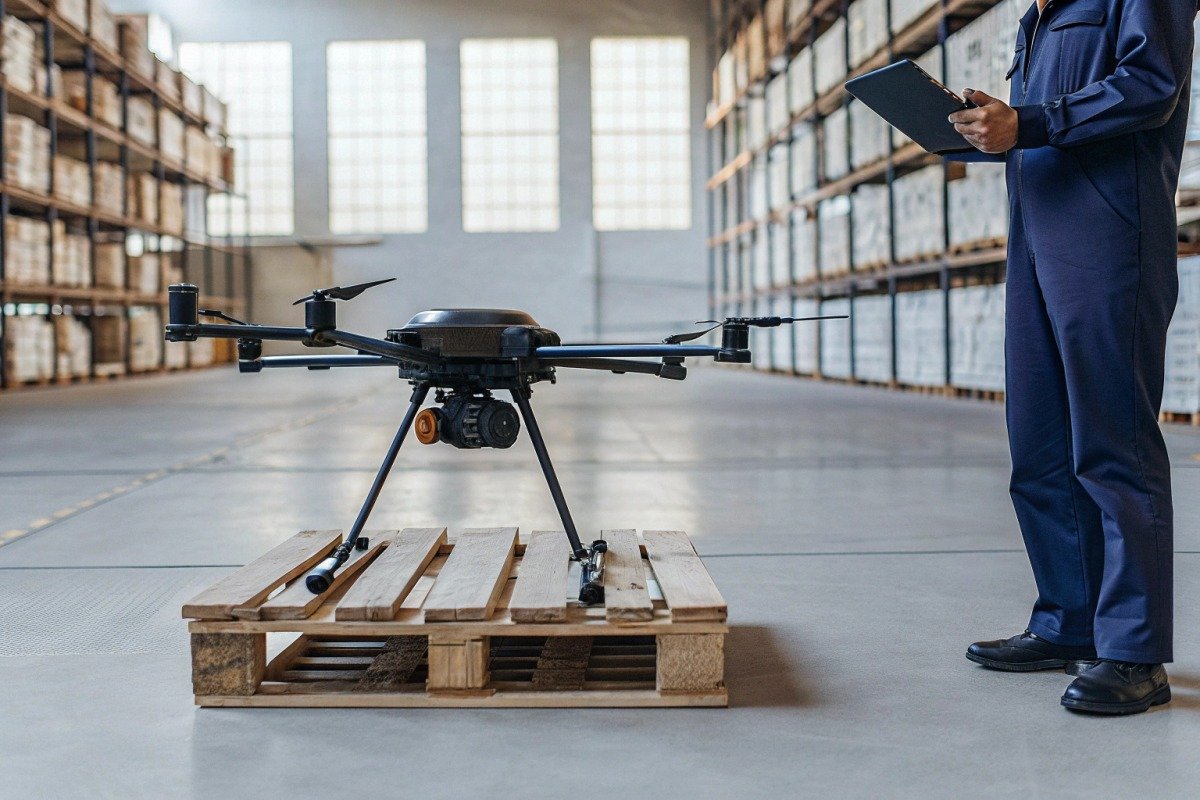
When our engineering team ships firefighting drones to European clients, questions about tariffs always come up bilateral free trade agreement 1. Many buyers expect special preferential rates. The reality often surprises them.
China does not have preferential tariff status with the EU for drones. Firefighting drones face the EU’s Common Customs Tariff rates, typically 0-6% under HS code 8806. No bilateral free trade agreement exists between China and the EU, so standard MFN rates apply to all Chinese drone imports.
Understanding these tariff rules can save you thousands on your next order قاعدة بيانات الاتحاد الأوروبي TARIC 2. Let me walk you through everything you need to know about importing firefighting drones from China to the EU.
How do I determine the specific import duty rates for Chinese firefighting drones in my EU country?
Our export team handles shipments to over 15 EU countries each year. Clients often assume rates vary wildly. The truth is simpler, but the details matter.
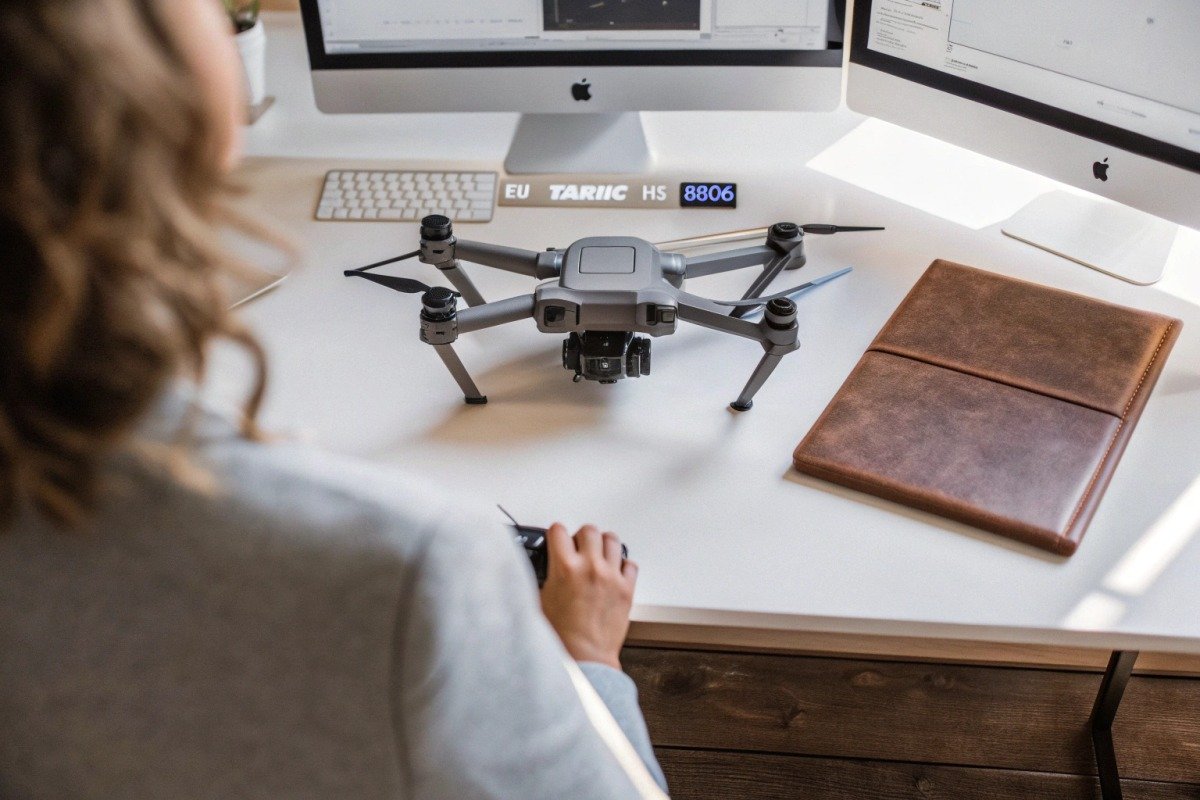
To find your exact duty rate, look up your drone's HS code in the EU TARIC database. Firefighting drones typically fall under HS 8806 with rates from 0% to 2.7%. All EU member states apply the same Common Customs Tariff, though VAT rates differ by country, ranging from 19% to 27%.
Understanding the EU TARIC System
The EU uses one unified customs database called TARIC. This system applies identical tariff rates across all 27 member states. When you import a firefighting drone to Germany, France, or Poland, the base duty stays the same.
Your first step is identifying the correct HS code. Firefighting drones typically classify under these headings:
| رمز النظام المنسق | الوصف | Typical Duty Rate |
|---|---|---|
| 8806.10 | Unmanned aircraft designed to be controlled remotely | 0% |
| 8806.21 | UAVs with maximum take-off weight ≤250g | 0% |
| 8806.22 | UAVs with MTOW >250g but ≤7kg | 2.7% |
| 8806.23 | UAVs with MTOW >7kg but ≤25kg | 2.7% |
| 8806.24 | UAVs with MTOW >25kg but ≤150kg | 2.7% |
| 8806.29 | طائرات أخرى بدون طيار | 2.7% |
Our industrial firefighting drones usually weigh between 15kg and 45kg at maximum take-off weight. This places them in the 8806.23 or 8806.24 categories.
VAT Differences Across EU Countries
While tariffs stay uniform, VAT creates real price differences. Here is what you pay in major markets:
| البلد | معدل ضريبة القيمة المضافة القياسي | Applied On |
|---|---|---|
| ألمانيا | 19% | CIF value + duty |
| فرنسا | 20% | CIF value + duty |
| ايطاليا | 22% | CIF value + duty |
| اسبانيا | 21% | CIF value + duty |
| هولندا | 21% | CIF value + duty |
| بولندا | 23% | CIF value + duty |
| المجر | 27% | CIF value + duty |
مثال حسابي عملي
Let me show you a real scenario. One client ordered a firefighting drone worth €8,000 CIF Rotterdam.
Base duty at 2.7%: €216
Subtotal: €8,216
Dutch VAT at 21%: €1,725
Total landed cost: €9,941
The effective increase from Chinese factory price to Dutch warehouse was 24.3%. Planning for this helps you set accurate resale margins.
Using the EU Trade Helpdesk
The EU provides a free online tool at trade.ec.europa.eu. Enter your HS code and origin country to get exact rates, including any anti-dumping duties. As of early 2026, no additional trade defense measures target firefighting drones specifically.
Are there any trade agreements or certificates of origin that can lower my tariff costs?
We have clients who ask every month about preferential rates. They see other suppliers from Vietnam or Turkey get better deals. China's situation is different.
China has no preferential trade agreement with the EU that reduces drone tariffs. Chinese products are ineligible for the EU's Generalized System of Preferences since China's GDP exceeds qualifying thresholds. You will pay standard MFN rates, and a non-preferential certificate of origin is required for customs clearance.
Why China Lacks EU Tariff Preferences
The EU reserves its GSP program for developing economies. China's per capita GDP crossed the exclusion threshold years ago. This means Chinese goods receive no special treatment.
Compare this to competing drone suppliers:
| Origin Country | EU Trade Status | Drone Tariff Benefit |
|---|---|---|
| الصين | MFN only | None, standard 0-2.7% |
| فيتنام | GSP eligible | Reduced or zero rates |
| Turkey | Customs Union | Zero duty on most goods |
| كوريا الجنوبية | FTA | Zero duty |
| اليابان | وكالة حماية البيئة | Zero duty |
| المملكة المتحدة | TCA | Zero duty |
Our production costs still make Chinese drones competitive despite paying full tariffs. A 2.7% duty adds less than €300 on a €10,000 drone. Labor and manufacturing efficiency savings often exceed 30%.
متطلبات شهادة المنشأ
You still need proper documentation for customs. A non-preferential certificate of origin 4 proves the drone was made in China. This document:
- Must be issued by CCPIT or local chambers of commerce
- Shows the factory name and product details
- Helps customs apply the correct MFN rate
- Prevents classification as goods from sanctioned origins
Our export team includes this certificate with every shipment at no extra charge. Some freight forwarders charge €50-100 for arranging it separately.
Potential Future Scenarios
Trade policy changes fast. The EU-China relationship faces pressure from several directions. Here is what our logistics partners monitor:
Anti-dumping investigations could target drones if EU manufacturers file complaints. The precedent exists with electric vehicles facing 7.8% to 35.3% additional duties. No drone-specific probe has launched yet.
إن Foreign Subsidies Regulation 5 lets EU authorities investigate Chinese state support. Drone manufacturing receives government subsidies in China. This creates potential exposure.
Price undertakings offer an alternative to duties. Chinese EV makers agreed to minimum import prices to avoid tariffs. Similar arrangements could emerge for drones if investigations begin.
Alternative Sourcing Strategies
Some clients ask about routing shipments through third countries. This rarely works. EU customs applies rules of origin strictly. A Chinese drone assembled minimally in Vietnam still counts as Chinese origin.
Substantial transformation must occur to change origin. The drone would need major component changes, new programming, or significant assembly in the third country. Simply repackaging or adding minor parts does not qualify.
How does the HS code classification of my industrial drones affect the final price I pay at customs?
When our engineers design new firefighting drone models, they work closely with our export compliance team. Small design choices can shift HS codes. This affects your bottom line directly.
HS code classification determines your exact duty rate, VAT base, and any trade defense measures. Misclassification can trigger penalties of up to 300% of underpaid duties. Firefighting drones may classify under 8806 for UAVs, 8424 for fire extinguishing apparatus, or 8479 for machines not elsewhere specified, each with different rates.

The Classification Challenge for Multi-Function Drones
Firefighting drones combine several technologies. They are aircraft, fire suppression equipment, and specialized machinery. Customs authorities look at the primary function to classify them.
Our experience shows these classification options:
| HS Heading | التطبيق | Duty Rate | الأفضل لـ |
|---|---|---|---|
| 8806 | طائرة بدون طيار | 0-2.7% | Pure surveillance/reconnaissance drones |
| 8424.10 | Fire extinguishers | 1.7% | Drones with integrated suppression systems |
| 8479.89 | آلات ذات وظائف فردية | 1.7% | Specialized industrial equipment |
| 8525.89 | Transmission apparatus | 0% | Drones classified as cameras |
The classification affects more than tariffs. It determines compliance requirements, statistical tracking, and potential trade remedies.
How Classification Decisions Are Made
Customs authorities follow the General Rules of Interpretation. These rules prioritize:
- The terms of the headings
- Any section or chapter notes
- The essential character for combination goods
- The heading occurring last in numerical order
For a firefighting drone with a 30-liter water tank and fire suppression nozzles, the essential character could argue for 8424. But if the drone primarily surveys fire locations and occasionally drops suppressant, 8806 might apply.
Real Classification Disputes
One European client faced a reclassification audit last year. They imported drones under 8806.24 at 2.7%. Customs argued the thermal imaging payload made it transmission equipment under 8525, which carried 0% duty but different regulatory oversight.
The resolution took four months. The client needed technical documentation from our engineering team showing the primary function was flight operations, not signal transmission. We now provide classification support letters with shipments.
Protecting Yourself from Misclassification
Get a Binding Tariff Information ruling 7 before large orders. The EU customs system issues BTI decisions that guarantee classification for three years. Application is free but takes 4-8 weeks.
Document everything about your drone's intended use. Save marketing materials, technical specifications, and correspondence showing primary purpose. Customs can review these during audits.
Work with customs brokers experienced in aviation equipment. General freight forwarders often default to 8806 without checking alternatives. Specialized brokers identify legitimate classifications that may save you money.
التأثير على التكلفة الإجمالية للوصول
Let me compare two scenarios for a €15,000 firefighting drone shipped to Spain:
Scenario A – Classified as 8806.24:
- Duty: €405 (2.7%)
- VAT base: €15,405
- VAT at 21%: €3,235
- Total: €18,640
Scenario B – Classified as 8424.10:
- Duty: €255 (1.7%)
- VAT base: €15,255
- VAT at 21%: €3,204
- Total: €18,459
The 1% duty difference saves €181 per unit. On a 20-unit order, that totals €3,620.
Can my supplier provide DDP shipping to help me avoid unexpected tariff and tax complications?
Our logistics team manages DDP deliveries throughout Europe weekly. Clients tell us this service removes their biggest headache. The certainty matters more than the cost.
Yes, reputable Chinese drone manufacturers like our company offer DDP (Delivered Duty Paid) shipping to EU destinations. This means we handle customs clearance, pay all duties and taxes, and deliver to your warehouse. You receive one final price with no surprise fees. This eliminates customs delays and compliance risks for importers.
What DDP Includes
DDP is the most comprehensive Incoterm for buyers. When you choose DDP shipping from our facility, we assume all responsibility until delivery. Here is the complete breakdown:
| عنصر التكلفة | Who Pays Under DDP | Who Pays Under FOB |
|---|---|---|
| Factory packaging | البائع | البائع |
| Inland transport China | البائع | البائع |
| التصدير الجمركي | البائع | البائع |
| Ocean/air freight | البائع | المشتري |
| تأمين الشحن | البائع | المشتري |
| EU customs clearance | البائع | المشتري |
| رسوم الاستيراد | البائع | المشتري |
| ضريبة القيمة المضافة | البائع | المشتري |
| التسليم النهائي | البائع | المشتري |
The difference becomes clear with a €10,000 drone order. Under FOB, you might budget €10,000 plus maybe 15% for shipping. Then customs presents a €2,700 duty and VAT bill. Your actual cost hits €14,500.
Under DDP, we quote €14,200 all-inclusive. You know exactly what you pay. No customs agent fees. No surprise storage charges. No delays from paperwork errors.
Why DDP Matters for 2026 EU Imports
The regulatory environment is tightening. Starting July 1, 2026, the EU applies new rules on low-value consignments. Parcels under €150 face a €3 fixed duty plus VAT. E-commerce platforms must register and collect these fees.
For commercial drone shipments, these rules matter less. But they signal increased customs scrutiny on Chinese imports. Professional DDP handling ensures compliance.
The EU's Import Control System 2 9 now requires advance electronic declarations. Mistakes in safety and security filings cause shipments to be held. Our dedicated customs broker files ICS2 declarations correctly the first time.
Choosing the Right Supplier for DDP
Not all suppliers can actually deliver DDP service. Some quote DDP but use inexperienced freight forwarders. Problems arise at customs. Then they claim "unexpected" duties you must pay.
Ask these questions before ordering DDP:
Do you have an EU-based customs agent? Direct relationships mean faster clearance.
Who is the importer of record? The seller should handle this for true DDP.
Can you provide past shipment tracking? References prove capability.
What happens if customs holds the shipment? Clear responsibility prevents disputes.
At our company, we maintain customs agent partnerships in Rotterdam, Hamburg, and Barcelona. These hubs cover most EU distribution. We file paperwork 48 hours before arrival to prevent delays.
Cost Comparison: DDP vs. Self-Import
Some clients prefer managing their own imports to save money. Let me show you when each approach makes sense:
For single-unit orders under €20,000:
- DDP advantage: Lower broker fees spread across our volume
- Self-import disadvantage: €150-400 customs broker minimum fees
For large orders over €100,000:
- DDP advantage: Guaranteed landed cost for budgeting
- Self-import consideration: Your volume may justify dedicated broker relationships
For clients without EU import experience:
- DDP strongly recommended to avoid costly errors
- Classification mistakes can trigger audits on past shipments
We see clients switch to DDP after one bad customs experience. The peace of mind outweighs the slightly higher quoted price.
الخاتمة
Importing firefighting drones from China to the EU involves standard MFN tariffs of 0-2.7%, plus country-specific VAT. No preferential agreements reduce these costs. Correct HS classification and professional DDP shipping minimize risks and ensure smooth customs clearance for your business.
الحواشي
1. Details the EU-China Comprehensive Agreement on Investment, highlighting the lack of a ratified free trade agreement. ︎
2. Official European Commission portal providing access and information about the integrated EU TARIC database. ︎
3. Official EU source explaining the Common Customs Tariff and its application. ︎
4. Official EU guidance on non-preferential rules of origin and their role in customs declarations. ︎
5. Official European Commission page detailing the Foreign Subsidies Regulation and its purpose in the EU market. ︎
6. Explains the EU’s Generalized System of Preferences, a scheme for developing countries to receive lower tariffs. ︎
7. Official EU information on Binding Tariff Information (BTI) rulings for legal certainty in product classification. ︎
8. Provides detailed Harmonized System codes for unmanned aircraft under heading 8806. ︎
9. Official EU page explaining the Import Control System 2 (ICS2) for enhanced cargo security. ︎

 English
  Español de México
  Deutsch
  Français
  Русский
  العربية
