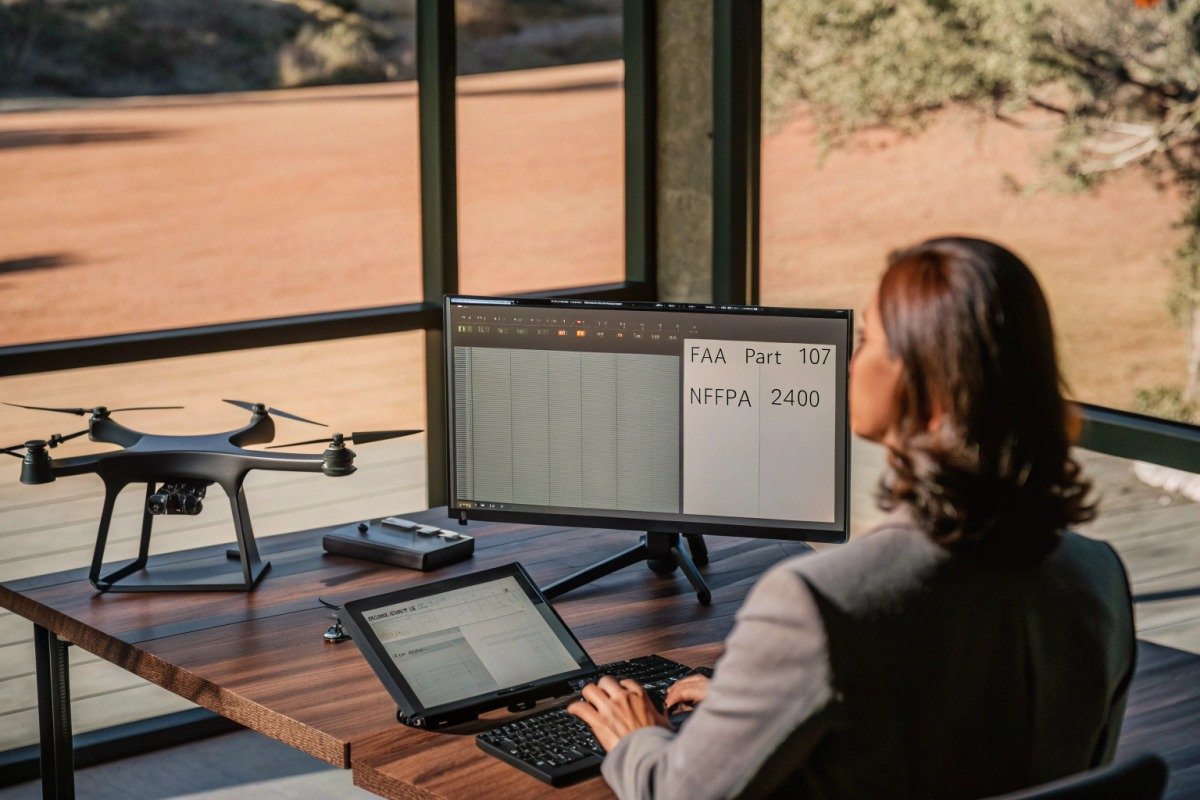
When our production line ships firefighting drones overseas, we constantly face questions from procurement managers about compliance verification. Many buyers have lost money importing drones from suppliers who lacked proper documentation. This creates customs delays, seized shipments, and damaged business relationships.
To verify if firefighting drone suppliers are compliant and not sanctioned, request FAA Part 107 or COA certifications, check OFAC SDN and BIS Entity Lists, verify export licenses and CE/DoC markings, and confirm NFPA 2400 compliance. Cross-reference supplier ownership against international sanction databases before any purchase.
This guide walks you through every step of supplier verification. We cover certifications, sanction checks, export qualifications, and quality standards. Let’s start with the certifications you need to request.
What certifications should I request to verify my firefighting drone supplier's legal compliance?
Our engineering team has processed hundreds of certification requests from US and European buyers. Many procurement managers don't know which documents to ask for. This leads to incomplete compliance files and customs problems.
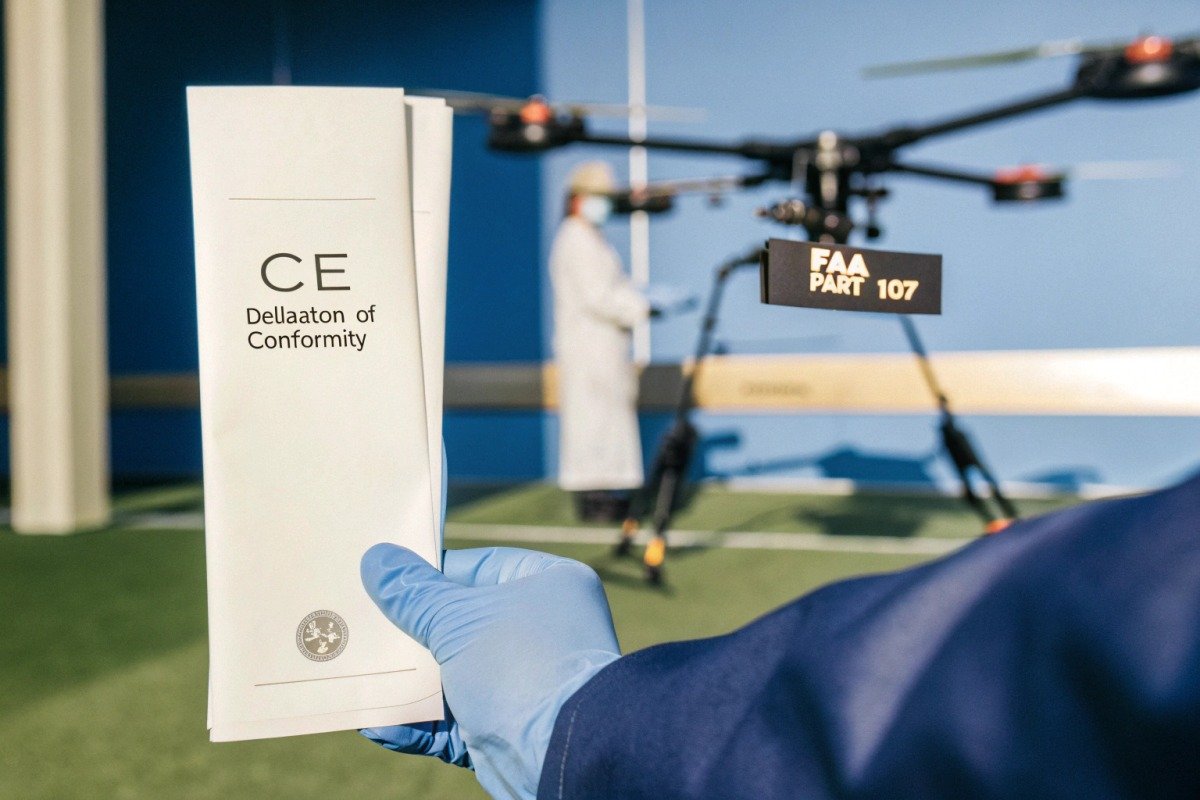
Request FAA Part 107 certification for US operations, EU Declaration of Conformity with CE markings for European markets, NFPA 2400 compliance documentation, RoHS test reports, and third-party quality certifications. For public safety drones, also request COA documentation and pilot training program records.
FAA Certification Requirements
The FAA requires different certifications based on how you'll use your firefighting drone. For commercial operations under 55 pounds, Part 107 certification is standard. Fire departments operating as government entities may use Certificate of Authorization (COA) 1 instead.
Part 107 covers drones flying below 400 feet. The pilot must pass a knowledge test with at least 70% score. This test covers 60 questions on airspace, operations limits, and emergency procedures. Certification stays valid for two years with recurrent testing.
COA applications require more documentation. You must submit UAV specifications, serial numbers, pilot training records, and Standard Operating Procedures. The FAA processes these through DroneZone with Special Governmental Interest (SGI) pathways for first responders.
Essential Certification Checklist
| نوع الشهادة | الغرض | Valid For | Issuing Body |
|---|---|---|---|
| FAA Part 107 | Commercial drone operations in US | 2 years | إدارة الطيران الفيدرالية |
| COA | Government/public safety operations | متفاوتة | إدارة الطيران الفيدرالية |
| علامة CE | EU market compliance | مستمر | Notified Body |
| NFPA 2400 | Public safety drone standards | مستمر | NFPA |
| RoHS Certificate | Hazardous substance compliance | Per product | Third-party lab |
| إعلان المطابقة | EU regulatory compliance | مستمر | الشركة المصنعة |
International Certification Equivalents
When sourcing from global suppliers, understand regional certification differences. EU operations require EASA A1/A2/A3 certifications with 40-70 multiple choice questions. UK buyers need GVC plus A2 Certificate of Competency. Australian imports require RePL and ReOC for commercial use.
Our factory maintains all major international certifications. We provide documentation packages tailored to each destination market. This saves our clients weeks of paperwork and compliance research.
NFPA 2400 Standards
NFPA 2400 sets standards specifically for public safety drones. NFPA 2400 standards 2 This covers thermal imaging capabilities, zoom functions for search-and-rescue, and operational protocols. Fire departments should verify their supplier's drones meet these standards.
The standard integrates with FAA Part 91/107 requirements. It addresses crew resource management, Remote Pilot Station specifications, and advanced navigation systems. Suppliers should provide detailed compliance matrices showing how their products meet each requirement.
How do I check if a potential drone manufacturer is on any international trade sanction or entity lists?
In our experience exporting to the US market, sanction screening has become critical. Some of our competitors have had shipments blocked because buyers didn't verify supplier status. This creates serious legal and financial risks for importers.
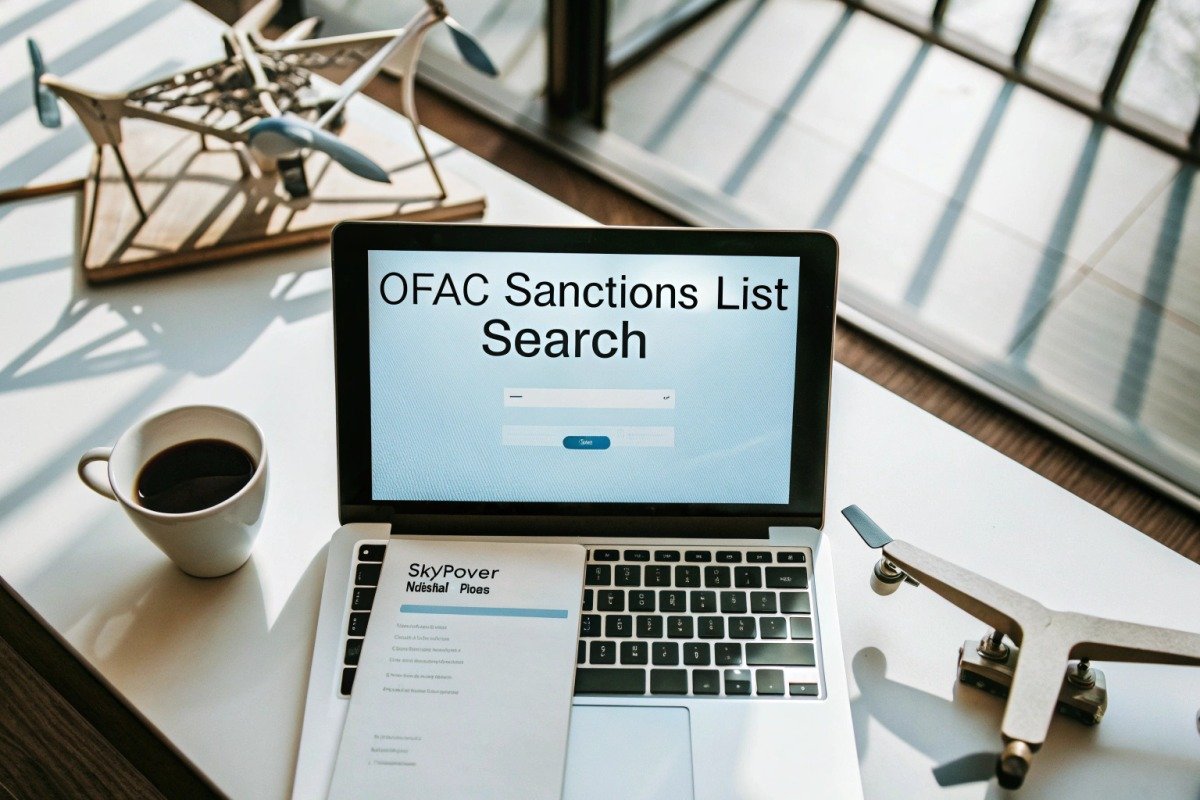
Check potential suppliers against OFAC's Specially Designated Nationals (SDN) list, the BIS Entity List, EU consolidated sanctions list, and UN Security Council sanctions. Screen not just the company but also beneficial owners, key executives, and parent companies. Use official government databases directly.
Primary Sanction Databases to Check
The US Office of Foreign Assets Control (OFAC) maintains the SDN list. OFAC's Specially Designated Nationals (SDN) list 4 This includes individuals and companies blocked from US trade. The Bureau of Industry and Security (BIS) maintains the Entity List for export control purposes. BIS Entity List 5
Chinese drone manufacturers like DJI face increasing scrutiny. Post-2024 regulations push to phase out certain Chinese drones in public safety applications due to data security concerns. This makes sanction verification even more important.
عملية التحقق خطوة بخطوة
First, collect the supplier's full legal name, registration number, and address. Search OFAC's Sanctions List Search tool directly. Then check the BIS Consolidated Screening List. Cross-reference against EU and UN databases for international compliance. EU consolidated sanctions list 6
Don't stop at the company name. Research beneficial owners and key executives. Some sanctioned individuals operate through shell companies. Check corporate ownership structures through business registries.
Key Sanction Databases Reference
| Database | Maintained By | Covers | Access |
|---|---|---|---|
| SDN List | OFAC (US Treasury) | Blocked persons/entities | sanctions.gov |
| Entity List | BIS (US Commerce) | Export restrictions | bis.gov |
| EU Consolidated List | European Commission | EU-wide sanctions | ec.europa.eu |
| UN Security Council | United Nations | Global sanctions | un.org |
| CMIC List | US Treasury | Chinese military companies | treasury.gov |
Supply Chain Due Diligence
Sanction compliance extends beyond your direct supplier. Request a detailed Bill of Materials (BOM) from potential suppliers. Verify that component manufacturers are not sanctioned entities. Some drone parts come from subcontractors in restricted regions.
Our production team maintains full supply chain transparency. We provide documentation showing component origins and subcontractor compliance status. This protects our clients from indirect sanction violations.
Red Flags to Watch
Be cautious if suppliers refuse to disclose ownership information. Watch for frequent company name changes or address changes. Complex corporate structures spanning multiple jurisdictions warrant extra scrutiny. Pricing significantly below market rates may indicate gray market or sanctioned sources.
What export qualifications should I look for to ensure my drone shipment clears customs smoothly?
When we calibrate our flight controllers and prepare export documentation, we follow strict protocols. Our clients have shared stories of competitors whose shipments sat in customs for months. Missing export qualifications cause expensive delays and storage fees.
Look for valid export licenses from the supplier's country, proper Harmonized System (HS) codes, complete commercial invoices, certificates of origin, and packing lists matching declared specifications. Verify the supplier has experience with your destination country's import requirements and can provide end-user certificates if required.
Essential Export Documentation
Smooth customs clearance requires complete paperwork. Commercial invoices must show accurate product descriptions, quantities, values, and HS codes. رموز النظام المنسق (HS) 7 Certificates of origin prove manufacturing location. Packing lists must match physical shipment contents exactly.
For firefighting drones with thermal imaging or advanced navigation, additional export controls may apply. Dual-use technology regulations require extra documentation. Suppliers should understand these requirements and prepare accordingly.
Export License Categories
Different drone technologies require different export licenses. Basic quadcopters may ship freely. Drones with military-grade sensors or encryption may need government approval. Your supplier should identify which category their products fall under.
Critical Export Documents Checklist
| المستند | الغرض | Who Provides | Common Issues |
|---|---|---|---|
| الفاتورة التجارية | التقييم الجمركي | المورد | Incorrect values or descriptions |
| شهادة المنشأ | Tariff determination | Supplier/Chamber | Missing or outdated |
| قائمة التعبئة | Content verification | المورد | Mismatched quantities |
| رخصة التصدير | Government approval | المورد | Missing for controlled tech |
| End-User Certificate | Final destination proof | المشتري | Incomplete information |
| Technical Specifications | التصنيف | المورد | Vague descriptions |
Software Compliance for Geofencing
Modern firefighting drones include geofencing software. This software must comply with destination country airspace regulations. Verify that the supplier's drones can import official no-fly zone data. Check for EASA ED-269 compliance or equivalent standards.
Emergency operations require authorized unlocking protocols. Fire departments need drones that can operate in restricted airspace during emergencies. Confirm the supplier provides secure unlocking procedures with proper documentation.
Destination-Specific Requirements
US imports require additional scrutiny for Chinese-manufactured drones. The NDAA includes provisions restricting certain Chinese drone makers from government contracts. Private sector buyers face fewer restrictions but should verify compliance anyway.
EU imports require CE marking and Declaration of Conformity. The supplier must provide technical documentation supporting these markings. Third-party test reports strengthen customs clearance success rates.
Working with Experienced Exporters
Choose suppliers with proven export track records to your country. Ask for references from previous clients in your region. Experienced exporters know which documents customs officers request. They prepare complete packages that avoid delays.
Our logistics team has processed thousands of shipments to North America and Europe. We provide door-to-door delivery with customs clearance support. This eliminates the uncertainty many importers face with inexperienced suppliers.
How can I confirm that my supplier has the engineering support and quality standards my business requires?
Our engineers have found that post-purchase support separates good suppliers from great ones. Many buyers focus only on price and specifications. Then they face problems when drones malfunction and the supplier cannot help. This damages their reputation with end customers.
Confirm engineering support by requesting documentation of local service centers, spare parts availability, warranty terms, pilot training programs, and technical support response times. Verify quality standards through ISO certifications, third-party audit reports, patent ownership verification, and cybersecurity compliance documentation.
Evaluating Technical Support Infrastructure
Strong suppliers maintain service centers in major markets. Ask where the nearest service facility is located. Verify spare parts warehouse locations and stock levels. Request average response times for technical support inquiries.
Our Xi'an headquarters supports a network of service partners across North America and Europe. We stock common spare parts regionally to reduce replacement times. Technical support responds within 24 hours for urgent issues.
Quality Certification Standards
ISO 9001 certification 8 indicates quality management systems. ISO 14001 covers environmental management. These certifications require regular third-party audits. Request copies of current certificates and audit reports.
Beyond ISO standards, verify product-specific certifications. Firefighting drones should meet NFPA 2400 requirements. Thermal imaging systems need calibration certificates. Flight controllers require testing documentation.
Quality and Support Evaluation Matrix
| العامل | Questions to Ask | الأعلام الحمراء | Green Flags |
|---|---|---|---|
| Service Centers | Location? Response time? | No local presence | Regional facilities |
| قطع الغيار | Stock levels? Delivery time? | 4+ week delays | 1-2 week delivery |
| Warranty | Duration? Coverage? | Limited 6-month | 2+ years comprehensive |
| التدريب | Format? Certification? | No training offered | Structured programs |
| الدعم الهندسي | Customization? Development? | No modification possible | Collaborative design |
Intellectual Property Verification
Verify the supplier owns their core technology. Search براءات اختراع جوجل 9 and USPTO databases for patent ownership. Legitimate manufacturers hold patents as assignees. This protects you from intellectual property disputes later.
Some suppliers resell products from other manufacturers without proper licensing. These suppliers cannot provide engineering support because they don't understand the technology. Verify original manufacturer status before committing.
الأمن السيبراني وسيادة البيانات
Modern firefighting drones collect sensitive operational data. Verify the supplier's cybersecurity measures. Ask about data encryption protocols, vulnerability management, and security update schedules.
Data sovereignty matters for government contracts. Confirm where flight data is stored and processed. Some jurisdictions require local data storage. Suppliers should offer compliant data handling options for different markets.
Long-Term Support Commitments
Drones require ongoing software updates for regulatory compliance. No-fly zone databases change frequently. Ask suppliers for their update roadmap and commitment timeline. Verify they will support the product throughout its operational lifespan.
Assess supplier financial stability. A bankrupt supplier cannot honor warranties or provide spare parts. Request financial statements or business credit reports. Consider suppliers with established market presence and stable operations.
Collaborative Development Capabilities
For specialized firefighting applications, you may need custom features. Ask whether the supplier can modify software or hardware. Request examples of previous customization projects. Verify engineering team qualifications and capacity.
Our development team works directly with clients on custom projects. We have modified thermal imaging algorithms for specific fire conditions. We have integrated custom communication systems for remote operations. This flexibility serves clients with unique requirements.
الخاتمة
Verifying firefighting drone supplier compliance requires checking certifications, sanction lists, export qualifications, and engineering capabilities. Take time to complete thorough due diligence before purchasing. Your business reputation depends on working with compliant, supportive suppliers.
الحواشي
1. Official FAA information regarding Certificates of Waiver or Authorization for public operators. ︎
2. Direct link to the official NFPA page for the 2400 Standard for public safety drones. ︎
3. Official FAA guidance on obtaining the Remote Pilot Certificate for commercial drone operations. ︎
4. Official source for the Specially Designated Nationals and Blocked Persons List from OFAC. ︎
5. Official Bureau of Industry and Security page detailing the Entity List for export control. ︎
6. Official EU resource providing an overview and access to various EU sanctions regimes. ︎
7. Official World Customs Organization page explaining the Harmonized System for classifying goods. ︎
8. Direct link to the International Organization for Standardization’s official page for ISO 9001. ︎
9. Direct link to Google’s official platform for searching and reading patents globally. ︎

 English
  Spanish
  German
  French
  Dutch
Dutch  Arabic
