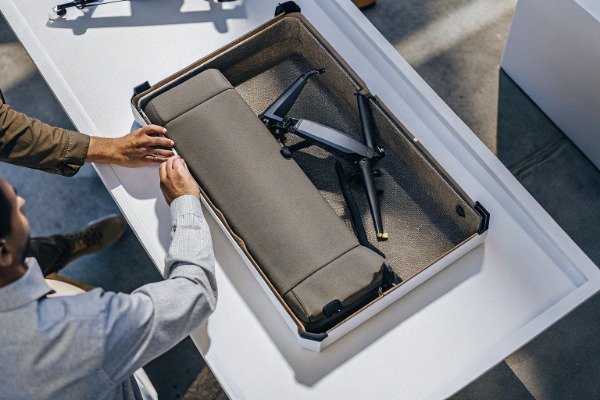
We know the anxiety of unboxing a new industrial drone. A crash during testing isn't just expensive; it delays critical deployment timelines for your team and damages confidence.
To test a firefighting drone sample, first conduct a hardware audit and verify FAA Part 107 compliance. Proceed to NIST-standard flight proficiency tests in open lanes. Finally, perform controlled fire suppression drills to evaluate payload accuracy, thermal sensor calibration, and flight stability under heat stress.
This guide outlines the precise protocols our engineers recommend to ensure your field tests are safe, accurate, and effective.
What Safety Protocols Must I Establish Before Test-Flying a New Industrial Drone?
Skipping safety checks often leads to catastrophic failure. When we test prototypes, we prioritize strict protocols to protect both the expensive hardware and the ground crew from accidents.
Establish a designated safety perimeter and verify airspace authorization before flight. Ensure all pilots hold valid certification, such as the FAA Part 107. Conduct a comprehensive pre-flight hardware inspection, focusing on motor integrity and secure payload mounting, to prevent mechanical failures during operation.
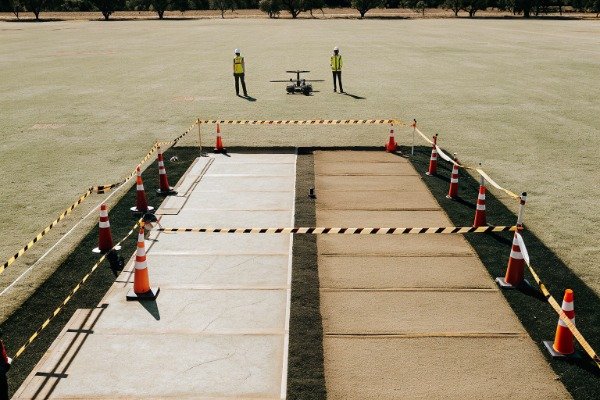
Testing a heavy-lift industrial drone requires a mindset shift from recreational flying to aviation-grade discipline. Before you even power on the battery, the environment and the hardware must be secured. We have seen too many incidents occur simply because a propeller was loose or a safety zone was breached.
Regulatory Compliance and Site Selection
The first step is ensuring legal and operational safety. In the United States, commercial operators must hold an FAA Part 107 Remote Pilot Certificate. This ensures the pilot understands airspace regulations and emergency procedures. You must also register the drone and conduct biannual flight reviews.
FAA Part 107 1
For the test site, do not just choose an open field. You need a controlled environment that mimics operational reality without the risks.
- Perimeter: Establish a "keep-out" zone for non-essential personnel.
- Airspace: Use FAA tools to verify you are not in restricted airspace.
- Fire Safety: Since you will eventually test fire suppression, have ground-based fire extinguishers ready.
The Hardware Audit
Before the first takeoff, a rigorous hardware audit is non-negotiable. Industrial drones endure high stress, and shipping vibrations can loosen components. You must inspect the motor integrity and propeller balance. A slightly unbalanced propeller can cause vibration that confuses the flight controller, leading to instability.
Check the mounting of the firefighting payload. Whether it is a dry powder extinguisher or a liquid tank, it must be locked in securely. A shifting payload shifts the center of gravity, which can be disastrous mid-flight.
مركز الجاذبية 2
إجراءات التشغيل القياسية (SOPs)
Create a checklist that every team member must follow. This removes human error from the equation. Below is a standard pre-flight safety checklist we recommend for heavy-duty drones.
| Checklist Category | بند العمل المحدد | الغرض |
|---|---|---|
| Mechanical | Check propeller torque and motor mounts. | Prevent mid-air detachment. |
| Electrical | Verify battery voltage and cell balance. | Ensure consistent power delivery. |
| الحمولة | Inspect release valves and safety pins. | Prevent accidental discharge. |
| Site Safety | Clear landing zone of debris (FOD). | Protect sensors and props during landing. |
| Communication | Test radio link and video transmission. | Maintain control at long range. |
By adhering to these protocols, you mitigate liability and ensure that any data you gather during the flight test is valid and reproducible.
How Do I Measure the Accuracy of the Fire Extinguishing Payload During the Trial?
Missing the target during a fire drill renders the drone useless. Our flight team emphasizes precise calibration to ensure the extinguishing agent hits the hotspot every time, regardless of conditions.
Measure accuracy by timing the interval from trigger to "fire out" status and analyzing the impact zone relative to the target center. Use thermal sensors to verify hotspot suppression and record video telemetry to assess how recoil forces affect the drone's hover stability.
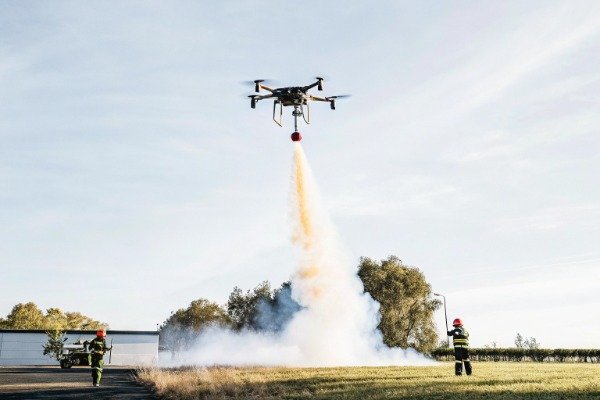
Accuracy in firefighting drones is not just about aiming; it is about the complex interaction between the drone's flight dynamics and the physics of the payload discharge. When you release a high-pressure agent, the drone experiences a physical reaction that must be managed.
Calibrating the Aim and Managing Recoil
The most critical aspect to measure is the "kickback" or recoil force. When an extinguisher is triggered, it generates thrust in the opposite direction. If the flight controller is not tuned to compensate for this sudden force, the drone will pitch back, causing the agent to spray upwards or miss the target entirely.
During your trial, perform a "dry run" first to ensure the release valves function without clogging. Then, during the live test, observe the drone's attitude (tilt) at the moment of discharge. You want to see the drone maintain its position. If it drifts, the PID settings (Proportional-Integral-Derivative) on the flight controller may need adjustment.
PID settings 3
Thermal Sensor Verification
Accuracy is also about seeing through the smoke. Modern firefighting drones use thermal cameras to detect hotspots. You must calibrate these sensors against controlled heat gradients.
- الاختبار: Place a heat source behind a visual obstruction (like smoke or a thin barrier).
- الهدف: The drone should clearly distinguish the fire core from surrounding reflective surfaces.
- التحقق: After extinguishing, use the thermal camera to check for "cold spots" to confirm the fire is out and not just suppressed.
The Multi-Pass Replenishment Drill
Real fires often require multiple hits. You should measure the efficiency of the entire cycle, not just one shot. We call this the Multi-Pass Drill. It measures how fast you can land, swap the payload, and return to the fire front.
Use the following metrics to score your accuracy and efficiency during the trial:
| متري | التعريف | Target Goal |
|---|---|---|
| Suppression Time | Time from trigger pull to visible flame extinction. | < 10 seconds for small controlled fires. |
| Drift Distance | How far the drone moves during discharge. | < 0.5 meters. |
| Re-ignition Rate | Frequency of fire flaring up after initial hit. | 0% (indicates total coverage). |
| Cycle Time | Time to land, reload, and return to hover. | < 2 minutes. |
Analyzing these data points helps you determine if the drone is truly combat-ready or if it requires further tuning.
What Environmental Conditions Are Ideal for Stress-Testing the Drone's Stability?
Fair-weather testing hides critical flaws. We deliberately expose our units to harsh elements because real fires create turbulence and heat that standard flights never encounter.
Ideal stress-testing conditions include variable wind speeds to evaluate position holding and controlled heat environments to test "heat soak" resilience. Testing near active heat sources reveals how well the flight controller manages turbulence and internal component temperatures during prolonged operations.
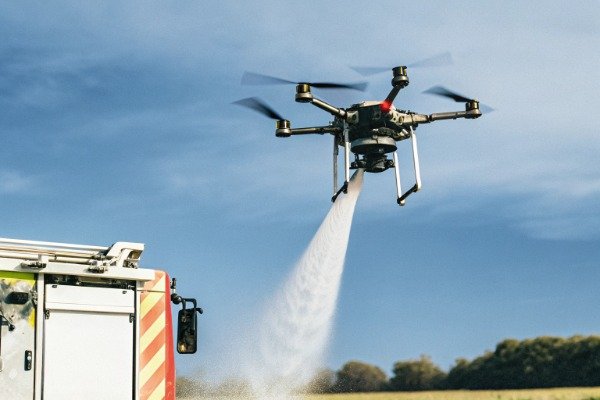
A drone that flies perfectly on a calm, sunny day may fail catastrophically above a burning building. Fire creates its own weather system, including updrafts and intense heat. To truly test a sample, you must simulate these conditions safely.
Simulating Real-World Turbulence
Fire generates heat-induced air turbulence. This is different from normal wind because it is often vertical and unpredictable. To test this, you should fly the drone near the perimeter of your controlled fire source (maintaining a safe distance).
Observe the telemetry. Is the drone fighting hard to maintain altitude? Are the motors spinning at near 100% capacity just to hover? If the drone struggles here, it will fail in a real emergency. You should also conduct flight tests in natural wind conditions of at least 15-20 mph to verify the propulsion system's power reserve.
Heat Soak Resilience
One of the most overlooked tests is "Heat Soak." This refers to the drone's ability to operate when its internal components are already hot from the ambient environment. In a fire scenario, the air around the drone is hot, reducing the cooling efficiency of the motors and battery.
- The Test: Hover the drone near the heat source for an extended period (e.g., 5-10 minutes) without discharging the payload.
- The Monitor: Watch the internal temperature sensors of the battery and the Electronic Speed Controllers (ESCs).
- The Risk: If these components overheat, the drone may trigger a safety landing or cut power mid-flight.
Testing in Obstructed Environments
Real fires happen in complex environments. We recommend using the NIST (National Institute of Standards and Technology) testing lanes. These standard tests involve flying through obstructed and confined lanes.
National Institute of Standards and Technology 4
Construct simple bucket stands using lumber to create a course. Fly the drone through these lanes to test the collision avoidance sensors. Smoke often confuses optical obstacle avoidance sensors. Testing in a controlled, smoky environment allows you to see if the drone refuses to move forward because it thinks smoke is a solid wall—a common issue that requires switching to manual or radar-based modes.
collision avoidance sensors 5
| Environmental Factor | طريقة الاختبار | ما الذي تبحث عنه |
|---|---|---|
| Wind/Turbulence | Fly in 15+ mph wind or near heat updrafts. | Position holding stability. |
| Ambient Heat | Hover near heat source for 10 mins. | Battery/ESC temperature spikes. |
| Smoke/Visibility | Fly through smoke (controlled). | False positives on obstacle sensors. |
Should I Invite the Supplier's Technical Team to Join a Remote Video Call During the Test?
Troubleshooting alone is frustrating and risky. We always encourage clients to connect with our engineers live, ensuring immediate guidance prevents minor issues from becoming major failures.
Yes, inviting the supplier's technical team provides real-time troubleshooting and ensures correct payload configuration. Live video support allows engineers to monitor telemetry data instantly, offer advice on PID tuning for stability, and verify that the testing procedures align with the manufacturer's design specifications.
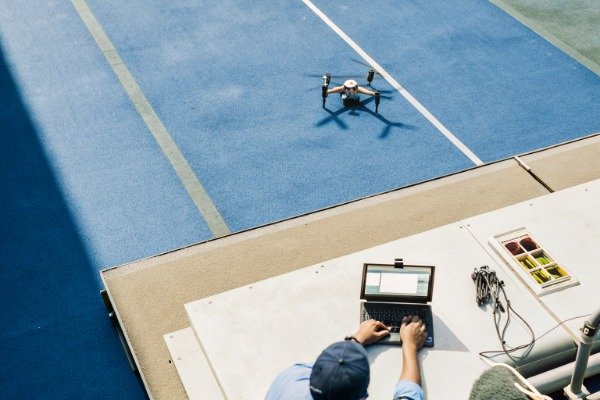
Modern industrial drones are complex computers with wings. When you are in the field, having the manufacturer on speed dial—or better yet, on a video call—can save the day.
Real-Time Telemetry Analysis
When we support our clients remotely, we don't just watch the video feed; we look at the data. Through screen sharing or telemetry mirroring, our engineers can see the voltage sag, the vibration levels, and the GPS signal strength in real-time.
GPS signal strength 6
For example, if you notice the drone drifting during the extinguishing test, you might think it is a motor issue. A remote engineer might look at the data and realize the compass is experiencing magnetic interference from a nearby structure. They can guide you to recalibrate instantly, saving you hours of guessing.
التداخل المغناطيسي 7
Collaborative Problem Solving
Every test flight yields data that can improve the product. By involving the supplier, you turn a simple test into a collaborative development session.
Electronic Speed Controllers 8
- PID Tuning: As mentioned earlier, recoil can destabilize the drone. A remote engineer can guide you to adjust the "Gain" settings on the flight controller to stiffen the response, making the drone more stable during discharge.
- Safety Verification: Suppliers can spot unsafe practices that you might miss. We often spot things like a loose battery strap or an improperly armed payload simply by watching the pre-flight video feed.
Building a Long-Term Partnership
Inviting the supplier to the test builds trust. It shows you are serious about the product and allows the supplier to understand your specific use case. This often leads to better support down the line, such as custom firmware updates tailored to your specific fire scenarios.
الكاميرات الحرارية 9
Summary of Benefits
- Instant Fixes: Resolve configuration errors on the spot.
- Data Interpretation: Understand what the error codes actually mean.
- Risk Reduction: Have a second pair of expert eyes on the safety protocols.
- Training: Your team learns directly from the creators of the technology.
الخاتمة
Rigorous testing ensures safety and reliability. By following these protocols—hardware audits, accuracy drills, environmental stress tests, and supplier collaboration—you validate the drone's capability to save lives in real-world fire scenarios.
airspace regulations 10
الحواشي
1. Official government page outlining certification requirements for commercial drone operators. ︎
2. NASA educational resource explaining the physics of center of gravity in flight. ︎
3. Comprehensive explanation of the control loop mechanism used in flight controllers. ︎
4. Official website of the institute setting standards for drone testing lanes. ︎
5. Explanation of systems designed to prevent impact with obstacles. ︎
6. Official US government site providing information on the Global Positioning System. ︎
7. Explanation of how external fields disrupt electronic equipment and sensors. ︎
8. Technical explanation of the component regulating motor speed in electric aircraft. ︎
9. Detailed overview of the technology used for heat detection. ︎
10. Authoritative source on US airspace restrictions and rules for drones. ︎

 English
  Spanish
  German
  French
  Dutch
Dutch  Arabic
