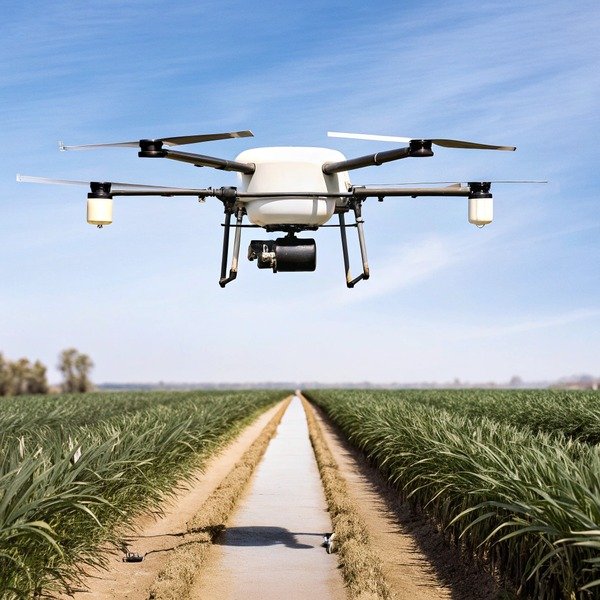
When our engineering team designs new flight platforms flight platforms 1, we constantly hear from clients who struggle with downtime during equipment changes. You need a drone that adapts instantly to field conditions, not one that requires a workshop visit.
To switch effectively, you must physically swap the tank and distribution mechanism while ensuring the flight controller recognizes the new payload type. You should use the spreading system for solid fertilizers and seeds, and the spraying system for liquid pesticides, ensuring you calibrate flow rates and swath widths for each specific material.
Here is a detailed guide on optimizing this transition for your daily operations.
How complicated is the process of changing the liquid tank to a solid granule spreader?
Our production line staff focuses heavily on modular connectors because we know complex assembly frustrates operators in the field. If you cannot swap systems quickly, you lose valuable daylight during critical application windows.
The process is designed to be user-friendly and typically takes between five to ten minutes for a trained operator. It involves disconnecting quick-release electrical cables, unlocking the retention mechanism to remove the liquid tank, and securing the granular hopper and spinning disk in its place without heavy tools.
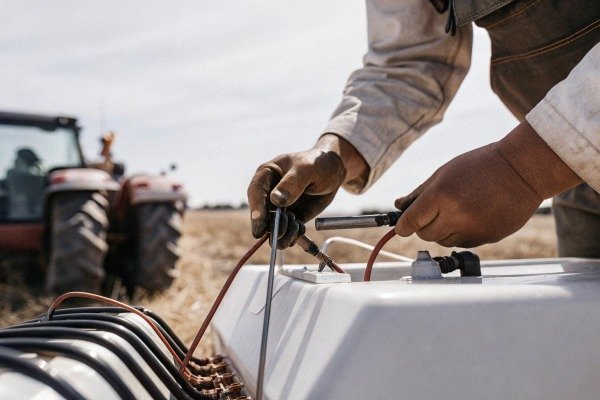
When we export our SkyRover units to large farms in the Midwest, we emphasize that "complicated" is a relative term. Modern agricultural drones have moved away from the rigid, fixed designs of the past. Today, the complexity is minimal, but the attention to detail must be high. The physical swap is mechanical, but the success lies in the preparation.
Most modern systems use a modular architecture. This means the flight platform—the motors, arms, and brain—remains the same, while the "mission payload" changes. You are essentially unplugging one appliance and plugging in another. However, because these machines handle corrosive chemicals and fine dust corrosive chemicals 2, the connections must be perfect.
Step-by-Step Mechanical Transition
The transition usually follows a standard workflow. You do not need an engineering degree, but you do need a clean workspace.
- Power Down: Always remove the battery first. Our safety protocols strictly forbid swapping payloads on a live system to prevent short circuits.
- Disconnect: Unplug the main CAN-BUS cable and liquid supply tubes.
- Unlock: Release the mechanical latches holding the spray tank.
- التبديل: Lift the liquid tank out and insert the spreading hopper.
- Secure: Lock the latches and connect the spreader’s servo cables.
Cleaning is Part of the Process
The biggest complication isn't the latch; it is the residue. If you switch from a sticky liquid fungicide to a dry fertilizer without cleaning the mounting points, you risk a poor electrical connection. Liquid residue can trap dust, which then acts as an insulator or, worse, a conductor that shorts the pins.
We recommend using a fast-drying contact cleaner on the ports during every switch. contact cleaner 3 This adds two minutes to the process but saves hours of troubleshooting.
Firmware Recognition
Once the hardware is swapped, the software must know. On our systems, the flight controller usually detects the new peripheral automatically. وحدة التحكم في الطيران 4 However, you must confirm this on your remote controller screen. If the drone thinks it is still a sprayer, it will try to prime a pump that isn't there, leading to error messages.
Time Estimation for System Swapping
We have timed these procedures in our testing facility to give you a realistic benchmark.
| مكوّن الطائرة بدون طيار | الإجراء المطلوب | الوقت المقدر | مستوى التعقيد |
|---|---|---|---|
| Battery & Power | Removal and safety check | 1 Minute | منخفضة |
| خزان السائل | Unlock latches, disconnect hoses | 2 Minutes | منخفضة |
| Chassis Cleaning | Wipe down ports, check for residue | 3 Minutes | متوسط |
| Spreader Install | Mount hopper, connect servo cables | 2 Minutes | منخفضة |
| فحص البرنامج | Boot up, confirm payload type | 2 Minutes | منخفضة |
| Total Process | Complete Transition | ~10 Minutes | منخفضة-متوسطة |
In which agricultural stages should I utilize the spreading system instead of the spraying nozzle?
We analyze crop cycle data from our test fields to help clients maximize their investment return. Using the wrong system at the wrong stage not only wastes expensive inputs but can also physically damage your crop’s potential yield.
You should utilize the spreading system primarily for seeding cover crops and applying granular fertilizers during pre-planting or top-dressing stages. Conversely, the spraying system is essential for crop protection stages, such as applying liquid herbicides for weed control and fungicides or insecticides during active growth.
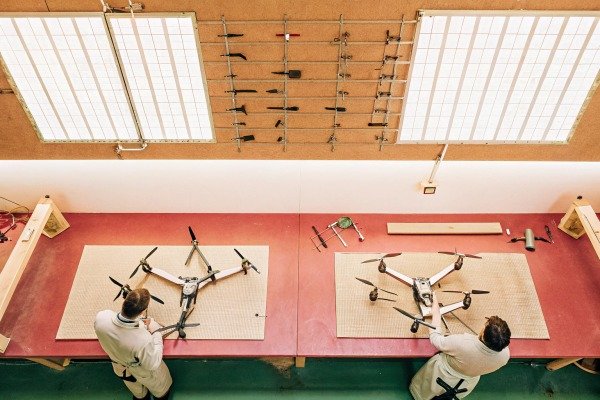
Understanding the agricultural calendar is vital for payload selection. agricultural calendar 5 A drone is a multi-role tool, but it cannot do everything at once. The decision to switch should be driven by the agronomic needs of the plant, not just convenience.
Early Season: The Spreading Dominance
Before the crop canopy closes, the spreading system is your workhorse. In the early spring, fields are often too wet for heavy tractors. This is where the drone shines. You will use the spreading hopper to broadcast seeds for cover crops cover crops 6 or to apply basal fertilizers.
- Granular Fertilizer: Solid nitrogen or NPK blends are heavy. Drones can distribute these evenly over wet ground without compacting the soil.
- Seeding: For rice paddies or pasture overseeding, the centrifugal spreader throws seeds in a wide, even pattern.
Mid-Season: The Switch to Liquid
As the crop emerges and grows, the threats change. Weeds compete for sunlight, and insects attack the leaves. Solid granules are rarely effective here because they fall to the ground. You need the chemical to stick to the plant.
This is when you must switch to the spraying system.
- Herbicides: You need precise droplets to kill weeds without drifting onto neighbors.
- Fungicides: These must coat the leaves to prevent disease. A solid granule cannot do this.
- Foliar Feeding: Liquid nutrients are absorbed through the leaves, providing a quick boost that solid fertilizers cannot match in speed.
Late Season: A Mix of Both
In the late season, you might switch back and forth. You might spray a desiccant to dry down a crop for harvest, or you might spread a late-season granular booster.
Integrated Pest Management (IPM) Strategy
Modern IPM relies on using the right method. We see many clients trying to dissolve solid fertilizers in water to spray them. This often fails because the pumps clog. Similarly, trying to spread a "dust" pesticide with a granule spreader results in massive drift. Stick to the intended physical state of the material.
Application Stage Guide
The following table outlines when we recommend using each system based on typical crop cycles.
| مرحلة المحصول | النظام الموصى به | المادة النموذجية | الهدف |
|---|---|---|---|
| Pre-Planting | Spreading | Granular Fertilizer / Lime | Soil conditioning and nutrient loading |
| Planting | Spreading | Seeds (Rice, Grass, Cover Crops) | Establishing the crop |
| Early Growth | الرش | Pre-emergent Herbicides | Preventing weed competition |
| Vegetative | الرش | Insecticides / Foliar NPK | Pest control and rapid nutrient uptake |
| Flowering | الرش | مبيدات فطرية | Disease prevention on blooms/fruit |
| Maturation | Spreading | Granular Top Dressing | Late-season nutrient boost |
| Post-Harvest | Spreading | Cover Crop Seeds | Soil erosion prevention |
Do I need to adjust the flight parameters or software settings after switching the payload?
Our software engineers spend months tuning flight algorithms, yet we often see operators crash because they ignored the settings menu. Skipping parameter adjustments is the leading cause of poor application uniformity and unstable flight behavior.
Yes, you absolutely need to adjust the flight parameters because granular materials fly differently than liquid droplets. You must update the line spacing to match the wider spread width of granules and recalibrate the flow meter مقياس التدفق 7 to account for the specific density of the solid material being applied.
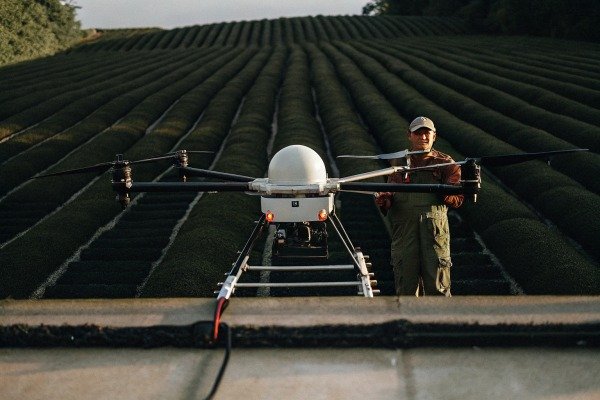
Hardware is only half the equation. When you switch from a liquid tank to a solid spreader, the physics of the drone's mission changes completely. solid spreader 8 If you fly a spreader using sprayer settings, you will strip your field (leave gaps) or waste product by overlapping too much.
عرض الرش الفعال
Liquid nozzles typically spray a width of 4 to 6 meters depending on height. A centrifugal spreader disk can throw granules 7 to 10 meters wide.
- The Risk: If you leave the software set to "Liquid Mode" (e.g., 5-meter spacing) but your spreader throws 10 meters, you are double-dosing the crop. This burns plants and wastes money.
- الإصلاح: You must measure the effective spread width of your specific granule and input that new value into the flight plan.
Flow Rate Calibration
Liquids are consistent. Water is always water. Granules vary wildly. Urea is light; potash is heavy. Seeds vary in size.
- المشكلة: The drone's "flow meter" for a spreader is often a calculation based on the rotation speed of the feed roller. rotation speed 9 It does not know if you are feeding light grass seed or heavy fertilizer.
- الحل: You must perform a "bucket test" or calibration routine in the software. You dispense a known amount of material, weigh it, and tell the drone, "That was 500 grams." The drone then adjusts its math.
Center of Gravity (CoG) and Inertia
Liquids slosh. Drones have anti-slosh algorithms. Solids do not slosh, but they shift differently. The spreader mechanism is also often heavier or sits lower than the spray manifold.
- استقرار الطيران: We tune the PID (Proportional-Integral-Derivative) gains differently for each payload. If you do not tell the drone it has a spreader attached, it might over-correct in high winds, leading to a "toilet bowl" effect (wobbling) or instability during braking.
Battery Consumption Profiles
Spreading eats more power in a different way. The spinning disk requires high torque, creating current spikes. Spray pumps draw constant, lower current. You may need to adjust your "Return to Home" battery percentage. With a spreader, you might need to land at 30% battery instead of 20% to ensure safety.
Parameter Adjustment Checklist
Before taking off with a new system, ensure these settings are updated in your ground control app.
| فئة المعلمة | Spraying System Setting | Spreading System Setting | Why Change? |
|---|---|---|---|
| Line Spacing | 4–6 Meters (Typical) | 6–10 Meters (Typical) | Spreader throws material further than nozzles spray. |
| Flow Calibration | Standard Liquid Rate | Material Specific | Granule density varies; must calibrate per product. |
| سرعة الطيران | 4–6 m/s | 5–8 m/s | Spreading can often support higher flight speeds. |
| الارتفاع | 2–3 Meters | 3–5 Meters | Spreading needs more height for even distribution. |
| Spin Disk Speed | غير متاح | 800–1200 RPM | Controls how far the granules are thrown. |
What tools or spare parts do I need to have on hand for a smooth system switch?
Our logistics team packs a standard kit with every shipment, but savvy operators know that field conditions devour small parts. You do not want a $20,000 operation to halt because you are missing a ten-cent rubber seal.
You should maintain a dedicated field kit containing a soft-bristle brush and compressed air for cleaning, spare O-rings and gaskets for connectors, and a set of metric hex keys. Additionally, keep a dummy plug to protect the disconnected ports and a microfiber cloth to ensure optical sensors are clear of dust.
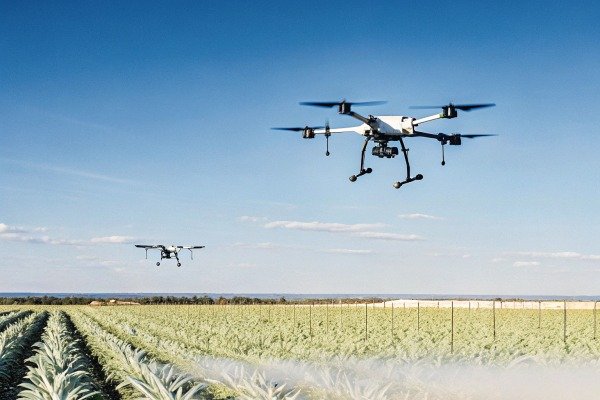
Switching systems in the comfort of a workshop is easy. Switching them on the tailgate of a truck in a dusty cornfield is a challenge. The environment is your enemy. Dust, pollen, and chemical residue are waiting to compromise your drone's electronics.
The "Go-Bag" for Payload Switching
We advise our distributors to build a "Payload Switch Kit" for their customers. This isn't just about tools; it's about contamination control.
Cleaning Essentials
When you remove the spreader, the drone will be covered in dust. If you immediately attach the spray tank, that dust gets trapped between the seals.
- Compressed Air (Canned Air): Essential for blowing dust out of the multi-pin electrical connectors before plugging in the new system.
- Soft Brush: Use a paintbrush to sweep fertilizer granules off the landing gear and locking mechanism. Fertilizer is highly corrosive; if it sits on metal parts, it will rust them.
Sealing and Protection
- Spare O-Rings: The quick-release liquid couplers use rubber O-rings. These can dry out, crack, or fall out during a swap. Always have spares. If an O-ring is missing, your expensive pesticide will leak all over the battery.
- Dielectric Grease: A small dab on electrical pins helps prevent corrosion and ensures a smooth connection, especially in humid climates.
Mechanical Tools
While many modern drones (like our newer models) feature tool-free assembly, "tool-free" often assumes perfect conditions.
- Hex Key Set: Sometimes a latch gets stuck due to grit. A small hex key can help loosen it.
- Pliers: Useful for gripping slippery connectors if your hands are sweaty or gloved.
Sensor Maintenance
Spreading creates a cloud of dust. This dust coats the obstacle avoidance radar and cameras.
- Microfiber Cloths: You must wipe the sensors clean after removing the spreader. If you don't, the drone might refuse to take off because it thinks it is blocked by an obstacle (which is actually just dust on the lens).
Critical Spare Parts List
Keep these specific items in your truck at all times.
| اسم القطعة | الوظيفة | Why you need it immediately |
|---|---|---|
| Port Covers / Dummy Plugs | Protects open ports | When one system is off, the open port is vulnerable to rain/dust. |
| Liquid Gaskets | Seals hose connections | Leaks cause pressure drops and uneven spraying. |
| Cotter Pins / Safety Clips | Secures mechanical latches | Small pins are easily lost in field grass during swaps. |
| Isopropyl Alcohol | Cleaning contacts | Removes sticky chemical residue that water won't dissolve. |
الخاتمة
Switching between spreading and spraying is a powerful capability that transforms your drone into a versatile farm implement. By understanding the mechanical process, choosing the right agricultural stage for each system, adjusting your software parameters, and keeping the right tools on hand, you ensure seamless operations. Master this transition, and you will maximize both your efficiency and your crop yields غلة المحاصيل 10.
الحواشي
1. Official regulations and guidelines for unmanned aircraft flight platforms. ︎
2. Safety standards for handling hazardous agricultural chemicals. ︎
3. Background on the use of contact cleaners for maintaining electrical integrity. ︎
4. Technical specifications for advanced flight controllers in agricultural drone platforms. ︎
5. FAO resources on aligning agricultural activities with the seasonal calendar for optimal yield. ︎
6. USDA resources on the benefits and management of cover crops. ︎
7. Authoritative standards for measurement and calibration devices. ︎
8. Background on the mechanics and use of a solid spreader in agriculture. ︎
9. ISO standards for measuring rotation speed in agricultural dispensing mechanisms. ︎
10. Global statistics and data on agricultural crop yields. ︎

 English
  Español de México
  Deutsch
  Français
  Русский
  العربية
