
When we test our latest SkyRover prototypes in the windy fields outside Xi'an, we often see how a single gust can ruin a spray pattern PID loop (Proportional-Integral-Derivative) 1. If your drone drifts even slightly, you risk chemical burn on crops or missed coverage chemical burn on crops 2, directly impacting your farm's profit margins.
To evaluate stability, you must conduct standardized field tests like 1000-meter straight-line flights and 60-second hovers under full payload. Analyze telemetry logs for roll and pitch deviations within ±0.1 degrees and verify altitude consistency via RTK data to ensure precise spraying coverage without dangerous drift.
Let’s look at the specific methods we recommend for verifying these systems in the field Lost Link 3.
What specific field tests can I run to verify the accuracy of the flight path?
Our engineers frequently advise clients in the US to look beyond the spec sheet and perform rigorous physical checks. If the drone cannot hold a line, the resulting crop damage will cost far more than the hardware itself.
You should execute straight-line tracking tests at 4 meters per second over 1000-meter distances and measure lateral deviation using RTK logs. Perform orbital flight tests with a 50-meter radius and sudden braking maneuvers to verify the drone returns to its path within centimeters of the programmed tolerance.

To truly understand if a flight control system is up to the task, you need to simulate real-world agricultural conditions. In our factory testing grounds, we don't just fly empty drones; we load them to their maximum capacity. A drone behaves very differently when it is carrying 30 or 50 liters of liquid compared to when it is empty. The inertia is massive, and the flight controller must predict this momentum.
The Straight-Line Deviation Test
The most critical metric for an agricultural drone is its ability to fly in a perfectly straight line. We call this "track consistency." When you are spraying a field, you set up parallel lines. If the drone wavers, you get gaps (weeds grow) or overlaps (crop burn).
To test this, set up a mission plan with a 1000-meter straight leg. Set the speed to a standard working rate, usually between 4 m/s and 6 m/s. Do not use the remote controller sticks for this; let the autonomous system fly the route. Afterwards, you need to pull the flight logs. You are looking for "Cross-Track Error" (XTE). Cross-Track Error 4 In a high-quality industrial flight controller, the XTE should rarely exceed 20 to 30 centimeters, provided you are using RTK positioning. If you see deviations of 1 meter or more, the internal control loops are not tuned correctly for that airframe.
Hovering Under Load
Hovering sounds easy, but it is the ultimate test of sensor noise. We recommend a "60-second Hover Test." Launch the drone with a full tank. Have it hover at a height of 3 meters. Watch the drone's arms. Are they twitching? Is the drone "hunting" for position, moving in small circles?
This behavior often indicates that the vibration from the motors is interfering with the IMU (Inertial Measurement Unit). وحدة القياس بالقصور الذاتي 5 In our assembly process, we use soft-mounting dampers to isolate the flight controller. If you see the drone drifting vertically or struggling to hold altitude within ±10cm, the barometer or altitude fusion algorithm is failing.
Table 1: Essential Field Test Protocols
We use the following checklist for every unit before it ships to Europe or North America. You can replicate this in your own field.
| اسم الاختبار | Procedure | معايير النجاح | مؤشر الفشل |
|---|---|---|---|
| Loaded Hover | Hover at 3m altitude for 60s with full tank. | Horizontal drift < 10cm; Altitude drift < 5cm. | Visible "toilet bowling" (circular motion) or audible motor pulsing. |
| Brake Test | Fly at 6 m/s, then release sticks/pause mission instantly. | Stopping distance < 5m; Pitch angle recovers in < 2s. | Drone overshoots significantly or pitches up violently (>30°). |
| Slosh Test | Half-full tank. rapid yaw (turn) left and right. | Drone maintains position; no oscillation from liquid movement. | Drone wobbles uncontrollably after the turn stops. |
| RTL Accuracy | Trigger Return-to-Launch from 500m away. | Landing within 20cm of the takeoff point. | Landing outside the landing pad or multiple adjustments before touchdown. |
Analyzing Orbital Precision
While straight lines are common, turning is where crashes happen. During a "U-turn" at the end of a row, the drone changes speed and orientation. We use an orbital test (flying in a circle) to check if the magnetometer is calibrated correctly. If the drone flies an oval instead of a circle, it usually means the compass is suffering from interference or the GPS delay compensation is off.
How does the system maintain stability during strong winds or magnetic interference?
We know that farmers cannot always wait for a perfect, calm day to treat their crops. Our teams design propulsion systems to fight sudden gusts, but the brain of the drone—the flight controller—must react faster than the wind.
Systems maintain stability using sensor fusion algorithms like Extended Kalman Filters (EKF) that weight GPS and IMU data against magnetic noise. High-torque motors and rapid ESC response times actively counter wind gusts up to 10 meters per second by adjusting propeller speeds instantly.

Stability is not just about power; it is about data confidence. When a drone flies, it receives conflicting information. The GPS might say "you are moving left," but the accelerometer says "you are leaning right." The flight controller uses a mathematical process called the Extended Kalman Filter (EKF) to decide Extended Kalman Filter 6 Extended Kalman Filter (EKF) 7 which sensor to trust.
Wind Resistance Mechanisms
In agricultural settings, wind is not constant; it is turbulent. When a gust hits the side of a SkyRover drone, the aircraft will naturally tilt with the wind. A stable flight controller detects this uncommanded rotation via the gyroscope.
The reaction happens in milliseconds. The controller sends a signal to the Electronic Speed Controllers (ESC) to spin up the motors on the "downwind" side to push back. You can evaluate this by flying in a 5 m/s wind. Watch the drone's attitude (angle). A good system will lean into the wind to hold its position, but the camera gimbal and the frame should remain relatively steady. If you see the drone oscillating (wobbling) rapidly, the "P-gain" (Proportional gain) in the software is likely set too high, or the motors lack the torque to react quickly enough.
Dealing with Magnetic Noise
Magnetic interference is the silent killer of drones. Pumps, high-voltage power lines, and even the drone's own high-current wiring generate magnetic fields. We place our compasses on tall stalks or far out on the wings to avoid this.
If you fly near a metal structure (like a barn or a tractor) and the drone suddenly starts flying in a curved line when you push the stick straight, this is "toilet bowling." It happens because the compass heading is wrong. Modern stable systems use dual GPS units (front and back) dual GPS units 8 to calculate heading based on movement, rather than relying solely on the magnetic compass. This is a feature we strongly recommend for anyone flying near infrastructure.
Table 2: Wind and Interference Performance Metrics
When you evaluate a drone, ask the supplier for their wind tunnel or real-world data. Compare it against these standards.
| متري | Standard Performance | High-Performance (Industrial) | ما أهمية ذلك |
|---|---|---|---|
| Max Wind Resistance | 8 m/s (Level 4) | 12-14 m/s (Level 6) | Ensures you can spray during tight weather windows. |
| Heading Accuracy | ± 2 degrees | ± 0.5 degrees (Dual Antenna) | Prevents the drone from drifting sideways in crosswinds. |
| Position Hold (GPS) | ± 0.5m Vertical | ± 0.1m Vertical (RTK) | Ensures consistent spray height above the canopy. |
| Mag. Interference | Calibrate every flight | Auto-compensation / Dual GPS | Reduces setup time and crash risk near metal structures. |
Voltage Sag During Stability Corrections
One hidden factor is the battery. When the flight controller fights the wind, it demands a massive spike in current. If the battery voltage sags too low, the ESCs might reduce power to protect the battery, causing the drone to lose stability and drift. When evaluating stability, always check the voltage logs during high-wind flights. A stable system requires a battery with a high "C-rating" (discharge rate) to support these instant power demands without dropping voltage.
Which hardware redundancy features should I prioritize to prevent crashes?
In our experience exporting to strict markets like Germany, we find that redundancy is the main differentiator between a toy and a tool. We install backup systems because in farming, a crash means spilled chemicals and lost time.
Prioritize dual IMUs and triple redundant compasses to cross-check sensor data for inconsistencies. Ensure the drone features dual GPS modules for backup positioning and signal loss protection, alongside redundant power distribution setups to prevent total failure during a single battery or ESC fault.

Redundancy is not just about having two of everything; it is about the "voting" logic. The flight computer constantly compares data from Sensor A, Sensor B, and sometimes Sensor C. If Sensor A goes crazy, the system must ignore it and listen to the others.
Sensor Redundancy: The IMU and Compass
The IMU (Inertial Measurement Unit) contains the gyroscope and accelerometer. It is the inner ear of the drone. If it fails, the drone flips upside down instantly. We prioritize flight controllers with triple redundant IMUs. This means there are three separate sensors inside the black box. The software compares all three. If one differs significantly due to vibration or heat, it is "voted out."
Similarly, the compass is vulnerable. As mentioned earlier, we use external compasses. But wires break, and connectors come loose. A stable system should have at least two compasses. If the external one fails, it should seamlessly switch to the internal one (while warning the pilot) rather than entering an uncontrolled "fly-away" state.
Power and Signal Safety
The most common cause of crashes we see in cheaper models is power failure. Not the battery dying, but a signal wire breaking. We use dual signal lines for the motor controls (PWM signals). If one wire vibrates loose, the second one carries the command.
Furthermore, look for Dual GPS setups. This is standard on our larger payloads. If you are flying under trees or near a hill, one GPS puck might lose satellite lock. The second one, located on the other side of the frame, might still have a clear view. This ensures the drone doesn't suddenly drop into "Attitude Mode" (manual leveling only), which is very difficult for most operators to control manually, especially 500 meters away.
Table 3: Redundancy Checklist for Buyers
Before purchasing an agricultural drone, inspect the spec sheet for these redundancies.
| المكوّن | الوظيفة | مستوى الأولوية | ما الذي تبحث عنه |
|---|---|---|---|
| IMU | Measures angle & speed changes. | الحرجة | Triple Redundancy (3x sensors) with internal heating. |
| GPS/GNSS | Positioning. | عالية | Dual Antenna + RTK support. |
| Compass | Heading/Direction. | عالية | External mounted + Internal backup. |
| Barometer | Altitude. | متوسط | Dual Barometers (often covered by foam). |
| رابط التحكم | Pilot to Drone signal. | عالية | Dual Band (2.4GHz + 5.8GHz) auto-switching. |
| Battery Connection | Power. | عالية | Anti-spark connectors, secure locking mechanism. |
Why "Consumer" Tech Fails in Agriculture
Consumer drones often rely on visual sensors (cameras) for stability. In agriculture, these often fail. Why? Because crops move. A field of wheat blowing in the wind looks like moving ground to a visual sensor, causing the drone to drift. This is why hardware redundancy in the inertial و satellite systems (IMU and GPS) is far more important for us than visual positioning when designing for farmers.
How can I assess the reliability of the flight control software algorithms?
We spend months tuning the code before a new model leaves the factory floor. Software reliability isn't just about not crashing; it's about handling the physics of a moving liquid payload without panicking.
Assess reliability by reviewing flight logs for PID loop performance, checking for oscillations during rapid payload changes. Verify the software handles sudden center-of-gravity shifts from liquid sloshing and successfully executes failsafe protocols like Return-to-Home during simulated signal interruptions.
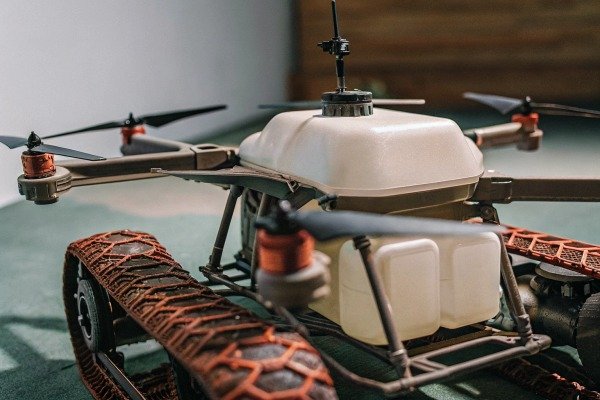
The software inside the flight controller (often based on ArduPilot or PX4 in industrial drones PX4 9 ArduPilot 10, or proprietary code like ours) uses a PID loop (Proportional-Integral-Derivative). This loop is constantly calculating errors. "I want to be at 5 meters high, but I am at 4.9 meters. I need to speed up the motors."
PID Loop Tuning and Response
You can assess this by looking at the "Desired vs. Actual" graphs in the flight logs.
- Desired Roll: The angle the computer wanted to be at.
- Actual Roll: The angle the drone actually achieved.
In a reliable system, these two lines should overlap almost perfectly. If you see the "Actual" line lagging behind the "Desired" line, the drone feels sluggish. If you see the "Actual" line spiking above and below the "Desired" line rapidly, the drone is oscillating.
For agricultural drones, the "I" term (Integral) is crucial. This part of the math looks at long-term error. For example, if the tank is unbalanced and the drone is constantly leaning left, the "I" term learns this and corrects it. To test this, fly with an off-center load (safely). A good algorithm will relevel the drone within seconds.
Handling Liquid Sloshing
Liquid sloshing is unique to our industry. When a drone brakes hard, the liquid in the tank rushes forward. This shifts the Center of Gravity (CoG) instantly. A standard camera drone algorithm will freak out and might flip the drone.
Agricultural flight control software includes Feed-Forward logic. The computer knows: "I just ordered a hard stop, so I expect the nose to dip." It pre-emptively stiffens the front motors to catch the weight transfer. You can test this by flying forward at speed and letting go of the stick.
- Bad Software: The drone pitches back, then the nose dives (due to slosh), then pitches back again. It looks like a rocking boat.
- Good Software: The drone pitches back to brake, settles, and holds flat. The movement is stiff and controlled.
Failsafe Execution
Finally, software reliability is about safety nets. We tell our customers to test the "Lost Link" failsafe safely. Remove the propellers (or do this on the ground first). Arm the drone and throttle up. Then, turn off your remote controller.
The software يجب immediately detect the signal loss. In the logs, you should see the mode switch to "RTL" (Return to Launch) or "Land" within 2-3 seconds. If the drone waits 10 seconds, that is 10 seconds of uncontrolled flight that could drift into a highway. Reliability means predictable behavior when things go wrong.
Continuous Improvement via Firmware
We also assess reliability by the manufacturer's update history. A stable system is rarely perfect on day one. We constantly release firmware updates to refine how the EKF handles vibration or new battery types. If a system hasn't had a firmware update in two years, it likely lacks the modern filtering needed to handle the noise of aging motors and propellers.
الخاتمة
Evaluating the stability of an agricultural drone requires moving beyond the brochure and into the field. By conducting standardized physical tests—like the loaded hover and 1000m straight-line tracking—and analyzing the hidden data in flight logs, you can verify if the hardware redundancy and software algorithms are truly industrial-grade. Stable flight ensures precise chemical application, protects your investment, and ultimately secures your farm's productivity.
الحواشي
1. Authoritative resource explaining the control loop mechanism used in flight software. ︎
2. Government guidelines on preventing pesticide drift and resulting crop damage. ︎
3. Regulatory context for failsafe requirements during signal loss. ︎
4. Defines the standard metric for measuring lateral flight path deviation in autonomous systems. ︎
5. Provides a technical definition of the sensor component critical for flight stability. ︎
6. General background on the sensor fusion algorithm used in drones. ︎
7. Explains the sensor fusion algorithm used to estimate aircraft state. ︎
8. Explains how dual GNSS antennas calculate heading without magnetic interference. ︎
9. Official site for the PX4 open-source autopilot standard. ︎
10. Official documentation for the open-source flight control software mentioned. ︎

 English
  Spanish
  German
  French
  Dutch
Dutch  Arabic
