
Sourcing industrial drones is high-stakes. A small workshop might build a perfect prototype, but fail your bulk order. At SkyRover, we see daily how vital scalable infrastructure is for reliability.
To determine mass production capacity, audit the supplier's factory for automated assembly lines and verify their ISO 9001 certifications. Analyze their supply chain resilience for critical components like thermal sensors and review historical delivery data to confirm they have successfully fulfilled high-volume orders for similar hardware in the past.
Let's break down the specific metrics and indicators you need to verify before signing a contract.
What is the supplier's monthly production output for industrial drones?
You need volume assurance. A supplier claiming high output without proof is a red flag. When we plan our production schedules for export to the US and Europe, we rely on hard, verifiable data.
A capable supplier should transparently share current monthly output metrics and maximum theoretical capacity. You must verify if they can produce multiple drone variants simultaneously or if they need to dedicate lines to specific models. This data confirms if they can handle your order size without bottlenecks.
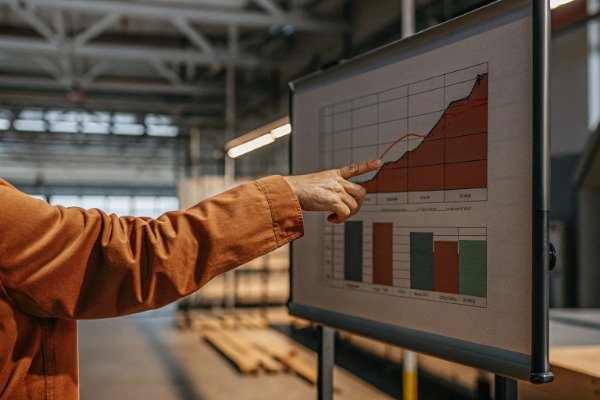
Analyzing Production Metrics and Market Demand
When you are evaluating a supplier, the first question is often about numbers. However, raw numbers can be misleading if not contextualized. The firefighting drone market is experiencing explosive growth, with projections hitting over $6 billion by 2035. This means a supplier that was adequate yesterday might be overwhelmed tomorrow.
firefighting drone market 1
In our experience, the "sweet spot" for current market demand lies in the 10-20 kg payload segment. This category represents a significant portion of the market because it balances operational capability with cost-effectiveness. If your supplier claims they can produce 500 units a month, you need to ask: "500 units of what?" A small photography drone is vastly easier to assemble than a heavy-lift firefighting drone carrying fire suppressant.
We recommend breaking down the production output inquiry into specific categories. You need to assess whether their current capacity aligns with your growth timeline. If you are a government contractor looking to equip a fleet, a supplier producing 10 units a month by hand will not suffice.
The Importance of Surge Capacity
Firefighting is seasonal in many parts of the world. We often see surge demand during peak wildfire seasons. A robust manufacturer must have "surge capacity"—the ability to ramp up production quickly without compromising quality. This usually involves modular manufacturing processes rather than rigid assembly lines.
Below is a checklist of metrics you should request from any potential partner:
Table 1: Key Production Capacity Metrics to Request
| Metric Category | سؤال محدد لطرحه | ما أهمية ذلك |
|---|---|---|
| Base Output | What is your verified monthly output for 10-20kg payload drones? | Establishes the baseline for their current operational reality. |
| Theoretical Max | What is your maximum capacity if running 24/7 shifts? | Indicates the absolute ceiling of their production before they need new facilities. |
| Variant Flexibility | Can you produce heavy-lift (>20kg) and mid-range drones simultaneously? | Ensures your order won't be paused because another client ordered a different model. |
| Expansion Timeline | What is your timeline for adding new assembly lines? | Shows if the supplier is investing in growth to match market CAGR. |
By critically analyzing these figures, you can avoid suppliers who are essentially "craft workshops" masquerading as factories.
Do they have automated assembly lines or rely on manual labor?
Consistency is non-negotiable. Manual assembly often leads to human error in complex flight systems. In our workshop, we balance skilled technicians with automation to ensure every screw is torqued precisely.
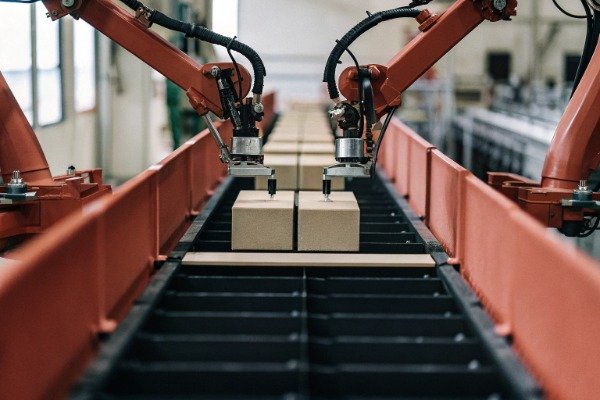
Automated assembly lines are crucial for scaling production while maintaining consistent quality. Suppliers relying solely on manual labor often struggle with scalability and uniformity. You should assess their investment in specialized tooling and automation to ensure they can meet high-volume demands without compromising on hardware reliability.
The Role of Hardware Investment
Hardware investments typically account for the majority of capital expenditure in our industry. This is a barrier to entry that protects you from low-quality sellers. If a supplier has not invested in automation, they are likely undercapitalized.
Mass production of industrial drones—especially those used for firefighting—requires "Design for Manufacturing" (DFM) protocols. This means the drone is engineered from the ground up to be assembled by machines or specialized tooling, rather than being a complex, hand-built prototype.
Design for Manufacturing 2
When we developed our latest heavy-lift platform, we had to redesign the chassis three times just to ensure it could be assembled efficiently on the line. A supplier who cannot show you their specialized tooling or automated stations is likely building units one by one. This manual approach is fine for prototypes but disastrous for a 100-unit order.
Automation vs. Skilled Labor
It is important to note that not everything can be automated. The installation of flight controllers or sensitive thermal sensors often requires a human touch. However, the core structural assembly, motor mounting, and repetitive tasks should be automated or assisted by jigs.
If a supplier relies entirely on manual labor, you face two risks:
- Scalability limits: Adding more people is harder than speeding up a machine.
- Inconsistency: Two different workers might tighten a propeller mount differently, leading to vibration issues in the field.
Table 2: Risks of Manual vs. Automated Assembly
| الميزة | Manual Assembly Reliance | Automated/Hybrid Assembly |
|---|---|---|
| Scalability | Low. Requires hiring and training new staff, which takes months. | High. Can often be adjusted by increasing machine uptime. |
| Consistency | Variable. Dependent on individual worker fatigue and skill. | High. Machines perform the exact same action every time. |
| Cost per Unit | High. Labor costs increase linearly with volume. | Lower at scale. Upfront investment pays off in lower unit costs. |
| Error Rate | Higher probability of human error (missed screws, bad soldering). | Low. Automated optical inspection (AOI) catches defects early. |
When you visit a factory (or do a virtual tour), look for conveyor belts, robotic arms for chassis manipulation, and automated soldering stations. These are the hallmarks of a mature manufacturer.
automated soldering stations 3
How does their quality control process change from samples to mass production?
A perfect sample doesn't guarantee a perfect batch. We know that maintaining standards across thousands of units requires a completely different mindset than building a single "golden sample."
Mass production quality control requires a shift from individual inspection to systematic process control. You must verify the existence of a Quality Management System like ISO 9001 and audit their end-of-line testing infrastructure. Ensure they have the facilities to stress-test every unit, not just a random sample.
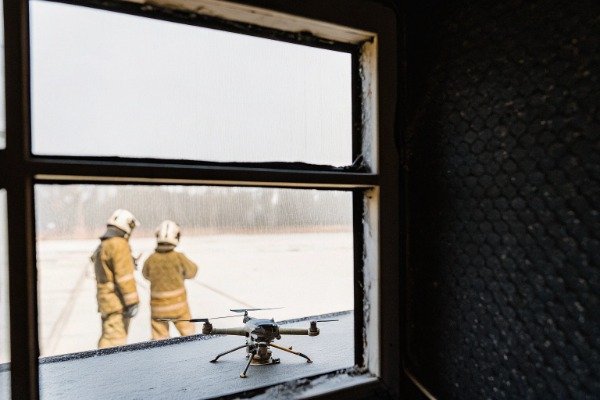
From Inspection to Process Control
In the prototype phase, engineers might spend days tweaking one drone to perfection. In mass production, that luxury disappears. The process itself must guarantee quality.
This is where the Quality Management System (QMS) comes into play. You should ask to see their ISO 9001 or AS9100 certifications. These aren't just badges; they prove the supplier has a documented process for every step of manufacturing.
Quality Management System (QMS) 4
For firefighting drones, the stakes are incredibly high. A failure in the field can mean loss of property or life. Therefore, the "End-of-Line" (EOL) testing is critical. Does the supplier have a flight range? Do they have simulation chambers?
Environmental Stress Screening
Firefighting drones operate in hellish conditions—high heat, smoke, and water spray. A standard QC check in an air-conditioned room is insufficient.
At our facility, we implement what is known as "burn-in" testing. We run the drones at full power for extended periods to ensure early component failures happen in the factory, not at the fire scene. We also use environmental chambers to simulate extreme temperatures.
burn-in testing 5
If your supplier only test-flies 1 out of every 10 drones, that is a statistical risk you are taking. For high-end industrial equipment, 100% functional testing should be the standard.
Table 3: QC Protocols – Prototype vs. Mass Production
| أسبكت | Prototype/Sample QC | Mass Production QC |
|---|---|---|
| التركيز | Design verification and performance tuning. | Consistency and defect elimination. |
| Testing Volume | 100% of units, extensive manual testing. | 100% automated testing + statistical sampling for destructive tests. |
| التوثيق | Engineering notes and design logs. | Standard Operating Procedures (SOPs) and batch tracking records. |
| المعدات | Lab benches and manual tools. | Automated test jigs, environmental chambers, and flight simulators. |
Ask your supplier for their "defect rate" data from previous batches. If they claim it is zero, they are lying. A mature manufacturer knows their defect rate and has a plan to reduce it.
Can they guarantee stable lead times for large volume orders?
Delays cost money and damage reputations. We constantly monitor our global supply chain to prevent shortages, because we know you need a partner who anticipates disruptions before they happen.
Stable lead times depend heavily on supply chain resilience and inventory management. You need to investigate the supplier's sourcing strategy for critical components like thermal sensors and batteries. Confirm they have buffer stock for long-lead items and alternative suppliers to mitigate global supply chain instability risks.
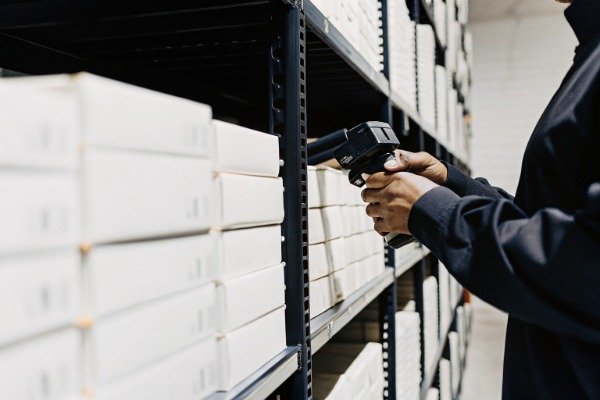
The Supply Chain Vulnerability Paradox
The rapid growth of the drone market creates a paradox. As demand spikes, component shortages become more common. Firefighting drones rely on specialized components: high-definition thermal sensors, optical zoom cameras, and high-density lithium batteries.
الحساسات الحرارية 6
A pressing challenge for mass production is the reliance on these specialized parts. For example, the market for high-end thermal sensors is dominated by a few global players. If your supplier does not have a strong relationship with these component manufacturers, they will be the last to get stock when shortages hit.
Geographic Advantages and Risks
Being based in China gives us a distinct advantage: we are physically close to the component supply chain. The "Shenzhen ecosystem" allows for rapid sourcing. However, even we face risks.
When evaluating a supplier, ask about their "Tier 2" and "Tier 3" suppliers.
- المستوى 1: The drone manufacturer (us).
- المستوى 2: The maker of the flight controller or motor.
- المستوى 3: The maker of the chips inside the flight controller.
If a supplier doesn't know who their Tier 3 suppliers are, they cannot predict delays.
Inventory Buffers and Contingency Plans
You should specifically ask: "What is your inventory buffer for long-lead-time components?"
A competent manufacturer will hold 3-6 months of stock for critical items like chips and sensors.
dual-use restrictions 7
Furthermore, do they have alternative suppliers? If their primary battery vendor has a factory fire, can they switch to a backup source without redesigning the drone? This is called "supply chain resilience."
supply chain resilience 8
Critical Questions for Lead Time Assurance
- Exclusive Relationships: Do they have priority status with sensor manufacturers?
- Customs Expertise: Can they navigate export regulations (like dual-use restrictions) smoothly? Delays often happen at customs, not the factory.
- Financial Health: Do they have the working capital to buy materials for your 500-unit order upfront? If they need your deposit just to buy screws, they are financially unstable.
By digging into these supply chain details, you can differentiate between a supplier who hopes to deliver on time and one who guarantees it.
environmental chambers 9
الخاتمة
To ensure mass production capacity, you must look beyond the sales pitch. Audit their automation levels, verify their QC certifications, and stress-test their supply chain resilience. Choosing the right partner ensures your fleet is reliable when the heat is on.
AS9100 certifications 10
الحواشي
1. Authoritative US government page on UAS usage in fire management. ︎
2. Defines the engineering methodology required for efficient mass production. ︎
3. Explains the specific automated manufacturing equipment mentioned. ︎
4. Authoritative definition from the American Society for Quality. ︎
5. Defines the stress testing process used to detect early failures. ︎
6. Explains the technology behind this critical firefighting component. ︎
7. Official US government source on dual-use export controls. ︎
8. NIST provides authoritative guidelines on supply chain risk management. ︎
9. Explains the testing equipment used for simulating extreme conditions. ︎
10. Provides context on the aerospace-specific quality standard. ︎

 English
  Spanish
  German
  French
  Dutch
Dutch  Arabic
